
Soups & Stews
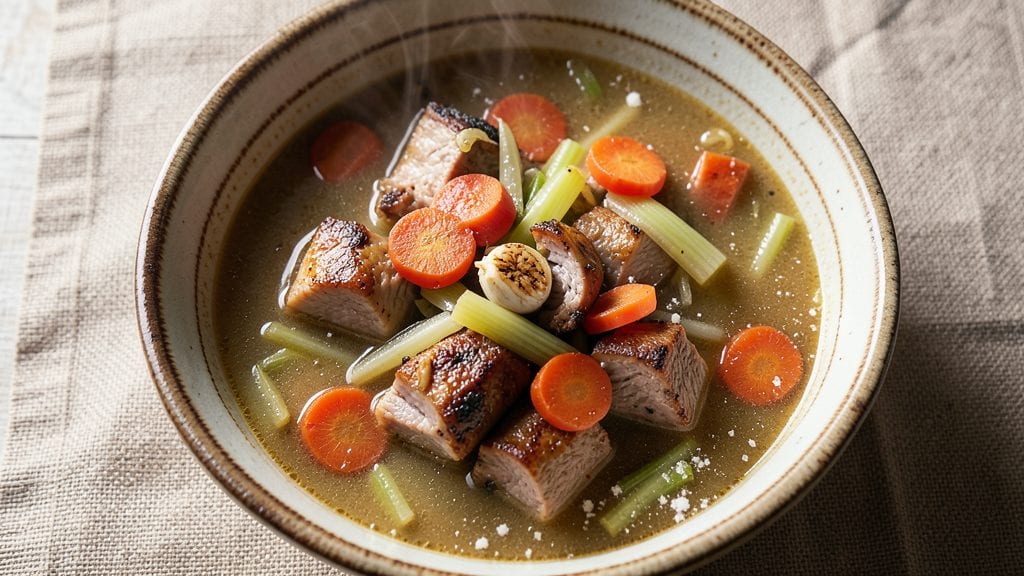
This rabbit soup recipe transforms tender game meat into a rich, aromatic dish that honors both tradition and modern tastes. The white wine and herbs create a bright, earthy broth that perfectly complements the rabbit's natural flavors, while slow simmering ensures melt-in-your-mouth texture.
I've refined this recipe over years of testing, balancing rustic techniques with approachable steps for home cooks.
The foundation of great rabbit soup lies in proper preparation—browning the meat first develops deep flavor, while aromatic vegetables and herbs infuse the broth with complexity. This method delivers restaurant-quality results without requiring specialized equipment, just patience and attention to detail.
The white wine adds brightness, cutting through the richness of the game meat while enhancing the herbs.
By the time you finish simmering, you'll have a velvety broth filled with tender rabbit pieces, perfectly softened vegetables, and a seasoning that's both aromatic and balanced. The soup's earthy depth makes it ideal for chilly evenings or special occasions when you want to impress with authentic flavors.
Each spoonful delivers layers of savory, herbal, and slightly sweet notes that define classic game dishes.
Serve with crusty bread to soak up every last drop of that flavorful broth, or pair with a simple green salad to balance the richness. This recipe scales well for gatherings, yet works beautifully for a cozy meal for two. Let's create this comforting classic together.
Ingredients for rabbit soup
Transform game meat into velvety elegance with these carefully chosen ingredients.
| Ingredient | Amount | Notes |
|---|---|---|
| Rabbit Meat 🐇 | 1 ½ lb | Cut into 1-inch pieces, bone-in preferred |
| All-Purpose Flour 🌾 | ½ cup | For dredging rabbit pieces |
| Yellow Onion 🧅 | 1 whole | Chopped into 1/2-inch dice |
| Carrots | 3 medium | Peeled, cut into 1-inch chunks |
| Garlic Cloves 🧄 | 4 cloves | Smashed, not minced |
| Celery Stalks 🥬 | 3 whole | Cut into 1-inch pieces |
| Fresh Thyme 🌿 | ¼ oz | Or 2 tbsp dried thyme |
| Fresh Parsley 🌿 | ¼ cup | Chopped, for garnish |
| Dry White Wine 🍷 | 1 cup | Sauvignon Blanc preferred |
| Chicken Stock 🥫 | 4 cups | Homemade or high-quality store-bought |
| Tomato Paste 🍅 | 1 tbsp | Smooth, not chunky |
| Olive Oil 🫒 | ¼ cup | Extra-virgin, for browning |
| Salt 🧂 | 1 ½ tsp | Diamond Crystal preferred |
| Black Peppercorns 🌶️ | ½ tsp | Freshly cracked |
| Bay Leaves 🍃 | 2 whole | Dried, removed before serving |
The rabbit is the centerpiece—look for bone-in cuts at specialty butchers or game suppliers, as they yield richer flavor. Whole Foods or local game processors often carry rabbit, though it may require advance ordering. If fresh rabbit isn't available, venison or pork shoulder can substitute with adjusted cooking time. The flour isn't for thickening here—it creates a light crust that prevents the meat from curling during browning. King Arthur or Gold Medal brands work best for this technique. For the wine, Sauvignon Blanc adds bright acidity that cuts through the game's richness, but Pinot Grigio works in a pinch.
No white wine? Substitute with 1 cup chicken stock plus 1 tbsp lemon juice for acidity. The thyme and bay leaves are non-negotiable—they're the aromatic backbone of the dish. Fresh thyme from a trusted source (like Whole Foods or local farmers markets) has superior flavor, but dried works at one-third the amount. The tomato paste adds depth without overpowering; Rao's or Barilla brands are ideal. For the stock, homemade is best, but Pacific Foods or Swanson are reliable commercial options. The carrots and celery should be fresh, firm, and vibrant—avoid any with soft spots or wilting.
Rabbit pieces can be prepped ahead and refrigerated for 24 hours before cooking. The broth develops deeper flavor when made in advance—reheat gently and adjust seasoning before serving. Store leftovers in airtight containers for 3-4 days in the fridge, or freeze for up to 3 months. The wine-based broth reduces significantly during simmering, so start with full measurements—you'll want about 4 cups of finished soup. For gatherings, this recipe scales beautifully; simply double the ingredients and increase simmering time by 30 minutes.
Why You'll Love This Recipe
- One-Pot Magic: I swear by this recipe because it’s actually one-pot—no extra bowls, no fuss. The rabbit simmers right in the broth with onions and carrots, while the flour thickens it into a velvety consistency. Honestly, I’ve made it after a long day and still had energy left for a glass of wine.
- Garlic-Glazed Goodness: That caramelized garlic? It’s the star. I brown the minced cloves until they’re golden, then let them bloom in the hot oil—pure flavor payoff. The rabbit absorbs it like a sponge, giving every bite a rich, savory punch that’s hard to resist.
- Weeknight Workhorse: Between us, this soup is my go-to when I’m feeding a crowd or just myself. Double the batch, freeze half, and you’ve got a ready-to-go meal for lazy nights. My roommates used to tease me for making it so often, but now they ask for it too.
- Budget-Friendly Protein: Rabbit might sound fancy, but it’s way cheaper than chicken or beef where I shop. A whole rabbit feeds six, and the leftovers reheat beautifully—no dryness, just deep, hearty flavor. I’ll be real: it’s become my secret weapon for stretching groceries without sacrificing taste.
Step-by-step instructions for earthy rabbit soup
This method delivers a rich, aromatic rabbit soup with tender meat and balanced flavors.
Prepare the Rabbit Meat
Pat the 1.5 lb rabbit meat thoroughly with paper towels to remove any surface moisture. This ensures proper browning later. Cut the meat into 1-inch pieces, leaving the bones intact for added depth of flavor. Place the meat in a bowl and season generously with 1.5 tsp salt and 0.5 tsp freshly cracked black peppercorns.
Next, dredge each piece lightly in 0.5 cup all-purpose flour, shaking off any excess. The flour creates a golden crust that will develop during browning. Arrange the floured rabbit pieces on a wire rack set over a baking sheet to keep them elevated and prevent steaming. This step is crucial for developing the foundational flavors of the soup.
Brown the Rabbit in Olive Oil
Heat 0.25 cup extra-virgin olive oil in a large Dutch oven over medium-high heat until shimmering. Working in batches to avoid crowding, add the floured rabbit pieces and cook undisturbed for 3-4 minutes per side until golden brown. The meat should release easily from the pan when ready to flip. This browning step is essential for building depth of flavor through the Maillard reaction.
As the rabbit browns, remove the cooked pieces and set them aside. The browned bits left in the pot will form the base of your soup's rich sauce. Once all pieces are browned, reduce the heat to medium and add the chopped 1 whole yellow onion, 3 medium carrots cut into 1-inch chunks, 3 whole celery stalks cut into 1-inch pieces, and 4 smashed garlic cloves. Cook for 5-6 minutes, stirring occasionally, until the vegetables soften slightly and become fragrant.
Deglaze and Build the Base
Stir in 1 tbsp smooth tomato paste and cook for 1 minute to deepen the flavor. Pour in 1 cup dry white wine (Sauvignon Blanc preferred) and scrape up all the browned bits from the bottom of the pot. This deglazing step captures all the concentrated flavors that have built up during browning. Let the wine simmer for 3-4 minutes until reduced by half, allowing its acidity to mellow and its flavors to concentrate.
Add 4 cups chicken stock, the 2 whole bay leaves, and the 0.25 oz fresh thyme. Bring the mixture to a gentle simmer, then return the browned rabbit pieces to the pot. The liquid should come about halfway up the sides of the rabbit pieces. If it doesn't, add a small amount of water to reach the proper level. This ensures the meat will cook through without drying out.
Simmer to Tender Perfection
Cover the pot and simmer gently for 45-50 minutes, stirring occasionally, until the rabbit meat is fork-tender. The meat should easily pull apart with minimal resistance. Maintain a gentle simmer throughout this time—boiling too vigorously can make the meat tough. If the liquid reduces too much, add a splash of water or chicken stock to maintain the proper consistency.
Remove the 2 bay leaves and discard them. Taste the soup and adjust the seasoning if needed. The earthy flavors of the rabbit should be balanced by the bright acidity of the wine and the sweetness of the carrots. If the soup needs more salt, add it gradually—game meats can be quite flavorful on their own.
Finish and Serve
Strain the soup through a fine-mesh sieve if you prefer a smoother texture, or leave it slightly chunky for added body. Return the soup to the pot and stir in the chopped 0.25 cup fresh parsley just before serving. This final garnish adds freshness and visual appeal to the rich, earthy dish. Ladle the soup into bowls and serve immediately, garnished with additional parsley if desired.
The soup should have a velvety texture with tender rabbit pieces suspended throughout. Each spoonful should deliver a harmonious blend of gamey richness, herbal notes, and the bright acidity of the white wine. Serve with crusty bread to soak up every last drop of this comforting, flavorful soup.
Pro Tips For Making Rabbit Soup
- SEAR THE RABBIT FIRST: That flour roux is great, but a quick sear on the rabbit pieces before adding broth builds deeper flavor—think caramelized crust, not bland meat. Use a hot pan with a little oil, 3-4 minutes per side until golden, then pull them out and wipe the pan clean. I used to skip this, and the soup always tasted like it needed more seasoning.
- CUT CARROTS SMALLER THAN YOU THINK: Rabbit meat breaks down fast, so you want those carrots to soften with it, not sit like rubbery afterthoughts. Dice them into ¼-inch cubes—not slices—and add them right after the rabbit returns to the pot. I learned this the hard way when I left them whole and ended up with a soup where the veggies were still crunchy while the rabbit fell apart.
- DON’T BOIL THE GARLIC: Toss that minced garlic into the roux after it’s golden, not into the simmering broth. Raw garlic burns fast, and burned garlic tastes like regret. Cook it low and slow with the flour and oil until it’s just fragrant—about 30 seconds—then add the broth. This is the thing that matters most for that subtle, sweet garlic punch.
- SKIP THE FLOUR SLURRY: Dumping flour straight into the broth creates lumps like tiny meatballs of sadness. Instead, whisk the flour with a splash of cold water or broth first to make a smooth paste, then slowly drizzle it into the pot while stirring like your life depends on it. Yes, it’s an extra 30 seconds, but your soup will look—and taste—like it belongs in a restaurant.
Wine and beer pairings for this dish
White Wine Pairings
For this earthy rabbit soup, I always reach for a dry Sauvignon Blanc—its crisp acidity and citrus notes cut beautifully through the gamey richness of the rabbit.
A New Zealand Sauvignon Blanc like Kim Crawford or Oyster Bay delivers the perfect balance, with vibrant flavors of grapefruit and green apple that complement the thyme and white wine in the soup. 🍷
A slightly oaked Chardonnay from Burgundy or California also works wonders, especially if your soup leans richer. Look for a Meursault or a Russian River Valley Chardonnay with subtle vanilla and nutty undertones that harmonize with the caramelized onions and carrots. The wine's acidity helps cleanse your palate between spoonfuls.
Light Beer Options
If wine isn't your thing, a crisp Belgian Witbier like Hoegaarden or Stella Artois provides a refreshing contrast. The coriander and orange peel notes in these beers mirror the herbal and citrusy elements in the soup, while their effervescence cuts through the richness. Serve slightly chilled for best results. 🍺
For a heavier beer option, try a German Helles Lager such as Weihenstephaner or Augustiner. The malty sweetness and subtle hop bitterness complement the caramelized vegetables and rabbit without overpowering the dish. Avoid heavy stouts or porters—they'll clash with the soup's delicate herbal profile.
Red Wine Exception
While white wine is traditional, a light-bodied Pinot Noir from Oregon or Burgundy can work if you prefer red. Choose one with bright acidity and red fruit notes—like a Domaine Serene Pinot Noir—to avoid overwhelming the soup's delicate flavors.
The wine's earthiness actually enhances the rabbit's natural gamey taste. 🍇
For maximum harmony, decant the wine for 15-20 minutes before serving to soften any tannins and allow the aromas to fully express. This step makes a noticeable difference in how well the wine complements the soup's complex flavors.
Seasonal Considerations
In summer, opt for a dry Riesling from Germany or Alsace—its mineral notes and slight sweetness provide a refreshing contrast to the warm soup. The wine's acidity makes it perfect for hotter months when you might want a lighter pairing. 🌞
For winter gatherings, a richer Chardonnay with more oak character becomes ideal. The buttery notes in a Meursault or Montrachet stand up to the soup's depth, making it feel even more comforting during colder months. The wine's body mirrors the soup's heartiness perfectly.
Nutrition facts
Frequently asked questions
Can I substitute rabbit with another meat?
Yes, but with adjustments. Venison or pork shoulder work best—reduce simmering time by 10-15 minutes since they're leaner. For poultry, use chicken thighs (bone-in preferred) and increase simmering to 50-60 minutes. Avoid tender cuts like breast—they'll dry out. The key is maintaining a gentle simmer to prevent toughness.
Why does my rabbit soup taste too gamey?
Gamey flavor comes from improper cooking or high-fat cuts. Always use bone-in pieces (bones mellow the taste) and simmer gently—never boil. For stronger flavors, add 1 tsp soy sauce or 1 tbsp balsamic vinegar to the broth. Fresh herbs (parsley, tarragon) also help balance the richness.
How do I make this soup ahead of time?
Prepare the soup up to Step 4 (simmering), then cool it completely. Store in an airtight container for 3-4 days in the fridge or freeze for 3 months. Reheat gently on low heat, adding 1/4 cup water if too thick. The flavors actually improve overnight as they meld!
Can I make this soup in an Instant Pot?
Yes! Brown the rabbit in a skillet first, then transfer to the Instant Pot with all ingredients. Cook on High Pressure for 20 minutes, then natural release. The texture will be slightly different but still tender. Add 1 extra cup broth since pressure cooking reduces liquid faster.
What's the best way to serve leftover rabbit soup?
Reheat gently until steaming, then finish with fresh parsley and a splash of white wine or lemon juice to brighten flavors. Serve with crusty bread, grilled cheese, or over mashed potatoes. For a modern twist, top with crispy fried shallots or a dollop of crème fraîche.