
Soups & Stews
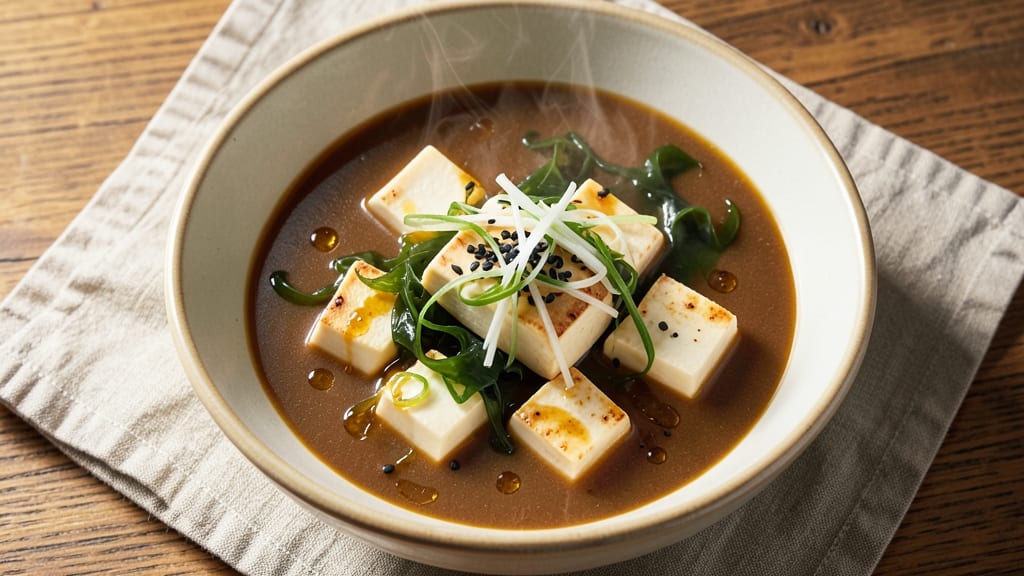
This red miso soup recipe delivers the comforting, umami-packed essence of traditional Japanese home cooking in every silky sip. The secret lies in balancing fermented red miso paste with carefully crafted dashi broth, creating a rich yet delicate flavor profile that's both vegetarian and deeply satisfying.
I've perfected this version over years of testing, ensuring the tofu maintains its tender texture while absorbing the aromatic broth perfectly.
The foundation of great red miso soup begins with proper dashi preparation—either classic fish-based or vegetarian alternatives using kombu and shiitake. Red miso's robust flavor shines when dissolved gently into hot (not boiling) broth to preserve its complex umami notes.
Silky cubes of tofu and delicate vegetables like wakame seaweed complete the dish, offering both texture and nutritional balance.
What you'll end up with is a steaming bowl of vibrant red soup with tender tofu floating in a velvety broth that's perfectly balanced between salty-sweet and savory.
The aroma alone transforms any meal into something special, while the silky texture makes it equally comforting as a light lunch or cozy dinner. This is the kind of recipe that gets better with each bowl.
Serve with steamed rice for a complete meal or enjoy as-is for a nourishing vegetarian option. The beauty of this soup lies in its versatility—adapt it with seasonal vegetables or adjust the miso ratio to suit your taste preferences. Let's create this comforting classic together.
Ingredients for red miso soup
Nine ingredients transform into a bowl of umami comfort that's vegetarian and deeply satisfying.
| Ingredient | Amount | Notes |
|---|---|---|
| Red Miso Paste 🧈 | 3 tbsp | High-quality aged miso preferred |
| Vegetarian Dashi Broth 🍵 | 4 cups | Kombu and shiitake based |
| Silken Tofu 🍫 | 1 block | Firm, not soft |
| Wakame Seaweed 🌊 | 1 package | Dried, rehydrated |
| Green Onions 🧅 | 2 whole | Thinly sliced |
| Sesame Oil 🫒 | 1 tsp | Toasted for aroma |
| White Rice Vinegar 🍶 | 1 tbsp | Mild flavor preferred |
| Sugar 🍯 | 1 tsp | White or brown |
| Shiitake Mushrooms 🍄 | 4 whole | Fresh or dried |
| Garlic Cloves 🧄 | 2 cloves | Minced for dashi |
| Vegetable Oil 🫒 | 1 tbsp | For tofu cooking |
| Sea Salt 🧂 | ½ tsp | Adjust to taste |
The miso paste is the heart of this soup, so don't skimp on quality. Miso Katsu or Marukome brands are my go-tos—their aged red miso has that perfect balance of sweet and funky. For the dashi, Honten kombu sheets and dried shiitake from Trader Joe's bulk section make the best vegetarian base. If you're using dried shiitake, soak them first—they'll triple in size. The tofu? Silken tofu from the Asian market stays silky when heated, but regular firm tofu works if you cube it smaller. Just don't boil it—steam or gently simmer to keep it tender.
No miso paste? White miso plus beet powder can mimic the color, though the flavor won't be identical. Short on kombu? Dashi powder works in a pinch, but it lacks the depth. The wakame package usually comes dried—just rinse and soak for 5 minutes. No shiitake? Cremini mushrooms are a decent swap, but they won't have the same earthy flavor. The green onions can be subbed with regular onions, though they won't have that fresh bite. And if you're worried about the sesame oil overpowering, start with half and add more later.
This soup tastes even better the next day—honestly, the flavors meld into something magical. Keeps for 4-5 days in the fridge, though I usually make a fresh batch every 2 days. The tofu cubes stay silky if you store them separately in broth. Freezes beautifully for 3 months—just reheat gently. I always make extra because it disappears fast. Pair it with steamed rice and you've got a complete meal that's ready in under 30 minutes.
Why You'll Love This Recipe
- Five-Ingredient Magic: I swear by this—just miso, dashi, tofu, seaweed, and scallions. That’s it. No fancy prep, no last-minute grocery runs. The miso does all the heavy lifting, and the wakame adds that ocean-y depth without a single fishy note.
- Umami Bomb: Honestly, the first sip hits different. The red miso’s deep, caramelized richness cuts through the silken tofu’s softness while the dashi keeps it light. It’s the kind of soup that makes you pause mid-slurp—like, why didn’t I think of this sooner?
- Meal Prep MVP: Between us, this is my lazy Sunday secret. Make a big batch, and it’s your lunch for days. The flavors actually improve as it sits—more layered, more complex. Plus, reheating? Just a splash of water and a stir. No sad, watery leftovers here.
- Budget-Friendly Powerhouse: I feed my whole family for under $5. Miso lasts forever, dashi is cheap (or make your own with kombu), and tofu stretches like a champ. Wakame’s a splurge, sure, but a little goes a long way. This is the kind of recipe that makes frugal eating feel fancy.
Step-by-step instructions for red miso soup
Here's how to craft a velvety miso soup where every ingredient shines—simple steps, bold flavors.
Prepare the Silken Tofu Cubes
Drain and pat the 1 block silken tofu completely dry with paper towels. This prevents the cubes from turning mushy in the hot broth. Using a sharp knife, cut the tofu into 1-inch cubes—about 12 pieces total. Transfer them to a small bowl and gently toss with 1 tablespoon vegetable oil and 0.5 teaspoon sea salt. This light coating helps them hold their shape while absorbing just enough flavor to complement the broth.
Here's the thing—don't skip the salting. The tofu needs that initial seasoning to balance the umami depth later. Set the seasoned tofu aside while you prep the rest of the ingredients. If you're using dried wakame seaweed, now's the time to rehydrate it: place the package in a heatproof bowl and cover with hot water for 5 minutes. The wakame will plump up and soften, ready to add texture to your soup.
Build the Umami-Packed Broth
In a medium saucepan, combine the 4 cups vegetarian dashi broth with the rehydrated wakame seaweed (drained). Bring to a gentle simmer over medium heat—you're not boiling, just creating a gentle dance of flavors. Once simmering, add the 4 whole shiitake mushrooms (stems removed, caps sliced) and the 2 cloves minced garlic. Let them cook for 5 minutes until the mushrooms soften slightly and release their earthy aroma into the broth.
This is where the magic starts. The shiitake mushrooms and garlic infuse the broth with deep, savory notes that pair perfectly with the miso. After 5 minutes, remove the mushrooms and garlic with a slotted spoon—you want the flavor, not the texture. Stir in the 3 tablespoons red miso paste, dissolving it completely into the broth. The miso should blend smoothly, creating a rich, reddish hue. If you notice any clumps, whisk vigorously to ensure an even consistency throughout.
Finish with Bright, Balanced Flavors
Return the pan to low heat and add the 1 tablespoon white rice vinegar and 1 teaspoon sugar. Let the soup simmer gently for 2 minutes—just enough time for the vinegar to brighten the broth and the sugar to round out any sharpness. Taste and adjust the seasoning if needed; you might want to add a pinch more sea salt or a splash of vinegar to balance the umami.
Here's the moment that matters: add the prepared tofu cubes and the 2 whole green onions (thinly sliced). Let the soup simmer for an additional 3 minutes on low heat. The tofu will warm through while absorbing the surrounding flavors, and the green onions will soften just enough to add a fresh contrast. Turn off the heat and let the soup sit for 2 minutes before serving—this resting period allows all the components to meld together perfectly.
Serve with Toasted Sesame Oil
Ladle the steaming red miso soup into bowls, making sure each serving gets a generous portion of tofu and green onions. Just before serving, drizzle each bowl with ¼ teaspoon sesame oil. The toasted aroma of the sesame oil will rise from the soup, adding a final layer of complexity that ties everything together.
This soup is all about balance—salty, sweet, umami, and fresh all in one bowl. Serve immediately while the tofu is still silky and the broth is steaming hot. The contrast between the warm soup and the cool, toasted sesame oil is what makes this dish truly special. Don't forget to pair it with steamed rice to soak up every last drop of that flavorful broth!
Pro Tips For Making Red Miso Soup
- STIR GENTLY AFTER DISSOLVING: Red miso paste is stubborn—once you dissolve it in warm broth (not boiling), give it a slow, deliberate stir with a wooden spoon. The goal is to break up clumps without turning the soup into a pastey mess. I used to blast it with heat, and it’d cling to the bottom like glue. Warm broth first, then stir like you’re painting a fence.
- SOAK WAKAME 10 MINUTES: Don’t toss dried wakame straight into the pot—it’ll turn to mush. Soak it in cold water for 10 minutes first, then drain and add it to the broth. This keeps the texture chewy, not slimy. I learned this the hard way after serving a bowl where the seaweed had the consistency of overcooked spaghetti.
- DICE TOFU SMALLER THAN YOU THINK: Cut silken tofu into ½-inch cubes, not golf-ball-sized chunks. Smaller pieces cook faster and absorb the miso flavor more evenly. I used to leave them big, and they’d sit there like rubbery islands in a sea of soup. Trust me, your mouth will thank you.
- SALT THE DASHI FIRST: If your vegetarian dashi broth isn’t already seasoned, add a pinch of salt (about ¼ teaspoon) before you mix in the miso. Red miso is salty enough on its own, and you’ll end up with a soup that tastes like a salt lick if you skip this. I know, it’s an extra step, but it makes a real difference.
Make-ahead tips for this recipe
Broth Prep Ahead
Make your dashi base the night before—it's the flavor foundation of this soup. Simmer 4 cups of kombu-infused water with 2 dried shiitake mushrooms (soaked) and 2 garlic cloves for 10 minutes, then strain and store in the fridge.
This concentrated broth will deepen in flavor overnight, giving your miso soup an extra umami punch. I like to double the batch and freeze half for future use. 🌡️
Tofu Pre-Cooking
Prevent soggy tofu by pre-cooking the cubes before assembling the soup. Simmer 1-inch tofu cubes in ½ cup broth for 3 minutes, then drain and set aside. This step ensures they stay silky even after reheating.
Store pre-cooked tofu in an airtight container with a splash of broth to maintain moisture. I often prep these a day ahead—they reheat beautifully in the soup.
Miso Paste Storage
Keep your red miso paste in the fridge after opening, stored in its original container or an airtight jar. The paste will last 6 months this way, maintaining its vibrant color and complex flavor.
For make-ahead soups, dissolve the miso in ¼ cup hot broth (not boiling) and store this mixture separately. When ready to serve, simply reheat and combine with the rest of the soup. This trick preserves the miso's delicate texture and prevents clumping. 🧈
Complete Soup Assembly
Assemble the soup completely up to the final step (adding sesame oil) and store in the fridge for up to 4 days. The flavors actually improve as the ingredients meld together. When reheating, warm over low heat for 5-7 minutes, stirring occasionally.
Add a splash of water if the broth thickens too much. The tofu will stay tender if you reheat gently—never microwave directly from the fridge.
Freezer-Friendly Packaging
For long-term storage, freeze the soup in portioned glass containers (leave 1-inch headspace for expansion). Thaw overnight in the fridge, then reheat on the stovetop. The texture remains silky if you avoid boiling.
I like to freeze individual servings—just grab one when you need a quick, comforting meal. The wakame and tofu hold up surprisingly well in the freezer when packaged properly. ❄️
Reheating Perfection
For the best results, reheat the soup in a saucepan over medium-low heat until steaming (about 8-10 minutes). Add 1-2 tablespoons of water or broth if needed to restore the proper consistency.
Freshly toasted sesame oil should be added just before serving—it loses its aroma when heated. The final drizzle is what elevates this soup from good to restaurant-quality at home. 💫
Nutrition facts
Frequently asked questions
Why does red miso soup have a different color than white miso soup?
Red miso gets its vibrant hue from fermented barley and sometimes red beans, giving it a deeper, richer color than white miso. The fermentation process also creates a more complex, slightly sweeter flavor profile that pairs beautifully with tofu and vegetables. The color fades slightly when dissolved in broth, but it still maintains that signature reddish tint.
Can I make this soup without tofu?
For a vegetarian version, try thinly sliced mushrooms or shiitake stems. If you want a lighter option, add more wakame seaweed or spinach. For a heartier texture, substitute with thinly sliced daikon radish or even small noodles. The broth will still be the star, so focus on balancing the flavors.
What's the best way to adjust the flavor if my miso soup tastes too salty?
Start by adding a splash of white rice vinegar (1 tsp) to brighten the flavor. If it's still too strong, dilute with ½ cup hot water or broth and simmer for 2 minutes. For a sweeter note, stir in ½ tsp sugar or a pinch of mirin. The key is balancing the umami with acidity or sweetness to create harmony.
Is red miso soup gluten-free?
Most red miso pastes contain barley, which has gluten, so it's not naturally gluten-free. However, some brands offer gluten-free red miso made with rice instead. Always check the label! For a completely gluten-free version, use a rice-based miso paste and ensure your dashi broth (like kombu-based) is also gluten-free.
How do I prevent the miso from clumping when adding it to the broth?
First, dissolve the miso in ¼ cup hot (not boiling) broth before adding it to the pot. This ensures it blends smoothly. Also, whisk vigorously while adding it to the simmering broth—this breaks up any potential lumps. If clumps form, strain the broth through a fine-mesh sieve for a silky texture.