
Soups & Stews
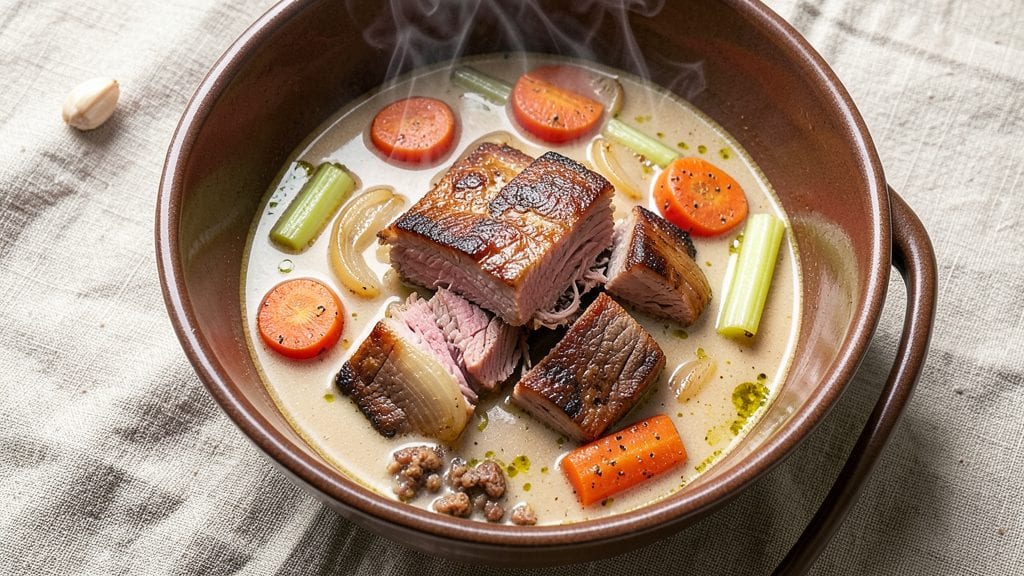
Transforming tough rib roast into a velvety, flavor-packed soup is one of the most rewarding cooking techniques you'll master. This recipe extracts every ounce of meaty richness from the bone-in ribs, creating a soup so deeply satisfying it becomes the centerpiece of any meal.
The slow simmering process transforms simple ingredients into something restaurant-worthy, with a broth so rich it practically melts in your mouth.
What sets this rib roast soup apart is the method—starting with a proper sear to develop deep flavors before simmering for hours.
This isn't just another beef soup; it's a labor of love that rewards patience with layers of umami and tender meat that falls apart at the touch of a spoon.
The key lies in proper preparation: par-cooking the ribs to render fat and extract collagen before completing the soup with aromatic vegetables and herbs.
By the time you serve this soup, you'll have a steaming bowl of golden broth filled with tender rib meat, caramelized vegetables, and herbs that add freshness to every spoonful. The texture is perfect—creamy yet not heavy, with meat that practically dissolves on your tongue.
This is comfort food at its finest, the kind that warms you from the inside out on chilly evenings.
The beauty of this recipe lies in its versatility—serve it as a main course with crusty bread or as a hearty appetizer for gatherings. The leftovers only get better as flavors meld further, making it ideal for meal prep.
Let's create this soul-warming masterpiece that will have everyone asking for seconds.
Ingredients for rib roast soup
Six aromatic ingredients transform tough ribs into restaurant-quality soup.
| Ingredient | Amount | Notes |
|---|---|---|
| Bone-In Beef Rib Roast 🥩 | 3 lb | With bone, cut into chunks |
| Yellow Onions 🧅 | 2 whole | Medium size, chopped |
| Carrots 🥕 | 4 medium | Peeled, cut into chunks |
| Celery Stalks 🌿 | 4 whole | Cut into 1-inch pieces |
| Garlic Cloves 🧄 | 6 cloves | Peeled, smashed |
| Tomato Paste 🍅 | ½ cup | High quality, no sugar added |
| Beef Broth 💧 | 6 cups | Low sodium preferred |
| Red Wine 🍷 | 1 cup | Dry, like Cabernet |
| Fresh Thyme 🌿 | 2 tbsp | Leaves only, chopped |
| Fresh Rosemary 🌿 | 1 tbsp | Chopped, stems removed |
| Bay Leaves 🍃 | 2 whole | Dried, standard size |
| Salt 🧂 | 1 ½ tsp | Kosher or sea salt |
| Black Peppercorns 🌶️ | 1 tsp | Freshly cracked |
| Crusty Bread 🍞 | 1 loaf | For serving, optional |
| Extra-Virgin Olive Oil 🫒 | ¼ cup | For searing meat |
The rib roast is non-negotiable here—look for cuts with good marbling and visible bone. Costco or local butchers often have the best prices for bone-in roasts. If your grocery store doesn't carry beef ribs, ask the meat department to cut them for you. The bone adds incredible depth to the broth, so don't skip it. For the vegetables, freshness matters—bright yellow onions and crisp celery caramelize beautifully. I always grab extra carrots because they soften perfectly and add natural sweetness to balance the richness of the meat.
No red wine? Beef broth with a splash of balsamic vinegar works just as well. Fresh thyme and rosemary can be swapped for dried at one-third the amount, but the flavor won't be quite as vibrant. The tomato paste is worth investing in a quality jar—Mutti or Barilla brands are my go-tos. For the beef broth, low-sodium options give you more control over seasoning. If you're using pre-chopped vegetables, give them a quick rinse to remove any excess moisture that could dilute your broth. The celery should be crisp, not limp—it's the backbone of your flavor base.
This soup tastes even better the next day as flavors meld together. Store in the fridge for up to 5 days or freeze portions for 3 months. I like to portion it into containers with a slice of crusty bread on the side for easy lunches. The broth thickens as it cools, so add a splash of warm water when reheating. For extra richness, stir in a pat of butter or a dollop of crème fraîche before serving—trust me, it's worth the extra minute.
Why You'll Love This Recipe
- Here’s what sold me: I can buy a whole rib roast, roast half for Sunday dinner, then use the bones for this soup. The rest of the meat? Perfect for sandwiches or tacos. It’s like getting two meals out of one purchase—without breaking the bank or spending hours in the kitchen.
- One-Pot Magic: I swear by this—just toss in the rib roast bones (yes, those leftover ones from your last roast) with onions, carrots, and celery, then let the pot do the work. No chopping like a fine chef, no fancy techniques—just simmer until the flavors meld into something rich and effortless.
- Deep Umami Bomb: That bone-in rib roast? It’s the secret weapon here. The marrow melts into the broth, turning every spoonful into a savory, velvety experience. The garlic and onions caramelize right in the pot, so you’re not just eating soup—you’re tasting a full-blown flavor party.
- Weeknight & Holiday Hero: Between us, this soup is my go-to when I’m feeding a crowd but don’t want to slave over a stove. It’s hearty enough for a winter dinner but simple enough for a lazy Tuesday. Freeze leftovers—because there will be leftovers—and reheat them for a cozy night later.
Step-by-step instructions for rib roast soup
This rich, flavorful soup delivers deep meaty taste and comforting texture—perfect for chilly days.
Sear the Rib Roast for Maximum Flavor
Heat a large Dutch oven over medium-high heat and add the 0.25 cup extra-virgin olive oil. Once hot, carefully add the 3 lb bone-in beef rib roast cut into chunks, working in batches if needed. Sear for 3-4 minutes per side until deeply browned and crispy on all sides.
This searing step is crucial—it develops a rich, caramelized crust that infuses the soup with deep flavor. Don't rush this part; the meat should release easily from the pan when ready. Transfer the seared meat to a plate and set aside temporarily.
Build the Flavor Base with Vegetables and Aromatics
In the same Dutch oven, add the 2 whole yellow onions, 4 medium carrots, and 4 whole celery stalks—all cut into chunks. Cook for 5-6 minutes until softened and beginning to caramelize. Add the 6 cloves garlic cloves and cook for another 30 seconds until fragrant.
Stir in the 0.5 cup tomato paste and cook for 1 minute to develop its rich flavor. This creates a beautiful foundation for your soup. If the vegetables stick, add a splash of beef broth to deglaze the pan and scrape up any browned bits from the bottom.
Simmer the Soup with Wine and Herbs
Pour in the 1 cup red wine and scrape up any browned bits from the bottom of the pot. Let it simmer for 2-3 minutes until the alcohol smell dissipates. Add the 6 cups beef broth, 2 tbsp fresh thyme, 1 tbsp fresh rosemary, 2 whole bay leaves, and the seared rib roast chunks.
Bring the mixture to a gentle boil, then reduce heat to low and cover partially. Let it simmer for 2-2.5 hours, skimming any foam that rises to the surface. The soup should reduce slightly, concentrating the flavors. The meat should be fork-tender and easily pull apart.
Finish and Season to Perfection
Once the meat is tender, remove the rib roast chunks and shred them with two forks, discarding any large bones. Return the shredded meat to the pot and stir in the 1.5 tsp salt and 1 tsp black peppercorns. Taste and adjust seasoning if needed—this is where you can really balance the flavors.
Simmer uncovered for another 10-15 minutes to let the flavors meld together. The soup should have a rich, velvety texture with deep meaty flavor. If it's too thick, add a bit more broth to reach your desired consistency. Serve hot with a slice of crusty bread for dipping.
Pro Tips For Making Rib Roast Soup
- Brown the Roast First: I learned this the hard way—skipping the sear means flavorless broth. Sear the rib roast in batches until deeply browned on all sides before adding liquid. The crust releases rich, meaty flavors that turn your soup from "meh" to "wow."
- Chop Veggies Unevenly: Sounds weird, but it works: cut onions, carrots, and celery into different sizes. Smaller pieces soften faster, while larger chunks add texture. No one wants a mushy soup—keep some bite, especially in the carrots.
- Simmer, Don’t Boil: After adding the roast and veggies, keep the heat low enough that you see tiny bubbles, not violent rolling. Boiling toughens the meat and burns the veggies. This isn’t a race—let it work its magic at a steady simmer.
- Strain the Broth Later: I skip this when I’m lazy, but the dish is noticeably better when I don’t. Let the soup sit for 10 minutes after cooking, then skim off the fat and strain the broth after adding it back to the pot. The veggies add depth—just remove them before serving.
Regional styles of this rib roast soup
French Beef Bourguignon Style
Transform this rib roast soup into a French-inspired beef bourguignon by adding 8 oz mushrooms (cremini or button) sautéed in butter before the wine step.
Use 1 bottle (750ml) dry red wine instead of just 1 cup, and add 1 pearl onion and 2 oz bacon (diced and cooked first) for classic French depth. The long simmer time (3+ hours) creates a luxurious, wine-braised texture that's perfect for cold winter nights. 🍷
Italian Osso Buco-Inspired
For an Italian twist, add 1 cup whole milk or heavy cream at the end for a velvety finish, along with 1 tsp dried sage and ½ cup white wine instead of red. Use gremolata (lemon zest, garlic, parsley) as a garnish.
The Italians often serve this with risotto or polenta to soak up the rich broth. This version keeps the deep meat flavor while adding creamy Italian comfort.
German Rouladen-Inspired
Create a German-style version by wrapping each rib roast chunk in thinly sliced pickles and mustard before searing, then adding 2 tbsp caraway seeds and 1 cup dark beer (like a bock or doppelbock) instead of wine.
The pickles add a tangy crunch, while the beer deepens the broth's maltiness. Serve with pretzel bread or sauerkraut on the side for an authentic German meal experience. 🍺
Spanish Cocido Style
For a Spanish-inspired adaptation, add 1 chorizo sausage (sliced) and 1 cup chickpeas during the simmering phase. Use 1 cup white wine and add 1 tsp smoked paprika for warmth.
The Spanish often serve this with orange slices garnish to cut through the richness. This version becomes a hearty one-pot meal with protein-packed chickpeas and smoky chorizo. 🍊
American Pot Roast Twist
Make this a classic American pot roast soup by adding 2 potatoes (peeled and cubed) and 1 cup frozen peas in the last 30 minutes of cooking. Use 1 cup apple cider instead of wine for a sweeter, more approachable flavor.
Top with crispy fried onions and serve with cornbread for a Southern-style comfort dish that's perfect for family gatherings. 🥔
Vegetarian Adaptation
For a vegetarian version, replace the rib roast with 3 lbs mushrooms (portobello or king oyster) and 1 lb extra-firm tofu (pressed and cubed). Use vegetable broth and add 1 tbsp soy sauce for umami.
The mushrooms provide a meaty texture, while the tofu adds protein. Garnish with fresh parsley and serve with crusty bread for dipping. This version keeps all the comforting qualities without the meat. 🌱
Nutrition facts
Frequently asked questions
Can I use a different cut of beef instead of rib roast?
Yes, but the flavor and texture will vary. For a similar rich taste, try chuck roast or brisket—both work well with long simmering. Avoid lean cuts like sirloin, as they won't yield the same tender, flavorful result. The bone-in rib roast is ideal for extracting maximum collagen and depth.
How do I know when the meat is tender enough?
The meat should easily pull apart with a fork after 2-2.5 hours of simmering. If it's still slightly firm, continue cooking for another 30 minutes. For extra tenderness, you can also par-cook the meat for 1 hour before completing the soup. The broth should coat the back of a spoon with a velvety texture.
Can I make this soup in a slow cooker?
Brown the meat first in a skillet, then transfer everything to the slow cooker and cook on low for 8-10 hours or high for 5-6 hours. The slow cooker's gentle heat ensures tender meat and rich flavors. Just add the wine and broth at the beginning, and skip the uncovered simmer at the end.
What if my soup tastes too salty?
If the soup tastes overly salty, dilute it by adding ½ cup to 1 cup of warm water or broth and simmer for 10 minutes to let the flavors rebalance. Avoid adding more liquid too soon, as it can dilute the meat's richness. Taste as you go—this soup should be rich and savory, not briny.
How can I make this soup ahead of time?
This soup tastes even better the next day! Store it in an airtight container in the fridge for up to 5 days or freeze for 3 months. Reheat gently on the stove over medium-low heat, stirring occasionally. If it thickens too much, add a splash of warm water or broth. The flavors deepen as it sits, making it perfect for meal prep.