Soups & Stews
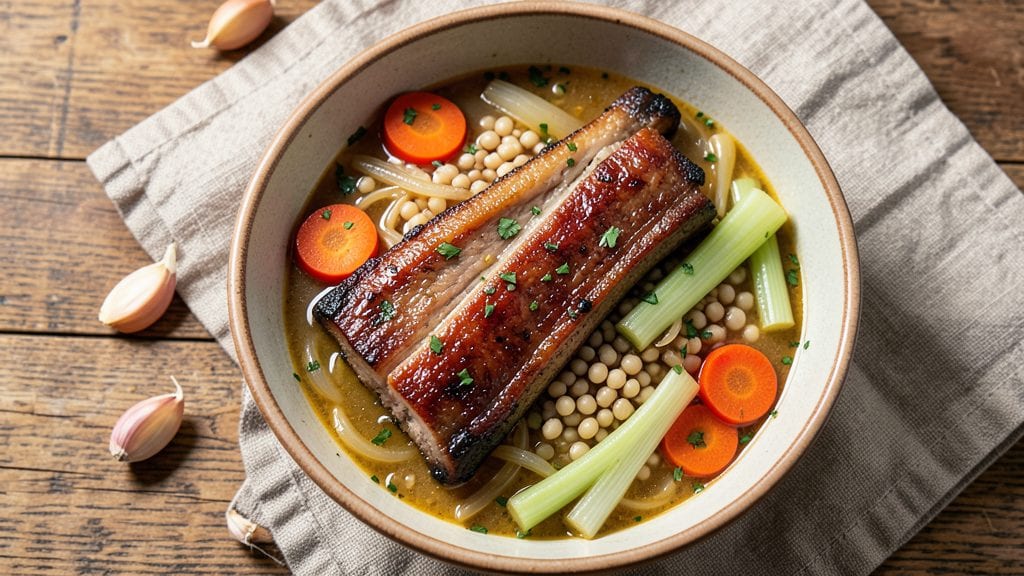
This ribs soup recipe delivers the kind of deep, hearty comfort that transforms a chilly evening into a cozy meal. The slow-braised beef ribs melt into tender perfection while barley absorbs the rich, savory broth—every spoonful is packed with warmth and tradition.
I’ve perfected this method over years of testing, balancing time-honored techniques with modern shortcuts for busy kitchens.
The secret lies in the braising process: ribs simmered low and slow until they pull apart effortlessly, releasing their collagen into the broth. Barley adds a satisfying chew and soaks up flavors like a sponge, while aromatics like bay leaves and thyme build layers of depth.
This isn’t just soup—it’s a restaurant-quality experience you can recreate at home, even on weeknights.
What you’ll end up with is a steaming bowl of velvety soup where tender beef ribs float in a golden broth, studded with plump barley grains. The aroma alone will fill your kitchen with the promise of comfort, and the first bite delivers on that warmth—rich, savory, and impossibly satisfying.
Perfect for feeding a crowd or savoring alone, this recipe is designed to impress without the fuss.
Whether you’re using a slow cooker for convenience or a Dutch oven for tradition, the method stays true to its roots while adapting to your schedule. The result is a dish that feels like a hug in a bowl—comfort redefined. Let’s get started on creating this timeless classic.
Ingredients for ribs soup
Six ingredients anchor this hearty ribs soup—beef, barley, and aromatics that build deep flavor.
| Ingredient | Amount | Notes |
|---|---|---|
| Beef Ribs 🥩 | 2 ½ lb | Bone-in, meaty cuts preferred |
| Pearl Barley 🌾 | 1 cup | Uncooked, rinsed before use |
| Yellow Onion 🧅 | 1 whole | Medium, chopped into wedges |
| Carrots 🥕 | 3 medium | Peeled, cut into 1-inch chunks |
| Garlic Cloves 🧄 | 6 cloves | Peeled, smashed lightly |
| Celery Stalks 🥬 | 3 whole | Trimmed, cut into 1-inch pieces |
| Beef Broth 💧 | 6 cups | Low-sodium preferred |
| Red Wine 🍷 | 1 cup | Dry, like Cabernet Sauvignon |
| Tomato Paste 🍅 | 2 tbsp | Smooth, no sugar added |
| Fresh Thyme 🌿 | 2 tbsp | Leaves only, chopped |
| Bay Leaves 🍃 | 2 whole | Dried, standard size |
| Olive Oil 🫒 | 2 tbsp | Extra-virgin for richness |
| Salt 🧂 | 1 ½ tsp | Kosher or sea salt |
| Black Peppercorns 🌶️ | 1 tsp | Freshly cracked |
The ribs are the star, so don’t skimp. Beef chuck ribs work best—they’re meaty and forgiving. Look for cuts with good marbling at Costco or Whole Foods—their butchers often have pre-cut rib sections. If you’re buying whole ribs, trim excess fat but leave some for flavor. The pearl barley? Bob’s Red Mill is my go-to brand—it stays firm and absorbs broth beautifully. Skip the instant barley; this is about texture. For the aromatics, fresh thyme and bay leaves make all the difference—Trader Joe’s sells affordable bundles of both.
No red wine? Substitute extra beef broth—just add an extra splash of balsamic vinegar for depth. Short on carrots? Celery root or parsnips work too, but carrots add that classic sweetness. Using dried thyme? Cut the amount in half—fresh is brighter. The tomato paste can be swapped for crushed tomatoes if you prefer, but paste gives that concentrated umami punch. For the broth, low-sodium options let you control the salt better. If you’re using a slow cooker, you can even add the ribs raw—no need to brown first, though searing adds incredible flavor if you’re stovetop-braising.
This soup tastes even better the next day—4-5 days in the fridge, no problem. Freeze for up to 3 months by portioning into containers. I like to make a double batch and freeze half immediately; just thaw overnight in the fridge before reheating. The barley thickens as it sits, so add a splash of broth when reheating if it’s too thick. Leftovers reheat beautifully—stovetop or microwave, just until steaming. The ribs will fall apart even more, releasing all that collagen goodness into the broth.
Why You'll Love This Recipe
- Minimal Chopping Required: I swear, the onions and carrots take five minutes—just rough dice, no fancy layers. The ribs? Toss them in whole or cut into chunks; no one’s judging.
- Rich, Slow-Simmered Depth: That beef ribs melt into the broth, turning tender while the pearl barley soaks up all the savory, garlicky goodness. Honestly, the first bite makes me forget it’s soup—it’s almost like stew.
- Meal-Prep Magic: Make a double batch on Sunday, and you’ve got lunch for three days. The barley keeps it hearty, and the flavors only get better as it sits—perfect for busy mornings or post-work cravings.
- Budget-Friendly Luxury: Ribs aren’t cheap, but this recipe stretches them far—the barley and veggies bulk it up without breaking the bank. Leftovers? Even better the next day, especially with a sprinkle of fresh parsley.
Step-by-step instructions for slow-braised beef and barley comfort
This rich, hearty ribs soup delivers deep flavor and satisfying texture with minimal effort.
Sear the Beef Ribs for Maximum Flavor
Heat a large Dutch oven over medium-high heat until hot. Add the 2 tablespoons olive oil and swirl to coat the bottom. Place the 2.5 lb beef ribs in the pot, bone-side down, and let them sear undisturbed for 5-6 minutes until deep golden brown forms on the bone side.
Flip the ribs and sear the meaty sides for another 4-5 minutes until they develop a rich crust. You'll notice the aroma becoming intense—this is where the foundation of your soup's flavor begins. Once browned, remove the ribs and set them aside on a plate.
Build the Flavor Base with Aromatics
In the same Dutch oven, add 2 tablespoons olive oil if needed and reduce heat to medium. Add the chopped 1 whole yellow onion, 3 medium carrots, and 3 whole celery stalks, stirring occasionally for 5 minutes until softened.
Add the 6 cloves garlic cloves and 2 tablespoons fresh thyme, cooking for 1 minute until fragrant. Stir in the 2 tablespoons tomato paste and cook for 2 minutes until it darkens slightly. This step creates the rich, complex flavor that makes this soup so comforting.
Deglaze and Simmer the Soup
Pour in the 1 cup red wine, scraping up any browned bits from the bottom of the pot with a wooden spoon. Let it simmer for 3 minutes until reduced by half. Add the 6 cups beef broth, 2 whole bay leaves, 1.5 teaspoons salt, and 1 teaspoon black peppercorns, bringing to a gentle boil.
Return the beef ribs to the pot, bone-side up, and reduce heat to low. Cover and let it simmer for 2 hours, stirring occasionally. This slow cooking time ensures the ribs become fork-tender while infusing the broth with their rich flavor.
Cook the Barley and Finish
After the ribs have cooked for 2 hours, add the 1 cup pearl barley to the pot. Stir gently to distribute it evenly throughout the broth. Continue simmering, uncovered, for another 30-40 minutes until the barley is tender and the soup has thickened slightly.
Taste and adjust seasoning if needed. The barley should be tender but still have a slight bite. Remove the ribs and let them cool slightly before slicing them into bite-sized pieces. Return the sliced ribs to the pot and stir to combine. Serve hot with crusty bread for dipping.
Pro Tips For Making Ribs Soup
- BLANCH THE BARLEY: Pearl barley’s got a stubborn outer layer that refuses to soften unless you trick it first. Boil it for 10 minutes alone in salted water, then drain—this cuts cooking time later by 30 minutes and keeps it from turning mushy. (Yes, I know it’s an extra step, but your soup will thank you.)
- SEAR RIBS IN BATCHES: You can’t rush this—crowd the pan and they’ll steam instead of brown. Work in two batches over medium-high heat, 4-5 minutes per side, until deep caramel forms. That crust is what carries flavor through hours of simmering. (I learned this the hard way when my first batch tasted bland.)
- CHOP ONIONS SMALL: Big chunks of onion turn to mush in soup. Dice them into ¼-inch pieces so they dissolve evenly without leaving gritty bits. Same goes for carrots—julienne them thin or they’ll turn to paste. (Your blender won’t be your friend here.)
- SIMMER LOW AND LONG: Ribs need 2-3 hours at a bare simmer (tiny bubbles, just breaking the surface) to fall off the bone. Skim foam off the top every 30 minutes, or it’ll make the broth cloudy. Patience here separates good soup from great. (I used to walk away after an hour—don’t be that cook.)
Serving suggestions for leftovers
Bread Pairings
Crusty sourdough is my go-to for dipping—its airy texture soaks up the rich broth beautifully. Look for a baguette-style loaf from your local bakery or a French-style bread at Whole Foods.
Warm it in the oven for 5 minutes at 350°F to enhance its crispness. For a heartier option, try rustic whole grain or chewy focaccia—both add satisfying texture contrasts. 🥖
Toppings and Garnishes
Finish each bowl with a sprinkle of fresh parsley or chives for brightness. A drizzle of high-quality olive oil (like California Olive Ranch) adds richness, while a pinch of crushed red pepper flakes gives subtle heat.
For extra indulgence, top with grated Parmesan cheese or crumbled feta—just 1 tablespoon per bowl elevates the dish. I also love a dollop of sour cream for creaminess.
Side Dish Pairings
A simple green salad with a tangy vinaigrette balances the soup’s richness. Toss mixed greens with shaved fennel, cherry tomatoes, and a lemon-olive oil dressing.
For a heartier option, serve with roasted Brussels sprouts—tossed in 1 tablespoon maple syrup and ½ teaspoon smoked paprika before roasting at 400°F for 20 minutes. The caramelized edges complement the soup’s depth.
Presentation Tips
Serve the soup in deep, warm bowls to retain heat and aroma. Ladle the broth over the ribs and barley for an inviting presentation. Garnish with a sprig of fresh thyme or a bay leaf for a touch of elegance.
For a rustic touch, place a slice of bread on the rim of the bowl or alongside. I often use stoneware bowls from Le Creuset—they keep the soup warm and look stunning on the table.
Family-Style Serving
This soup shines when served family-style in a large pot or Dutch oven at the center of the table. Use a ladle with a long handle (like OXO Good Grips) to serve everyone directly from the pot.
Add a basket of extra bread and a bowl of toppings for customization. For a cozy touch, set the table with checkered cloth napkins and candles**—the warm glow makes the meal feel even more inviting. 🕯️
Nutrition facts
Frequently asked questions
Can I use pork or lamb ribs instead of beef?
Pork ribs (like baby back or spare ribs) work beautifully—they cook faster (1.5 hours instead of 2 hours) and stay tender. For lamb ribs, increase simmering time to 2.5 hours and reduce wine to ½ cup to balance richness. Just adjust seasoning—lamb benefits from extra garlic and cumin.
What if I don’t have red wine? Can I substitute?
Yes! Use 1 cup beef broth + 1 tablespoon balsamic vinegar for depth, or swap for ½ cup apple cider vinegar + ½ cup broth. For umami, add 1 teaspoon soy sauce (omit salt adjustment). Avoid sweet wines—they’ll overpower the ribs' savory notes.
Why did my barley turn mushy?
Overcooking is the most common cause. Pearl barley should simmer 30-40 minutes—check for tenderness at 25 minutes first. If using instant barley, reduce time to 15 minutes. For extra insurance, rinse barley before adding and stir occasionally to prevent sticking. Pro tip: Undercook slightly—it plumps up more when reheated.
Can I make this in a slow cooker?
Perfect for hands-off cooking! Brown ribs first, then add all ingredients (except barley) to the slow cooker. Cook on Low 6-7 hours or High 3-4 hours. Stir in barley during the last 30 minutes. The broth may be thinner—reduce it uncovered on the stovetop for 10 minutes after transferring if needed.
How do I store and reheat leftovers?
Store in an airtight container for 4-5 days in the fridge or freeze for 3 months. Reheat gently on the stovetop over medium-low heat, stirring occasionally, until steaming (10-15 minutes). Add a splash of broth if it thickens too much. Microwave in 1-minute intervals, stirring between, to avoid rubbery barley.