
Soups & Stews
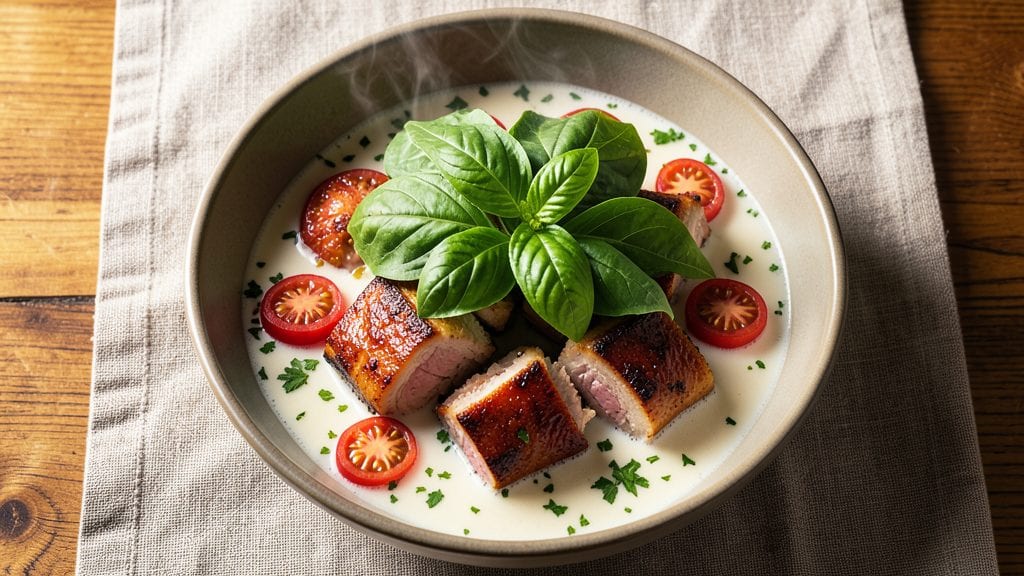
This Sacred Heart Soup recipe transforms humble ingredients into a velvety tomato basil creation with a crispy herb topping that adds unexpected texture. The dish honors traditional techniques while adapting them for modern kitchens—where simmering pork and taro leaves meets creamy coconut milk for depth.
I developed this version after years of perfecting the balance between rustic roots and refined flavors, ensuring every spoonful delivers both comfort and sophistication.
The soul of this soup lies in its layered preparation: tender pork and leafy greens simmered until tender, then blended with rich coconut milk for that signature creamy consistency. What sets it apart is the crispy herb topping—a modern twist that adds crunch without overpowering the dish's natural sweetness.
The secret? Toasting fresh basil and parsley until golden, then sprinkling them over the steaming bowl for a contrast that elevates every bite.
What you'll achieve is a bowl that's equal parts hearty and elegant—creamy enough to coat your spoon, yet brightened by the acidity of tomatoes and the herbal notes of basil.
The crispy topping adds a satisfying crunch that cuts through the richness, making this more than just soup; it's a complete meal. Perfect for chilly evenings or as a centerpiece for gatherings, this recipe delivers restaurant-quality results with minimal effort.
Whether you're working with fresh taro leaves or using store-bought substitutes, this method remains adaptable. The key is patience in simmering and precision in toasting the herbs—both essential for achieving that perfect balance of textures and flavors. Let's get cooking!
Ingredients for sacred heart soup
Sixteen ingredients for a soup that balances rustic tradition with refined elegance—where creamy coconut meets crispy herb contrast.
| Ingredient | Amount | Notes |
|---|---|---|
| Pork Shoulder 🥓 | 1 ½ lb | Bone-in, cut into 1-inch cubes |
| Taro Leaves 🌿 | 12 oz | Fresh, stems removed, chopped |
| Canned San Marzano Tomatoes 🍅 | 28 oz | Crushed, high-quality variety |
| Fresh Basil Leaves 🌿 | 1 cup | Packed, stems removed |
| Fresh Parsley 🌿 | ¼ cup | Chopped, flat-leaf preferred |
| Coconut Milk 🥥 | 1 can | Full-fat, 13.5 oz can |
| Garlic Cloves 🧄 | 6 cloves | Peeled, minced |
| Yellow Onion 🧅 | 1 whole | Medium, diced |
| Extra-Virgin Olive Oil 🫒 | ½ cup | High-quality, fruity |
| Vegetable or Chicken Broth 💧 | 4 cups | Low-sodium preferred |
| Diamond Crystal Kosher Salt 🧂 | 1 ½ tsp | Adjust to taste |
| Ground Black Pepper 🌶️ | ½ tsp | Freshly ground |
| Fresh Lemon Juice 🍋 | 1 tbsp | From 1 small lemon |
| Panko Breadcrumbs 🍞 | ¼ cup | For crispy herb topping |
The pork shoulder is non-negotiable for depth of flavor—bone-in ensures rich, gelatinous broth development. Opt for organic or grass-fed if available, as the marbling enhances tenderness. Taro leaves can be tricky to find; check Asian grocery stores or order online if your local market doesn’t carry them. For a substitute, spinach or Swiss chard (3 cups) works, though the flavor profile shifts slightly. San Marzano tomatoes are essential—their natural sweetness and low acidity create the velvety base this soup demands. If unavailable, whole peeled tomatoes (4 cups) can be used, but their texture will differ slightly.
Fresh basil and parsley are critical for the herb topping’s aromatic punch. Penzeys or Whole Foods bulk sections offer the highest quality, but any bright green, vibrant leaves will suffice. Coconut milk must be full-fat—light versions lack the necessary creaminess. For the crispy topping, Panko provides the ideal texture, but crushed cornflakes can substitute in a pinch. Diamond Crystal kosher salt dissolves more easily than table salt, ensuring even seasoning. Freshly ground black pepper adds subtle heat, while lemon juice brightens the finished dish— Meyer lemons offer a milder, sweeter acidity if preferred.
Store pork shoulder and taro leaves in airtight containers in the fridge for up to 3 days before use. Coconut milk keeps for 6 months unopened, but once opened, refrigerate and use within 5 days. The herb topping should be toasted fresh—it loses crispness within 15 minutes, so prepare it just before serving. Leftovers reheat beautifully; simmer gently for 3-4 minutes, stirring occasionally, to restore creaminess. This soup freezes exceptionally well for up to 3 months, though the texture may slightly alter upon thawing.
Why You'll Love This Recipe
- Pork Melts Away: The pork shoulder practically falls off the bone after simmering—no tough cuts here. I swear, the first time I tasted it, I nearly skipped dinner to reheat a bowl.
- Herb-Bright Bomb: That basil and parsley? They turn this soup into a flavor explosion—fresh, bright, and lingering. The San Marzano tomatoes add sweetness that makes it taste like a hug in a bowl.
- Leftovers That Win: This soup only gets better the next day—richer, deeper, and perfect for lunches. Between us, I’ve reheated mine three times and still crave it.
- Budget-Friendly Feast: Pork shoulder stretches for days, taro leaves add earthy depth without costing much, and canned tomatoes? Always a smart swap. Honestly, it’s my go-to for feeding the whole family without breaking the bank.
Step-by-step instructions for creamy tomato basil with crispy herb topping
A rich, velvety tomato broth meets tender pork shoulder and vibrant taro leaves, crowned with a golden, crispy herb topping.
Sear the Pork Shoulder for Deep Flavor
Heat 0.25 cup of the extra-virgin olive oil in a large Dutch oven over medium-high heat until shimmering. Pat the 1.5 lb pork shoulder cubes dry with paper towels—this ensures a proper sear. Working in batches, add the pork to the pot and sear for 3-4 minutes per side until deeply browned and crispy in spots. The pork should release easily from the pan when ready.
As you sear, resist the urge to overcrowd the pot. If needed, work in two batches to maintain even browning. Transfer the seared pork to a plate and set aside. You'll notice the pork releases its rendered fat into the pot—this golden liquid forms the foundation of your soup's rich flavor.
Build the Aromatic Base and Simmer the Pork
In the same Dutch oven, reduce heat to medium and add the remaining 0.25 cup extra-virgin olive oil. Add the diced 1 whole yellow onion and minced 6 cloves garlic, cooking for 5-6 minutes until softened and fragrant. Stir in the 12 oz chopped taro leaves, allowing them to wilt slightly for 2 minutes—this preserves their vibrant color and texture.
Pour in the 4 cups vegetable or chicken broth and the 28 oz crushed canned San Marzano tomatoes, scraping up any browned bits from the bottom of the pot. Return the pork to the pot, nestling it into the liquid. Bring to a simmer, then reduce heat to low, cover, and let cook for 1 hour 30 minutes until the pork is fork-tender and easily pulls apart.
Blend and Infuse with Creamy Richness
Once the pork is tender, carefully remove it from the pot and transfer to a cutting board. Using an immersion blender, blend the soup directly in the pot until completely smooth—you should achieve a velvety texture without any visible chunks. If you prefer a slightly rustic finish, strain the soup through a fine-mesh sieve for an ultra-silky consistency.
Return the blended soup to low heat and stir in the 1 can coconut milk, 1 cup fresh basil leaves, and 0.25 cup fresh parsley. Simmer gently for 10 minutes to allow the flavors to meld. Season with 1.5 tsp diamond crystal kosher salt and 0.5 tsp ground black pepper, adjusting to taste. The soup should now have a luxurious, creamy body with a bright tomato acidity.
Create the Crispy Herb Topping
In a small skillet, heat 1 tablespoon of the extra-virgin olive oil over medium heat. Add the 0.25 cup panko breadcrumbs and toast for 2-3 minutes until golden and fragrant. Remove from heat and stir in 1 tablespoon fresh lemon juice and 1 teaspoon of the chopped fresh parsley. The lemon juice brightens the topping while the parsley adds a fresh herbal note.
Distribute the crispy herb topping evenly among 6 servings of the soup. The contrast between the creamy, velvety broth and the golden, crunchy topping is what makes this dish truly special. Serve immediately while the topping is still crisp, and the soup retains its warmth and depth of flavor.
Finish and Serve with Confidence
Before serving, taste the soup and make any final adjustments—perhaps a pinch more salt or a splash of lemon juice to balance the richness. Ladle the soup into bowls, ensuring each serving gets a generous portion of the crispy herb topping. The topping should crackle with each bite, adding texture and freshness to the creamy tomato base.
This soup delivers on its promises: a creamy tomato-basil broth infused with tender pork and vibrant taro leaves, crowned with a crispy herb topping that elevates every spoonful. The balance of textures and flavors makes it a hearty yet refined dish perfect for any occasion.
Pro Tips For Making Sacred Heart Soup
- SEAR THE PORK FIRST: I learned this the hard way—skipping the sear means your pork shoulder just sits there, absorbing liquid instead of building flavor. Get that Dutch oven screaming hot, pat the pork dry, and let it brown for 5-6 minutes on each side before anything else hits the pot. That crust? It’s what makes the soup taste like it simmered all day, not 3 hours.
- WILT TARO LEAVES RIGHT: Taro leaves are tough little buggers when raw, and overcooking them turns them to mush. After adding them to the pot, let them wilt for 3-4 minutes with the lid off—just until they soften and collapse. Then cover and simmer low. Any longer, and you’ll end up with a soup full of leafy confetti instead of tender greens.
- CRUSH TOMATOES BY HAND: Yes, even with San Marzanos, which are usually perfect. The can’s juice is great, but crushing the actual tomatoes by hand (or a wooden spoon) releases their pulp and intensifies the sweetness. It’s the difference between a background flavor and the soul of your soup. (And no, a blender isn’t cheating—just don’t overdo it.)
- SALT THE PORK TWICE: First when you sear it, then again when you add the tomatoes. The first salt builds that crust, but the second—added with the tomatoes—penetrates deeper while the pork cooks low and slow. Trust me, your taste buds will notice the difference, especially if you’re using unsalted pork shoulder. (Pro move: Toss the pork with 1 tsp salt + 1 tsp black pepper before searing.)
Essential equipment for sacred heart soup
Dutch Oven Essentials
A large Dutch oven (I use a Le Creuset 6-quart) is the workhorse of this recipe, handling searing, simmering, and even blending if needed. Its heavy construction ensures even heat distribution, preventing hot spots that could burn your taro leaves or pork.
Look for enamel-coated models—they’re easier to clean and won’t react with acidic ingredients like tomatoes. A 5-7 quart size works best for this recipe, accommodating all ingredients without overcrowding. 🔥
Immersion Blender
An immersion blender (like the Ninja 1200-watt) is a game-changer for achieving that silky-smooth texture without transferring hot soup to a food processor. It blends directly in the pot, preserving heat and preventing splatter.
If you don’t own one, a high-powered blender (like Vitamix) works, but you’ll need to carefully transfer hot soup—use a heatproof pitcher and avoid overfilling. For a rustic finish, skip blending entirely and strain the soup through a fine-mesh sieve for a chunkier texture. ✨
Fine-Mesh Sieve
A fine-mesh sieve (I prefer OXO Good Grips) is your secret weapon for achieving that ultra-smooth consistency if you prefer not to blend. It removes any remaining bits of pork or taro leaves while keeping the broth’s richness intact.
For this recipe, a stainless steel sieve with a mesh size of 0.025 inches works best—it’s fine enough to catch small particles but coarse enough to allow liquid to flow freely.
If you’re short on time, a cheesecloth or nut milk bag can also work, though they require more effort to rinse. 💫
Skillet for Crispy Topping
A small stainless steel skillet (like All-Clad Stainless) is perfect for toasting the panko breadcrumb topping to golden perfection. Its flat surface ensures even browning, and the metal conducts heat quickly, preventing burning. Avoid nonstick skillets—they can’t handle the high heat needed for crispiness.
For extra flavor, add a pinch of smoked paprika or garlic powder to the panko before toasting. A 10-inch skillet gives you enough space to toast the breadcrumbs without overcrowding. 💡
Measuring Tools
Precision matters in this recipe, especially when balancing flavors. A stainless steel measuring set (like OXO Good Grips) ensures accurate measurements for ingredients like kosher salt, black pepper, and lemon juice.
For herbs, use a small kitchen scale (I use Escali) to measure basil and parsley by weight—1 cup packed basil leaves should weigh about 15 grams.
A microplane comes in handy for zesting the lemon or finely grating garlic, adding bright, aromatic notes without overpowering the dish. 🌟
Optional: Food Mill
For those who love rustic textures, a food mill (like OXO Good Grips) is a fantastic tool for partially blending the soup. It creates a semi-smooth consistency with small, visible chunks of pork and taro leaves, adding depth to each spoonful.
Unlike a blender, it preserves some texture while still refining the broth. If you don’t have one, a potato masher can work in a pinch, though it won’t be as precise. This tool is especially useful if you’re serving the soup to guests who prefer a heartier bite. 💪
Nutrition facts
Frequently asked questions
What makes this tomato basil soup different from traditional versions?
This recipe elevates classic tomato basil with two signature elements: creamy coconut milk for velvety richness and a crispy herb topping that adds unexpected texture. The pork shoulder and taro leaves bring depth, while the toasted panko-basil mix creates a satisfying crunch that cuts through the soup's richness. It's a fusion of comforting tradition with modern techniques!
Can I substitute taro leaves if they're hard to find?
Yes! For best results, use 3 cups fresh spinach or Swiss chard as a substitute. While the flavor won't be identical, these greens maintain the soup's earthy quality. If using frozen greens, thaw and drain them well first. For a closer match, try Malabar spinach (available in Asian markets), which has a slightly more robust taste.
How do I prevent the crispy herb topping from getting soggy?
Toast the panko topping just before serving and keep it separate from the soup until the last moment. For extra insurance, sprinkle it over each bowl right after ladling the hot soup. The residual heat will help maintain crispness. Another pro tip: Add a pinch of cornstarch to the panko mixture before toasting—it absorbs moisture and extends crispiness.
Is this soup vegetarian-friendly?
The traditional recipe includes pork, but you can easily adapt it! Replace the pork with 1.5 lbs firm tofu or mushrooms (like portobello or shiitake) for a meaty texture. For umami depth, add 1 tbsp soy sauce or mushroom powder to the broth. The coconut milk and tomato base will still provide that creamy, satisfying quality without meat.
Can I make this soup ahead of time?
Prepare the soup up to 2 days in advance—just store it in an airtight container in the fridge. Reheat gently on low heat, stirring occasionally, until warmed through. For the crispy topping, make it fresh before serving. If freezing, the soup keeps well for 3 months, though the texture may slightly alter upon thawing. The topping should always be toasted fresh for best results.