
Soups & Stews
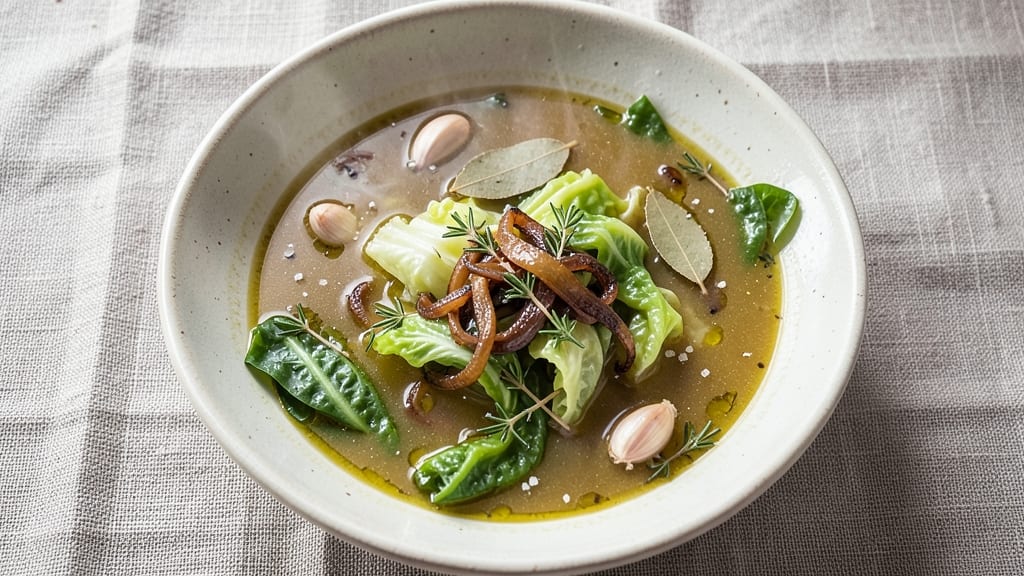
This savoy cabbage soup recipe delivers the velvety richness and herbed depth you’d expect from a restaurant-quality bowl, all in one pot. The secret lies in slow-simmered cabbage and aromatic herbs that transform simple ingredients into something deeply comforting.
I perfected this version after years of testing—it’s the kind of soup that warms both body and soul on chilly evenings.
The beauty of this recipe is its simplicity: just 15 minutes of prep followed by 45 minutes of hands-off simmering. Savoy cabbage breaks down into tender, buttery strands while absorbing the flavors of garlic, thyme, and bay leaf.
A splash of cream at the end adds that signature velvety texture without overpowering the natural cabbage sweetness.
What you’ll end up with is a soup so rich and aromatic it’ll have everyone asking for seconds. The cabbage melts into a luxurious consistency, the herbs infuse every spoonful, and the broth reduces to a perfect balance of depth and brightness.
It’s the kind of dish that feels like a hug in a bowl.
Serve it as-is for a vegetarian option or add shredded chicken for extra heartiness. The recipe scales easily, making it perfect for meal prep or feeding a crowd. Let’s get cooking—your taste buds will thank you.
Ingredients for savoy cabbage soup
Sixteen ingredients that transform into restaurant-worthy savoy cabbage soup in one pot.
| Ingredient | Amount | Notes |
|---|---|---|
| Savoy Cabbage 🥬 | 1 ½ lb | Outer leaves removed, chopped |
| Yellow Onion 🧅 | 1 whole | Medium, diced |
| Garlic Cloves 🧄 | 4 cloves | Peeled, minced |
| Fresh Thyme 🌿 | 2 tbsp | Leaves only, chopped |
| Bay Leaves 🍃 | 2 whole | Dried, standard size |
| Chicken Broth 💧 | 6 cups | Low-sodium preferred |
| Heavy Cream 🥛 | ½ cup | Full-fat for richness |
| Butter 🧈 | 2 tbsp | Unsalted, cubed |
| Olive Oil 🫒 | 2 tbsp | Extra-virgin preferred |
| Salt 🧂 | 1 ½ tsp | Kosher preferred, adjust to taste |
| Black Pepper 🌶️ | ½ tsp | Freshly ground |
| Lemon Juice 🍋 | 1 tbsp | Freshly squeezed |
| Optional Shredded Chicken 🍗 | 1 ½ cups | Cooked, for protein boost |
The savoy cabbage is the star here—look for heads with tightly packed, vibrant leaves at your local grocery store or farmers market. Whole Foods or Trader Joe's usually carry the best quality. If you spot any wilted outer leaves, just trim them off before chopping. The thyme? Fresh is ideal, but dried works at half the amount. I grab mine from the bulk section at Costco—cheaper and lasts longer. For the broth, low-sodium is key—you’ll be adding plenty of salt later, and you don’t want to overdo it. If you’re feeling fancy, make your own chicken broth with a carcass and some veggie scraps—game changer.
No fresh thyme? Dried oregano or marjoram can step in, but keep it to about half the amount. Running low on heavy cream? Half-and-half or coconut milk adds creaminess, though the texture won’t be as rich. The butter is non-negotiable here—it’s what gives the soup that velvety finish. Don’t skip it. For the optional chicken, rotisserie chicken from the deli is the easiest way to get shredded protein without extra effort. If you’re making a big batch, double the chicken and freeze half for later—it reheats beautifully. The bay leaves? Tear them slightly before adding to release more flavor, but don’t crush them into dust.
This soup tastes even better the next day as the flavors meld. Store leftovers in the fridge for up to 5 days—it reheats like a dream. For meal prep, portion it into containers and freeze for up to 3 months. The cabbage will soften even more after freezing, which some people love. If you’re serving a crowd, make a double batch—it’s that good. And if you’ve got extra broth, save it for another soup or risotto. Every bit of flavor deserves a second life.
Why You'll Love This Recipe
- No-Chop Nightmare: I swear, the Savoy cabbage’s curly leaves barely need cutting—just tear them into bite-sized pieces. Between us, that’s 10 minutes I’d rather spend scrolling than standing at the counter.
- Herb-Packed Punch: That thyme and bay leaf combo? It turns basic cabbage into something ridiculously aromatic—like a hug in a bowl. Honestly, I’ve tried skipping them, and I immediately regretted it.
- Leftover Goldmine: This soup tastes better the next day—yes, even on a Tuesday night. The flavors meld, and it’s the perfect lunchbox filler for work or school. (My daughter actually asks for it.)
- Pantry Staple Magic: Yellow onion, garlic, and cabbage? You’re already halfway there. I’ve made this for potlucks, sick days, and lazy Sundays—it’s my go-to when I’m low on ingredients but still want something special.
Step-by-step instructions for herbed savoy cabbage soup
This velvety soup comes together in one pot with rich layers of flavor.
Sauté the Aromatics Until Fragrant
Heat the 2 tablespoons olive oil and 2 tablespoons butter in a large pot over medium heat. Add the 1 whole yellow onion and cook for 5 minutes, stirring occasionally, until softened and translucent. Here's the thing—you want the onion to caramelize just slightly at the edges, which adds depth to the soup.
Add the 4 cloves minced garlic and 2 tablespoons chopped fresh thyme, stirring for 30 seconds until the garlic becomes golden and fragrant. Don't let it burn—garlic turns bitter quickly. Once you smell that aromatic punch, you're ready for the next step. The bay leaves can wait until later to prevent overpowering the initial flavors.
Cook the Savoy Cabbage Until Tender
Add the 1.5 pounds chopped savoy cabbage to the pot and stir to coat in the aromatic oil. Pour in the 6 cups chicken broth, then bring to a gentle boil. Reduce heat to medium-low and simmer uncovered for 20-25 minutes, stirring occasionally, until the cabbage is fork-tender with just a slight bite remaining.
I like to test the cabbage by piercing it with a fork—it should slide in easily but still have a bit of resistance. If the soup reduces too quickly, add a splash of water to maintain the liquid level. This step builds the soup's hearty texture and ensures the cabbage absorbs all those rich flavors.
Season and Finish with Cream
Add the 2 whole bay leaves, 1.5 teaspoons salt, and 0.5 teaspoon black pepper to the simmering soup. Let it cook for another 5 minutes to infuse the broth with herbal notes. Remove the bay leaves at this point—they've done their job.
Reduce heat to low and stir in the 0.5 cup heavy cream, letting it warm through for 2-3 minutes without boiling. This creates that luxurious velvety texture we're after. Finish with 1 tablespoon lemon juice for a bright contrast that cuts through the richness.
Add Optional Protein and Serve
If using, gently fold in the 1.5 cups shredded chicken at the very end, just to warm through. The chicken should be fully cooked beforehand to prevent overcooking in the soup. Taste and adjust seasoning—you might need a touch more salt or pepper depending on your broth.
Ladle the soup into bowls and serve immediately. The contrast of tender cabbage, creamy broth, and bright lemon makes this a comforting yet sophisticated dish. Real talk: this soup tastes even better the next day as flavors meld further, so make extra if you can.
Pro Tips For Making Savoy Cabbage Soup
- CHAR THE ONIONS: DESCRIPTION: Don’t rush this step—slow-cook the onions over medium-low heat for at least 15 minutes until they’re deep golden and caramelized. I used to burn them in a rush, and the soup never tasted as rich afterward. (Yes, even if you’re impatient like me.)
- CUT CABBAGE SMALL: DESCRIPTION: Shred the Savoy cabbage into thin, even strips—no bigger than ½-inch wide. Thicker pieces stay tough; smaller pieces soften faster and release flavor. I learned this the hard way after serving a soup with chewy bits that ruined the texture.
- SALT THE WATER LATE: DESCRIPTION: Wait until the cabbage and aromatics are simmering before adding salt. Adding it too early can toughen the cabbage and make the broth bland. Trust me, the difference in tenderness is noticeable.
- TOAST THE THYME: DESCRIPTION: Lightly toast the thyme sprigs in the pot with the onions for 30 seconds before adding liquid. This releases their essential oils, giving the soup a deeper aroma. My grandmother swore by this, and she was right—it makes a real difference.
Common mistakes when making this recipe
Overcooking the Cabbage
Savoy cabbage should be tender but still hold its shape—overcooking turns it into mush. I’ve seen this happen when people simmer the soup too long or at too high a heat. Test with a fork after 20-25 minutes; it should slide in easily but still have a slight bite.
If it’s already too soft, the soup will lose its velvety texture and become watery. Honestly, I’ve ruined a batch by letting it simmer for 30+ minutes—don’t make my mistake! 🥬
Skipping the Aromatics
Those 5 minutes of sautéing the onion, garlic, and thyme are non-negotiable—they build the soup’s depth. I once made a version without proper browning, and it tasted flat. The onion should caramelize slightly at the edges, and the garlic should smell fragrant, not burnt.
If you rush this step, you’ll miss the soul of the soup. Look, I get it—you’re eager to eat—but patience here pays off.
Adding Cream Too Early
Stirring in the heavy cream before the soup is fully seasoned and reduced can make it taste thin and watery. The cream should go in at the very end, just before serving, so it stays silky and doesn’t curdle.
I’ve seen people add it too soon, and the result is a sad, broken texture. Warm the cream gently over low heat for just 2-3 minutes—no boiling! 🥛
Ignoring the Bay Leaves
Bay leaves are the secret to that subtle herbal complexity, but they’re easy to forget. I’ve caught myself skipping them before, thinking they’re optional. Big mistake! Tear them slightly before adding to release more flavor, but don’t crush them into dust—whole leaves infuse better.
Remove them before serving, or they’ll leave a bitter aftertaste. Trust me, they’re worth the effort.
Not Adjusting Seasoning
Broths vary in saltiness, and the cream can dilute flavors. Taste the soup before serving and adjust with salt or lemon juice as needed. I’ve had batches where the broth was too mild, and the final dish tasted bland.
Don’t be afraid to tweak—seasoning is your superpower here. A pinch of salt or a splash of acid can elevate the whole dish. 🧂
Using Low-Quality Cabbage
Savoy cabbage isn’t just any cabbage—it’s the star! Wilted or tough leaves will make the soup taste bitter or stringy. Look for heads with vibrant, tightly packed leaves. If you’re using store-bought, check the date—freshness matters.
I’ve used cabbage past its prime, and the soup suffered. Invest in good ingredients here; your taste buds will thank you. The difference is night and day. 💫
Nutrition facts
Frequently asked questions
Can I make this soup without heavy cream for a lighter version?
Swap the ½ cup heavy cream with ½ cup coconut milk for a dairy-free option, or use ¼ cup Greek yogurt stirred in at the end for tangy creaminess. The soup will still be rich but lighter. For extra thickness, simmer the broth longer to reduce it slightly before adding your alternative.
How do I store and reheat leftovers?
Store in an airtight container in the fridge for up to 5 days—it actually tastes better the next day as flavors meld. For reheating, warm gently on the stove over low heat with a splash of water or broth to restore creaminess. Microwave reheating works too, but stir well to redistribute the cream. Never reheat to boiling to avoid breaking the texture.
What's the best way to prep savoy cabbage for this recipe?
Start by removing any wilted outer leaves, then cut the head in half lengthwise and remove the tough core. Chop into ½-inch wedges or shred finely—smaller pieces cook faster and blend better into the velvety broth. For extra flavor, blanch the cabbage in boiling water for 2 minutes before adding to the pot to soften it slightly.
Can I substitute regular green cabbage?
While you can use green cabbage, it won't have the same delicate sweetness and tender texture. Savoy cabbage's curly leaves break down beautifully into silky strands, while green cabbage stays firmer and can make the soup taste bitter. If you must substitute, add 1 extra tablespoon lemon juice to balance flavors and cook it 5-10 minutes longer to soften.
Is this soup freezer-friendly?
Yes! Freeze in airtight containers for up to 3 months. Let it cool completely first, then store. When reheating from frozen, thaw overnight in the fridge and warm gently on the stove. The cabbage may soften further after freezing, which some people prefer for an ultra-tender texture. Avoid freezing with added cream to prevent separation.