
Soups & Stews
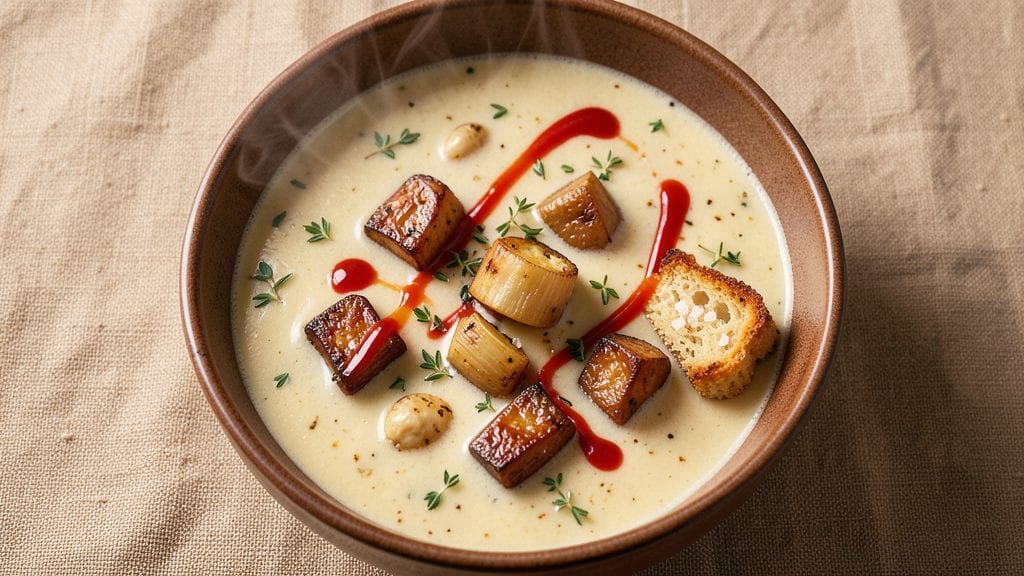
This sunchoke soup recipe transforms humble Jerusalem artichokes into a rich, nutty vegetarian masterpiece with a crispy fried topping that adds irresistible texture. The earthy sweetness of sunchokes shines through when slow-cooked with aromatic garlic and thyme, creating a velvety broth that feels both comforting and sophisticated.
What sets this apart is the crispy fried topping—golden, shatteringly thin layers that contrast perfectly with the soup's creamy depth.
The beauty of this recipe lies in its balance of simplicity and technique. You'll start with fresh sunchokes (peeled and sliced), which develop their signature nutty flavor when simmered with onions, garlic, and vegetable stock.
A touch of cream or coconut milk at the end rounds out the soup's texture, while the crispy topping comes together in minutes using leftover sunchoke slices fried to golden perfection. The result is a dish that feels restaurant-quality yet remains approachable for home cooks.
What you'll achieve is a soup with deep, earthy notes from the sunchokes, balanced by the bright aroma of garlic and herbs. The crispy topping adds a satisfying crunch that elevates every spoonful—imagine the contrast of creamy soup against those delicate, golden shards.
This recipe is perfect for chilly evenings when you crave something hearty yet refined, or as a make-ahead dish that tastes even better the next day.
Pair it with crusty bread to soak up every last drop of that velvety broth, or serve alongside a simple green salad for a complete meal. The crispy topping can be made ahead and reheated just before serving to maintain its crunch.
Let's create this soul-warming soup that proves comfort food can be elegant too.
Ingredients for sunchoke soup
Fresh sunchokes and aromatic herbs create this velvety soup with a crispy, golden topping—simple yet restaurant-worthy.
| Ingredient | Amount | Notes |
|---|---|---|
| Fresh Sunchokes (Jerusalem Artichokes) 🥔 | 2 lbs | Peeled, cut into 1-inch chunks |
| Yellow Onion 🧅 | 1 whole | Diced, medium size preferred |
| Garlic Cloves 🧄 | 4 cloves | Peeled, minced finely |
| Vegetable Stock 💧 | 4 cups | Low-sodium preferred |
| Heavy Cream 🥛 | ½ cup | Full-fat for richness |
| Fresh Thyme Leaves 🌿 | ¼ cup | Or 1 tbsp dried thyme |
| Extra-Virgin Olive Oil 🫒 | ¼ cup | For frying crispy topping |
| Salt 🧂 | 1 ½ tsp | Kosher or sea salt |
| Black Pepper 🌶️ | ½ tsp | Freshly ground preferred |
| Coconut Milk (optional) 🥥 | ¼ cup | Full-fat for creaminess |
| Breadcrumbs 🍞 | ½ cup | Panko for extra crispiness |
| Parmesan Cheese 🧀 | ¼ cup | Freshly grated, for topping |
Sunchokes are the star here, so pick firm, unblemished tubers—they should feel heavy for their size. Most grocery stores carry them in the produce section, often near potatoes. Costco or Whole Foods usually have the freshest selection, but any well-stocked supermarket works. The crispy topping relies on leftover sunchoke slices, so don't peel them all at once. For the vegetable stock, low-sodium is key—you'll be tasting it heavily. Fresh thyme makes a difference, but dried works in a pinch (use one-third the amount). The Parmesan should be freshly grated—pre-shredded gets clumpy and won't melt smoothly.
No fresh sunchokes? Substitute with parsnips or celeriac, though the flavor will differ slightly. Running low on heavy cream? Coconut milk adds richness and keeps it dairy-free. The crispy topping can be made with any breadcrumbs plus a pinch of salt, but panko gives that perfect shatter. For extra depth, toast the breadcrumbs in a dry pan for 2 minutes before frying. The garlic can be roasted (wrap whole cloves in foil, bake at 400°F for 10 minutes) for a sweeter, mellow flavor—worth the effort if you're feeling fancy.
This soup tastes even better the next day as flavors meld. Store in an airtight container for 4-5 days in the fridge, or freeze for up to 3 months. The crispy topping stays crunchy if reheated in a 200°F oven for 5 minutes—just pop it back in before serving. For meal prep, make the soup ahead and fry the topping fresh. The breadcrumbs keep well in the pantry for up to 6 months, so buy extra if you're making this often.
Why You'll Love This Recipe
- No Peel Required: I swear by this—sunchokes are one of the few veggies where you don’t need to scrub and peel for hours. Just scrub, chop, and toss them in. That alone cuts my prep time in half.
- Creamy Without Guilt: The heavy cream makes this soup ridiculously smooth, but the sunchokes bring this earthy-sweet depth that balances it perfectly. It’s rich but not heavy—honestly, I’ll take a bowl over mashed potatoes any day.
- Leftovers That Don’t Suffer: This soup actually improves overnight. The flavors meld, and the texture gets even creamier. I make a big batch on Sundays and reheat portions all week—no sad, watery soup here.
- Budget-Friendly Luxury: Sunchokes are cheap, and this recipe stretches them far. A single bag feeds four, and the onion/garlic combo adds layers of flavor without breaking the bank. Fancy dinner for pennies? Yes, please.
Step-by-step instructions for sunchoke soup
Here's how to transform earthy sunchokes into velvety soup with a golden, crispy topping.
Sauté Onions and Garlic for Flavor Foundation
Heat the 0.25 cup extra-virgin olive oil in a large pot over medium heat. Add the 1 whole yellow onion and cook for 5-6 minutes until softened and translucent. Here's the thing—you want to see the onions become almost caramelized at the edges without browning.
Add the 4 cloves garlic cloves and cook for 30 seconds until fragrant. The garlic should smell pungent but not burn—if it darkens too quickly, reduce the heat slightly. This aromatic base forms the flavor backbone of your soup, so take your time here. If the onions stick, add a splash of vegetable stock to deglaze and lift them from the bottom.
Cook Sunchokes Until Tender
Add the 2 lbs fresh sunchokes cut into 1-inch chunks and stir to coat in the onion mixture. Pour in the 4 cups vegetable stock and bring to a boil. Once boiling, reduce heat to medium-low and simmer uncovered for 20-25 minutes until the sunchokes are fork-tender.
You'll know they're done when they pierce easily with a fork but still hold their shape slightly. If the soup reduces too much during cooking, add a little more stock to maintain the proper consistency. The sunchokes should be soft enough to mash slightly but still retain some texture.
Blend Until Silky Smooth
Remove the pot from heat and let cool slightly for 5 minutes. Transfer half the soup to a blender or immersion blender. Here's where it gets smooth—blend until completely silky, scraping down the sides as needed. Return the blended portion to the pot and repeat with the remaining soup.
Strain through a fine-mesh sieve if you prefer an ultra-smooth texture. This step eliminates any remaining fibrous bits and creates that luxurious mouthfeel. The soup should now be completely smooth with no visible chunks. If it's too thick, whisk in 1-2 tablespoons of stock to reach your desired consistency.
Finish with Cream and Seasonings
Return the soup to medium-low heat and stir in the 0.5 cup heavy cream and 0.25 cup fresh thyme leaves. If using, add the 0.25 cup coconut milk now for extra richness. Season with 1.5 tsp salt and 0.5 tsp black pepper, tasting as you go. The soup should be well-seasoned but not overly salty—adjust gradually.
Simmer gently for 5 minutes to let the flavors meld. The cream will create a velvety texture while the thyme adds an aromatic depth. Don't let it boil vigorously or the cream may curdle. If the soup tastes too thick after adding cream, thin it with a little more stock.
Create the Crispy Topping and Serve
In a small skillet, heat 2 tablespoons of extra-virgin olive oil over medium heat. Add the 0.5 cup breadcrumbs and 0.25 cup parmesan cheese, stirring constantly for 2-3 minutes until golden brown and crispy. This topping is the star—it should be deeply browned with a satisfying crunch.
Spoon the crispy mixture over individual portions of soup just before serving. The contrast between the warm, creamy soup and crispy topping is what makes this dish exceptional. Serve immediately while the topping is at its crunchiest. For extra richness, you can also drizzle a little more olive oil on top.
Pro Tips For Making Sunchoke Soup
- Peel First, Chop Later: Sunchokes are stubborn—scrubbing them dry before peeling saves your knife from slipping. I learned this the hard way after a 10-minute fight with a wet tuber that kept rolling away. Use a vegetable peeler for speed, but angle it carefully—those knobby bits hide sharp edges.
- Sweat Onions Low and Slow: Skip the high heat when cooking onions—they’ll burn before they soften. A steady simmer (medium-low) for 8–10 minutes until translucent keeps them sweet and caramelized, not bitter. This is the foundation of flavor, so don’t rush it.
- Blend in Stages: Heavy cream added too early will break into greasy clumps. First, blend the cooked sunchokes, stock, and aromatics until silky. Then, temper the cream by whisking in a ladle of hot soup before adding the rest—this keeps the texture smooth, not curdled.
- Salt the Stock Early: Vegetable stock tastes bland if unsalted. Season it before adding to the pot—aim for 1 teaspoon per quart, then adjust later. Sunchokes soak up flavor like sponges, so you’ll thank yourself when the soup isn’t flat. (Yes, even if you’re impatient like me.)
Essential equipment for great sunchoke soup
Immersion Blender
An immersion blender is my go-to tool for this soup—it eliminates the need to transfer hot liquid to a separate blender, reducing mess and preserving heat. I recommend the Ninja IN1011-01 for its powerful motor and durable build.
For a budget option, the Hamilton Beach 58340 works well too. The key is blending directly in the pot for a seamless process. 💫
Heavy-Bottomed Pot
Use a 5-6 quart heavy-bottomed pot like the All-Clad Stainless Steel or Le Creuset Dutch oven to prevent scorching during simmering. The even heat distribution ensures your onions caramelize properly without burning.
A lighter pot can cause hot spots, leading to uneven cooking. I avoid non-stick for this recipe—stainless steel enhances flavor development.
Fine-Mesh Sieve
A fine-mesh sieve (like the OXO Good Grips) is essential if you prefer ultra-smooth soup. It removes any remaining fibrous bits after blending, creating that luxurious texture.
For extra insurance, I double-strain through a cheesecloth-lined sieve—this catches even the smallest particles. The result is a velvety broth that feels restaurant-quality.
Skillet for Crispy Topping
For the crispy breadcrumb topping, I use an 8-inch cast-iron skillet like the Lodge Pre-Seasoned—it retains heat perfectly and develops a natural non-stick surface over time. If you don't have cast iron, a stainless steel skillet works too.
The key is maintaining medium heat to achieve that golden, shatteringly crisp finish. A non-stick skillet can work, but it won't give the same depth of flavor.
Thermometer for Precision
While not strictly necessary, a kitchen thermometer (like the Thermoworks Thermapen ONE) helps ensure your soup reaches the perfect 185°F before serving—ideal for creamy textures. It's especially useful if you're making this ahead and reheating.
For the crispy topping, monitor the oil temperature around 350°F to prevent burning while achieving that perfect golden-brown color.
Optional Tools
For extra efficiency, consider a mandoline slicer (like the OXO Good Grips) to create perfectly even sunchoke slices for the crispy topping. A microplane comes in handy for finely grating Parmesan cheese.
If you're making this frequently, a high-speed blender (like the Vitamix) can handle larger batches more efficiently than an immersion blender. These tools elevate the process but aren't essential for a delicious result. 💡
Nutrition facts
Frequently asked questions
What makes sunchokes different from regular potatoes?
Sunchokes (Jerusalem artichokes) have a nutty, slightly sweet flavor and a crisp texture when raw, while potatoes are starchy and mild. They're also packed with inulin fiber, which gives them a unique earthy depth perfect for soups. Unlike potatoes, they stay firm when cooked and develop a velvety texture when blended.
Can I make this soup without cream?
For a dairy-free version, replace the 0.5 cup heavy cream with 0.5 cup coconut milk or 0.25 cup cashew cream. The soup will still be rich and creamy, though the texture will be slightly lighter. Add a splash of vegetable stock if needed to balance the consistency.
How do I prevent the crispy topping from getting soggy?
Make the topping fresh and fry it just before serving—this ensures maximum crunch. If prepping ahead, store the fried topping in an airtight container at room temperature for up to 2 hours. Reheat in a 200°F oven for 5 minutes to restore crispness. For extra insurance, sprinkle the topping with a pinch of salt while still hot.
What's the best way to store leftover sunchoke soup?
Store in an airtight container in the fridge for 4-5 days or freeze for up to 3 months. The crispy topping doesn't reheat well, so make it fresh when serving leftovers. Reheat gently on the stove over low heat, stirring occasionally, until warmed through. Stir in a splash of stock or milk if the soup thickens.
Can I use frozen sunchokes instead of fresh?
Fresh sunchokes work best for this recipe, as they develop the signature nutty flavor when slow-cooked. However, if you must use frozen, thaw them first and pat dry thoroughly to avoid a watery soup. Frozen sunchokes may lack the same depth of flavor and texture. For best results, stick with fresh tubers from the produce section.