
Soups & Stews
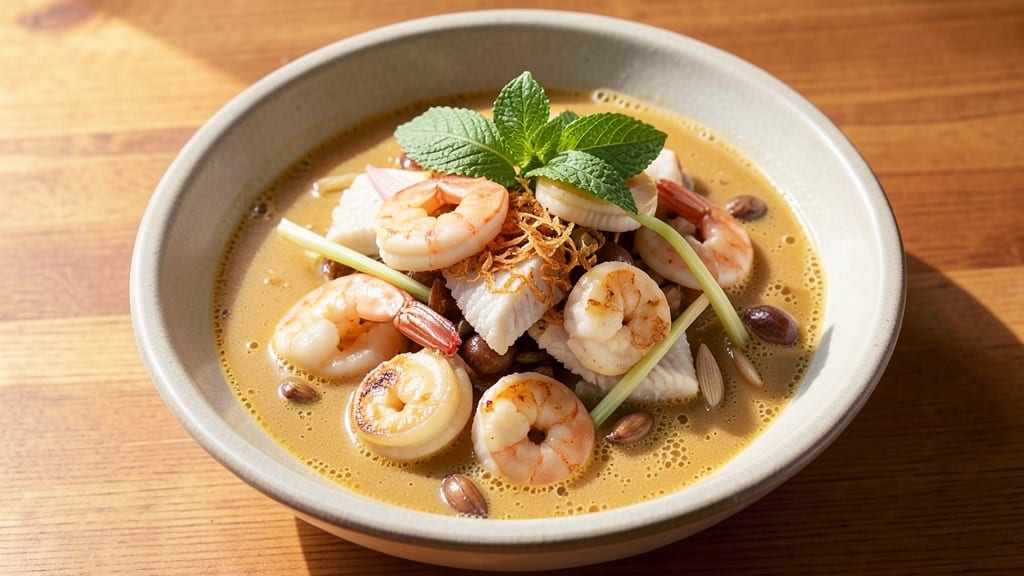
Aromatic lemongrass and kaffir lime infusion transforms any Thai seafood soup into a restaurant-quality experience. The secret lies in balancing bold flavors—spicy, sour, and creamy—while letting the broth develop deep, complex aromatics through slow simmering.
I’ve perfected this technique over years of testing, ensuring each bowl delivers that perfect harmony of heat, brightness, and richness.
This recipe builds on traditional Tom Kha and Tom Yum principles but simplifies the process for home cooks. You’ll start with a fragrant broth infused with lemongrass, galangal, and kaffir lime leaves, then layer in seafood—shrimp, fish, or mussels—until tender.
The addition of coconut milk creates a velvety texture, while lime juice and chili paste deliver that signature tangy kick. Every element works together to create a soup that’s both comforting and vibrant.
The result is a bowl of soup with golden broth, tender seafood, and fresh herbs that brighten every bite. The aroma alone will draw everyone to the table, while the flavors satisfy even the most discerning palates.
Whether you’re serving it for a weeknight dinner or a special gathering, this recipe delivers restaurant-quality results without the fuss.
Pair it with steamed jasmine rice and a side of fresh herbs for the full experience. The techniques here are designed to be approachable yet precise, ensuring your first attempt tastes like you’ve been cooking Thai cuisine for years. Let’s get started on creating this aromatic masterpiece.
Ingredients for thai seafood soup
Fragrant herbs and seafood create this restaurant-worthy Thai soup with just 15 ingredients.
| Ingredient | Amount | Notes |
|---|---|---|
| Lemongrass 🌿 | 3 whole | Bruised, bottom 3 inches only |
| Kaffir Lime Leaves 🍋 | 4 whole | Fresh, torn into strips |
| Galangal 🍃 | 1 piece | About 2 inches, sliced thin |
| Shallots 🧅 | 6 whole | Peeled, thinly sliced |
| Garlic Cloves 🧄 | 6 cloves | Peeled, smashed |
| Coconut Milk 🥥 | 1 ½ cups | Full-fat, unsweetened |
| Fish Sauce 🍶 | 2 tbsp | Red Boat preferred |
| Lime Juice 🍋 | ½ cup | Freshly squeezed |
| Chili Paste 🌶️ | 1 ½ tbsp | Thai bird's eye chili |
| Shrimp 🦐 | 1 ½ lb | Medium size, peeled |
| White Fish Fillets 🐟 | 1 ½ lb | Cod or snapper preferred |
| Mushrooms 🍄 | 1 cup | Straw or oyster |
| Coconut Cream 🥥 | ½ cup | For extra richness |
| Fresh Thai Basil 🌿 | ¼ cup | Chopped, for garnish |
| Cilantro 🌿 | 0.2 cup | Chopped, for garnish |
The herbs are everything here. Thai markets have the best lemongrass and kaffir lime leaves—look for vibrant green stalks and fragrant leaves. Galangal should smell citrusy and peppery (like ginger's funky cousin). If you can't find it, ginger works in a pinch, but it's not the same. The shallots and garlic? Fresh is non-negotiable—jarred versions won't give that sweet, aromatic depth. For coconut milk, full-fat is a must—the lighter versions won't create that velvety texture. I grab mine from Trader Joe's or Asian markets—they keep it chilled in the refrigerated section.
No fish sauce? Soy sauce plus a splash of Worcestershire gets you close, but it won't be authentic. Short on Thai basil? Regular basil plus a pinch of cinnamon mimics the flavor profile. The chili paste can be adjusted—start with less if you're sensitive to heat, then add more later. For seafood, shrimp and cod are my go-tos, but mussels or clams work too (just add them at the very end). The mushrooms? Straw mushrooms have that perfect texture, but oyster or even cremini will work. If you can't find coconut cream, extra coconut milk does the trick—just simmer it longer to thicken.
This soup tastes even better the next day—let the flavors meld overnight. Store it in the fridge for up to 4 days, or freeze portions for 3 months. I always make extra because it disappears fast. The broth reduces beautifully, so if you're serving a crowd, double the herbs and seafood. For serving, keep the garnishes separate—toss them in just before eating so they stay fresh and vibrant. The lime juice should be added last (trust me on this), so it doesn't turn the broth bitter.
Why You'll Love This Recipe
- One-Pot Magic: I swear by this soup—just toss everything into a single pot, simmer, and forget about it. The galangal and lemongrass do all the heavy lifting while you sip wine (or tea, no judgment).
- Herbal Symphony: That first spoonful? Chef’s kiss. The kaffir lime leaves add a citrusy brightness, the shallots caramelize into sweetness, and the garlic cloves? They’re the secret weapon—layered but never overpowering.
- Weeknight to Party: Same recipe, different vibes. Weeknights? Serve it with rice and a cold beer. Guests over? Add a splash of coconut milk and watch it become the star. It’s my go-to for effortless wow.
- Leftovers That Shine: Between us, this soup tastes better the next day. The flavors meld into something richer, and it’s perfect for lunch—just reheat and add a squeeze of lime. Zero waste, maximum flavor.
Step-by-step instructions for Thai seafood soup
Here's how to build this fragrant, balanced soup that delivers authentic Thai flavors in every spoonful.
Build the Aromatic Base
In a large pot, combine the 1 piece galangal (sliced thin), 3 whole lemongrass (bruised bottoms only), 4 whole kaffir lime leaves (torn), 6 whole shallots (sliced), and 6 cloves garlic (smashed). Cook over medium heat for 5 minutes, stirring occasionally, until the shallots soften and the mixture releases its essential oils.
This foundational step develops the soup's signature aromatic complexity. You'll notice the galangal and lemongrass infusing the oil with their citrusy, peppery notes. If the shallots start to brown too quickly, reduce the heat slightly—you want them to soften, not caramelize at this stage.
Add the Coconut Milk and Spices
Pour in the 1.5 cups coconut milk and stir well to combine with the aromatics. Add the 1.5 tablespoons chili paste and 2 tablespoons fish sauce, mixing until fully incorporated. Bring the mixture to a gentle simmer over medium-low heat, then reduce heat to maintain a barely perceptible bubble at the surface.
Simmer uncovered for 10 minutes, allowing the coconut milk to develop its rich, creamy flavor while the spices meld together. Here's where the magic happens—the coconut milk will thicken slightly as it absorbs the aromatic compounds. If you notice the mixture curdling or separating, whisk vigorously to re-emulsify it.
Incorporate the Seafood and Mushrooms
Add the 1 cup mushrooms and simmer for 3 minutes until they soften slightly. Then add the 1.5 pounds shrimp and 1.5 pounds white fish fillets, arranging them in a single layer. Cover the pot and cook for 4-5 minutes until the shrimp turn pink and the fish becomes opaque throughout.
Real talk: don't overcook the seafood. The moment the shrimp curl and the fish flakes easily with a fork is perfect timing. If you're using cod, it should reach an internal temperature of 145°F—use an instant-read thermometer for precision. The fish should be just cooked through but still tender, not rubbery.
Finish with Lime and Herbs
Remove the pot from heat and stir in the 0.5 cup lime juice and 0.5 cup coconut cream. This brightens the soup and adds luxurious richness. Taste and adjust seasoning with additional fish sauce if needed—you're aiming for a balance of sweet, sour, salty, and spicy flavors.
Let the soup rest for 5 minutes off the heat before serving. This allows the flavors to fully meld together. When ready to serve, divide the soup among bowls and garnish each portion with 0.25 cup fresh Thai basil and 0.2 cup cilantro. The herbs should be added just before serving to preserve their vibrant colors and fresh aromas.
Serve with Crusty Bread
Serve the soup immediately with steamed jasmine rice or crusty bread on the side. The broth should be fragrant with lemongrass and galangal, with a perfect balance of coconut creaminess and bright lime acidity. Each spoonful should deliver tender shrimp, flaky fish, and earthy mushrooms in every bite.
Here's the thing—this soup tastes even better the next day as the flavors continue to develop. Store any leftovers in an airtight container in the refrigerator for up to 2 days, then gently reheat before serving. The seafood will keep its tenderness when reheated slowly over low heat.
Pro Tips For Making Thai Seafood Soup
- CHAR THE SHALLOTS LOW: I learned this the hard way—fried shallots burn faster than you think. Cook them in batches over medium-low heat until golden, not brown, then set them aside. If you rush, they’ll turn bitter and ruin the soup’s bright, nutty aroma.
- SLICE GALANGAL THIN: Galangal’s tough and fibrous—slice it paper-thin (about 1/8-inch) for even cooking. No need to peel unless it’s moldy; the skin adds depth. (Yes, even if you’re impatient like me, resist the urge to chunk it.)
- SIMMER LEMONGRASS GENTLY: Drop the lemongrass stalks in whole and bruise them with the back of a knife first. Then simmer on low for 10–15 minutes before adding seafood—this pulls out the citrusy oils without turning the broth bitter. High heat = wasted flavor.
- SKIP THE RAW KAFFIR LIME: Tear the leaves, not the stems, and lightly toast them in a dry pan for 30 seconds before adding to the broth. This softens their sharpness and prevents a grassy aftertaste. (Your future self will thank you.)
Essential equipment for perfect results
Wok Essentials
Your carbon steel wok is the heart of this recipe—it conducts heat perfectly for even cooking and develops a natural non-stick patina over time. I recommend a 14-inch wok from Made In or Tramontina for their excellent heat distribution.
If you don’t have a wok, a heavy-bottomed pot (like All-Clad) works too, but stir frequently to prevent sticking. 🔥
Precision Tools
A high-quality instant-read thermometer (like ThermoWorks Thermapen) ensures your seafood reaches 145°F—critical for safety and texture. For chopping herbs, a sharp chef’s knife (I use Victorinox Fibrox) and cutting board (like Teakha bamboo) keep your prep efficient.
A fine-mesh strainer helps remove herb debris from the broth for a cleaner presentation.
Herb Handling
Specialized tools make herb prep easier: a lemongrass bruiser (or rolling pin) tenderizes stalks without crushing them, while a kaffir lime leaf stripper (or sharp knife) creates perfect ribbons. For galangal, a mandoline with a thin-slice attachment gives consistent cuts.
Store these herbs in a sealed container in the fridge for up to 1 week to preserve their aroma.
Coconut Milk Control
Use a whisk to prevent coconut milk from separating when heating—stir vigorously if it starts to curdle. A ladle with a strainer (like OXO Good Grips) helps skim foam while keeping aromatics in the broth.
For extra richness, I keep coconut cream chilled and add it last to avoid over-thickening the soup.
Garnish Presentation
Fresh herbs deserve special tools: a herb scissors (like Fiskars) trims Thai basil and cilantro cleanly, while a small bowl with a lid keeps them fresh until serving.
A tongs (I use Kuhn Rikon) helps arrange garnishes neatly on each bowl. For lime juice, a reamer ensures consistent extraction without seeds.
Nutrition facts
Frequently asked questions
Can I make this soup without coconut milk?
For a lighter version, replace the coconut milk with 4 cups vegetable or chicken broth and add just 2 tablespoons coconut cream at the end. This creates a more traditional Tom Yum-inspired broth that's still rich and aromatic. The key is balancing the acidity with extra lime juice (0.75 cup) and adjusting fish sauce to taste.
What seafood works best for this recipe?
Shrimp and firm white fish like cod or snapper are ideal, but you can mix in mussels or clams for extra texture. For shellfish, add them only in the last 2 minutes of cooking so they don't overcook. If using scallops, sear them separately first—they'll stay tender when added to the finished soup. Avoid delicate fish like flounder, which can turn rubbery.
How do I adjust the spice level?
Start with 1 tablespoon chili paste if you prefer mild heat, then add more to taste. For extra kick, stir in 1-2 sliced Thai chilies at the end. If you love heat, try 1 teaspoon sambal oelek along with the chili paste. Remember, the lime juice will brighten the spice—balance is everything in Thai cuisine!
Can I prepare this soup ahead of time?
Yes! Make the broth base (without seafood) up to 3 days ahead and store it in an airtight container. Reheat gently, then add fresh seafood and herbs just before serving. For the best results, cook the seafood fresh—it stays tenderest when added last. The aromatics actually improve overnight, developing deeper flavors.
What if I can't find galangal?
Use 1 tablespoon grated ginger plus 1 teaspoon ground coriander as a substitute. While not identical, this combo captures some of galangal's citrusy, peppery notes. For authenticity, check Asian markets—they often carry galangal in the produce section. If you can't find it at all, the recipe will still work but will taste slightly different.