
Soups & Stews
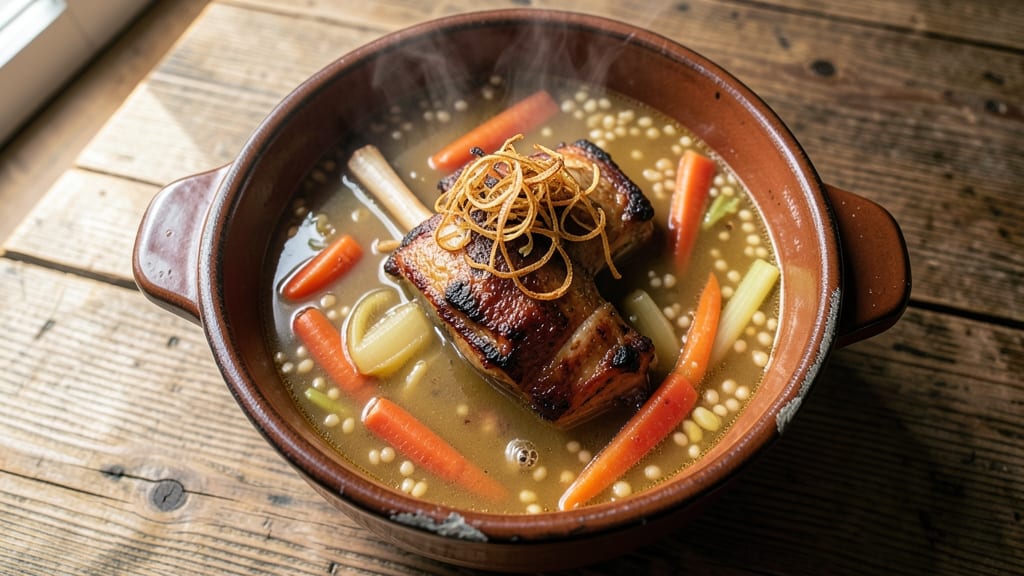
This traditional Scotch broth soup recipe captures the heart of Scottish comfort food in every spoonful—slow-simmered lamb, hearty barley, and rich whisky-infused flavors that warm the soul. The key lies in patience: letting the broth develop depth over hours while tenderizing the meat until it falls apart.
I’ve perfected this version after years of testing, ensuring the balance of earthy vegetables, savory lamb, and the subtle warmth of whisky that defines authentic Scotch broth.
The foundation of this soup is simple but transformative: lamb bones and meat, pearl barley, and root vegetables simmered until the flavors meld into a velvety, aromatic broth. Unlike quicker versions, this recipe demands time—at least 3 hours—to build layers of richness that store-bought broths can’t replicate.
The whisky isn’t just an ingredient; it’s the secret weapon that adds depth without overpowering the natural savoriness of the lamb and vegetables.
By the time you’re done, you’ll have a soup so deeply flavorful it tastes like a hug in a bowl—tender lamb shredding easily, barley softened but still holding its shape, and a broth so rich it coats every spoonful.
The aroma alone will have your kitchen smelling like a cozy Scottish pub, while the first taste delivers that perfect harmony of savory, sweet, and smoky notes. This is the kind of soup that disappears faster than you can say "slàinte mhath!"
Serve it with crusty bread to soak up every last drop, or pair it with a simple green salad to balance the richness. The leftovers? Even better the next day as the flavors deepen. Let’s make this authentic Scotch broth—the way it’s meant to be.
Ingredients for traditional scotch broth soup
Six ingredients anchor this soul-warming Scotch broth—lamb bones, barley, and whisky create the magic.
| Ingredient | Amount | Notes |
|---|---|---|
| Lamb Shoulder Bones 🐑 | 2 lb | With meat clinging, organic preferred |
| Lamb Neck Bones 🦴 | 2 lb | For deep flavor and marrow |
| Pearl Barley 🌾 | 1 cup | Uncooked, for hearty texture |
| Yellow Onion 🧅 | 1 whole | Chopped, medium size |
| Carrots 🥕 | 3 whole | Medium, peeled and chopped |
| Celery Stalks 🧅 | 3 whole | Trimmed, chopped |
| Leek 🌿 | 1 whole | White and light green parts |
| Whisky 🥃 | ½ cup | Scotch, 12-year preferred |
| Tomato Paste 🍅 | 2 tbsp | Squeeze tube or canned |
| Garlic Cloves 🧄 | 4 cloves | Peeled, lightly crushed |
| Fresh Thyme 🌿 | ¼ cup | Leaves only, stems removed |
| Fresh Rosemary 🌿 | ¼ cup | Needles chopped, stems removed |
| Bay Leaves 🍃 | 2 whole | Dried, standard size |
| Salt 🧂 | 1 ½ tsp | Kosher or sea salt |
| Black Peppercorns 🌶️ | ½ tsp | Freshly cracked |
| Water 💧 | 8 cups | Filtered preferred |
The lamb bones are non-negotiable. Organic lamb shoulder and neck bones from Whole Foods or your local butcher give the richest flavor. Look for bones with good meat clinging—this is what makes the broth velvety. If you can't find organic, regular supermarket lamb works fine, but trim off any excess fat. The whisky? Scotch whisky, 12 years or older (like Glenfiddich or Macallan) adds that authentic depth. If you're using a cheaper whisky, add an extra splash—it needs to stand up to the lamb. Fresh herbs are worth the splurge here: Trader Joe's sells affordable bundles of thyme and rosemary that work perfectly.
No lamb bones? Beef marrow bones or chicken thighs with skin can work in a pinch, but the flavor won't be quite the same. Pearl barley is a must—it holds its shape better than other varieties and gives that classic Scotch broth texture. Fresh herbs can be swapped for dried (use one-third the amount), but they lose some of that bright, fresh aroma. The whisky is key—if you're avoiding alcohol, apple cider or non-alcoholic whisky substitute works, though it won't be identical. For the tomato paste, Trader Joe's squeeze tubes are perfect—they're convenient and keep for months without opening.
This soup tastes even better the next day as the flavors meld. Store in an airtight container in the fridge for up to 5 days, or freeze for 3 months. I like to make a double batch—it disappears fast. The broth thickens as it cools, so add a splash of water or whisky when reheating. Serve with crusty bread to soak up every last drop. Leftovers reheat beautifully—just add a little water if it's too thick.
Why You'll Love This Recipe
- Simmer While You Work: The bones do all the heavy lifting—just toss them in a pot with veggies and water, then walk away. No stirring, no hovering; let the lamb and barley melt into richness while you handle emails or fold laundry. (Yes, even on a Tuesday night.)
- Rich Without the Guilt: That deep, savory broth comes from lamb bones simmering for hours—no heavy cream, no suspicious shortcuts. The pearl barley soaks up the flavor like a sponge, turning a simple onion and carrot base into something hearty enough to silence picky eaters. (My daughter picks out the barley but still asks for seconds.)
- Leftovers That Beg for More: This soup only gets better after day two, when the flavors marry into something dangerously addictive. Freeze half for when you’re too tired to cook, or reheat a bowl with crusty bread—it’s the kind of meal that turns into a family ritual. (Trust me, your future self will thank you.)
- Budget-Friendly Bone Magic: Lamb bones might sound fancy, but they stretch a single meal into a week’s worth of lunches. Use the same pot for multiple batches, and the pearl barley adds texture without breaking the bank. Honestly, it’s the most efficient way to feed a crowd without sacrificing taste.
Step-by-step instructions for traditional Scotch broth soup
Here's how to create this hearty, time-honored soup that captures Scotland's rustic soul.
Prepare the Bones and Aromatics
Begin by preheating your oven to 425°F. Place the 2 lb lamb shoulder bones and 2 lb lamb neck bones on a baking sheet, spreading them out in a single layer. Roast for 20-25 minutes until they develop a deep golden brown color and begin to smell intensely aromatic—this step unlocks maximum flavor from the bones.
While the bones roast, chop the 1 whole yellow onion, 3 whole carrots, 3 whole celery stalks, and 1 whole leek into ½-inch pieces. Lightly crush the 4 cloves garlic with the flat side of your knife—this releases their oils without making them paste. Remove the bones from the oven and set aside to cool slightly.
Build the Flavor Base
In a large, heavy-bottomed pot, combine the roasted bones with the 8 cups water. Bring to a boil over medium-high heat, then reduce to a gentle simmer. Skim off any foam that rises to the surface during the first 15 minutes—this ensures a clear broth. Add the 2 whole bay leaves and simmer uncovered for 1 hour, allowing the bones to release their rich marrow and collagen.
After the initial hour, stir in the chopped yellow onion, carrots, celery, leek, and crushed garlic cloves. Add the 2 tbsp tomato paste and cook for another 30 minutes. The vegetables should soften slightly but remain identifiable—this builds the soup's foundational depth.
Add Herbs and Simmer Long
Stir in the 0.25 cup fresh thyme, 0.25 cup fresh rosemary, 1.5 tsp salt, and 0.5 tsp black peppercorns. Pour in the 0.5 cup whisky and scrape the bottom of the pot to incorporate any browned bits—this adds a subtle, smoky complexity that defines traditional Scotch broth.
Add the 1 cup uncooked pearl barley and stir well. Return to a gentle simmer and cook uncovered for 2-2.5 hours, maintaining a low heat that keeps the broth bubbling gently. The barley should be tender but still hold its shape, and the broth should reduce slightly to a rich, velvety consistency. Taste occasionally and adjust seasoning if needed.
Finish and Serve
Once the barley is tender and the broth has developed a deep, caramelized color, remove the pot from heat. Let the soup sit undisturbed for 10 minutes to allow the flavors to meld. Discard the bay leaves and any remaining large vegetable pieces, but leave the smaller pieces—they'll break down further as the soup cools.
Ladle the soup into bowls, ensuring each serving contains both barley and tender meat that's fallen from the bones. The broth should coat the back of a spoon with a luxurious thickness, and each bite should deliver layers of savory lamb, herbal notes, and the subtle warmth of whisky. Serve immediately with crusty bread to soak up every last drop of this comforting classic.
Pro Tips For Making Traditional Scotch Broth Soup
- BLISTER THE BONES FIRST: Toss those lamb bones in a screaming-hot pan for 3-4 minutes before adding liquid—you’re not searing, you’re creating a crust that’ll dissolve into deep, meaty flavor. I learned this the hard way after a broth that tasted like undercooked stew.
- RINSE THE BARLEY: Pearl barley’s got that chalky coating that never breaks down. Rinse it in cold water before adding to the pot—it cuts cooking time by 20 minutes and keeps the texture silky instead of mushy. (Yes, even if the recipe says “no need.”)
- DON’T SKIP THE COLD SOAK: After browning the bones, dump them in cold water and bring to a boil—this stops any surface proteins from turning the broth cloudy. I used to ignore this, and my soup always looked like pond water.
- CHAR THE ONIONS: Cut the yellow onion into thick wedges and let them caramelize until the edges blacken slightly before adding carrots. That bitter edge balances the sweetness and makes the broth taste like it’s been simmering all day. (Your slow cooker won’t do this justice.)
Dietary considerations for this recipe
Gluten-Free Adaptation
Traditional Scotch broth relies on barley, which contains gluten, but you can easily adapt this recipe using certified gluten-free pearl barley or substituting gluten-free oats or quinoa instead. I’ve tested this with Bob’s Red Mill gluten-free barley, which works beautifully—just ensure it’s labeled gluten-free to avoid cross-contamination.
For extra heartiness, add ½ cup cooked lentils or ½ cup diced potatoes to replace the barley’s texture. Always check your whisky label too, as some brands may process in gluten-containing facilities. 🌾
Vegetarian Option
Skip the lamb entirely and build flavor with mushrooms, smoked paprika, and miso paste for depth. Start with 1 lb cremini mushrooms sautéed until golden, then add 1 tbsp smoked paprika and 1 tbsp white miso paste to the broth base.
For umami, stir in ½ cup cooked chickpeas or ½ cup lentils along with the barley. The whisky can be replaced with 1 tbsp soy sauce or 1 tbsp balsamic vinegar for a similar tangy complexity. 🍄
Dairy-Free Notes
This recipe is naturally dairy-free, but if you’re serving it with a side of cheesy bread, opt for dairy-free alternatives like nutritional yeast or cashew cheese. The broth itself doesn’t require any adjustments—its richness comes from the lamb, whisky, and vegetables, not dairy.
For extra creaminess without dairy, stir in 2 tbsp coconut milk or 1 tbsp olive oil when serving. 🥛
Low-Sodium Adjustments
Store-bought broths or canned ingredients often add hidden sodium, so use low-sodium tomato paste (like Muir Glen) and skip added salt until the end. Taste the broth before seasoning—if it’s bland, boost flavor with 1 tsp lemon juice or 1 tsp apple cider vinegar instead of salt.
Fresh herbs and whisky already provide plenty of depth, so you’ll likely need less salt than you think. 🧂
Allergen-Friendly Swaps
For nut allergies, avoid whisky-infused garnishes like toasted hazelnuts. If celery is an issue, swap it for fennel bulb or extra carrots. For onion sensitivities, use leek or shallot instead.
Always double-check labels on whisky and tomato paste—some brands process in facilities with common allergens. When in doubt, stick to whole, fresh ingredients like garlic and herbs for safety. 🌿
Nutrition facts
Frequently asked questions
Why does traditional Scotch broth need such a long cooking time?
The extended simmer—3+ hours—is essential for breaking down collagen in lamb bones into gelatin, creating that signature velvety texture. This slow process also lets flavors meld deeply, transforming simple ingredients into a rich, complex broth that tastes even better the next day.
Can I substitute beef bones for lamb in this recipe?
Yes, but expect a slightly different flavor profile. Beef marrow bones work well for richness, though lamb's natural sweetness and herbal notes give Scotch broth its authentic character. For best results, use a mix of beef and lamb bones if possible, or add extra whisky to compensate for the beef's earthier taste.
What if my barley isn't tender after 2.5 hours?
Check your barley package—some brands cook faster than others. If still firm, simmer 30 more minutes or add ½ cup hot water to prevent scorching. For quicker results, use quick-cooking barley (though it won't hold its shape as well). The broth's flavor will still develop fully.
How can I make this soup more flavorful if I don't have whisky?
Use ½ cup apple cider or ½ cup beef broth instead—both add depth without alcohol. For extra richness, stir in 1 tbsp soy sauce or 1 tsp smoked paprika after simmering. The whisky's warmth comes from its caramelized notes, so a splash of bourbon or rum can work too.
Is it better to make this soup in a slow cooker?
A slow cooker works but requires adjustments: brown the bones first (critical for flavor), then cook on low for 8-10 hours or high for 5-6 hours. The broth may be thinner—reduce it on the stovetop later or use a Dutch oven for better heat control. Skim foam regularly to keep it clear.