
Soups & Stews
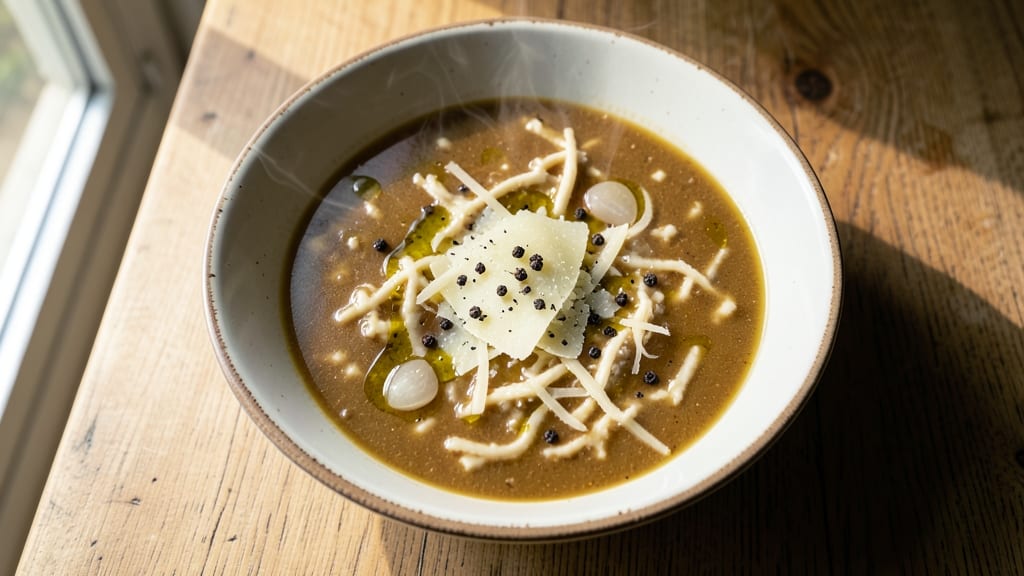
This traditional stracciatella soup recipe brings the soul-warming flavors of Italian nonna kitchens to your pot, where torn pecorino cheese transforms humble broth into liquid gold.
The key lies in its ragged cheese—stracciatella means "little rags" in Italian, and that's exactly how the cheese should look when it melts into the broth. I first tasted this soup in a tiny trattoria in Rome, where the owner's grandma insisted it was the secret to Roman winters.
The magic happens when you simmer fresh pecorino Romano in hot broth until it stretches and tears into delicate strands, creating a velvety texture that coats every spoonful.
Unlike other Italian soups, stracciatella relies on just three essential ingredients—broth, cheese, and a touch of olive oil—but the technique is what elevates it from simple to extraordinary. The cheese must be aged pecorino, as its sharp, salty flavor stands up to the rich broth without overpowering it.
What you'll end up with is a soup so comforting it feels like a hug in a bowl—creamy yet light, with each bite offering layers of cheesy goodness that melt on your tongue.
The broth should be deeply flavorful, whether homemade or high-quality store-bought, as it forms the foundation of this dish. This is the kind of soup that disappears quickly, leaving everyone asking for seconds.
While traditional stracciatella is vegetarian, many Italian families add a few meatballs or anchovies for extra depth. The beauty of this recipe lies in its simplicity and versatility—perfect for chilly evenings or as a starter for festive meals. Let's bring some Italian warmth to your kitchen.
Ingredients for traditional stracciatella soup
Three core ingredients transform into Italy’s most comforting soup—pecorino, broth, and olive oil.
| Ingredient | Amount | Notes |
|---|---|---|
| Pecorino Romano Cheese 🧀 | 8 oz | Aged, block form preferred |
| Chicken or Vegetable Broth 🍲 | 6 cups | Homemade or high-quality store-bought |
| Extra-Virgin Olive Oil 🫒 | ¼ cup | Light, fruity variety |
| Garlic Cloves 🧄 | 2 cloves | Minced for aromatic depth |
| Freshly Ground Black Pepper 🌶️ | ½ tsp | Freshly cracked for intensity |
| Salt 🧂 | 1 tsp | Kosher or sea salt |
| Freshly Grated Nutmeg 🌿 | ¼ tsp | Freshly grated for warmth |
| Fresh Parsley 🌿 | ⅛ cup | Chopped, for garnish |
| Optional Anchovy Fillets 🐟 | 2 whole | For umami depth (optional) |
| Optional Meatballs 🍖 | ½ lb | Homemade or store-bought |
Pecorino Romano is non-negotiable here. Look for aged blocks in the deli section of Whole Foods or Italian specialty stores—the pre-shredded stuff just won’t cut it. The cheese should be hard and salty, with a sharp, tangy bite that melts into delicate strands when simmered. If you can’t find pecorino, Parmigiano-Reggiano works in a pinch, though it lacks that distinctive sheep’s milk flavor. For broth, homemade is ideal, but Pacific Foods or Imagine brands are solid store-bought options. The olive oil should be light and fruity—California Olive Ranch or Colavita are reliable choices.
No pecorino? Parmigiano-Reggiano works but won’t be identical—it’s less salty and has a different texture when melted. Fresh out of parsley? Dried Italian parsley at half the amount will do, but fresh is always better. Want extra richness? Those tiny anchovy fillets from the Italian market add umami magic without overpowering. The garlic and nutmeg are optional but recommended—they deepen the flavor without being overpowering. For the optional meatballs, homemade ones with herbs taste best, but frozen store-bought ones (like Trader Joe’s) work in a pinch.
This soup tastes even better the next day as flavors meld. Store leftovers in the fridge for up to 4 days, covered tightly to prevent drying. If freezing, cool completely first and portion into airtight containers—it reheats beautifully. The cheese strands will separate slightly when reheated, but just stir vigorously to restore that velvety texture. Serve with crusty bread to soak up every last drop of that golden broth.
Why You'll Love This Recipe
- Same recipe, different vibes: Serve it with crusty bread for a lazy Tuesday or drizzle with olive oil and garnish with parsley for a fancier gathering. The broth keeps it effortless, the cheese makes it elegant.
- No-Fuss Ritual: I swear by this when I’m too tired to chop—just shred that Pecorino into ribbons, toss it into simmering broth, and let the cheese melt into delicate strands. The hardest part? Waiting for the first bite.
- Umami Bomb: That first spoonful of broth, garlic-infused and peppery, with the Pecorino dissolving into silky threads? It’s like a warm hug for your taste buds. Honestly, the cheese alone makes it worth it.
- Weeknight to Dinner Party: Same recipe, different vibes: Serve it with crusty bread for a lazy Tuesday or drizzle with olive oil and garnish with parsley for a fancier gathering. The broth keeps it effortless, the cheese makes it elegant.
Step-by-step instructions for traditional stracciatella soup
Here's how to make this beloved Italian classic with rich, cheesy texture and comforting depth.
Prepare the Pecorino Cheese for Ragged Texture
Start by grating the 8 oz Pecorino Romano Cheese using a box grater or food processor. For that signature "stracciatella" texture, don't use pre-shredded cheese—the fresh grating creates those signature ragged strands. I like to pulse the cheese in short bursts in the food processor, then finish by hand to create a mix of fine shavings and longer strands. This texture is what gives the soup its name and its signature mouthfeel.
Set the grated cheese aside in a bowl. The key here is to work quickly—once you start cooking, the cheese will begin to melt and lose its distinct texture. If you're using the 2 whole optional anchovy fillets, finely chop them and add them to the cheese now. They'll dissolve completely into the soup, adding a deep umami flavor that's characteristic of traditional versions. The anchovies are optional but worth including if you want that authentic taste.
Build the Flavor Base in Olive Oil
Heat the 0.25 cup extra-virgin olive oil in a large pot over medium-low heat. Add the 2 minced garlic cloves and cook for 1-2 minutes until they're just fragrant—not browned. The garlic should smell sweet and inviting, not bitter. This is where the foundation of your soup's flavor begins to develop.
Next, add the 0.5 lb optional meatballs if you're using them. Cook them for 5-6 minutes until they're lightly browned on all sides. If you're making this version without meatballs, skip to the next step. The meatballs will add protein and heartiness to the soup, making it more substantial. If you're using them, remove them with a slotted spoon and set aside while you finish the base.
Create the Cheesy Broth
Pour in the 6 cups chicken or vegetable broth and bring it to a gentle simmer over medium heat. Once the broth is simmering, gradually sprinkle in the grated Pecorino Romano cheese while stirring constantly. The cheese will begin to melt and create a rich, creamy texture. This is where the magic happens—you're essentially making a cheese sauce within the broth.
Add the 1 tsp salt, 0.5 tsp freshly ground black pepper, and 0.25 tsp freshly grated nutmeg to the simmering mixture. Stir well to combine. The nutmeg adds a warm, slightly sweet note that balances the saltiness of the Pecorino. Let the soup simmer gently for 5-7 minutes, stirring occasionally. This allows the flavors to meld together and the cheese to fully incorporate into the broth.
Finish and Serve with Fresh Parsley
If you removed the meatballs earlier, return them to the pot now. Let the soup simmer together for another 3-4 minutes to heat through. The meatballs should be warm all the way through. Taste the soup and adjust the seasoning if needed—you might want to add a pinch more salt or pepper to suit your preference.
Before serving, stir in the 0.125 cup chopped fresh parsley. This not only adds a fresh, bright note to balance the richness of the cheese but also makes the soup look beautiful. Ladle the soup into bowls and serve immediately. The stracciatella texture works best when the soup is hot, so don't let it sit too long before serving. Each spoonful should deliver that perfect combination of creamy cheese strands, savory broth, and aromatic herbs.
Pro Tips For Making Traditional Stracciatella Soup
- Grate the Cheese Fresh: Skip the pre-shredded bag—it gets clumpy and melts unevenly. Use a fine grater or food processor right before adding it to the broth, and pulse just until it resembles coarse breadcrumbs. The texture should dissolve smoothly into the soup without leaving gritty bits.
- Bloom the Garlic Low: I used to burn the garlic every time. Instead of high heat, add the minced cloves to the olive oil over medium-low and let them sweat for 2–3 minutes until fragrant but not golden. Stracciatella relies on flavor, not color—overcooking turns it bitter.
- Strain the Broth Twice: Even homemade broth has hidden bits. After simmering the broth with garlic and oil, strain it first through a fine-mesh sieve, then again through cheesecloth for a silky finish. The first strain catches solids; the second removes the last of the cloudiness.
- Salt the Broth Last: Add the Pecorino first, let it melt into the broth, then season with salt and pepper. Salting early makes the cheese curdle—it’s delicate, like ricotta, and needs the right balance at the end. Taste as you go; you’ll likely need less salt than you think.
Flavor customization for this dish
Spicy Roman Twist
Add ½ tsp red pepper flakes or 1 tbsp Calabrian chili paste when simmering the broth to bring heat to this classic. For a smoky kick, stir in ¼ tsp smoked paprika with the nutmeg.
I love this version with spicy 'nduja sausage crumbled into the broth—just 2 oz adds deep, fiery flavor. The heat cuts through the richness beautifully while keeping the dish authentically Roman. 🌶️
Creamy Ricotta Version
Swap half the pecorino for ½ cup ricotta cheese blended with 2 tbsp heavy cream before adding to the broth. This creates a lighter, silkier texture while adding subtle sweetness. For extra richness, fold in 1 oz mascarpone at the end.
The ricotta version works wonderfully with roasted garlic instead of fresh—simmer 3 cloves in the olive oil until golden before adding broth. 🧀
Herb-Infused Variations
Transform your stracciatella with fresh herbs. For a basil version, stir in ¼ cup torn basil leaves at the end and finish with a drizzle of balsamic glaze. For a sage twist, add 2 tbsp chopped fresh sage with the garlic and remove it before adding broth.
I also love adding 1 sprig rosemary while simmering—remove before serving. These herb variations add bright, aromatic notes that elevate the dish beyond the classic. 🌿
Meatball & Anchovy Fusion
Combine both optional proteins for maximum depth. Start with ½ lb meatballs and add 2 anchovy fillets dissolved in the olive oil. For extra umami, stir in 1 tsp fish sauce with the broth.
This version tastes like a cross between stracciatella and Italian wedding soup. The anchovies add complexity while the meatballs provide hearty texture—perfect for chilly winter nights. 🍖
Vegetable-Enhanced Version
Make this soup vegetarian-friendly by adding 1 cup diced fennel and 1 cup roasted cherry tomatoes to the simmering broth. For extra creaminess, stir in ¼ cup pureed butternut squash with the cheese.
The fennel adds an anise-like sweetness that pairs beautifully with the pecorino. This version works wonderfully with a sprinkle of toasted pine nuts on top for crunch. 🥕
Creamy Potato Addition
For a heartier soup, add 1 cup diced Yukon Gold potatoes to the simmering broth. Let them cook until tender (8-10 minutes) before adding the cheese. The potatoes absorb the broth beautifully while adding natural creaminess.
For extra richness, stir in 2 tbsp sour cream at the end. This version feels like a cross between stracciatella and potato leek soup—perfect for those who love their soups with body. 🥔
Nutrition facts
Frequently asked questions
Why does stracciatella soup need freshly grated cheese?
Pre-shredded cheese contains anti-caking agents that prevent the delicate "rags" from forming. Freshly grated pecorino creates those signature stringy strands when melted in hot broth, giving the soup its authentic texture. The cheese should tear into irregular pieces as it simmers, creating that velvety mouthfeel.
Can I make stracciatella soup without anchovies?
Traditional recipes often omit anchovies, but they add deep umami flavor when dissolved in the olive oil. For a vegetarian version, simply skip them and rely on the pecorino's natural saltiness. The broth's quality becomes even more important in this case.
How do I fix soup that's too thick or too thin?
If too thick, add ½ cup warm broth at a time while stirring. For thin soup, sprinkle in 1 tbsp grated pecorino at a time until creamy. The cheese should melt gradually to maintain proper texture. Never boil vigorously—gentle simmering preserves the delicate strands.
What's the best way to store leftovers?
Cool completely and refrigerate in an airtight container for up to 4 days. The texture may separate slightly when reheated, but stir vigorously to restore creaminess. For freezing, portion into containers leaving 1-inch headspace—it reheats beautifully but may lose some of its signature stringy texture.
Can I use Parmigiano-Reggiano instead of pecorino?
While Parmigiano-Reggiano works, it lacks pecorino's distinctive sheep's milk flavor and saltiness. For the authentic experience, pecorino is essential. If substituting, use 10% more Parmigiano-Reggiano since it's less salty, and add an extra pinch of salt to compensate. The texture will be slightly different but still delicious.