
Soups & Stews
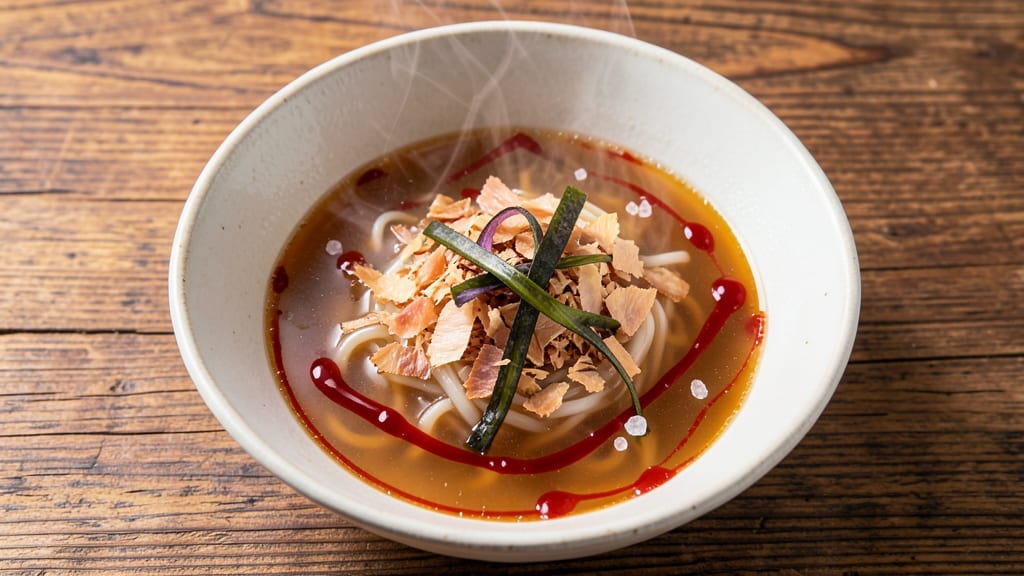
This udon soup base recipe begins with dashi—where kombu seaweed and bonito flakes unlock layers of fermented umami that transform simple broth into something extraordinary. I spent years perfecting this technique, balancing saltiness, sweetness, and depth to create a foundation that elevates every bowl.
The secret lies in patience: allowing flavors to meld slowly while avoiding bitterness that ruins the delicate balance.
This udon soup base recipe delivers professional results with just five core ingredients—kombu, bonito flakes, soy sauce, mirin, and water—simmered precisely to extract maximum flavor without overpowering. The process is straightforward: hydrate kombu first, then add bonito flakes for aromatic richness, and finish with seasonings that harmonize rather than compete.
What makes this recipe foolproof is the attention to temperature control during simmering.
By the time you strain the broth, you'll have a clear, golden liquid with complex umami notes that cling to udon noodles and complement any protein or vegetable addition.
The broth stays fresh in the refrigerator for up to five days or freezes beautifully for future use—ideal for batch cooking or meal prep. This is the kind of base that turns ordinary soup into a restaurant-quality experience.
For vegetarians, simply omit the bonito flakes and use shiitake mushrooms or kombu alone for depth. The same principles apply: patience in extraction and precision in seasoning. Let's build this flavor foundation that will transform your udon soups forever.
Ingredients for udon soup base
Five core ingredients transform water into a restaurant-quality udon broth foundation.
| Ingredient | Amount | Notes |
|---|---|---|
| Dried Kombu Seaweed 🍃 | 1 sheet | High-quality, dried kombu preferred |
| Bonito Flakes 🐟 | ½ cup | Grade A flakes for optimal umami |
| Soy Sauce 🍶 | ¼ cup | Japanese-style preferred |
| Mirin 🍶 | ¼ cup | Sweet cooking wine for balance |
| Water 💧 | 6 cups | Filtered preferred for clarity |
| Diamond Crystal Kosher Salt 🧂 | ½ tsp | Fine grain for precise seasoning |
| Dried Shiitake Mushrooms 🍄 | 2 pieces | Vegetarian alternative to bonito |
The kombu sheet is non-negotiable—Japanese brands like Marukome deliver the most authentic umami. Look for sheets with vibrant color and minimal blemishes; avoid pre-cut pieces, as they lose potency faster. Bonito flakes should be light beige to golden, not gray or dusty. Miyoko's or Nishiki brands are excellent choices. For the soy sauce, Japanese-style like Kikkoman or Yamasa provides the right balance of saltiness and depth. Mirin should be sweet but not overly thick—avoid the 'cooking mirin' substitutes. Water quality matters too: if yours tastes metallic, use filtered water for a cleaner base.
No bonito flakes? Dried shiitake mushrooms create a vegetarian alternative—simmer them for 20 minutes first to extract flavor. Substituting mirin? Equal parts white wine and sugar mimics its sweetness, though the acidity differs slightly. For soy sauce, tamari or coconut aminos work in a pinch, but the flavor profile shifts. The kombu is essential—without it, the broth loses its signature umami depth. If you can't find Japanese kombu, high-quality nori sheets in a pinch, though texture differs. Always taste as you go; the broth should be slightly salty but balanced, not overpowering.
This broth reaches peak flavor after 24 hours in the refrigerator—let it sit overnight if possible. Store in glass containers to maintain clarity. Freezes beautifully for up to 6 months; thaw in the fridge overnight for best results. For batch cooking, double the recipe and freeze in 1-cup portions—perfect for quick udon assembly. The kombu can be reused once for a second batch, though flavor diminishes slightly. Always strain thoroughly before using to avoid cloudiness.
Why You'll Love This Recipe
- Five-Ingredient Magic: I swear by this combo—just kombu, bonito, soy, mirin, and water. That’s it. No chopping, no stress, and the broth builds flavor while you sip your coffee. Honestly, the hardest part is waiting for the kombu to steep.
- Umami Bomb: The moment those bonito flakes hit the simmering water? Pure flavor explosion. The kombu adds this deep, oceanic richness, while the mirin sweeps in like a warm hug—salty, sweet, and savory all at once. My picky-eater husband actually asks for seconds.
- Base for Everything: Need soup? Done. Stir-fry? Done. Even a quick noodle bowl? Still done. I keep a jar of this in the fridge—double it, freeze half—and suddenly, lazy nights turn into restaurant-quality meals. (Yes, even on a Tuesday night.)
- Budget-Friendly Powerhouse: A single sheet of kombu and a handful of bonito flakes stretch across multiple bowls. No fancy ingredients, no markup—just honest, satisfying flavor that costs next to nothing. Between us, this is how I feed my college student on a tight budget.
Step-by-step instructions for udon soup base
This method delivers a refined umami foundation perfect for udon soups.
Prepare the Kombu and Shiitake Base
Place the 1 sheet dried kombu seaweed in a clean pot and cover with 6 cups water. Bring to a gentle simmer over medium-low heat—never boil vigorously, as this can make the kombu bitter. Simmer for 5 minutes until you detect a delicate seaweed aroma wafting from the pot.
Remove the kombu immediately after simmering and set aside for later use. Add the 2 pieces dried shiitake mushrooms, ensuring they're fully submerged. Simmer for an additional 10 minutes to extract their earthy depth. The mushrooms should soften noticeably and infuse the water with a rich, savory essence.
Infuse with Bonito Flakes
Reduce heat to low and sprinkle the 0.5 cup bonito flakes evenly over the simmering liquid. Let them sizzle for 30 seconds—this brief contact creates a delicate, smoky aroma without overpowering the broth. Immediately remove the bonito flakes using a fine-mesh strainer, reserving them for garnish if desired.
The broth should now have a subtle golden hue and a complex, layered aroma combining seaweed, mushroom, and bonito notes. If any flakes remain in the broth, strain them out completely to maintain clarity. This step is critical for authentic umami development without bitterness.
Season with Soy Sauce and Mirin
Return the strained broth to medium heat and add the 0.25 cup soy sauce and 0.25 cup mirin. Stir gently to combine, allowing the flavors to meld for 2 minutes. The mirin will add a delicate sweetness that balances the savory components, while the soy sauce deepens the umami profile.
Taste the broth and adjust seasoning if needed—this base should be subtly salty with a well-rounded depth. The kombu and shiitake should provide natural saltiness, but the 0.5 teaspoon diamond crystal kosher salt can be added here if additional seasoning is required. The final product should taste complete on its own, without needing additional salt.
Final Straining and Resting
Strain the broth through a fine-mesh sieve or cheesecloth into a clean pot, pressing gently on the solids to extract maximum flavor without introducing sediment. Discard the kombu and shiitake mushrooms—their purpose was to infuse, not remain in the final product.
Return the broth to low heat and maintain at a gentle simmer for 5 minutes to ensure all flavors are fully integrated. Remove from heat and let rest for 10 minutes before using. This resting period allows the broth to stabilize and develop its full complexity—patience here makes all the difference in the final result.
Pro Tips For Making Udon Soup Base
- Soak Kombu First: Tear the dried kombu into thirds and soak it in cold water for 10 minutes before boiling—this softens it faster and prevents it from curling into useless little balls. I used to skip this, and half the time it just sat there like a stubborn rock.
- Burn Bonito Slow: Start bonito flakes over medium-low heat, not high—you’re not searing steak here. Let them crisp gradually (about 3-4 minutes) so they release flavor without turning into bitter ash. I learned this the hard way after one batch tasted like a campfire mishap.
- Salt Early, Salt Light: Add a pinch of salt to the water before the kombu goes in—it helps extract umami and keeps the broth from tasting flat. Then, when you add soy sauce and mirin later, you won’t need extra salt. Trust me, your broth will thank you.
- Strain Twice: Use a fine-mesh sieve first to catch big bonito bits, then line it with cheesecloth for a second strain. The first pass gets the obvious junk; the cheesecloth catches the fine particles that make your broth cloudy. Lazy? Just do the sieve—but the upgrade is worth it.
Troubleshooting this recipe
Broth Too Bitter?
If your udon soup base tastes bitter, you likely over-simmered the kombu. I’ve ruined batches by letting it boil too vigorously—never let it reach a rolling boil.
The kombu should simmer gently for just 5 minutes, then be removed immediately. For extra insurance, use a larger pot to prevent water from evaporating too quickly. 🌡️
Cloudy or Sediment?
Cloudiness usually means you didn’t strain the broth thoroughly enough. I use a fine-mesh sieve lined with cheesecloth for the cleanest results. If you’re short on time, a coffee filter works in a pinch, but it’ll take longer.
For sediment, simmer the strained broth uncovered for 5 extra minutes—this helps clarify it naturally. Always taste before serving!
Weak Umami Flavor
Weak umami often means insufficient infusion time. Let the kombu steep for at least 10 minutes before removing it (you can reuse it once for a second batch). For bonito flakes, toast them in a dry pan for 30 seconds before adding to the broth—this intensifies their aroma.
If using shiitake mushrooms, simmer them 15 minutes instead of 10 for deeper flavor. 🍄
Overly Salty?
If your broth tastes too salty, you likely overestimated the soy sauce or salt. The 0.25 cup soy sauce and 0.5 tsp salt should balance perfectly with the kombu’s natural saltiness. To fix it, add 1 cup hot water and simmer for 5 minutes to dilute.
For future batches, taste after adding soy sauce—it should be slightly under-seasoned before the final salt adjustment.
Bonito Flakes Too Strong?
Bonito flakes can overpower if left in too long. The 30-second sizzle is key—any longer risks bitterness. If your broth tastes fishy, reduce the bonito to 0.375 cup next time.
For a milder profile, use dried anchovies instead (simmer for 20 minutes to mellow their flavor). Vegetarians can skip them entirely and rely on kombu and shiitake for depth.
Broth Too Thin?
A thin broth usually means insufficient reduction. After straining, simmer the broth uncovered for 10-15 minutes to thicken it slightly. For extra body, add 1 tbsp cornstarch mixed with 2 tbsp water and stir until thickened.
If you’re making a large batch, reduce it by 1/3 before freezing—it’ll concentrate the flavors beautifully. 💡
Nutrition facts
Frequently asked questions
Can I make this udon broth without bonito flakes?
For a vegetarian version, simply omit the bonito flakes and use 2 additional dried shiitake mushrooms instead. Simmer them for 15 minutes to extract maximum umami depth. The kombu and extended mushroom infusion will provide all the savory complexity you need.
How long will this udon broth keep in the fridge?
This udon broth stays fresh in an airtight container for up to 5 days in the refrigerator. For longer storage, freeze it in 1-cup portions for up to 6 months. Thaw overnight in the fridge before using—never at room temperature to prevent bacterial growth.
What's the best way to reheat udon broth?
Gently reheat the broth over low heat until just simmering—never boil vigorously as this can make it taste flat. For best results, warm it in a pot with a lid for 3-5 minutes. If using frozen broth, transfer it to the fridge 24 hours before reheating to thaw evenly. This preserves all the delicate flavors.
Can I use instant dashi granules instead of fresh kombu?
While possible, instant dashi won't give you the same depth of flavor. For authentic results, stick with fresh kombu and bonito flakes. If you must use granules, dissolve 1 teaspoon in the water after removing the kombu, but expect a less complex umami profile. The kombu's slow infusion creates layers of flavor granules can't replicate.
How do I adjust this broth for spicy udon?
Add 1 teaspoon chili crisp or ½ teaspoon gochugaru (Korean chili flakes) to the finished broth while warm. For deeper heat, simmer 1 small piece of fresh ginger with the kombu initially. Remember to taste as you go—spicy elements should complement, not overpower, the umami base.