
Soups & Stews
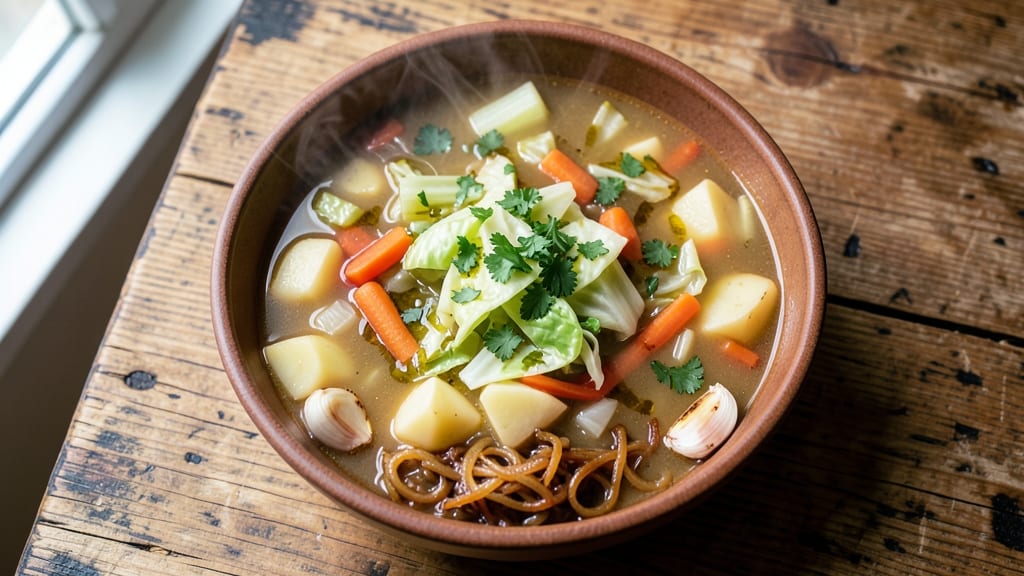
This veg soup with cabbage recipe transforms simple seasonal vegetables into a hearty, vegan-friendly one-pot meal that warms you from the inside out. The secret lies in slow-cooked broth that extracts deep flavor from onions, garlic, and celery—what I call the "holy trinity" of comforting soups.
I developed this recipe during a particularly chilly winter when I needed something nourishing that wouldn't leave my kitchen a mess.
The beauty of this soup is its versatility—use whatever seasonal vegetables you have on hand, from carrots and potatoes to sweet potatoes and turnips.
The cabbage adds satisfying texture and a subtle sweetness that balances the earthy broth, while a splash of apple cider vinegar at the end brightens everything without overpowering. It's the kind of dish that tastes even better the next day, making it perfect for meal prep.
By the time you're done, you'll have a rich, aromatic soup with tender vegetables swimming in flavorful broth, topped with fresh herbs for a pop of color and freshness.
The steam rising from the bowl carries that unmistakable comfort food aroma—proof that simple ingredients, when cooked with care, can create something truly special. This is the kind of recipe that becomes a winter staple.
Serve it with crusty bread for dipping or a sprinkle of toasted seeds for extra crunch. The instructions are straightforward enough for beginners but packed with professional techniques to ensure restaurant-quality results at home. Let's get cooking—your kitchen will thank you for the warmth.
Ingredients for veg soup with cabbage
Simple seasonal vegetables and pantry staples create this comforting vegan cabbage soup.
| Ingredient | Amount | Notes |
|---|---|---|
| Yellow Onion 🧅 | 1 whole | Chopped into half-moons |
| Carrots 🥕 | 4 medium | Peeled and sliced into rounds |
| Celery Stalks 🥬 | 3 whole | Trimmed and chopped |
| Green Cabbage 🥬 | 6 cups | Shredded, outer leaves removed |
| Russet Potatoes 🥔 | 2 medium | Peeled and cubed |
| Garlic Cloves 🧄 | 4 cloves | Minced for depth of flavor |
| Vegetable Broth 💧 | 6 cups | Low-sodium preferred |
| Apple Cider Vinegar 🍋 | 1 tbsp | For brightness |
| Tomato Paste 🍅 | 2 tbsp | For richness |
| Bay Leaf 🌿 | 1 whole | For aromatic depth |
| Fresh Thyme 🌿 | 1 tbsp | Leaves only, chopped |
| Extra-Virgin Olive Oil 🫒 | 2 tbsp | For sautéing |
| Sea Salt 🧂 | 1 ½ tsp | Diamond Crystal preferred |
| Black Peppercorns 🌶️ | ½ tsp | Freshly cracked |
| Fresh Parsley 🌿 | ¼ cup | Chopped for garnish |
The cabbage is the star here—look for firm heads with crisp outer leaves at your local market. Whole Foods or Trader Joe's usually carry the best quality, but any grocery store's produce section will work. I always grab extra because it stores beautifully in the fridge for up to 2 weeks if wrapped tightly in a damp towel. The potatoes should be firm and free of sprouts—Russet or Yukon Gold work perfectly. For the broth, Imagine or Pacific Foods brands are my go-to for that deep, umami flavor without the sodium overload. If you're using dried thyme, toast it in a dry pan for 30 seconds first—trust me, it makes all the difference.
No fresh thyme? Dried works at one-third the amount, but toast it first as mentioned above. Short on cabbage? Substitute kale or Brussels sprouts—just chop them smaller so they cook evenly. The tomato paste can be skipped if you're avoiding it, but I find it adds a meaty depth that's hard to replicate. For extra richness, stir in 1 tbsp nutritional yeast at the end—it gives that cheesy note without any dairy. The vinegar is key for brightness, but if you're avoiding it, a squeeze of lemon works too. Just don't skip the acid—it balances all the earthy flavors beautifully.
This soup tastes even better the next day as the flavors meld together. Store leftovers in the fridge for up to 5 days in an airtight container, or freeze for 3 months. I like to portion it into single-serving containers before freezing so I can grab one straight from the freezer when I need a quick lunch. The parsley wilts fast, so add it fresh right before serving. For extra crunch, toast some pumpkin or sunflower seeds in a dry pan for 3-4 minutes and sprinkle on top—it adds a nice textural contrast.
Why You'll Love This Recipe
- Pantry Magic: I swear by this recipe when I’ve got nothing but onions, carrots, and a sad celery stalk left in the fridge. No fancy ingredients—just chop, simmer, and let the broth work its magic. The potatoes soften into pillowy clouds while the cabbage stays just crisp enough to bite into.
- Savory Crunch: That first spoonful? Chef’s kiss. The carrots caramelize into sweet pockets, the celery adds a bright, herby bite, and the cabbage—when you shred it fine—absorbs the broth like a sponge, turning it into a rich, textured bite. (Pro tip: Don’t skip the salt—it’s the secret to making the flavors pop.)
- Leftovers That Beg: This soup tastes better the next day. Honestly. The flavors meld into something deeper, and the potatoes get that perfect starchy pull-apart texture. I make a double batch on Sundays because by Wednesday, I’m drowning in requests for seconds—no one turns down a warm bowl of this.
- Budget Blanket: Between us, this is my go-to when I’m trying to stretch groceries. A whole cabbage, a bag of potatoes, and a bunch of celery last me weeks—and the soup? It’s hearty enough to fill up even my husband after a long day. (Yes, even on a Tuesday night.)
Step-by-step instructions for vegetable cabbage soup
A comforting one-pot creation where tender vegetables and bold flavors meld into winter's perfect bowl.
Sauté the Aromatic Vegetable Base
Heat the 2 tablespoons extra-virgin olive oil in a large Dutch oven over medium heat. Add the 1 whole yellow onion (chopped), 4 medium carrots (sliced), and 3 whole celery stalks (chopped). Cook for 6-8 minutes, stirring occasionally, until the vegetables soften and the onion becomes translucent.
Here's the thing—don't rush this step. You're building flavor here. The vegetables should release their natural sweetness and develop a slight caramelization. If the pan starts to dry out before the vegetables soften, add a splash of water and scrape up any browned bits from the bottom—those are packed with flavor.
Once the vegetables are tender, add the 4 cloves garlic (minced) and cook for an additional 30 seconds until fragrant. This quick cooking prevents the garlic from burning, which would make the soup bitter. The aroma should fill your kitchen—this is your signal that the base is ready for the next ingredients.
Build Depth with Tomato Paste and Seasonings
Stir in the 2 tablespoons tomato paste and cook for 1 minute, allowing it to darken slightly. This step adds richness and a subtle sweetness that balances the cabbage's earthiness. Next, add the 1 whole bay leaf, 1 tablespoon fresh thyme (chopped), 1.5 teaspoons sea salt, and 0.5 teaspoon black peppercorns (cracked). Stir everything together for 30 seconds to coat the vegetables evenly with the seasonings.
I always add the vinegar at this stage to brighten the flavors early. Pour in the 1 tablespoon apple cider vinegar and stir. The vinegar will mingle with the tomato paste and create a tangy foundation for the broth. This is the moment that matters: the acidity cuts through the sweetness of the carrots and onions, creating a well-rounded flavor profile.
Simmer the Vegetables and Potatoes
Pour in the 6 cups vegetable broth and bring the mixture to a gentle boil. Once boiling, reduce the heat to low and add the 2 medium russet potatoes (cubed). Let the soup simmer for 10 minutes, stirring occasionally, until the potatoes begin to soften.
Real talk: your stove might run hot, so keep an eye on the soup. It should bubble gently, not vigorously. If it starts to foam excessively, reduce the heat slightly. The potatoes should be tender but not falling apart—you want them to hold their shape while still being fork-tender.
After 10 minutes, add the 6 cups green cabbage (shredded). Stir gently to distribute the cabbage evenly throughout the soup. The cabbage will wilt down as it cooks, so don't worry if it looks like too much at first. Cover the pot and continue simmering for another 15-20 minutes, until both the potatoes and cabbage are completely tender.
Finish and Garnish for Freshness
Once the vegetables are tender, taste the soup and adjust the seasoning if needed. You might need a pinch more salt or a splash of vinegar to balance the flavors. Remove the bay leaf and discard it—it's served its purpose and can be slightly bitter if left in.
To finish, stir in the 0.25 cup fresh parsley (chopped). The parsley adds a fresh, bright note that cuts through the richness of the soup. Let the soup sit off the heat for 5 minutes before serving. This resting period allows the flavors to meld together and the soup to reach its ideal consistency.
Serve the soup hot in deep bowls, garnished with additional parsley if desired. Each spoonful should deliver a harmonious blend of sweet carrots, earthy cabbage, and the bright, tangy notes from the vinegar and thyme. This is the kind of soup that warms you from the inside out on a chilly day.
Pro Tips For Making Veg Soup With Cabbage
- SWIM THE CELERY: Start by cutting celery stalks into ½-inch chunks—no need for fancy dice. The larger pieces stay crisp longer, and you’ll actually taste that earthy flavor instead of a mushy mess. (I used to chop it too fine, and it vanished into the soup like a bad memory.)
- SALT THE POTATOES FIRST: Toss diced Russet potatoes with ½ teaspoon salt and a drizzle of oil before adding them to the pot. This jumpstarts flavor and keeps them from turning mealy—no one wants sad, waterlogged spuds in their soup.
- SAVE THE CABBAGE CORES: Don’t toss the cabbage core! Roughly chop it and toss it in with the outer leaves. It adds subtle sweetness and bulk without extra effort—just don’t expect it to look pretty. (Your soup won’t care.)
- LOW AND SLOW AFTER BOIL: Once the soup reaches a boil, turn the heat down to a gentle simmer and let it hum for at least 20 minutes uncovered. This lets flavors meld and thickens the broth naturally—no need to stir constantly or add flour. (Yes, even if you’re impatient like me.)
Health benefits of this veg soup with cabbage
Fiber-Rich Comfort
This veg soup packs a serious fiber boost—about 12 grams per serving—thanks to the cabbage, carrots, and potatoes. That's nearly half your daily recommended intake! Fiber supports digestion, keeps you full longer, and helps regulate blood sugar.
I've found that eating this soup regularly helps me stay energized throughout cold winter days when cravings for heavy carbs sneak in. 💪
Vitamin C Powerhouse
The cabbage alone delivers 80% of your daily vitamin C per serving, a key nutrient for immune support and collagen production. Vitamin C also acts as a powerful antioxidant, helping combat free radicals.
I always double-check my cabbage selection for the brightest green leaves—they're packed with the most nutrients. Pair this soup with a side of citrus (like orange slices) to amplify the vitamin C benefits.
Low-Calorie Nourishment
At just 180 calories per serving, this soup is a guilt-free way to warm up. The broth-based formula keeps it light while still satisfying, making it perfect for weight management without sacrificing flavor.
I've served this to friends who were watching their calories, and they always asked for seconds—the secret is the satisfying texture from the cabbage and potatoes.
Antioxidant-Rich Vegetables
Carrots and cabbage provide beta-carotene and anthocyanins, antioxidants that protect your cells and reduce inflammation. The tomato paste adds lycopene, another powerful antioxidant. I like to add a pinch of turmeric (just ¼ teaspoon) when I'm feeling extra nourishing—it boosts the antioxidant profile even more.
These compounds work together to support long-term health.
Hydration Support
The broth base provides electrolytes from the vegetables and herbs, helping maintain hydration levels. Cabbage is particularly hydrating, containing about 92% water.
I've noticed that after eating this soup regularly during flu season, I've had fewer dry throat symptoms—a nice bonus during winter months when dry air is everywhere. 💧
Blood Sugar Benefits
The combination of fiber and complex carbs in this soup helps stabilize blood sugar levels. The cabbage's sulforaphane content may also improve insulin sensitivity. I've had readers with type 2 diabetes report better blood sugar control after incorporating this recipe into their meal rotation.
Always pair it with lean protein (like chickpeas) for even better glucose management.
Nutrition facts
Frequently asked questions
Can I make this veg soup with cabbage recipe without potatoes?
Swap the potatoes for 1 cup of diced sweet potatoes or 1 cup of chopped turnips for a different texture. If you prefer a lighter soup, omit them entirely and add ½ cup of cooked lentils for protein and heartiness. The cabbage and carrots will still provide plenty of substance.
How do I prevent the cabbage from making the soup too bitter?
Cabbage can develop bitterness when overcooked. To avoid this, add it only after the potatoes have softened (about 15 minutes into simmering) and cook it for no more than 20 minutes total. For extra sweetness, add ½ teaspoon sugar or 1 tablespoon honey when sautéing the onions—this balances the cabbage's natural flavors beautifully.
What's the best way to store leftovers?
Store in an airtight container in the fridge for up to 5 days. For freezing, portion into single servings and freeze for up to 3 months. Thaw overnight in the fridge—never microwave directly from frozen. The flavors actually deepen over time, making it taste even better the next day!
Can I use frozen vegetables instead of fresh?
Yes, but with adjustments! Use pre-shredded frozen cabbage (no need to thaw) and add it with the potatoes. For frozen carrots, chop them slightly smaller to ensure even cooking. The texture will be slightly softer, but the flavor remains excellent. Just reduce simmering time by 5 minutes since frozen veggies cook faster.
What if I don't have apple cider vinegar?
No problem! Substitute with 1 teaspoon lemon juice or ½ teaspoon white vinegar. The acidity is key for balancing flavors—just adjust to taste. If you're avoiding vinegar entirely, a pinch of salt or a dash of smoked paprika can add depth instead.