
Soups & Stews
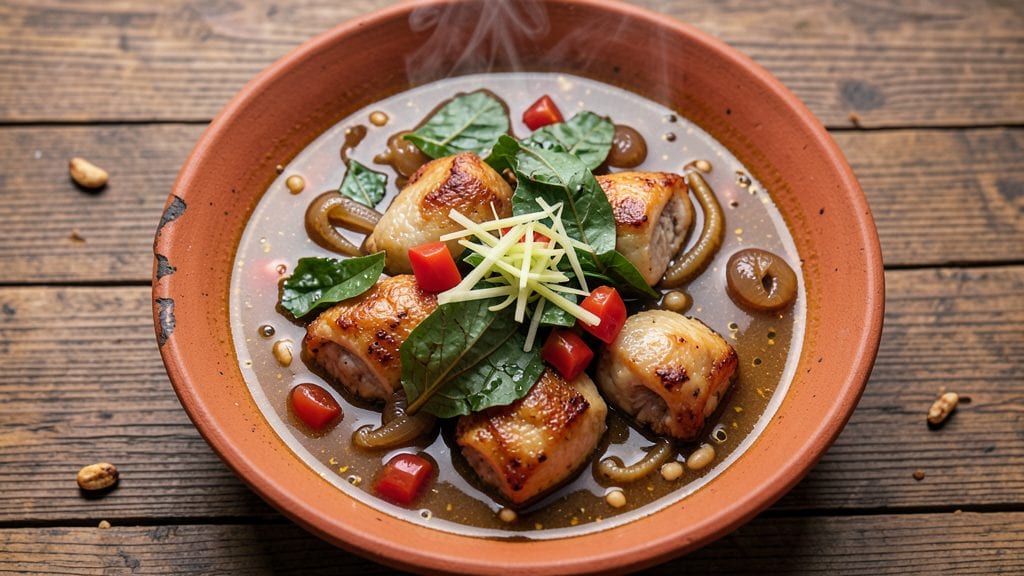
This Vishiswa soup recipe brings the hearty, comforting flavors of Ugandan cuisine to your kitchen, where tender chicken and earthy cassava leaves simmer into a fragrant, protein-rich stew.
The dish is traditionally served during celebrations and family gatherings, offering a perfect balance of bold spices, nutty groundnuts, and the natural sweetness of cassava leaves.
What makes this recipe special is its ability to transform simple ingredients into a deeply satisfying meal that's both nourishing and full of cultural significance.
The secret to authentic Vishiswa lies in the slow simmering process, which allows the flavors to meld together while tenderizing the chicken and vegetables. This recipe includes traditional techniques like toasting spices for maximum aroma and preparing cassava leaves properly to avoid bitterness.
With just 30 minutes of active prep and 1.5 hours of simmering, you'll have a restaurant-quality dish that's perfect for feeding a crowd or enjoying a cozy family dinner.
By the time you finish cooking, you'll have a steaming bowl of Vishiswa with tender chicken pieces, vibrant green cassava leaves, and a rich, spiced broth that's packed with flavor.
The groundnuts add a delightful crunch and nutty depth, while the blend of spices creates a warm, inviting aroma that fills your home. This is comfort food at its finest—a dish that's both hearty and full of tradition, designed to be shared and savored.
The beauty of Vishiswa is its versatility—serve it with crusty bread to soak up every last drop of the flavorful broth, or pair it with steamed rice for a complete meal.
The leftovers keep well in the refrigerator for up to 3 days, making it an ideal dish for meal prep or busy weeknights. Let's get started on creating this authentic Ugandan classic in your own kitchen.
Ingredients for vishiswa soup
Simple ingredients that pack a flavor punch—this Ugandan classic needs just 15 staples.
| Ingredient | Amount | Notes |
|---|---|---|
| Chicken Thighs 🍗 | 2 lb | Bone-in, skin-on preferred |
| Cassava Leaves 🌿 | 1 lb | Fresh, washed thoroughly |
| Groundnuts 🥜 | ½ cup | Roasted, unsalted peanuts |
| Onions 🧅 | 2 whole | Yellow, chopped fine |
| Fresh Ginger 🧄 | ½ cup | Grated, skin-on |
| Tomatoes 🍅 | 3 whole | Ripe, chopped |
| Garlic Cloves 🧄 | 6 cloves | Peeled, minced |
| Coconut Milk 🥥 | 1 can | Full-fat, 13.5 oz |
| Vegetable Oil 🫒 | ½ cup | For cooking |
| Groundnut Oil 🫒 | ¼ cup | For toasting spices |
| Curry Powder 🌶️ | 2 tbsp | Mild, toasted |
| Ground Cumin 🌿 | 1 tbsp | Toasted |
| Turmeric Powder 🌶️ | 1 tsp | Freshly ground preferred |
| Salt 🧂 | 1 ½ tsp | Adjust to taste |
| Black Pepper 🌶️ | ½ tsp | Freshly ground |
The cassava leaves are the star, so grab fresh ones from an African market if possible—they’ve got that earthy, slightly bitter kick that’s essential. If you can’t find them, spinach or collard greens work in a pinch, but they won’t taste quite the same. The chicken? Thighs stay juicier than breasts during the long simmer. For groundnuts, roast your own peanuts if you’ve got time—they’ll taste way better than store-bought salted ones. Look for unsalted, dry-roasted peanuts at bulk bins or the international aisle.
No cassava leaves? Kale or mustard greens are decent substitutes, but you’ll need about twice the amount since they’re milder. Short on coconut milk? Heavy cream or half-and-half works, but the dish will be lighter. The spices matter—toast your curry powder and cumin in groundnut oil for 30 seconds before adding to the pot. That step makes all the difference. For tomatoes, San Marzano if you’re fancy, but any ripe, flavorful variety will do. The ginger should be freshly grated—none of that jarred stuff.
This soup tastes even better the next day, so make extra. Keeps in the fridge for 3-4 days sealed tight, or freeze portions for up to 3 months. I like to portion it into glass containers with a splash of coconut milk on top—prevents a skin from forming. Serve with crusty bread or steamed rice to soak up every last drop of that rich, spiced broth.
Why You'll Love This Recipe
- No Chopping Nightmare: The cassava leaves? They’re pre-washed and ready to go if you buy them fresh—no tedious scrubbing like spinach. Even if you’re using dried, a quick soak softens them up in minutes. Honestly, the hardest part is deciding whether to fry the onions or sauté them with the ginger first.
- Peanut Powerhouse: That groundnut paste isn’t just flavor—it’s the secret weapon. The toasty, slightly bitter depth from the roasted peanuts balances the chicken’s richness, while the ginger cuts through it like a bright knife. My kids fight over the last spoonful of the broth. (Yes, even the adults.)
- Leftovers That Shine: This soup tastes better the next day—like a cozy hug in a bowl. I make a double batch on Sundays, and by Wednesday, it’s still the star of my lunch. Freeze the extra portions, and thawing just means a quick reheat. No sad, rubbery leftovers here.
- Budget-Friendly Feast: Chicken thighs stretch farther than breasts, and cassava leaves are cheaper than kale. Groundnuts add luxury without breaking the bank, and onions/ginger? Always in my pantry. Between us, this feeds four for under $10—and still feels like a restaurant dish. (My wallet thanks me.)
Step-by-step instructions for Vishiswa soup
Here's how to make this hearty South Indian stew with rich flavors and tender chicken.
Prepare the Chicken and Vegetables
Start by trimming any excess fat from the 2 lb chicken thighs and cutting them into bite-sized pieces. Set them aside. Next, wash the 1 lb cassava leaves thoroughly and chop them into 1-inch pieces. You'll want to remove any tough stems first—this makes them easier to chew and prevents bitterness.
Peel and finely chop the 2 whole onions, then grate the 0.5 cup fresh ginger, skin and all. Chop the 3 whole tomatoes into small chunks and mince the 6 cloves garlic. Keep all these prepped ingredients separate in bowls so they're ready when you need them. The key here is uniformity—finely chopped onions and ginger will blend smoothly into the soup, while larger pieces can create texture contrasts.
Sauté the Aromatics and Spices
Heat the 0.25 cup groundnut oil in a large pot over medium heat. Once hot, add the chopped onions and cook for 5-6 minutes until they turn golden brown and translucent. This step develops the base flavor—don't rush it, or the onions will burn and make the soup bitter.
Add the minced garlic, grated ginger, 2 tbsp curry powder, 1 tbsp ground cumin, and 1 tsp turmeric powder. Stir constantly for 1-2 minutes until the spices release their aroma and the oil becomes fragrant. You'll see the spices darken slightly—that's when you know they're properly toasted and ready to infuse the soup with flavor.
Cook the Chicken and Add Vegetables
Increase the heat to medium-high and add the 2 lb chicken thigh pieces, seasoning them with 1.5 tsp salt and 0.5 tsp black pepper. Cook for 5-6 minutes, stirring occasionally, until the chicken turns opaque and starts to brown on the edges. This initial searing locks in the juices and builds deep flavor.
Add the chopped tomatoes and cook for another 3-4 minutes until they soften and release their juices into the pot. Stir in the chopped cassava leaves and pour in the 1 can coconut milk. Bring the mixture to a gentle boil, then reduce the heat to low. The soup should simmer steadily—this is where the magic happens as all the flavors meld together.
Simmer to Perfection
Cover the pot and let the soup simmer for 45-50 minutes, stirring occasionally. The chicken should become fork-tender and easily pull apart. If the soup starts to reduce too much and looks thick, add a little water—just enough to keep it at a gentle simmer. You want the cassava leaves to soften but still retain some texture.
After 45 minutes, taste the soup and adjust the seasoning if needed. The cassava leaves should be tender but not mushy. Once everything is perfectly cooked, stir in the 0.5 cup groundnuts and cook for another 2-3 minutes. This adds a delightful crunch and nutty flavor that balances the richness of the coconut milk.
Finish and Serve
Remove the pot from heat and let the soup rest for 5 minutes. This allows the flavors to settle and the chicken to absorb any remaining juices. Serve the Vishiswa Soup hot, garnished with a sprinkle of freshly ground black pepper and a drizzle of coconut milk if desired.
This soup tastes even better the next day as the flavors deepen and meld together. Pair it with steamed rice or crusty bread to soak up every last bit of that flavorful broth. The combination of tender chicken, nutty groundnuts, and the earthy cassava leaves makes this a truly satisfying dish.
Pro Tips For Making Vishiswa Soup
- CRISP THE GINGER: Peel and slice ginger thin—like matchsticks—so it infuses the soup without turning it into a muddy paste. I used to chop it roughly, and the flavor got lost in the cassava leaves. Thin slices release aroma faster and blend smoothly.
- SALT THE THIGHS FIRST: Season chicken thighs generously with salt and let them sit 20 minutes before cooking. This ensures they stay juicy while browning, and the salted skin crisps up beautifully when you sear them. Skipping this step means dry, flavorless meat.
- WATCH THE GROUNDNUTS: Toast the groundnuts low and slow in a dry pan until they smell nutty—not burnt. Overheating turns them bitter, and that ruins the soup’s rich, earthy base. Stir often and pull them out just before they darken.
- BLANCH THE LEAVES: Shock the cassava leaves in boiling water for exactly 2 minutes before adding them to the pot. This removes bitterness and softens them just enough to blend into the soup without turning it slimy. Don’t skip the ice bath after—it stops the cooking process cleanly.
Common mistakes when making great vishiswa soup
Skipping Spice Toasting
One of the biggest mistakes is skipping the spice toasting step, which is crucial for building deep flavor. Toast your curry powder and cumin in groundnut oil for 30 seconds until fragrant—that's when they release their maximum aroma.
I once made Vishiswa without toasting and ended up with a bland, one-dimensional soup. The spices need that quick burst of heat to awaken their essential oils.
Overcooking Cassava Leaves
Cassava leaves should be tender but still retain some texture—overcooking turns them mushy and ruins the dish. Simmer for 45-50 minutes maximum, then check for doneness. If they're still slightly crisp, they're perfect.
I learned this the hard way when my first batch turned into a sad, watery mess. A quick taste test is key—leave them slightly underdone if unsure.
Using Pre-Salted Groundnuts
Store-bought salted peanuts will overpower the delicate balance of flavors in Vishiswa. Always use unsalted, dry-roasted groundnuts—toast your own if possible. The natural nuttiness should complement, not dominate.
I once used salted peanuts and had to adjust the entire batch with extra water to dilute the saltiness. A simple swap makes all the difference.
Rushing the Simmering Process
Patience is everything with this soup—rushing the simmering time leads to tough chicken and underdeveloped flavors. The 45-50 minute simmer is non-negotiable for tenderizing the chicken and melding the spices. I've seen people try to speed it up with high heat, but that just creates a thin, flavorless broth.
Keep it at a gentle simmer—this is where the magic happens.
Ignoring the Resting Time
Letting the soup rest for 5 minutes off heat before serving allows the juices to redistribute and the flavors to settle. Skipping this step means serving a soup where the chicken releases juices into the bowl instead of staying moist.
I always give mine a proper rest—it makes a world of difference in texture and taste. Think of it as the final touch before serving.
Substituting Cassava Leaves Improperly
If you can't find cassava leaves, avoid using spinach or kale without adjusting quantities. These greens are milder and need twice the amount to match the earthy depth. I once used regular spinach without doubling it, and the soup tasted flat.
When substituting, always increase the greens by 50% and add an extra ½ tsp salt to compensate for the milder flavor profile.
Nutrition facts
Frequently asked questions
What makes cassava leaves essential in this Ugandan chicken stew?
The cassava leaves bring an earthy, slightly bitter depth that's the soul of this dish. Their unique flavor pairs perfectly with the nutty groundnuts and tender chicken, creating a balanced taste profile. Fresh leaves are ideal, but if unavailable, use twice the amount of spinach or kale while adjusting salt levels.
Can I use chicken breasts instead of thighs?
While possible, thighs stay juicier during the long simmer. If using breasts, trim excess fat and add them after the initial 30-minute simmer to prevent drying out. For best results, stick with thighs—they handle the extended cooking time beautifully and add rich flavor to the broth.
How do I properly prepare cassava leaves if I've never used them?
Wash thoroughly to remove dirt, then chop into 1-inch pieces while removing tough stems. Blanch in boiling water for 1 minute to soften slightly before adding to the soup. This reduces bitterness and ensures they cook evenly. Never skip washing—they grow close to the ground!
What's the secret to getting that authentic nutty flavor?
Toast your groundnuts in a dry pan until fragrant (3-4 minutes) before adding to the soup. This enhances their natural oils and creates that signature crunch. For extra depth, lightly toast your spices in groundnut oil before incorporating them into the aromatics.
Can I make this soup in a slow cooker?
Brown the chicken first, then transfer everything to the slow cooker and cook on low for 4-5 hours. The slow cooking enhances tenderness and flavor development. Just check occasionally to prevent over-simmering—aim for 45 minutes of cooking time equivalent to stovetop.