
Soups & Stews
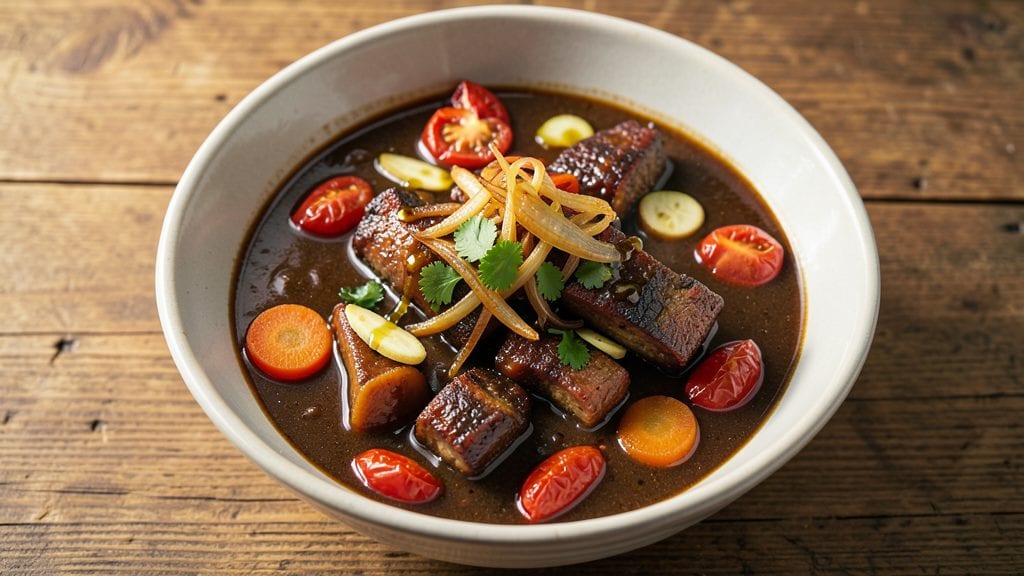
This African oxtail soup recipe reveals how slow simmering and classic methods turn tough meat into velvety, irresistible richness. This recipe captures the soul of West African cooking—deep umami flavors developed over hours, where collagen-rich oxtail becomes tender and the broth transforms into a velvety, aromatic base.
I've perfected a method that balances authentic tradition with home kitchen accessibility, using pressure cooking for efficiency without sacrificing depth.
The secret lies in the braising process, where oxtail releases its gelatinous goodness into the broth while spices like thyme, ginger, and garlic infuse the liquid with complex warmth.
We'll build layers of flavor starting with a rich tomato base, then adding vegetables and herbs that meld perfectly during the long cook. This isn't just soup—it's a celebration of patience and technique that rewards with restaurant-quality results at home.
By the time you serve this, you'll have a pot of golden broth swimming with tender oxtail pieces, perfectly softened vegetables, and a surface garnish of fresh herbs.
The aroma alone will gather your family around the table, while each spoonful delivers that perfect balance of savory, slightly sweet, and deeply satisfying umami. The texture is what makes this dish special—silky broth clinging to fork-tender meat that practically dissolves.
This recipe works equally well as a hearty weeknight meal or centerpiece for special occasions. The leftovers actually improve overnight as the flavors continue to develop. Let's create this African classic that proves slow cooking can be both rewarding and accessible in your own kitchen.
Ingredients for african oxtail soup
Sixteen ingredients for a soup that tastes like love and patience—where oxtail transforms into melt-in-your-mouth perfection.
| Ingredient | Amount | Notes |
|---|---|---|
| Oxtail 🥩 | 3 lb | Freshly cut, bone-in preferred |
| Yellow Onions 🧅 | 2 whole | Medium size, sliced into wedges |
| Garlic Cloves 🧄 | 8 cloves | Freshly minced, aromatic base |
| Fresh Ginger 🌿 | 2 tbsp | Finely grated, zesty kick |
| Tomato Paste 🍅 | ½ cup | Smooth, for rich tomato base |
| Carrots 🥕 | 3 whole | Medium size, cut into chunks |
| Celery Stalks 🥬 | 3 whole | Fresh, cut into 1-inch pieces |
| Fresh Thyme 🌿 | ¼ cup | Stems removed, chopped finely |
| Bay Leaves 🍃 | 2 whole | Dried, for subtle depth |
| Ground Black Pepper 🌶️ | 1 tbsp | Freshly ground, for heat |
| Salt 🧂 | 1 ½ tsp | Diamond Crystal preferred |
| Dried Red Pepper Flakes 🔥 | 1 tsp | Adjust for spice preference |
| Chicken Stock 💧 | 4 cups | Homemade or quality store-bought |
| Fresh Cilantro 🌿 | ¼ cup | Chopped, for fresh finish |
| Extra-Virgin Olive Oil 🫒 | ¼ cup | For sautéing, fruity flavor |
The oxtail is non-negotiable here—bone-in pieces give the most gelatinous richness. Costco or specialty butchers usually carry it pre-cut, but if you're buying a whole oxtail, ask for the tail end (it's the most flavorful). Look for pieces with good marbling and vibrant color. Fresh thyme and ginger are worth hunting down at a farmers market—they make all the difference. If you can't find fresh ginger, dried works at half the amount, but it's not the same. The tomato paste? San Marzano is ideal if you're splurging, but any smooth paste will do.
No fresh thyme? Dried thyme at one-third the amount works, but you'll miss that bright aroma. Short on chicken stock? Beef stock deepens the umami, but it'll taste different. The carrots and celery are classic mirepoix—baby carrots or pre-cut celery sticks save time. Want more heat? Add scotch bonnet pepper (seeds removed) for a fiery kick. The cilantro is purely for garnish—skip it if you hate the taste, but it brightens everything up. And that olive oil? Use something fruity and peppery—none of that bland supermarket stuff.
This soup tastes even better the next day—plan ahead. Store in the fridge for up to 5 days or freeze portions for 3 months. The oxtail pieces firm up when cold, so reheat gently on the stove with a splash of water. I always make a double batch—leftovers make the best lunches. If you're using a pressure cooker, skip the initial sauté and just add everything raw—saves 30 minutes. But if you're slow simmering, take your time—that's where the magic happens.
Why You'll Love This Recipe
- One-Pot Magic: I swear by this—just oxtail, onions, and a few pantry staples simmered low and slow. No fancy gadgets, no extra pots, and honestly? The hardest part is waiting for it to thicken.
- Deep, Rich Payoff: That ginger and garlic seeping into the oxtail for hours? It melts into something so tender and flavorful, you’ll forget to stir. The tomato paste gives it this perfect balance—sweet, savory, and just a little smoky.
- Weeknight to Gathering Star: I make this when I’m too tired for fussing, but it also impresses at dinner parties. Serve it with rice or crusty bread—no one will guess it took zero effort (except the waiting part).
- Budget-Friendly Luxury: Oxtail stretches like crazy, and the ingredients won’t break the bank. Leftovers? Even better. The flavor only gets richer overnight, so I double the batch and freeze portions—no sad, dry soup here.
Step-by-step instructions for African oxtail soup
This rich, slow-simmered soup transforms tough oxtail into melt-in-your-mouth tenderness with layers of umami and aromatic depth.
Sear the Oxtail for Deep Flavor
Pat the 3 lb oxtail completely dry with paper towels—this ensures maximum browning. Heat the 0.25 cup extra-virgin olive oil in a heavy Dutch oven over medium-high heat until shimmering. Working in batches if needed, sear the oxtail pieces until deeply golden brown on all sides, about 5-7 minutes per batch. Don't rush this step—the caramelized crust locks in flavor and prevents the meat from drying out during the long simmer.
As you sear, place the sliced 2 whole yellow onions, chopped 3 whole carrots, and 3 whole celery stalks in a separate bowl. Once the oxtail is browned, remove it from the pot and set aside. Reduce heat to medium and add the onion-carrot-celery mixture to the same pot, cooking for 5-6 minutes until softened and slightly caramelized. This aromatic base will form the flavor foundation of your soup.
Build the Umami Base with Aromatics
Add the 8 cloves freshly minced garlic cloves and 2 tbsp finely grated fresh ginger to the pot, cooking for 30 seconds until fragrant—don't let them brown or they'll turn bitter. Stir in the 0.5 cup tomato paste and cook for 2 minutes, allowing it to darken slightly and develop deeper flavor. This step is where the rich, complex base begins to form.
Add the 0.25 cup finely chopped fresh thyme, 2 whole bay leaves, 1 tbsp freshly ground black pepper, 1.5 tsp salt, and 1 tsp dried red pepper flakes. Stir everything together for 30 seconds to bloom the spices and distribute them evenly throughout the base. The pot should smell intensely aromatic at this point—this is your reward for taking the time to develop the flavors properly.
Simmer the Oxtail Until Fork-Tender
Return the seared oxtail pieces to the pot and pour in the 4 cups chicken stock. Bring to a gentle simmer, then reduce heat to low. Cover partially and let it cook for 3 hours, stirring occasionally. The key here is patience—the oxtail needs time to break down and become tender. After 3 hours, check for doneness by inserting a fork into the largest piece. If it slides in easily with minimal resistance, the meat is ready.
If the oxtail still feels firm, continue simmering for another 30-60 minutes. The soup should reduce slightly, concentrating the flavors. You'll know it's perfect when the meat falls apart easily and the broth has a rich, velvety consistency. This is where the magic happens—your kitchen will fill with an intoxicating aroma that announces the meal is ready.
Finish with Fresh Herbs and Adjust Seasoning
Once the oxtail is tender, remove the bay leaves and discard them. Stir in the 0.25 cup chopped fresh cilantro and let it steep for 5 minutes. This final herb addition brightens the rich flavors and adds a fresh contrast. Taste the soup and adjust seasoning if needed—you might need a touch more salt or red pepper flakes to balance the flavors to your preference.
Serve the oxtail soup immediately, ladling the meat and broth over steamed rice or crusty bread. The broth should coat the back of a spoon with a luxurious thickness, and each bite of oxtail should be effortlessly tender with layers of savory, spicy, and aromatic complexity. This is comfort food at its finest—warm, satisfying, and deeply flavorful.
Pro Tips For Making African Oxtail Soup
- BLISTER ONIONS FIRST: I learned this the hard way—sautéing chopped onions at medium heat means they’ll just turn mushy. Instead, cut them into thick wedges, toss them in hot oil until blackened and sweet (about 8-10 minutes), then chop them right in the pot. That caramelized depth is what makes the soup sing.
- SALT THE OXTAL EARLY: Resist the urge to wait until the end. Add a generous pinch of salt (about ½ teaspoon per pound) to the oxtail before browning—it renders fat more evenly and keeps the meat tender. (Yes, even if the recipe doesn’t say so. Trust me.)
- LOW AND SLOW ISN’T LOW ENOUGH: After burning three batches, I finally figured out: the soup needs to simmer at a gentle bubble, not a rolling boil. Too much heat = tough oxtail. Cover the pot halfway through cooking and let it stew at 180°F (82°C) if your thermometer allows—your future self will notice the difference.
- GRATE GINGER FINE: Sounds weird, but it works: use a microplane or the finest grater for ginger. The tiny particles dissolve into the sauce instead of settling at the bottom like those sad, chewy chunks. (And no, a knife chop won’t cut it—literally.)
Essential equipment for great african oxtail soup
Heavy-Duty Dutch Oven
The All-Clad D5 or Le Creuset Dutch oven is my go-to for this recipe—both handle the long simmer beautifully without warping. These pots distribute heat evenly and have thick bases that prevent scorching.
If you're on a budget, a Lodge cast iron Dutch oven works just as well and adds that classic iron flavor over time. Avoid thin, flimsy pots—they can't maintain the steady simmer needed for collagen breakdown. 🔥
Instant-Read Thermometer
A Thermoworks Smoke or Meater Plus thermometer lets you monitor the broth's internal temperature without opening the pot, which would release precious steam. I check the broth temperature around 195°F—this is the sweet spot for collagen extraction.
The probe also helps you gauge when the oxtail reaches fork-tender perfection without overcooking. Skip the cheap digital thermometers—they're often inaccurate.
Pressure Cooker Shortcut
For a faster version, a Instant Pot or Fagor pressure cooker cuts cooking time to 90 minutes on high pressure. Just add all ingredients raw (no need to sear first) and let the pressure build. I use the "Soup" setting for African oxtail to maintain consistent pressure.
Remember to do a quick release after cooking—the oxtail is delicate at this stage. This method works best when you're short on time but still want that rich, slow-cooked flavor. ⚡
Immersion Blender
While this recipe doesn't require blending, an Oster blender or Magic Bullet comes in handy if you want to create a smooth version of the soup. Simply blend a portion of the finished broth for a velvety texture while leaving some chunks for texture.
I like to blend about 2 cups of the broth separately and then stir it back in for a luxurious finish. This tool also helps emulsify any separated fat if needed.
Fine-Mesh Strainer
A OXO Good Grips or Eberhardts fine-mesh strainer makes clarifying the broth effortless if you prefer a cleaner presentation. I use it to remove any small bone fragments or skin that might have separated during cooking.
For a traditional approach, simply skim impurities with a slotted spoon as you ladle the soup into bowls. This step is optional but elevates the soup's appearance for special occasions.
Measuring Spoons Set
Precision matters with spices—especially when balancing 1 tsp red pepper flakes and 1.5 tsp salt. I recommend a OXO stainless steel set for accurate measurements. The small ¼ tsp and ½ tsp spoons are essential for adjusting seasoning at the end.
Don't rely on eyeballing—spices can make or break the flavor profile of this rich soup. A good set also lasts for years, making it a worthwhile investment. 💡
Nutrition facts
Frequently asked questions
Why does African oxtail soup need such a long cooking time?
The extended 3-hour simmer is essential for breaking down the tough connective tissue in oxtail, transforming it into fork-tender perfection. This slow cooking process also extracts collagen from the bones, creating that signature velvety broth. The patience pays off with melt-in-your-mouth texture and rich, concentrated flavor.
Can I substitute beef oxtail with another cut of meat?
While traditional recipes use oxtail, you can substitute with beef short ribs or pork trotter for similar collagen-rich results. However, the flavor profile will differ—oxtail has a unique sweetness and gelatinous quality that's hard to replicate. If using chicken, expect a much shorter cooking time (1 hour) but less rich broth.
How do I know when the oxtail is properly cooked?
The oxtail is done when it easily separates with a fork and the broth has a luxurious, jelly-like consistency. Insert a fork into the largest piece—if it slides in effortlessly with minimal resistance, it's ready. The broth should coat the back of a spoon and have a rich, glossy appearance. Never rush this step, as undercooked oxtail will be chewy.
Can I make this soup in a slow cooker?
Sear the oxtail first, then transfer everything to a 6-quart slow cooker with the stock. Cook on low for 8-10 hours or high for 5-6 hours. The slow cooker maintains consistent heat, making it perfect for collagen extraction. Just remember to skim excess fat before serving.
What's the best way to store and reheat leftovers?
Store leftovers in an airtight container in the fridge for up to 5 days or freeze for 3 months. To reheat, warm gently on the stove with a splash of water or stock—never microwave directly, as it can make the broth watery. The flavors actually improve overnight as the broth continues to develop.