
Soups & Stews
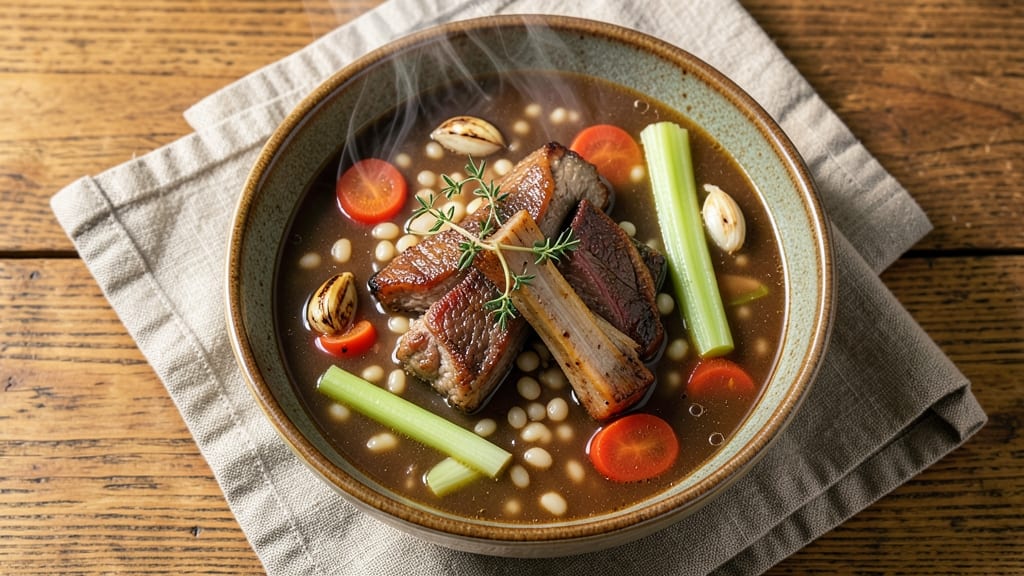
This beef barley soup recipe with prime rib bones transforms tough cuts into a velvety, restaurant-worthy broth that tastes like it simmered all day. The secret lies in slow-roasting the bones to unlock deep, caramelized flavors before simmering them for hours—a process that turns simple ingredients into something extraordinary.
I developed this method after years of experimenting with bone broths, and the difference is night and day compared to store-bought versions.
The result is a soup with a rich, umami-packed broth that coats every spoonful, tender beef that practically melts in your mouth, and chewy barley that soaks up all the savory essence.
We’ll use prime rib bones for their natural richness, paired with aromatic vegetables and herbs to build layers of flavor. This isn’t just soup—it’s a hearty, comforting meal that warms you from the inside out, perfect for chilly evenings or when you crave something deeply satisfying.
What sets this recipe apart is the technique: roasting the bones first concentrates their flavor, while a long simmer extracts every last bit of gelatin for that signature velvety texture.
The barley cooks until tender but still holds its shape, and the vegetables add brightness without overpowering the deep, meaty base. Every ingredient plays a role, and the end result is a bowl of soup that feels like a hug in edible form.
Ready in about 3 hours (most of which is hands-off simmering), this recipe delivers restaurant-quality depth with minimal effort. The key is patience—letting the broth develop slowly ensures a flavor profile that’s impossible to replicate quickly.
Serve with crusty bread to soak up every last drop of that luxurious broth. Let’s get started.
Ingredients for beef barley soup recipe with prime rib bones
Prime rib bones and aromatic vegetables create a velvety broth with restaurant-worthy depth.
| Ingredient | Amount | Notes |
|---|---|---|
| Prime Rib Bones 🦴 | 3 lb | Cut into 3-inch pieces, marrow intact |
| Yellow Onions 🧅 | 2 whole | Medium size, roughly chopped |
| Carrots 🥕 | 2 lb | Medium size, peeled and cut into chunks |
| Celery Stalks 🌿 | 6 whole | Fresh, tough ends trimmed |
| Garlic Cloves 🧄 | 8 cloves | Fresh, peeled and smashed |
| Pearl Barley 🌾 | 1 ½ cups | Uncooked, rinsed thoroughly |
| Tomatoes 🍅 | 4 whole | Roma or vine-ripened, crushed |
| Beef Chuck Roast 🥩 | 2 lb | Cut into 1.5-inch cubes |
| Fresh Thyme 🌿 | ¼ cup | Leaves only, stems removed |
| Fresh Parsley 🌿 | ¼ cup | Chopped, for garnish |
| Bay Leaves 🍃 | 2 whole | Dried, standard size |
| Black Peppercorns 🌶️ | 1 tbsp | Freshly cracked, not ground |
| Diamond Crystal Kosher Salt 🧂 | 2 tsp | For seasoning and adjusting broth |
| Extra-Virgin Olive Oil 🫒 | ½ cup | For roasting vegetables |
| Red Wine 🍷 | 1 cup | Dry, like Cabernet Sauvignon |
The prime rib bones are the foundation—look for marrow-rich bones at your butcher or specialty grocer like Whole Foods. The marrow adds unmatched richness to the broth. For the vegetables, freshness matters: bruised carrots or wilted celery will muddy the broth. I always buy organic celery when possible—it holds up better during the long simmer. The beef chuck roast should have visible marbling; Costco's pre-cut roast is my go-to for consistency. Store all ingredients in the fridge until ready to use, with the bones wrapped tightly to prevent drying.
No prime rib bones? Beef marrow bones or knuckle bones work equally well, though they may require longer roasting. Substituting dried thyme for fresh? Use one-third the amount—the flavor is more concentrated. The red wine can be swapped for dry sherry or additional beef broth, though wine adds that subtle acidity that balances the richness. For the barley, pearled barley is ideal—it cooks faster than whole grain and holds its shape. If you can't find it, couscous or orzo work in a pinch, though the texture will differ. The tomatoes? San Marzano canned tomatoes are my secret weapon—they're sweeter and more flavorful than standard brands.
This soup develops deeper flavor over time—reheat gently on the stove to preserve its velvety texture. Store leftovers in airtight containers in the fridge for up to 5 days, though I recommend freezing portions for longer storage. The broth freezes beautifully for up to 3 months, making it perfect for meal prep. For optimal freshness, keep the bones and vegetables in the fridge until ready to roast, and store the fresh herbs in damp paper towels wrapped in plastic. The finished soup keeps well for 5-6 days when refrigerated, with flavor actually improving as it sits.
Why You'll Love This Recipe
- Minimal Chopping Required: I swear by this—just rough-chop the onions, slice the carrots into thick rounds, and hack the celery into 2-inch chunks. The prime rib bones do all the heavy lifting while you sip wine and pretend you’re a French chef.
- Rich Without the Fuss: That first sip? Chef’s kiss. The marrow from the prime rib bones melts into the broth, turning it into liquid gold—no fancy reduction or hours of simmering. Just dump everything in, let it work its magic, and you’ve got depth in every spoonful.
- Sunday Supper or Meal Prep: Between us, this soup is my secret weapon for both lazy Sundays and busy weeks. Double the batch, freeze half, and reheat it when you’re too tired to think. The flavor only gets better after a day in the fridge—honestly, leftovers are the real star.
- Budget-Friendly Luxury: Prime rib bones might sound fancy, but they’re the most cost-effective way to get restaurant-quality broth. I buy them in bulk, roast them until crispy, then toss them straight into the pot. Suddenly, you’re feeding a crowd for less than takeout—without sacrificing taste.
Step-by-step instructions for beef barley soup with prime rib bones
Transform humble ingredients into a restaurant-worthy soup with deep bone marrow richness and perfectly tender barley.
Roast Vegetables and Brown Bones for Maximum Flavor
Preheat your oven to 425°F and line two rimmed baking sheets with parchment paper. In a large bowl, toss the 2 whole yellow onions, 2 lb carrots, 6 whole celery stalks, 8 cloves garlic cloves, and 0.25 cup fresh thyme with 0.5 cup extra-virgin olive oil. Spread everything in a single layer on the prepared sheets.
Roast for 25-30 minutes, stirring once halfway through, until the vegetables are deeply caramelized and the garlic is fragrant. Meanwhile, heat a large Dutch oven over medium-high heat. Add the 3 lb prime rib bones in batches, searing until deeply browned on all sides (about 5 minutes per batch). This Maillard reaction builds the soup's foundational depth.
Build the Broth with Wine and Vegetables
Return all roasted vegetables to the Dutch oven along with the browned bones. Add the 1 cup red wine and scrape up any browned bits from the bottom - these contain concentrated flavor. Pour in 8 cups cold water and bring to a rolling boil. Reduce heat to low and skim off any foam that rises to the surface.
Add the 2 whole bay leaves, 1 tbsp freshly cracked black peppercorns, and 2 tsp diamond crystal kosher salt. Cover partially and simmer gently for 2 hours, maintaining a barely perceptible bubble. This slow extraction ensures the bones release their marrow and collagen, creating a velvety texture. Check occasionally and add water if the liquid reduces too much.
Add Meat and Barley for Perfect Texture
After 2 hours, remove the bones and strain the broth through a fine-mesh sieve into a large pot, pressing gently on the solids to extract maximum flavor. Discard the bones and vegetables. Return the strained broth to the pot and bring to a gentle simmer over medium-low heat. Add the 2 lb beef chuck roast cut into 1.5-inch cubes and simmer uncovered for 45 minutes, until the meat is fork-tender.
Stir in the 1.5 cups rinsed pearl barley and 4 whole crushed tomatoes. The barley should be fully submerged - add a little hot water if needed. Simmer uncovered for another 30-40 minutes, until the barley is tender but still has a slight bite. The soup should have a consistency between broth and stew - thick enough to coat a spoon but still easy to ladle.
Finish with Fresh Herbs and Adjust Seasoning
Remove the pot from heat and stir in the 0.25 cup chopped fresh parsley. Taste and adjust seasoning with additional diamond crystal kosher salt or freshly cracked black pepper as needed. The soup should be richly seasoned but not salty - the umami from the bones should be prominent.
Let the soup rest for 10 minutes before serving. This allows flavors to meld and the barley to fully absorb the broth. Ladle into bowls and garnish with additional fresh parsley if desired. The finished soup should have a deep amber color, silky texture, and complex layers of flavor from the roasted vegetables, red wine, and bone marrow.
Pro Tips For Making Beef Barley Soup Recipe With Prime Rib Bones
- Brown the Bones First: I learned this the hard way—skipping the sear means missing out on the deep, nutty flavor that comes from caramelizing the marrow and bone fragments. Get your Dutch oven ripping hot and let those bones sizzle for 8–10 minutes, turning occasionally, until they’re dark golden. The extra effort makes the broth taste like it simmered all day.
- Chop Onions Like a Pro: Tiny, even dice (about ¼-inch) cook faster and sweeten up better than big chunks. My grandmother swore by this, and she was right: uniform pieces ensure the onions melt into the soup instead of sitting like sad, undercooked lumps. (Yes, even if you’re impatient like me.)
- Don’t Rush the Simmer: After burning three batches, I finally figured out that a gentle simmer (just small bubbles breaking the surface) is non-negotiable for prime rib bones. Too much heat = cloudy broth, not rich. Cover the pot and keep it at a low boil for at least 3 hours—your patience will pay off with a velvety texture and bones that fall apart.
- Save the Celery Leaves: Sounds weird, but it works: those feathery celery leaves add a bright, herbal note that disappears if you toss them. Rinse them quickly, chop them fine, and stir them in with the barley at the end. It’s the little upgrade that makes the soup taste like it came from a restaurant.
Regional styles of this dish
British Pub Style
In British pubs, this soup often includes ale or stout instead of red wine for a malty depth. I recommend adding 1 cup of dark ale (like Guinness) when building the broth, along with a 1-inch piece of fresh ginger for warmth.
The barley is typically cooked until extra tender, almost mushy, to soak up all the broth. Serve with crusty sourdough bread and a side of pickled onions for that classic pubhouse touch. 🍺
French Bistro Twist
French bistros elevate this soup with white wine and mushrooms for earthiness. Swap the red wine for 1 cup dry white wine (like Sauvignon Blanc) and add 8 oz sliced cremini mushrooms with the roasted vegetables.
A splash of 1 tbsp cognac deglazed at the end adds a luxurious touch. Garnish with fresh tarragon instead of parsley for that Parisian flair. 🍷
German Sunday Dinner
German versions often include sauerkraut and smoked bacon for a hearty, tangy contrast. Brown 4 oz thick-cut bacon with the bones, then add 2 cups chopped sauerkraut when simmering the meat.
A 1-inch piece of juniper berries (simmered with the broth) adds a piney aroma. Serve with pretzel rolls and mustard on the side. 🥨
Italian Rustic Version
For an Italian touch, use San Marzano tomatoes and rosemary instead of thyme. Add 1 sprig fresh rosemary with the roasted vegetables and 1 cup diced pancetta (cooked with the bones).
Finish with a drizzle of extra-virgin olive oil and grated Parmesan before serving. The pancetta adds a salty, fatty richness that balances the barley perfectly. 🌿
American Homestyle
Classic American versions often include corn kernels and potatoes for heartiness. Add 1 cup frozen corn and 2 diced potatoes with the barley. A pinch of smoked paprika in the broth gives it that cozy, smoky depth.
Top with shredded cheddar cheese and green onions before serving. This version feels like a hug in a bowl—especially on cold winter nights. 🌽
Nutrition facts
Frequently asked questions
Why do prime rib bones make this soup so much richer than regular beef broth?
Prime rib bones contain marrow and collagen that dissolve during long simmering, creating a naturally rich, velvety texture. The slow roasting step before simmering deepens their flavor through the Maillard reaction, while their fat content adds luxurious mouthfeel compared to leaner cuts or store-bought broth.
Can I use beef marrow bones instead of prime rib bones?
Marrow bones work beautifully and are often more affordable. They'll yield even more gelatinous richness since marrow is pure fat and collagen. Just roast them slightly longer (up to 45 minutes) to render their fat completely before simmering.
What's the best way to store leftovers without making the barley mushy?
Cool the soup completely before refrigerating in airtight containers. Reheat gently on the stove over low heat (never microwave) and add 1-2 tablespoons of water if the barley appears dry. For long-term storage, freeze the broth separately from the barley and meat.
How can I make this soup vegetarian?
Replace the beef with mushrooms (for umami) and use vegetable broth instead of water. Add 1 tbsp soy sauce or miso paste to the broth for depth. For a meaty texture, try jackfruit or lentils in place of the beef cubes.
Why does my broth turn cloudy after simmering?
Cloudiness often means the broth hasn't skimmed properly or simmered long enough. Strain through a cheesecloth-lined sieve for crystal clarity. For extra richness, strain the broth twice - first through a fine-mesh sieve, then through cheesecloth.