
Soups & Stews
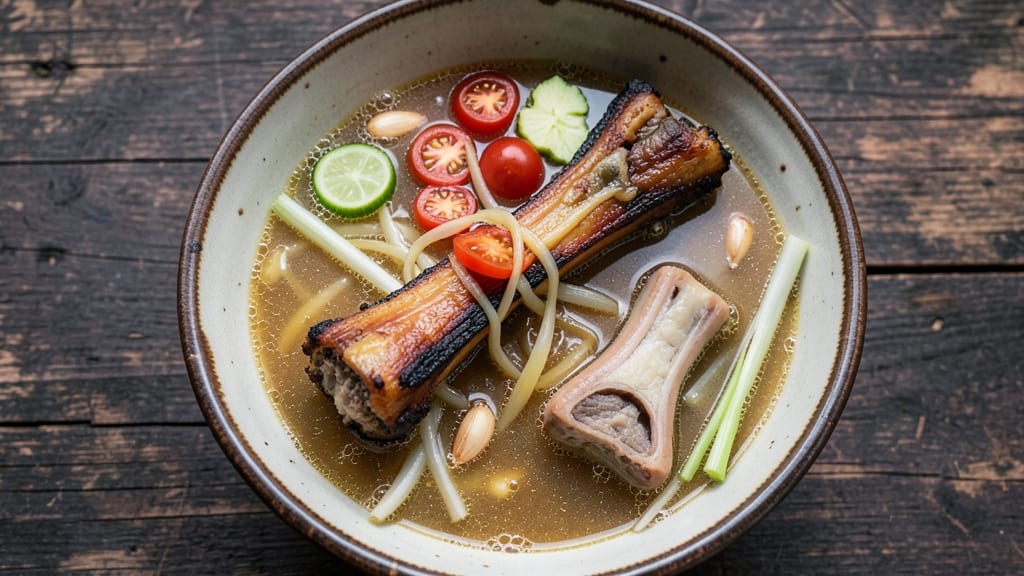
This beef bulalo bone marrow soup recipe unlocks the deep, savory essence of Filipino comfort food in one rich, aromatic bowl. The secret lies in slow-simmered beef bones and marrow that dissolve into the broth, creating a velvety texture and intense umami flavor that defines this dish.
I've perfected the balance between traditional techniques and modern convenience—no shortcuts, just layers of flavor built through patience and precise seasoning.
The foundation begins with beef shank and marrow bones, which release collagen and gelatin as they simmer for hours, transforming into a thick, luxurious broth. Traditional Filipino aromatics like lemongrass, garlic, and ginger form the flavor backbone, while bay leaves and peppercorns add depth.
The marrow, when carefully extracted and incorporated, delivers a luxurious creaminess that elevates every spoonful to restaurant-quality richness.
By the time you serve this soup, you'll have a steaming bowl of tender beef, silky marrow-infused broth, and vegetables that absorb the savory essence perfectly.
The aroma alone will draw everyone to the table, and the first bite delivers that perfect harmony of meaty richness, herbal brightness, and velvety depth. This is the kind of dish that turns ordinary weeknights into special occasions.
Whether you're preparing for a family gathering or simply craving a comforting meal, this recipe delivers authentic Filipino soul food with professional-level results. The techniques are straightforward once mastered, and the reward—a deeply satisfying bowl of bulalo—is worth every minute of simmering time.
Ingredients for beef bulalo bone marrow soup
Six hours of simmering transforms simple ingredients into restaurant-quality beef bulalo.
| Ingredient | Amount | Notes |
|---|---|---|
| Beef Shank Bones 🦴 | 4 lb | With marrow, split for broth |
| Beef Marrow Bones 🦴 | 1 ½ lb | Fresh, for creaminess |
| Yellow Onions 🧅 | 2 whole | Chopped, medium size |
| Garlic Cloves 🧄 | 12 cloves | Peeled, smashed slightly |
| Fresh Ginger 🌿 | 4 oz | Sliced, about 1-inch pieces |
| Lemongrass Stalks 🌿 | 4 whole | Fresh, bruised lightly |
| Bay Leaves 🌿 | 4 whole | Dried, standard size |
| Black Peppercorns 🌶️ | 1 tbsp | Whole, lightly crushed |
| Coconut Milk 🥥 | 1 can | 13.5 oz, full-fat preferred |
| Potatoes 🥔 | 2 lb | Russet, peeled, cubed |
| Carrots 🥕 | 1 ½ lb | Whole, scrubbed, cut |
| Green Cabbage 🥬 | 1 small | Cut into wedges |
| Salt 🧂 | 2 tbsp | Diamond Crystal preferred |
| Fish Sauce 🍶 | 2 tbsp | Red Boat brand preferred |
| Soy Sauce 🍶 | 2 tbsp | Dark soy preferred |
The bones are everything—beef shank and marrow from a quality butcher make all the difference. I always ask for fresh marrow bones at Whole Foods or my local Filipino market, where they're prepped for bulalo. Look for bones with visible marrow—those creamy yellow veins are where the magic happens. The shank should have good meat clinging to it, not just bare bone. If you can't find marrow bones, beef knuckle bones work as a substitute, though they won't give the same luxurious texture. For the aromatics, lemongrass and ginger should be vibrant—no wilted stalks or shriveled roots here. The fish sauce and soy sauce? Red Boat and Lee Kum Kee are my go-tos, but any quality brands will do.
No coconut milk? Heavy cream at half the amount works in a pinch, though it won't be quite as rich. Running short on fish sauce? Soy sauce plus a splash of vinegar mimics the umami punch. The potatoes and carrots can be swapped for other root vegetables—parsnips or turnips add nice texture. For the cabbage, Napa cabbage if you're feeling fancy, but regular green works just fine. The onions and garlic are non-negotiable—they're the flavor foundation. I always double-check my fish sauce isn't past its prime (should smell funky, not rotten). And trust me, fresh ginger beats powdered every time—it's the secret to that bright, zesty note in the broth.
This soup tastes even better the next day—4-5 days in the fridge, honestly. The flavors meld beautifully overnight. Freezes for 3 months if you portion it properly—just thaw in the fridge overnight. I like to make a big batch and freeze individual servings in ziplock bags with a little broth. Reheat gently on the stove with a splash of water to restore that silky texture. The marrow-infused broth is the star—save some to drizzle over rice or noodles for extra richness.
Why You'll Love This Recipe
- No-Chop Start: The onions and ginger just need rough chopping—no dicing, no fuss. I toss in whole cloves of garlic and a thick slab of ginger, let the pot do the work while I sip coffee.
- Rich Without Effort: Those marrow bones? They melt into velvety pools of fat, turning every bite into a luxurious mouthful. No heavy cream, no tricks—just beef breaking down into pure satisfaction.
- Leftovers That Shine: This soup tastes better the next day. I freeze portions for lazy Sundays or bring it to potlucks—no one guesses it’s reheated. The flavors only deepen, honestly.
- Budget Soul Food: A few bones stretch into meals for days. I buy shanks on sale, simmer them slow, and end up with a pot that feeds my family for less than takeout. That crispy marrow? The best part of the deal.
Step-by-step instructions for beef bulalo bone marrow soup
Here's how to transform tough bones into velvety richness—layer by layer.
Prepare the Bones for Maximum Flavor Extraction
Begin by separating the beef shank bones from their marrow. Using a sharp cleaver, split each bone lengthwise to expose the marrow cavity. This exposes more surface area for flavor infusion. Place the split shank bones in a large stockpot, adding the 1.5 lb beef marrow bones whole—their marrow will melt into the broth, creating luxurious creaminess.
Add the 2 whole yellow onions, halved, and the 12 cloves garlic cloves, smashed slightly to release their oils. Tuck in the 4 oz fresh ginger slices and the 4 whole lemongrass stalks, bruised lightly with the side of your knife. The aroma alone signals this broth is about to become extraordinary. Add the 4 whole bay leaves and 1 tbsp black peppercorns, lightly crushed between your palms. This aromatic bundle forms the flavor foundation.
Simmer the Bones Low and Slow for Deep Umami
Cover the bones with cold water by about 2 inches, then bring to a boil over high heat. Once boiling vigorously, reduce to a bare simmer—you should see only the slightest bubbles at the edges. Maintain this temperature for 3 hours, skimming any foam that rises to the surface. This slow extraction draws collagen from the bones, transforming it into gelatin that thickens the broth beautifully.
After 3 hours, remove the bones with tongs and let them cool slightly. Using a spoon, scoop out the marrow from the shank bones and set aside. The marrow should be soft and spreadable—this is your secret weapon for richness. Return the bones to the pot and continue simmering for another 2 hours. The longer it simmers, the deeper the flavor becomes.
Build the Vegetable Base and Season
Add the peeled and cubed 2 lb potatoes and the 1.5 lb carrots, cut into 1-inch chunks, to the simmering broth. Let them cook for 30 minutes until they begin to soften but aren't fully tender. This partial cooking prevents them from turning mushy later. Stir in the 2 tbsp salt, 2 tbsp fish sauce, and 2 tbsp soy sauce, allowing the flavors to meld with the broth.
Here's the thing—don't rush this step. The vegetables need time to absorb the bone broth's depth. After 30 minutes, add the wedges of 1 small green cabbage. The cabbage should be firm enough to hold its shape but beginning to wilt slightly at the edges. This is your visual cue that the vegetables are ready to absorb the final flavors.
Finish with Coconut Milk and Marrow
Pour in the 1 can coconut milk and stir gently to combine. The coconut milk should blend smoothly into the broth, creating a velvety texture without separating. Add the scooped marrow back to the pot and let the entire soup simmer together for 15 minutes. This final simmer ensures all ingredients are infused with the coconut's richness and the marrow's creaminess.
Taste the broth and adjust seasoning if needed—you might need a touch more fish sauce for umami depth or salt for balance. The soup should be rich but not overpowering, with a perfect harmony of savory, sweet, and tangy notes. The cabbage should be tender-crisp, the potatoes and carrots fully cooked but still holding their shape.
Serve with Crispy Bone Chips (Optional)
For an authentic touch, remove any remaining meat from the bones and chop it into small pieces. Heat a dry skillet over medium-high heat and toast the bone pieces until they become crispy and golden brown—about 3-4 minutes. These crispy bone chips add a delightful crunch to each bowl of soup.
Ladle the hot soup into bowls, garnishing each serving with the crispy bone chips and a sprinkle of freshly cracked black pepper. The contrast between the velvety broth, tender vegetables, and crispy bone chips makes every spoonful unforgettable. Serve immediately while the broth is steaming hot and the flavors are at their peak.
Pro Tips For Making Beef Bulalo Bone Marrow Soup
- Char Bones First: Skip the pot and sear shank bones in a dry skillet before simmering—high heat for 3-4 minutes per side turns them golden and deepens the broth’s richness. I learned this the hard way after tasting bland broth from bones that never hit the right temperature.
- Split Marrow Bones: Crack marrow bones open with a cleaver or heavy knife before adding them to the pot—this lets the marrow render into the broth instead of staying trapped inside. Sounds tedious, but it’s the difference between a good soup and one that feels extra.
- Don’t Rush the Skim: Let the broth simmer uncovered for the first 20 minutes so scum rises to the top—skim it off aggressively with a slotted spoon. Skipping this step means a cloudy broth no matter how long you simmer.
- Save the Onion Water: Reserve the cold water from soaking yellow onions (if you do) and add it to the pot later—it’s packed with dissolved sugars that caramelize and sweeten the broth. I was skeptical until I tried it; now I never skip it.
Perfect pairings for this dish
Steamed Rice Pairing
Serve this rich bulalo with jasmine rice—its floral aroma complements the soup's deep umami perfectly. I like to cook 2 cups white rice with 3 cups water in a rice cooker, adding 1 tsp salt and a pinch of black pepper for subtle seasoning.
The rice should be fluffy and slightly sticky to soak up the marrow-infused broth. For extra luxury, drizzle toasted coconut milk over the rice before serving. 🍚
Crispy Garlic Bread
A warm, crispy garlic bread cuts through the soup's richness beautifully. Use a baguette sliced into ½-inch pieces, brushed with melted butter, and sprinkled with minced garlic, parsley, and salt.
Toast in a 400°F oven for 8-10 minutes until golden and crisp. The garlic-forward flavor balances the soup's savory depth. 🥖
Spicy Chili Oil Drizzle
Add a kick with a drizzle of homemade chili oil—mix ½ cup neutral oil (like avocado oil) with 2 tbsp red chili flakes, 1 tbsp crushed Sichuan peppercorns, and 1 tsp garlic.
Heat gently until fragrant, then strain. Drizzle 1 tsp per bowl for a tingling, spicy contrast. Store leftovers in an airtight container for up to 2 weeks. 🌶️
Pickled Vegetable Garnish
Brighten the dish with quick-pickled vegetables—slice ½ cup daikon radish, ½ cup carrots, and ¼ cup red onion, then soak in ½ cup rice vinegar, 1 tbsp sugar, and ½ tsp salt for 30 minutes.
The tangy crunch balances the soup's richness. Serve as a garnish or on the side. 🥬
Filipino Beer Pairing
Pair your bulalo with a San Miguel Pale Pilsen—its crisp, clean finish cleanses the palate between rich spoonfuls. For a local twist, try Red Horse or Tanduay Rum (if you prefer cocktails). Avoid heavy lagers; their maltiness clashes with the broth's delicate balance. 🍺
Coconut Milk Ice Cream
End the meal with homemade coconut milk ice cream—blend 2 cans coconut milk, 1 cup heavy cream, and ½ cup sugar, then churn in an ice cream maker. The creamy, tropical notes echo the soup's coconut richness. Top with toasted coconut flakes for texture. 🍦
Nutrition facts
Frequently asked questions
Why does this recipe use both beef shank and marrow bones?
The shank bones provide the collagen-rich broth that thickens beautifully during simmering, while the marrow bones contribute the luxurious creaminess that defines authentic bulalo. The marrow melts into the broth, creating that signature velvety texture you can't get from regular beef bones alone.
Can I make this soup without a pressure cooker?
This recipe is designed for stovetop simmering. The 5-hour total cooking time (3 hours initial simmer + 2 hours with bones returned) works perfectly in a heavy-bottomed stockpot. Just maintain a gentle simmer—never a rolling boil—to prevent the broth from becoming cloudy.
What if I can't find beef marrow bones?
Use beef knuckle bones as a substitute—they'll still give you rich flavor, though without the same luxurious marrow creaminess. For extra richness, add 2 tablespoons of high-quality bone marrow (available at butcher shops) directly to the broth during the final 15 minutes of cooking. The texture won't be identical, but it'll still be delicious.
How do I know when the broth is ready?
The broth should be deep amber with a gelatinous consistency when chilled. Taste it before adding vegetables—it should be rich, slightly sweet, and packed with umami. If it's too mild, simmer uncovered for another 30 minutes to reduce and concentrate the flavors. The aroma should be intense with notes of beef, garlic, and ginger.
Can I make this soup ahead of time?
This soup actually tastes better the next day! Store it in an airtight container in the refrigerator for up to 4-5 days. The flavors meld beautifully overnight. For freezing, portion into ziplock bags with a little broth, leaving 1-inch headspace to prevent ice crystals. Thaw overnight in the fridge and reheat gently on the stove.