
Soups & Stews
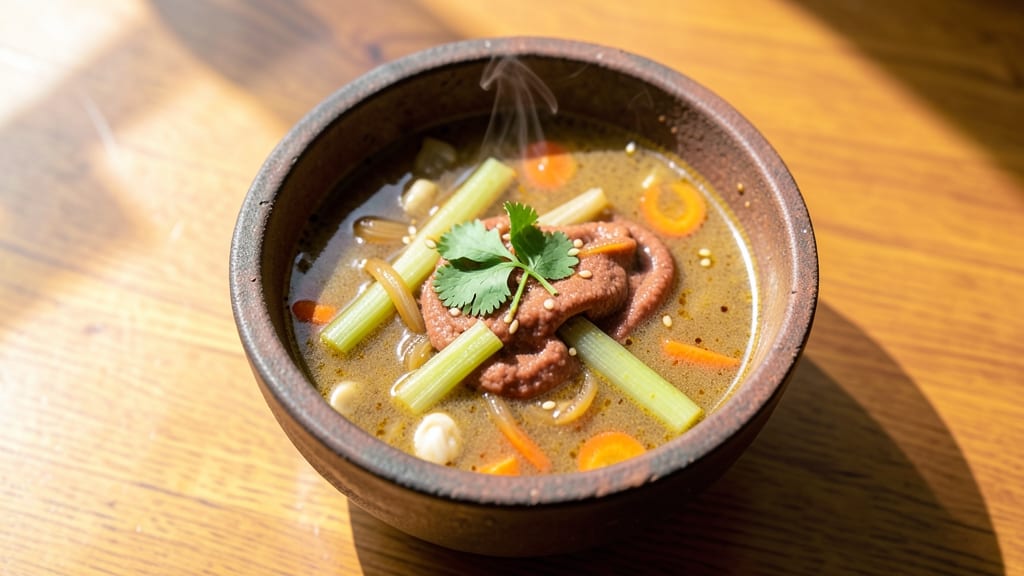
This Blue Zone soup recipe transforms simple vegetables into a nutrient-dense elixir that mirrors the longevity secrets of the world’s healthiest regions. Inspired by Okinawan and Mediterranean traditions, it’s packed with fiber, antioxidants, and umami-rich ingredients that support long-term health without sacrificing bold flavor.
The key lies in slow simmering—allowing vegetables to break down into a naturally thick, velvety broth while preserving their vibrant colors and earthy depth.
What sets this recipe apart is its adaptability—it thrives as a vegetarian powerhouse or with added fish for protein, making it perfect for any dietary preference.
The base ingredients (carrots, celery, onions, and garlic) form a foundation that’s both familiar and transformative when combined with miso paste, turmeric, and fresh herbs. Unlike processed soups, this version delivers real, whole-food nutrition in every spoonful, with no artificial additives.
The result is a soup that’s comforting yet light, warming yet energizing—ideal for chilly evenings or as a meal-prep staple. The aromatics infuse the broth with layers of savory warmth, while the vegetables retain their natural sweetness and texture.
Each bowl becomes a celebration of longevity, proving that the simplest ingredients can create extraordinary health benefits when prepared with intention.
Whether you’re exploring Blue Zone principles or simply seeking a nourishing daily meal, this recipe delivers restaurant-quality depth with minimal effort. Serve it as a standalone dish or pair with whole-grain bread for a complete, balanced plate. Let’s get cooking—your future self will thank you.
Ingredients for blue zone soup
Whole-food ingredients crafted for longevity, blending traditional wisdom with modern nutrition science.
| Ingredient | Amount | Notes |
|---|---|---|
| Organic Carrots 🥕 | 2 lb | Medium-sized, whole with tops |
| Celery Stalks 🧅 | 6 whole | Fresh, firm, trimmed ends |
| Yellow Onions 🧅 | 2 whole | Medium, peeled, halved |
| Garlic Cloves 🧄 | 8 cloves | Fresh, peeled, minced |
| Red Miso Paste 🍶 | 3 tbsp | Fermented, unsweetened |
| Turmeric Powder 🌿 | 1 tsp | Organic, vibrant color |
| Fresh Ginger Root 🌿 | 2 tbsp | Grated, freshly prepared |
| Vegetable Broth 💧 | 6 cups | Low-sodium, homemade preferred |
| Fresh Parsley 🌿 | ¼ cup | Flat-leaf, chopped |
| Extra-Virgin Olive Oil 🫒 | 2 tbsp | Cold-pressed, fruity |
| Sea Salt 🧂 | 1 tsp | Diamond Crystal preferred |
| Black Peppercorns 🌶️ | ½ tsp | Freshly cracked |
| Wild-Caught Salmon Fillet 🐟 | 1 lb | Optional, skinless, cubed |
| Brown Rice 🍚 | ½ cup | Uncooked, for serving |
| Lemon Wedges 🍋 | 2 whole | For garnish, fresh |
The foundation begins with organic carrots and celery—both rich in antioxidants and fiber. Whole Foods Market or local farmers markets offer the freshest selections, with vibrant colors indicating peak ripeness. For the yellow onions, choose medium-sized with firm skins; larger onions often have tougher layers. The garlic cloves should be plump and free of sprouts, as they provide the umami backbone. Miso paste is non-negotiable here—opt for red miso from Hessian or Marukome brands, as they deliver deeper fermentation and complexity. Turmeric powder must be organic to ensure vibrant color and potency, while fresh ginger root should be knobby and firm, not wrinkled or soft.
Vegetable broth can be homemade or a low-sodium store-bought variety like Pacific Foods. For the parsley, flat-leaf is preferred over curly for its more robust flavor. Extra-virgin olive oil should be cold-pressed and stored in a dark bottle to preserve its quality. If substituting sea salt, Diamond Crystal is ideal due to its coarse texture and lower sodium content. The black peppercorns should be freshly cracked for maximum aroma. For the optional protein, wild-caught salmon from Vital Choice ensures high omega-3 content. Brown rice should be organic and unpolished for optimal nutrition.
Store the vegetable broth in glass jars for up to 5 days in the refrigerator or 6 months frozen. Fresh ginger root keeps for 3 weeks in the fridge wrapped in a damp towel. The miso paste should be refrigerated after opening and used within 1 year. For meal prep, cook the soup base and store it in portions, reheating gently with a splash of broth to maintain texture. The salmon, if used, should be cooked separately and added just before serving to preserve its texture.
Why You'll Love This Recipe
- Pantry-to-Pot Ready: That red miso paste is my secret weapon—no fancy prep, just stir it in. I keep a jar on hand, and honestly? This soup comes together faster than my coffee brews.
- Umami Bomb: The miso and garlic create this deep, savory punch that lingers. Not too salty, not too sweet—just that perfect balance where every spoonful makes you pause.
- Meal Prep MVP: I double the batch on Sundays, and it stays fresh for days. The carrots and celery hold up beautifully, so I’m never scrambling for dinner.
- Budget-Friendly Staple: Organic carrots, celery, onions—these are the basics I always have. Between us, this soup costs me less than takeout but tastes like I slaved over it.
Step-by-step instructions for longevity-boosting vegetable velocity
This method delivers a nutrient-dense, umami-rich broth that captures all the healing properties of Blue Zone staples.
Prepare the Vegetable Base
Heat the 2 tablespoons extra-virgin olive oil in a large stockpot over medium-high heat. Add the 2 whole yellow onions, cut into ½-inch dice, and cook for 5 minutes until softened and just beginning to caramelize at the edges. The onions should release their natural sweetness while maintaining some texture.
Add the 6 whole celery stalks, cut into ½-inch pieces, and the 2 lb organic carrots, peeled and cut into 1-inch chunks. Stir to combine and cook for another 5 minutes, stirring occasionally. You'll notice the vegetables begin to soften slightly but shouldn't brown yet—this preserves their natural sweetness and prevents bitterness.
Push the vegetables to the sides of the pot and add the 2 tablespoons grated fresh ginger root and 8 cloves minced garlic cloves to the empty space. Sauté for 30 seconds until fragrant—this releases their volatile oils that will infuse the entire broth. Here's where it gets important: don't let the garlic burn, or it will turn bitter and overpower the delicate flavors we're building.
Build the Umami Foundation
Stir the vegetable mixture to distribute the ginger and garlic evenly. Sprinkle in the 1 teaspoon turmeric powder and 1 teaspoon sea salt, then add the 3 tablespoons red miso paste. The miso will immediately begin to dissolve and create a rich, fermented base. Cook for 2 minutes, stirring constantly to prevent the miso from sticking to the bottom.
Pour in the 6 cups vegetable broth and bring the mixture to a gentle boil. Once boiling, reduce heat to medium-low and let it simmer uncovered for 20 minutes. This initial simmer allows the vegetables to break down slightly, releasing their natural sugars and nutrients into the broth. You'll notice the liquid develop a deeper golden color and an aromatic complexity that signals the foundation is properly established.
After 20 minutes, use a slotted spoon to remove and discard the solid vegetable pieces, leaving behind a concentrated, flavorful liquid. Real talk: this step is crucial for achieving that silky texture characteristic of Blue Zone longevity soups. The vegetables have done their job—now it's time to build upon their flavor.
Incorporate Protein and Finish
Return the pot to medium heat and add the 1 lb wild-caught salmon fillet, cut into 1-inch cubes. Cook for 3-4 minutes until the salmon is just opaque in the center—it will continue cooking in the hot broth. The salmon should maintain its delicate texture rather than turning rubbery, which happens when overcooked in liquid.
Stir in the 0.25 cup chopped fresh parsley and 0.5 teaspoon freshly cracked black peppercorns. The parsley adds a bright, fresh finish that cuts through the richness of the miso and salmon, while the peppercorns provide a subtle heat that enhances the overall complexity. Let the soup simmer for an additional 5 minutes to allow all the flavors to meld together.
Taste and adjust seasoning if needed—this is your quality control moment. The soup should be deeply flavorful with a perfect balance of umami from the miso, sweetness from the vegetables, and brightness from the parsley. If it needs more salt, add it gradually, as the miso already contains significant sodium. The final product should be rich yet light, hearty yet cleansing—a true Blue Zone masterpiece.
Serve with Complementary Components
Ladle the hot soup into bowls and serve immediately with 0.5 cup cooked brown rice on the side. The rice provides a satisfying, fiber-rich base that helps balance the meal's nutrition profile. Garnish each serving with one of the 2 whole lemon wedges—this adds a citrus brightness that enhances the soup's natural flavors and provides a refreshing contrast.
Here's the thing about presentation: while this soup is simple, the way you serve it matters. The lemon wedge isn't just for garnish—it's an active component that should be squeezed over each serving at the table. This final step transforms the dish from good to exceptional, creating that restaurant-quality experience at home.
For an authentic Blue Zone touch, serve with a side of steamed greens or a simple mixed salad. The key is to maintain that balance of protein, complex carbohydrates, and vegetables that characterizes longevity diets. Each bowl should be a complete, nourishing meal that supports long-term health rather than just immediate satisfaction.
Pro Tips For Making Blue Zone Soup
- BLEND THE MISO FIRST: Skip adding miso paste directly to the pot—it burns faster than you’d think. Instead, whisk it into a splash of hot broth (about ½ cup) first, then stir that mixture into the soup. This guarantees even distribution and prevents those bitter, charred bits that ruin the umami.
- CUT CELERY IN HALVES: Whole celery stalks take forever to soften, and you’ll end up with a mushy, watery soup. Split them lengthwise into quarters before slicing—this keeps them intact but speeds up cooking by exposing more surface area. (Yes, even if you’re impatient like me.)
- SWEAT THE AROMATICS LOW: Onions and garlic need time to caramelize, not just blister. Cook them on medium-low heat for 8–10 minutes, stirring occasionally, until the onions are translucent and the garlic smells sweet. Rushing this step makes the soup taste raw and sharp.
- ADD CARROTS LAST: Toss them in with the miso and broth, not at the start. Carrots release starch early, which can make the soup gluey if they simmer too long. A 10-minute cook time after everything else is joined keeps them tender without turning the broth into paste. (Your future self will thank you.)
Storing and reheating your blue zone soup
Refrigerator Storage
Let your soup cool to room temperature (about 30 minutes) before transferring to airtight glass containers—I swear by Pyrex with snap-on lids for durability. Store at 40°F or below for up to 5 days, though the flavors actually deepen overnight as the miso and turmeric meld together.
The broth will thicken slightly, creating that signature Blue Zone texture. 💪
Freezer Preservation
For longer storage, portion the soup into quart-sized freezer bags (leave 1-inch headspace for expansion) and freeze for up to 3 months. I label each bag with the date—trust me, you'll forget!
When reheating frozen soup, add ¼ cup water or broth to prevent thickening. The salmon (if included) should be cooked separately and added fresh to maintain texture. ❄️
Stovetop Reheating
My preferred method is stovetop reheating over medium-low heat—it preserves the delicate balance of flavors. Pour the soup into a heavy-bottomed pot and simmer for 10-12 minutes, stirring occasionally. If the broth thickens too much, add 1-2 tablespoons water or broth.
Taste and adjust seasoning—miso soups often need a pinch of salt after reheating. The result should be velvety with restored brightness. 🔥
Microwave Revival
For quick reheating, transfer soup to a microwave-safe bowl and heat on 50% power in 2-minute intervals, stirring between each. This prevents overheating and maintains the parsley's freshness. Avoid full power—it can turn the broth rubbery.
Add a splash of water if needed, then finish with a squeeze of lemon to revive the flavors. Perfect for busy weeknights! ⏰
Reviving Texture
If your reheated soup loses its silky texture, blend it briefly with an immersion blender for 10-15 seconds. This restores the velvety mouthfeel without altering the flavor profile.
For extra richness, stir in 1 teaspoon olive oil or a dollop of miso paste. The key is gentle heat—never boil after reheating. 💫
Meal Prep Tips
Prepare components ahead: Cook the vegetable base and store it separately from the salmon (if using). When ready to serve, simply reheat the base, add fresh salmon, and finish with herbs. This method keeps the dish vibrant and minimizes texture loss.
Store broth components in glass jars for up to 3 months in the freezer. The miso paste should be refrigerated and used within 1 year for peak flavor. 📅
Nutrition facts
Frequently asked questions
What makes this soup different from regular vegetable soups?
This recipe draws from Blue Zone dietary principles—regions where people live longest—by combining fermented miso for gut health, turmeric for anti-inflammatory benefits, and a balance of complex carbs, protein, and fiber. The slow simmering technique preserves nutrients while developing deep umami flavor, unlike quick-cooked vegetable soups that often lose texture and nutritional value.
Can I make this soup vegetarian?
Simply omit the salmon and add extra vegetables like mushrooms, spinach, or tofu for protein. The miso and turmeric provide enough umami depth that you won't miss the meat. For a heartier version, stir in cooked lentils or chickpeas. The broth's flavor will still shine through.
Why does the recipe call for removing the vegetables after simmering?
This step creates the signature silky texture of Blue Zone longevity soups. By straining the vegetables, you're left with a concentrated broth rich in released nutrients and flavors—without the fibrous texture. The removed veggies can be blended into the broth for a thicker consistency if preferred, though purists say the clear version tastes cleaner.
How can I adjust this for a gluten-free diet?
Use gluten-free miso paste (made from rice or chickpea flour) instead of regular miso. Most store-bought red miso is naturally gluten-free, but always check labels. The rest of the recipe remains unchanged—this soup is already packed with naturally gluten-free ingredients. For extra safety, verify that your vegetable broth is also gluten-free.
What's the best way to reheat leftovers without ruining the texture?
Reheat on the stovetop over low heat for 10-12 minutes, stirring occasionally. Avoid microwaving on high power, as it can make the broth rubbery. If needed, add 1-2 tablespoons water or broth to restore consistency. For frozen soup, thaw overnight in the fridge first—never microwave directly from frozen.