
Soups & Stews
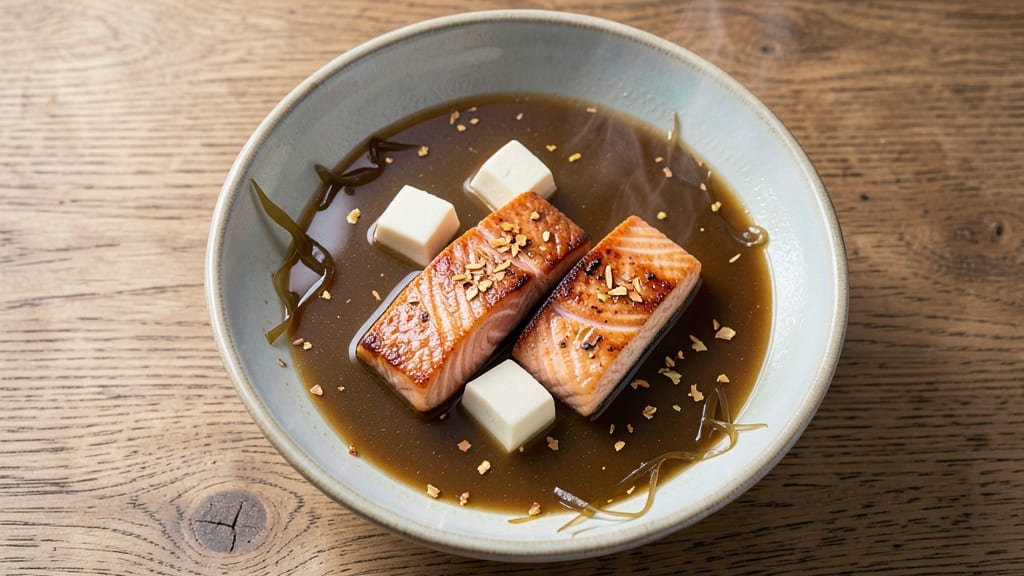
This miso salmon soup recipe transforms a simple bowl into a symphony of umami, where tender salmon meets silky tofu and crispy greens in a deeply savory broth. The secret lies in balancing fermented miso paste with dashi stock—a marriage that creates layers of flavor without overpowering the delicate salmon.
I developed this recipe after years of perfecting the art of umami-rich soups, and it’s now a staple in my winter rotation.
The broth is where the magic happens: simmered low and slow to extract maximum depth from the miso, kombu, and bonito flakes. Meanwhile, the salmon fillets poach gently in the broth, absorbing just enough flavor to stay tender yet firm.
Silken tofu adds a velvety contrast, while quick-pickled greens introduce a bright, crispy texture that cuts through the richness. Every spoonful delivers that perfect harmony of savory, silky, and crisp.
What makes this dish truly special is how it elevates humble ingredients into something restaurant-worthy. The miso broth isn’t just flavorful—it’s aromatic, with a depth that lingers long after the last sip.
The salmon stays moist and flaky, the tofu silky without falling apart, and the greens retain their satisfying crunch. This is the kind of soup that feels like a warm embrace on a chilly evening, balancing effortless preparation with professional results.
Serve it with steamed rice to soak up every drop of that umami-rich broth, or enjoy it as-is for a light yet satisfying meal. The recipe scales beautifully, so you can easily double it for leftovers—though I’ve never had any last that long.
Ready to make your kitchen smell like a Japanese izakaya? Let’s get started.
Ingredients for miso salmon soup
Nine essential ingredients transform into a restaurant-worthy miso salmon soup.
| Ingredient | Amount | Notes |
|---|---|---|
| White Miso Paste 🧂 | 3 tbsp | High-quality fermented miso preferred |
| Dashi Stock 🍜 | 4 cups | Homemade or quality store-bought |
| Silken Tofu 🧀 | 14 oz | Firm silken tofu, cubed |
| Salmon Fillets 🐟 | ¾ lb | Skin-on, center-cut preferred |
| Kombu Seaweed 🌿 | 1 sheet | Dried, 6x6 inches approximate |
| Bonito Flakes 🐟 | 1 tbsp | Dried, for dashi depth |
| Green Onions 🧅 | ¼ cup | Sliced, for garnish and crunch |
| Pak Choi Greens 🥬 | 2 cups | Baby bok choy or spinach works |
| Sesame Oil 🫒 | 1 tsp | Toasted, for finishing |
| Rice Vinegar 🍶 | 1 tbsp | For quick pickling greens |
| Sugar 🍚 | 1 tsp | Balances miso saltiness |
| Ginger Root 🌿 | ½ inch | Fresh, peeled and sliced thin |
| Salt 🧂 | 1 tsp | Adjust to taste |
| Steamed White Rice 🍚 | 2 cups | For serving |
The miso is the soul of this soup—look for white miso paste at Asian markets or the international aisle. Maehashi or Kodama brands are my go-tos, but any quality miso will work. Kombu seaweed? Dried sheets from Trader Joe's or Whole Foods are perfect—just rinse before using. The salmon should be fresh, not frozen, for that delicate texture. If you can't find bonito flakes, dried shiitake mushrooms add depth too.
No silken tofu? Firm tofu works at half the amount—just press it first. Short on rice vinegar? Lemon juice at the same quantity picks the greens nicely. The ginger can be pre-minced from a jar if you're in a hurry, but fresh is always better. For the greens, baby bok choy or spinach both work—just blanch them for 30 seconds to keep the crunch. And if you're feeling fancy, add a splash of mirin to the broth for extra sweetness.
Broth keeps for 5 days in the fridge—it actually gets better as flavors meld. The salmon reheats well, but tofu is best fresh. Store components separately: broth, tofu, greens, and rice. Freeze the broth for up to 3 months—just thaw overnight in the fridge. I always make extra rice because it disappears fast with that umami broth. And if you've got leftovers, turn them into soup dumplings—trust me, it's worth it.
Why You'll Love This Recipe
- Five-Ingredient Magic: The miso, dashi, and kombu do all the heavy lifting—no chopping, no fuss. Just simmer, add salmon at the end, and let the umami work its spell.
- Umami Bomb: That first spoonful of miso-packed broth with silken tofu slipping in? It’s the kind of flavor that makes you pause mid-bite. The dashi’s depth and kombu’s oceanic notes turn simple ingredients into something special.
- Lunchbox Hero: Between us, this soup reheats like a dream—perfect for packed lunches or meal prep. The salmon stays tender, the tofu holds its shape, and the broth tastes just as rich cold or warm.
- Budget Protein Win: Salmon fillets stretch further than you’d think when paired with tofu and kombu. Honestly, it’s my go-to for feeding two people without breaking the bank—plus, leftovers taste even better the next day.
Step-by-step instructions for miso salmon soup
Here's how to build this umami-packed bowl with perfectly cooked salmon and crispy greens.
Prepare the Dashi and Kombu Base
In a medium saucepan, combine the 4 cups dashi stock and 1 sheet kombu seaweed. Bring to a gentle simmer over medium heat for 5 minutes—you'll see bubbles form and the kombu soften slightly. This step infuses the broth with deep oceanic flavor.
Remove the kombu immediately after simmering—it's done when it becomes pliable and releases its minerals into the broth. Strain the liquid through a fine-mesh sieve into a clean pot if you prefer a smoother texture, or leave it in for more body. Keep the broth warm but not boiling for the next steps.
Build the Miso-Ginger Broth
Return the strained broth to medium-low heat and whisk in the 3 tbsp white miso paste until fully dissolved. Add the 0.5 inch peeled ginger root and 1 tbsp bonito flakes, stirring constantly for 2 minutes until the bonito flakes turn golden and aromatic.
Here's where the magic happens: the miso should melt completely without clumping. If it looks grainy, whisk in 1 tablespoon of hot broth to help it emulsify. Taste and adjust seasoning with 1 tsp salt—you want the broth to be rich but balanced, not overwhelmingly salty.
Cook the Silken Tofu and Salmon
Gently add the 14 oz cubed silken tofu to the simmering broth. Poach for 3-4 minutes just until the tofu is heated through but still silky—it should hold its shape when lifted with a slotted spoon. Remove and set aside, keeping it warm.
In the same broth, carefully add the 0.75 lb salmon fillets, skin-side down. Simmer gently for 4-5 minutes until the flesh turns opaque and flakes easily with a fork. The skin should be crispy—this is your crispy element from the title! Remove salmon and let rest for 2 minutes before serving.
Prepare the Crispy Greens
While the soup simmers, make the pak choi quick-pickle: Toss the 2 cups pak choi greens with 1 tbsp rice vinegar and 1 tsp sugar. Let sit for 5 minutes—this brightens their flavor and keeps them crisp when added later.
In a separate pan, heat 1 tsp sesame oil over high heat for 30 seconds until shimmering. Add the greens in a single layer and stir-fry for 1-2 minutes until just wilted but still vibrant green. The high heat creates that satisfying crisp-tender texture we're after.
Assemble and Serve
Ladle 1 cup of the miso broth into each serving bowl. Arrange ½ cup steamed white rice at the base, then place 2 oz tofu cubes and 2 oz salmon on top. Spoon ½ cup greens around the fish, finishing with 1 tbsp sliced green onions for freshness.
Drizzle with any remaining broth from the pan and serve immediately while the salmon is warm and the greens retain their crispness. The contrast of silky tofu, tender salmon, and crisp pak choi makes every bite exciting—just like a bowl from a Tokyo izakaya.
Pro Tips For Making Miso Salmon Soup
- Bloom the Kombu First: DESCRIPTION:
- Simmer, Don’t Boil: DESCRIPTION:
- Cut Salmon Thin: DESCRIPTION:
- Tofu in Last 2 Minutes: DESCRIPTION:
Storing and reheating this dish
Broth Storage Secrets
The miso broth is the heart of this soup, and it actually tastes better the next day as flavors meld. Store it in an airtight glass container (I love Pyrex) in the fridge for up to 5 days.
The miso's umami deepens over time, so reheat gently on low heat—never microwave, as it can break down the delicate flavors. If you want to preserve it longer, freeze the broth in quart-sized freezer bags (leave 1-inch headspace for expansion) for up to 3 months.
Thaw overnight in the fridge for best results. 💫
Salmon Safety Tips
Cooked salmon reheats beautifully, but timing is key to avoid dryness. Portion it into single-serving glass containers and refrigerate for up to 3 days. To reheat, place in a lightly oiled skillet over medium-low heat for 2-3 minutes until warmed through—165°F internal temperature is ideal.
For microwave reheating, cover with a damp paper towel and heat in 30-second bursts on 50% power. Never reheat beyond 2 days to maintain texture. 🌡️
Tofu Refresh Technique
Silken tofu loses its silky texture when reheated, so I recommend cooking it fresh each time. However, if you must reheat, place cubes in a steamer basket over simmering water for 3-4 minutes—this keeps it tender without absorbing excess moisture.
Store cooked tofu in the broth it was poached in for 2 days in the fridge. For extra flavor, add a splash of soy sauce or sesame oil when reheating. 🧀
Greens Revival Method
The quick-pickled pak choi greens are best eaten fresh, but you can revive wilted greens by blanching them for 30 seconds in boiling water, then shocking in ice water. Store them in the fridge for 2 days in a sealed container with a paper towel to absorb moisture.
For reheating, toss with 1 tsp sesame oil and 1 tsp rice vinegar in a hot pan for 1 minute—this restores their crisp-tender texture. 🥬
Rice Prep Ahead
Steamed rice is the perfect base for soaking up that umami broth, and it stores well. Cook a large batch (I use jasmine rice) and refrigerate in an airtight container for up to 4 days.
Reheat portions in a microwave-safe bowl with 1 tbsp water, covered, for 1-2 minutes on high power. For extra flavor, sprinkle with toasted sesame seeds or a drizzle of mirin when reheating. 🍚
Complete Bowl Assembly
When reheating leftovers, assemble bowls just before serving to maintain texture contrast. Warm the broth on low heat, then layer rice, tofu, and salmon in bowls. Add greens last to preserve their crunch.
Garnish with fresh green onions and a drizzle of sesame oil for that restaurant-quality finish. This soup tastes even better the second day—perfect for meal prep! ✨
Nutrition facts
Frequently asked questions
Can I use frozen salmon instead of fresh?
Fresh salmon is ideal for this recipe, but you can use frozen if thawed properly. Place frozen fillets in a sealed bag and submerge in cold water for 30 minutes per inch of thickness. Never thaw at room temperature—this can create bacterial growth. For best texture, pat dry thoroughly before cooking to ensure crispy skin.
What if I don't have kombu or bonito flakes?
No problem! For kombu, substitute with 2 dried shiitake mushrooms soaked in hot water for 20 minutes. Skip bonito flakes or replace with 1 tsp fish sauce for umami depth. The broth will still be flavorful, just with slightly different oceanic notes.
How do I adjust the spice level?
This recipe is naturally mild, but you can add heat by stirring in ½ tsp chili crisp or 1 tsp gochujang when assembling bowls. For smoky depth, add ½ tsp smoked paprika to the broth during simmering. Always taste before serving—miso already adds complexity without needing extra spice.
Can I make this soup vegetarian?
Replace salmon with extra-firm tofu pressed for 20 minutes and marinated in 1 tbsp soy sauce + 1 tsp sesame oil. For texture, pan-fry tofu slices until golden before adding to the broth. The miso broth remains the star—just reduce tofu cooking time to 2 minutes to prevent mushiness.
Why did my salmon turn rubbery?
Overcooking is the most common cause. Salmon should cook for 4-5 minutes maximum in simmering broth—any longer and it becomes tough. Use a thermometer for precision: remove when internal temp reaches 130°F (it'll rise to 145°F while resting). Also ensure broth isn't boiling vigorously—gentle simmering preserves tenderness.