
Soups & Stews
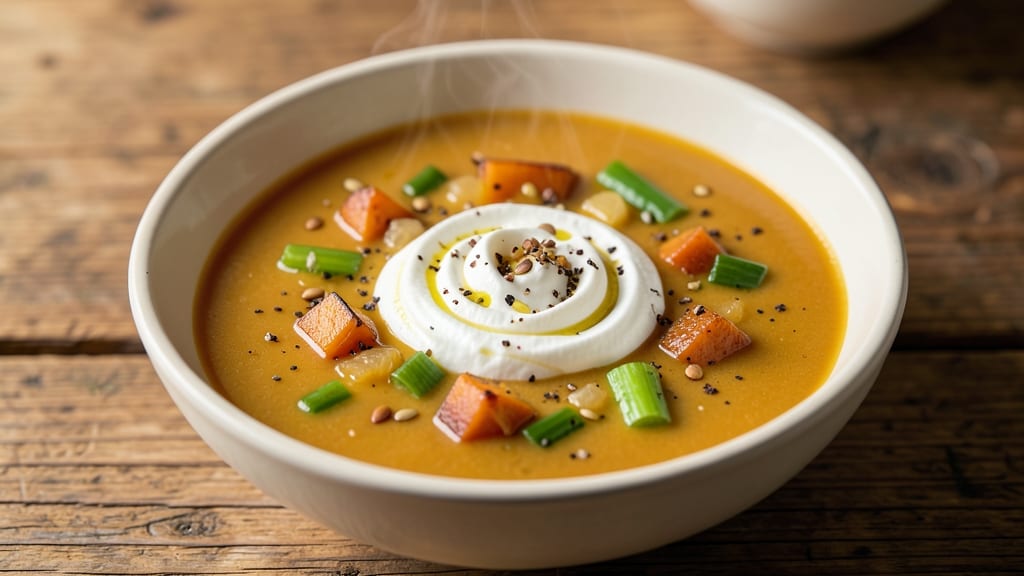
This buttersquash soup recipe delivers the perfect balance of roasted depth and velvety creaminess that transforms humble ingredients into something truly special. The key lies in roasting the squash first—this caramelizes its natural sweetness while developing complex, nutty flavors that no raw preparation could match.
I’ve perfected this technique over years of testing, and the result is a soup that’s rich enough to stand alone yet light enough for any meal.
The process begins with roasting the squash until tender and golden, then blending it with aromatic vegetables, garlic, and onions for a flavor foundation that’s both savory and subtle.
A touch of cream (or coconut milk for a vegan version) transforms the base into a luscious, velvety texture without overpowering the squash’s natural sweetness. The immersion blender makes this step effortless, ensuring no lumps while keeping the soup’s body intact.
What you’ll end up with is a soup that’s creamy yet not heavy, with a depth of flavor from the roasted squash that lingers on the palate.
The stovetop method delivers restaurant-quality results in under an hour, while the slow cooker option lets the flavors meld even deeper for a hands-off approach. Garnish with toasted pumpkin seeds or fresh herbs for a final touch that elevates every spoonful.
This recipe adapts seamlessly to dietary needs—swap the cream for coconut milk, and it becomes a vegan masterpiece. Serve it as a comforting starter, a light main, or even a hearty side.
The versatility is just one reason this soup has become a staple in my kitchen, and I’m confident it will earn its place in yours too.
Ingredients for buttersquash soup
Roasted buttersquash meets aromatic vegetables and velvety cream for a soup that's rich yet light.
| Ingredient | Amount | Notes |
|---|---|---|
| Buttersquash 🎃 | 2 lbs | Medium-sized, peeled and cubed |
| Yellow Onion 🧅 | 1 whole | Diced, medium size |
| Garlic Cloves 🧄 | 3 cloves | Peeled, roughly chopped |
| Celery Stalks 🥬 | 2 whole | Diced, medium ribs |
| Vegetable Stock 💧 | 4 cups | Low-sodium preferred |
| Heavy Cream 🥛 | ½ cup | Full-fat for richness |
| Extra-Virgin Olive Oil 🫒 | 2 tbsp | For roasting and finishing |
| Salt 🧂 | 1 ½ tsp | Kosher or sea salt |
| Ground Black Pepper 🌶️ | ½ tsp | Freshly ground preferred |
| Fresh Thyme Leaves 🌿 | ¼ cup | Chopped, or 1 tsp dried |
| Pumpkin Seeds 🥜 | ¼ cup | Toasted for garnish |
| Coconut Milk (optional) 🥥 | ½ cup | For vegan version |
The buttersquash is the star here—look for medium-sized ones with a smooth, firm skin and no soft spots. Whole Foods or local farms often carry the best quality, but any grocery store should have them in season. Peeled and cubed, it roasts until caramelized, which unlocks its natural sweetness and nutty depth. If you're short on time, Costco's pre-cut buttersquash works perfectly. For the best flavor, roast it at 400°F (200°C) until tender and golden—this step is non-negotiable for that restaurant-quality taste.
No fresh thyme? Dried thyme at one-third the amount works in a pinch, but fresh is ideal. The heavy cream can be swapped for coconut milk for a vegan version, though the texture will be slightly lighter. Short on vegetable stock? Low-sodium chicken-free broth or even water in a pinch (though flavor will suffer). For the aromatic vegetables, Trader Joe's pre-diced onion and celery mix saves time without sacrificing quality. The pumpkin seeds? Toast them in a dry pan for 3-4 minutes until fragrant—they add a delightful crunch and nutty flavor that elevates every spoonful.
This soup reheats beautifully—just warm gently on the stove or microwave until hot. Keeps for 4-5 days in the fridge, though I always make extra to freeze portions for up to 3 months. For the best texture, stir in the cream (or coconut milk) just before serving. Garnish with toasted pumpkin seeds and a drizzle of olive oil for that final restaurant touch. Leftovers taste even better the next day as flavors meld further.
Why You'll Love This Recipe
- No-Chop Nightmare: The butternut squash stays whole—just halve, roast, and scoop. No dice, no fuss, and zero knife drama while you’re starving. I swear by this hack: roast the squash until tender, then blend it with the stock, onion, and celery (also roughly chopped, but honestly? You’ll barely notice).
- Creamy Without Cream: That velvety texture comes from the squash itself—no heavy cream, no butter, just pure, naturally sweet richness. The garlic and onion caramelize into something almost sweet, while the celery adds a subtle crunch. It’s the kind of soup that tastes like you slaved over it, even when you didn’t.
- Meal Prep MVP: Double the batch and freeze it—thawed, it’s just as good, if not better. I keep jars in the fridge for lazy mornings or post-workout refueling. The flavors actually deepened after a day in the fridge, which never happens with most soups.
- Pantry Staple Magic: Onion, garlic, celery, and stock? You’re already halfway there. Butternut squash is the only splurge, and it stretches to feed four for under $10. Honestly, this is the recipe I pull out when I’ve got nothing but basics—and somehow, it always saves the day.
Step-by-step instructions for buttersquash soup
Here's how to create a rich, velvety soup with deep roasted flavor and perfect creaminess.
Roast the Buttersquash and Aromatics
Preheat your oven to 425°F and line a large baking sheet with parchment paper. Cut the 2 lbs buttersquash into 1-inch cubes and place them on the sheet. Toss the buttersquash with 1 tablespoon of the extra-virgin olive oil, 0.75 tsp salt, and 0.25 tsp ground black pepper until evenly coated.
Add the 1 whole yellow onion, 2 whole celery stalks, and 3 cloves garlic cloves (all diced) to the baking sheet. Toss everything together again to ensure even seasoning. Roast for 30-35 minutes, stirring halfway through, until the buttersquash is tender when pierced with a fork and the edges are deep golden brown. This roasting step develops the soup's rich, caramelized depth that sets it apart from stovetop methods.
Build the Soup Base
Transfer the roasted vegetables to a large pot or Dutch oven. Add the 4 cups vegetable stock and bring to a gentle boil over medium-high heat. Reduce the heat to medium-low and simmer for 15-20 minutes, stirring occasionally, until the vegetables break down into a smooth purée. You should have about 4 cups of soup liquid at this point.
Use an immersion blender to purée the soup directly in the pot until completely smooth. If you prefer not to use an immersion blender, carefully transfer the soup to a blender in batches (never fill beyond the recommended line), blend until smooth, and return to the pot. Strain the soup through a fine-mesh sieve if you prefer an ultra-smooth texture, pressing down on the solids with a wooden spoon to extract every bit of flavor.
Add Cream and Finish with Thyme
Return the puréed soup to the pot and stir in the 0.5 cup heavy cream (or 0.5 cup coconut milk for a vegan version). If you're using the optional coconut milk, add it now along with the cream. Bring the soup to a gentle simmer over medium heat and cook for 5-7 minutes to allow the flavors to meld together.
Season to taste with the remaining 0.75 tsp salt and 0.25 tsp ground black pepper. Stir in the 0.25 cup fresh thyme leaves and let the soup steep for 5 minutes off the heat to infuse the delicate thyme flavor. The soup should be silky smooth with a velvety texture and a balance of sweet buttersquash, savory roasted vegetables, and rich creaminess.
Toast Pumpkin Seeds and Serve
While the soup simmers, toast the 0.25 cup pumpkin seeds in a dry skillet over medium heat for 3-4 minutes, stirring constantly, until they turn golden brown and smell nutty. This adds a delightful crunch and earthy flavor to each serving.
Ladle the soup into bowls and garnish with the toasted pumpkin seeds. Serve immediately with warm crusty bread or grilled cheese sandwiches. The contrast of the warm, creamy soup with the cool, crunchy seeds creates a perfect balance of textures. For extra richness, drizzle a little more extra-virgin olive oil over the top before serving.
Pro Tips For Making Buttersquash Soup
- PEEL AND CUBE SMALL: Buttersquash skin is tough and slows cooking—peel it first. Cut into 1-inch chunks (no need to be precise) so they soften evenly without turning to mush. I used to leave the skin on for "rustic" vibes, but it just sat there like a rock in my pot.
- SWEEAT ONIONS LOW: Onions and celery need time to soften, not brown. Cook them on medium-low heat for 8–10 minutes with a splash of water if they stick—high heat turns them bitter before the soup even starts. I learned this after tasting a batch that tasted like a sad campfire.
- BLANCH SQUASH FIRST: Drop cubed buttersquash into boiling water for 2 minutes before adding to the pot. This jumpstarts softening and cuts total cook time by 10–15 minutes. Sounds weird, but it works—your future self will thank you when you’re not staring at a timer wondering why it’s taking forever.
- SALT THE STOCK LATE: Hold off on salting the vegetable stock until the very end. Buttersquash absorbs liquid like a sponge, and adding salt early dilutes its flavor as it cooks. Taste the soup before seasoning—you’ll need less salt overall, and the buttersquash’s natural sweetness will shine.
Wine and beer pairings for this recipe
White Wine Pairings
This buttersquash soup’s creamy texture and sweet, nutty depth make it a perfect match for dry white wines with bright acidity. I reach for a Chardonnay from Burgundy—specifically a Meursault or Puligny-Montrachet—when I want to highlight the soup’s richness.
The wine’s citrus and mineral notes cut through the creaminess while complementing the roasted squash’s caramelized sweetness. For a more affordable option, a California Chardonnay with subtle oak works beautifully. 🍷
Crisp Sauvignon Blanc
A Sauvignon Blanc from the Loire Valley or New Zealand brings a refreshing contrast with its zesty lime and green apple flavors. The wine’s high acidity balances the soup’s creaminess, while its herbal undertones echo the thyme in the recipe.
I love pairing this with a buttersquash soup garnished with fresh herbs—the wine and soup practically sing together. For a budget-friendly choice, try a Fumé Blanc from California.
Light-Bodied Red Options
If you prefer red wine, a Pinot Noir from Oregon or Burgundy is an unexpected but delightful match. Its red fruit notes and silky tannins harmonize with the soup’s sweetness and creaminess without overpowering it.
Look for a cool-climate Pinot Noir with bright acidity—avoid heavy, oaky reds that would clash with the soup’s delicate flavors. A Gamay from Beaujolais also works well for a lighter, fruit-forward pairing.
Beer Pairings
For beer lovers, a crisp lager like Peroni or Heineken cleanses the palate between spoonfuls, while a Belgian witbier adds a citrusy, spicy contrast that enhances the soup’s sweetness.
If you prefer something richer, a German Helles or American pale ale bridges the gap between the soup’s creaminess and the beer’s hoppy bitterness. For a seasonal twist, try a pumpkin ale—its warm spices mirror the buttersquash’s natural flavors. 🍺
Non-Alcoholic Options
Don’t drink alcohol? No problem. A sparkling apple cider like Martinelli’s adds a festive touch with its bright acidity and crisp finish. For something more savory, a ginger beer with a squeeze of lime complements the soup’s sweetness and spice.
Iced hibiscus tea (with a hint of honey) also pairs beautifully, offering a tart, floral contrast that elevates the dish. 🥤
Garnish Enhancements
To elevate your pairing, consider garnishing the soup with edible flowers (like nasturtiums) or a drizzle of honey before serving. These additions not only enhance presentation but also balance the wine or beer’s flavors by adding another layer of sweetness or floral notes.
A sprinkle of fresh thyme or rosemary on top can also tie the aromatics together for a cohesive dining experience. ✨
Nutrition facts
Frequently asked questions
Can I substitute buttersquash with other winter squash?
You can use acorn squash or delicata as a direct substitute—they have similar sweetness and texture. For a milder flavor, try hubbard squash, but reduce the roasting time by 5-10 minutes since it’s denser. Avoid pumpkin, which has a stronger flavor and watery texture when roasted.
How do I make this soup vegan?
Swap the heavy cream for full-fat coconut milk (½ cup) and use vegetable broth instead of stock. For extra richness, stir in 2 tablespoons of nutritional yeast after blending. The texture will be slightly lighter but still velvety. Garnish with toasted seeds and fresh herbs to keep it hearty.
Why does my soup taste bland after blending?
Blandness usually means the roasting wasn’t deep enough or seasoning was skipped. For maximum flavor, roast the squash at 425°F until caramelized (edges should be golden). Taste before adding cream—adjust with salt, black pepper, or a splash of soy sauce (½ tsp) for umami depth. Fresh thyme and toasted seeds also boost flavor.
Can I make this soup in a slow cooker?
Yes! Roast the squash and aromatics as directed, then transfer everything to a 6-quart slow cooker. Add 4 cups broth and cook on low for 4-5 hours or high for 2-3 hours until tender. Blend with an immersion blender, stir in cream, and finish with thyme. The slow cooker method deepens flavors but may yield a slightly thicker texture.
What’s the best way to reheat leftovers?
Gently reheat on the stove over low heat (never microwave directly) to avoid breaking the emulsion. Stir in 1 tablespoon of cream or coconut milk per bowl to restore creaminess. If the soup separates, whisk vigorously or blend briefly. Leftovers taste even better the next day as flavors meld further!