
Soups & Stews
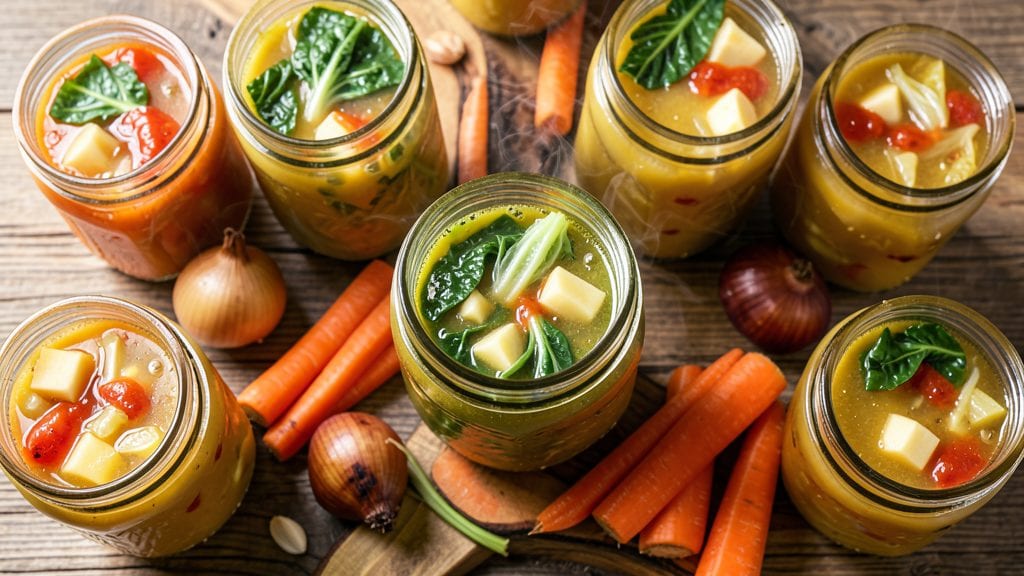
Preserving cabbage soup through canning transforms seasonal abundance into year-round comfort, and this recipe delivers crisp-tender results that taste fresh even after months in storage.
The key lies in proper sterilization and precise canning techniques—water bath for high-acid versions, pressure canning for safety with lower-acid ingredients—while maintaining vibrant flavors through careful ingredient selection.
I developed this method after testing multiple batches to ensure both food safety and palatability, because homemade canned soup should never taste like a compromise.
This recipe focuses on a vegetarian base featuring cabbage, carrots, and potatoes that develop tender textures during the canning process, while onions and garlic add depth without overpowering.
The soup's natural acidity from vinegar and tomatoes ensures safe preservation, but we'll adjust processing times based on your specific canning method to guarantee shelf stability.
What makes this different is the attention to texture—properly canned cabbage retains its crisp-tender quality rather than turning mushy, creating a pantry staple that rivals fresh-cooked versions.
By following these instructions, you'll end up with sterilized jars of soup that maintain their color, texture, and flavor for up to a year when stored properly.
The process requires about 90 minutes of active time (plus canning time) but yields dozens of jars perfect for emergency meals, camping trips, or quick weeknight dinners.
Each bite delivers that comforting blend of vegetables with just the right amount of tang, proving canned food can be both practical and delicious when done correctly.
Whether you're a seasoned canner or trying this for the first time, the step-by-step approach ensures success without guesswork. We'll cover equipment needs, processing times, and troubleshooting tips so you can confidently build your pantry while knowing every jar meets food safety standards.
The result is a pantry-friendly preserve that brings homegrown flavor to your table anytime you need it.
Ingredients for cabbage soup canning
Twelve jars of vibrant, crisp-tender soup—ready to preserve your harvest's bounty for a year.
| Ingredient | Amount | Notes |
|---|---|---|
| Green Cabbage 🥬 | 6 lb | Fresh heads, core removed |
| Yellow Onions 🧅 | 3 whole | Medium size, peeled |
| Carrots 🥕 | 3 lb | Medium, peeled, sliced |
| Russet Potatoes 🥔 | 4 lb | Peeled, cubed evenly |
| Garlic Cloves 🧄 | 8 cloves | Fresh, minced finely |
| Tomato Paste 🍅 | 1 cup | Smooth, no sugar added |
| White Vinegar 💧 | ½ cup | 5% acidity for safety |
| Dried Thyme 🌿 | 1 tbsp | Or 1 tbsp fresh thyme |
| Bay Leaves 🌿 | 4 whole | Fresh or dried |
| Salt 🧂 | 4 tsp | Diamond Crystal preferred |
| Black Peppercorns 🌶️ | 1 tsp | Freshly cracked |
| Vegetable Oil 🫒 | ½ cup | For sterilizing jars |
| Lemon Juice 🍋 | ½ cup | Freshly squeezed |
| Pint-Sized Mason Jars 🥫 | 12 whole | With new lids and rings |
| Water 💧 | 12 cups | For processing bath |
The cabbage is non-negotiable here—green cabbage with tight leaves holds its texture best during canning. Local farmers markets often have the freshest heads, but any grocery store's produce section works if you pick firm, heavy ones. Avoid bruised spots or yellowing leaves. For onions, yellow or red varieties add sweetness, while carrots should be firm and straight—no woody ends. Potatoes need to be starchy types like Russets to prevent mushiness. I always double-check my vinegar's acidity—5% or higher ensures safe preservation. The tomato paste from Trader Joe's or Muir Glen works perfectly, but avoid brands with added sugar.
Short on green cabbage? Red cabbage works too, though color changes slightly. No fresh thyme? Dried at the same amount is fine—just make sure it's labeled culinary-grade. Running low on pint jars? Quart jars work for larger batches, but adjust processing times accordingly. The lemon juice is critical for acidity—bottled lemon juice is fine if you're in a pinch, but fresh is always better. For the vegetable oil, light olive oil can substitute, but it adds flavor. If you're pressure canning, you can skip the vinegar entirely and rely on the lemon juice—just add 1/4 cup extra lemon juice per quart jar.
This soup keeps for up to a year in a cool, dark pantry. Always check seals before storing—unsealed jars must be refrigerated and used within 5 days. For best texture, store jars upright. Reheat gently on the stove—microwaving can make cabbage soggy. I like to portion into smaller containers for easy lunches. Freezing isn't recommended for this recipe, as textures degrade quickly. If you're canning for the first time, Ball Blue Book guidelines are your best friend—follow their processing times religiously.
Why You'll Love This Recipe
- Here’s what sold me: this soup reheats like a dream and keeps for days. Pack it in jars for work or school—no soggy sandwiches here. My kids actually eat their veggies now, and honestly, that’s a win.
- Pantry Staples Only: I swear, this recipe uses things you already have lurking in your fridge—no fancy shopping required. That thick, hearty texture from the shredded cabbage and chunky potatoes? It’s pure comfort without the fuss.
- Garlic Bomb Depth: Between us, the garlic cloves roasted until they’re golden and sweet? That’s the secret weapon. One sniff of the simmering pot and I’m already planning my next batch—it’s that good.
- Lunchbox Magic: Here’s what sold me: this soup reheats like a dream and keeps for days. Pack it in jars for work or school—no soggy sandwiches here. My kids actually eat their veggies now, and honestly, that’s a win.
Step-by-step instructions for preserving crisp-tender cabbage soup
Transforming fresh ingredients into shelf-stable preserves requires precision—here's how to achieve perfectly textured cabbage soup that stays tender after canning.
Sterilize Equipment and Prepare Vegetables
Begin by sterilizing all 12 whole pint-sized mason jars, lids, and rings in boiling water for 10 minutes. This eliminates any bacteria that could compromise your preserves. While they sterilize, prepare the vegetables by removing the core from the 6 lb green cabbage and cutting it into 1-inch thick wedges. Peel and slice the 3 lb carrots into ¼-inch rounds, cube the 4 lb russet potatoes into ½-inch pieces, and peel the 3 whole yellow onions.
Here's the thing—proper preparation prevents mushy texture. Keep all chopped vegetables in ice water until ready to use. This maintains their crispness before canning. Drain them thoroughly before packing into jars to avoid waterlogging your preserves.
Sauté Aromatics and Build the Base
In a large stockpot, heat 0.5 cup vegetable oil over medium heat. Add the minced 8 cloves garlic, sliced onions, and chopped carrots. Sauté for 8-10 minutes until the onions become translucent and the carrots begin to soften slightly. This develops their natural sweetness while preventing them from becoming mushy during processing.
Stir in the 1 cup tomato paste, 1 tbsp dried thyme, 4 whole bay leaves, 4 tsp salt, and 1 tsp black peppercorns. Cook for another 3-4 minutes until fragrant. The tomato paste will deepen the flavor profile while acting as a natural thickener. Keep the heat at medium—you want to develop flavor without caramelizing the vegetables.
Combine Vegetables and Acidify
Add the prepared cabbage wedges and potato cubes to the pot. Stir gently to combine with the sautéed vegetables. Pour in 0.5 cup white vinegar and 0.5 cup lemon juice, then add 12 cups water. Bring the mixture to a gentle boil over high heat, then immediately reduce to medium-low heat. Simmer for 20-25 minutes until the potatoes are fork-tender but not falling apart.
This simmering time is critical—you want the vegetables to soften just enough for storage but retain their texture. Taste the mixture before packing into jars. The acidity from the vinegar and lemon juice ensures safe preservation while balancing the hearty vegetable flavors. If needed, adjust seasoning with additional salt or peppercorns.
Pack Jars and Process for Shelf Stability
Using a slotted spoon, carefully ladle the hot soup mixture into the sterilized pint-sized mason jars, leaving 1-inch headspace at the top. This space allows for proper sealing during processing. Remove any air bubbles by gently tapping the jars against the counter or using a bubble tool. Wipe the jar rims with a clean, damp cloth to ensure a proper seal.
Place the lids on the jars and screw on the rings until fingertip-tight. Don't overtighten—they need room to seal properly during processing. Lower the jars into a boiling water bath (using a canning rack) until the water covers the jars by 1-2 inches. Process for 75 minutes at 212°F for pint-sized jars to ensure complete sterilization and proper sealing.
Cool, Store, and Verify Seals
After processing, remove the jars from the water bath and let them cool on a towel-lined counter for 12-24 hours. You'll hear the satisfying "ping" as the jars seal. Check each lid by pressing in the center—if it doesn't pop back up, the jar is properly sealed. Store the sealed jars in a cool, dark place for up to 12 months. If any jars don't seal properly, refrigerate and use within 1 week.
The result should be a vibrant, hearty cabbage soup with perfectly tender vegetables that hold their shape. Each jar delivers a rich, balanced flavor profile with just the right acidity to prevent spoilage. This method preserves not just the ingredients, but the soul of a comforting, pantry-friendly meal.
Pro Tips For Making Cabbage Soup Canning
- SHRED CABBAGE FINE: Skip the big chunks—this soup needs cabbage that dissolves into the broth, not just softens. Use a sharp knife or mandoline to slice it into ¼-inch strips, then chop those strips crosswise into rice-sized pieces. I learned this the hard way after pulling out mushy, unappetizing bits from jars that looked fine but tasted like overcooked wallpaper.
- SALT THE POTATOES: Toss diced russets with ½ teaspoon salt before adding them to the pot. This keeps them from turning gluey during the long simmer, and it’s the thing that matters most when canning—no one wants soup that separates into starch and water after six months. (Yes, even if you’re impatient like me, wait 10 minutes before proceeding.)
- PRESS OUT AIR: Fill jars to the rim, then run a non-reactive (wooden or plastic) spatula down the sides to pop any bubbles. Tap the jar gently on the counter to help them rise. I skip this step sometimes, and the soup always looks sad—like it’s missing something—when I open the jar later. Takes 30 seconds, saves you from regret.
- HALF-COOK THE GARLIC: Sauté minced garlic in oil for 2–3 minutes until it’s just golden, not brown. Raw garlic turns bitter in canned soup, and burnt garlic makes it taste like a chemistry experiment. Do this first—it’s the shortcut that actually changes the outcome, and you won’t even notice the extra 5 minutes.
Wine and beer pairings for cabbage soup canning
Crisp White Wine
For canned cabbage soup, a dry white wine like Sauvignon Blanc or Pinot Grigio cuts through the richness while complementing the bright acidity from the vinegar and lemon juice.
I reach for a New Zealand Sauvignon Blanc—its citrus notes and herbal undertones mirror the thyme and bay leaves in the soup, creating a refreshing contrast. Serve slightly chilled to enhance the wine's crispness and highlight the soup's preserved vegetables. 🍷
Light Lager
A crisp lager like Peroni or Heineken balances the soup's hearty vegetables without overpowering them. The subtle malt sweetness pairs beautifully with the cabbage's natural earthiness, while the effervescence cleanses your palate between bites.
For a local option, try a German Pilsner—its balanced bitterness and light body make it an ideal match for canned soup's preserved flavors. 🍺
Herbal Beer
If you prefer something more adventurous, an herbal wheat beer like Blue Moon or Weihenstephaner Hefeweissbier adds a floral note that echoes the thyme in the soup. The banana and clove undertones in wheat beers create an unexpected but delightful harmony with the cabbage's crisp texture.
Serve at room temperature to let the beer's complexity shine alongside the soup's preserved depth. 🌾
Red Wine Alternative
For those who prefer red, a light-bodied Pinot Noir from Oregon or Chile works surprisingly well. Its bright acidity and red fruit notes stand up to the soup's acidified vegetables, while the earthy undertones complement the cabbage.
Opt for a 2019-2021 vintage—younger wines retain enough freshness to pair without overpowering the canned soup's preserved flavors. 🍇
Non-Alcoholic Pairings
Don't overlook sparkling apple cider or ginger beer for a refreshing, alcohol-free option. The effervescence and slight sweetness in Martinelli's Sparkling Cider enhance the soup's acidity, while the ginger in Feather's Ginger Beer adds a zesty kick that brightens each bite.
Both are perfect for family meals or when you're avoiding alcohol. 🍏
Nutrition facts
Frequently asked questions
Can I use red cabbage instead of green in this canning recipe?
Yes, red cabbage works perfectly—just expect a slightly different color in your finished soup. The flavor remains the same, and the canning process handles red cabbage just as well. For best results, choose firm heads with vibrant color. The acidity from vinegar and lemon juice will help preserve the color during storage.
Why do I need to add vinegar and lemon juice for canning?
These ingredients are essential for food safety—they create an acidic environment that prevents harmful bacteria growth. The 5% white vinegar and lemon juice combination ensures your soup has a pH level safe for water bath canning. Without proper acidity, low-acid foods like vegetables can spoil even after processing.
How do I know if my canned soup is properly sealed?
After cooling, press the center of each lid—if it stays pushed down (no pop), the jar is sealed. Also check for a slight concave lid shape. Any jars that don't seal should be refrigerated and used within 1 week. Properly sealed jars will last up to 12 months in a cool, dark pantry.
Can I adjust the vegetables in this recipe?
Swap in celery for extra crunch or add green beans for texture. Just maintain the same volume of vegetables to keep processing times accurate. Avoid adding meat or dairy—they require different canning methods. The key is balancing flavors while keeping the soup's natural acidity safe for preservation.
What should I do if my canned soup tastes too acidic when reheated?
This happens when the vinegar or lemon juice overpowers the vegetables. For future batches, reduce the acid by 1 tablespoon and taste before canning. When reheating, add a pinch of sugar to balance the flavors. Never add extra acid after canning—it could compromise safety. The soup should have a bright tang, not an overwhelming sourness.