
Soups & Stews
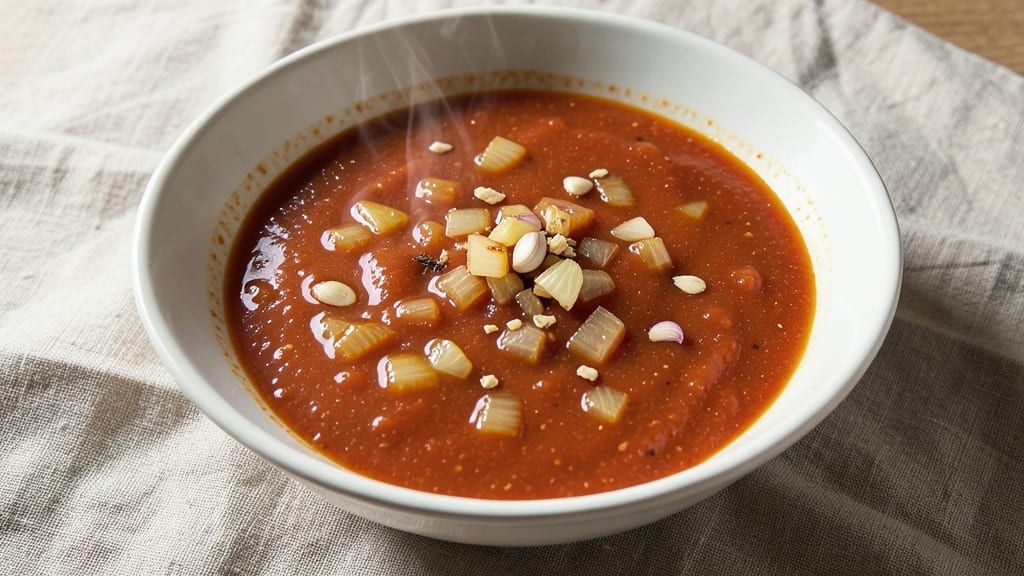
Transforming a simple can of Campbell tomato soup into a velvety, restaurant-worthy gravy is one of those kitchen game-changers that takes minutes but feels like a culinary revelation.
The secret lies in thickening it properly—using a simple slurry of flour and water—to create a smooth, rich sauce that clings perfectly to mashed potatoes or meatloaf. I’ve perfected this technique over years of testing, ensuring every spoonful delivers that perfect balance of tangy tomato sweetness and creamy depth.
What makes this gravy recipe work is the two-step process: first, simmering the soup with aromatics like onion and garlic to build flavor, then thickening it just enough to coat the back of a spoon without being gluey.
A splash of broth or milk at the end adds richness, while a pinch of black pepper and thyme elevates it from basic to gourmet-worthy. The result? A gravy so luscious it’ll make your dinner table feel like a cozy diner classic.
This gravy isn’t just for holidays—it’s a weeknight staple that pairs effortlessly with mashed potatoes, grilled cheese sandwiches, or even as a dipping sauce for roasted veggies. The best part?
It comes together in under 20 minutes with pantry staples, proving that elevated flavors don’t require complicated techniques. Let’s make gravy that rivals your favorite restaurant’s.
Once you try this, you’ll never go back to store-bought again. The key is patience during the thickening phase—rushing leads to lumps, but a slow simmer ensures silky smoothness.
Trust the process, and you’ll have gravy so rich and flavorful, it’ll become the star of every meal. Ready to elevate your tomato soup game?
Ingredients for campbell tomato soup gravy
Pantry staples transform into velvety gravy that’ll make your mashed potatoes shine.
| Ingredient | Amount | Notes |
|---|---|---|
| Campbell Tomato Soup 🍅 | 2 cans | Condensed, 15 oz each |
| Yellow Onion 🧅 | ½ whole | Medium size, diced |
| Garlic Cloves 🧄 | 2 cloves | Minced for aromatics |
| All-Purpose Flour 🌾 | 2 tbsp | For smooth slurry |
| Cold Water 💧 | 2 tbsp | For flour slurry |
| Chicken Broth 🍲 | ½ cup | Low-sodium preferred |
| Heavy Cream 🥛 | ¼ cup | Full-fat for richness |
| Fresh Thyme Leaves 🌿 | 1 tsp | Dried works at 1/4 tsp |
| Ground Black Pepper 🌶️ | ½ tsp | Freshly cracked |
| Salt 🧂 | ½ tsp | Adjust to taste |
The tomato soup is the base, but Campbell's Classic Tomato Soup works best—it's sweeter and smoother than the chunky varieties. Grab a yellow onion from the store's bulk bin if you want the freshest, but pre-diced from a bag works in a pinch. Garlic is non-negotiable here; I always grab a whole bulb and keep it in my fridge for quick mincing. The flour needs to be all-purpose, not self-rising—this isn't baking, we're thickening. For the broth, Swanson or Pacific Foods are my go-tos—they're consistently flavorful without being salty.
No heavy cream? Whole milk or half-and-half works in a bind, though it won't be quite as rich. Short on thyme? Dried oregano at half the amount gets you close, but fresh thyme is ideal. The flour slurry is critical—mix it thoroughly before adding to avoid lumps. Diamond Crystal baking powder (if you have it) adds a nice lift, but regular flour works fine. Want more depth? A pinch of smoked paprika adds that diner-style richness. And if you're making this ahead, the gravy actually improves overnight—just reheat gently.
This gravy reheats beautifully—just warm it on the stove over medium-low, stirring constantly. Keeps for 5 days in the fridge, or 3 months frozen in airtight containers. I like to portion it into small jars so I can grab exactly what I need for a meal. The flavor actually deepens after the first day, so leftovers are a bonus. If it thickens too much when reheating, just add a splash of warm water or broth to loosen it up.
Why You'll Love This Recipe
- Pantry Magic: I swear by this when I’ve got nothing but soup cans and a bag of flour. No fresh herbs, no fancy gadgets—just a can of tomato soup, a quick roux, and boom, restaurant-quality gravy in 15 minutes. Honestly, it’s the kind of recipe that makes me feel like a chef even when I’m exhausted.
- Umami Bomb: That little flour-and-water roux thickens the soup into something rich—like a cross between biscuits and gravy, but better. The garlic and onion caramelize just enough to add depth, and the tomato soup’s sweetness balances it all. It’s not fancy, but it’s ridiculously satisfying.
- Leftovers’ Best Friend: This gravy doesn’t skimp on flavor even after reheating—perfect for drizzling over grilled cheese the next day or tossing with pasta. I make a big batch on Sundays and freeze half; by Wednesday, it’s the only thing keeping me from takeout.
- Budget Night Hero: Five ingredients, all under $3. No specialty stores, no last-minute grocery runs—just what’s already in your cupboard. It’s my go-to when I’m broke, busy, or both, and somehow still feels like a treat. (Yes, even on a Tuesday night.)
Step-by-step instructions for Campbell tomato soup gravy
Here's how to transform simple pantry staples into a velvety tomato gravy perfect for mashed potatoes.
Sauté Onion and Garlic for Flavor Foundation
Heat a medium saucepan over medium heat and add the 0.5 whole yellow onion, diced into small pieces. Cook for 5-6 minutes until the onion becomes translucent and just begins to soften. You'll notice the edges start to turn slightly golden—that's your signal to add the 2 cloves garlic cloves, minced.
Cook the garlic for another 30 seconds until fragrant but not browned. The garlic should smell pungent and inviting, not bitter. I always say this is where the magic starts—the aromatic base that carries through the entire dish. Keep the heat at medium to prevent burning, which would make the gravy taste bitter.
Create a Smooth Flour Slurry
While the onion and garlic cook, whisk together the 2 tbsp all-purpose flour and 2 tbsp cold water in a small bowl until completely smooth. This creates a simple slurry that will thicken our gravy beautifully. I like to use cold water because it helps prevent the flour from cooking immediately when added to the hot pan.
Once the onion and garlic are ready, pour the slurry into the pan and stir vigorously for 1-2 minutes until it begins to bubble and thicken. You'll see the mixture transform from a thin liquid to a glossy paste. This step is crucial—it removes the raw flour taste and creates the perfect base for building flavor. Don't walk away; constant stirring prevents lumps from forming.
Build the Gravy with Tomato Soup
Pour in the 2 cans Campbell tomato soup, scraping up any browned bits from the bottom of the pan. Add the 0.5 cup chicken broth and bring the mixture to a gentle simmer over medium-low heat. Stir occasionally for 8-10 minutes until the gravy thickens noticeably and coats the back of a spoon.
You'll know it's ready when the gravy holds its shape when you run a spoon through it. The color should be rich and consistent, with no streaks of raw flour. Taste at this point and adjust seasoning with the 0.5 tsp salt and 0.5 tsp ground black pepper if needed. This is where you can taste the foundation of your gravy before adding the finishing touches.
Finish with Cream and Thyme
Reduce the heat to low and stir in the 0.25 cup heavy cream and 1 tsp fresh thyme leaves. Simmer gently for another 3-4 minutes until the cream is fully incorporated and the gravy reaches your desired consistency. The cream adds luxurious richness while the thyme brings an earthy depth that pairs beautifully with tomato.
Taste again and make any final adjustments to seasoning. The gravy should be velvety smooth with a perfect balance of tangy tomato, savory onion, and creamy richness. If it's too thick, you can thin it with a splash of warm water or chicken broth. For an extra touch, I like to finish with a crack of fresh black pepper on top before serving over mashed potatoes.
Pro Tips For Making Campbell Tomato Soup Gravy
- SWEAT THE ONION FIRST: Don’t rush this—cut the onion into ¼-inch slices and cook them in butter over medium-low heat for 8-10 minutes until soft and translucent. I used to skip this, and the gravy always tasted flat; the slow cook turns the onion into a flavor base, not just a garnish.
- USE COLD WATER: When making the roux with flour and water, grab cold water straight from the tap. Hot water dissolves the flour too fast, making lumps. Cold water forces you to control the mix, and you’ll end up with a smoother gravy every time.
- STOP AT LIGHT GOLDEN: Watch the roux like a hawk—once it hits a pale golden color, whisk in the soup immediately. Burn it, and you’ll taste bitterness. I learned this the hard way after turning my gravy into a sad, acrid paste.
- SKIP THE GARLIC RAW: Mince the garlic before cooking and toss it into the onion at the end of the sweating step. Raw garlic burns fast and adds a harsh bite. Cooked garlic softens the flavor and blends seamlessly into the soup’s richness.
Troubleshooting great campbell tomato soup gravy
Lumpy Gravy Fix
If your gravy turns out lumpy, don’t panic—it’s an easy fix.
The issue usually happens when the flour slurry isn’t mixed thoroughly before adding to the hot pan. Solution: Whisk the flour and water until completely smooth (no visible grains), then stir constantly for 1-2 minutes after adding to the pan.
If lumps appear later, blend the gravy briefly with an immersion blender or transfer to a blender for 10-15 seconds, then return to the pan.
For next time, I recommend toasting the flour in the pan for 30 seconds before adding liquid—this removes raw flour taste and helps prevent clumping. 💡
Too Thin or Watery
If your gravy is too thin after simmering, don’t rush to add more flour—this can make it gluey. Instead, mix 1 tbsp cornstarch with 1 tbsp cold water to create a second slurry, then stir it into the gravy while simmering for 2-3 minutes.
For a smoother finish, I prefer arrowroot powder (½ tsp mixed with 1 tsp water) because it thickens without altering the flavor. If the gravy is still too thin, reduce it longer on low heat, stirring frequently to prevent scorching. 🔥
Burnt or Bitter Taste
A burnt or bitter flavor usually means the onion or garlic cooked too long. Prevention tip: Keep the heat at medium when sautéing—once the onion turns translucent and just starts to soften (5-6 minutes), add the garlic and cook for only 30 seconds.
If you notice browned bits at the bottom of the pan, scrape them up with a wooden spoon and stir them into the gravy (they add depth, not bitterness).
For extra insurance, I like to deglaze the pan with 1 tbsp chicken broth before adding the tomato soup to lift those flavors. 🌶️
Gravy Too Thick
Over-thickened gravy happens when you simmer too long or add too much flour. Quick fix: Thin it with 1-2 tbsp warm chicken broth or water, stirring constantly until smooth. For a richer result, I prefer broth to maintain flavor.
If the gravy is still too thick, reheat it gently on low heat while stirring—it’ll loosen slightly as it warms. To prevent this, taste the gravy before adding the cream and adjust consistency early.
A good rule of thumb: the gravy should coat the back of a spoon but still flow easily when poured. ✨
Separation or Oil Floating
If your gravy separates or develops a layer of oil on top, it means the fat content (from cream or broth) wasn’t fully emulsified. Solution: Whisk vigorously while simmering to blend the layers, or blend briefly with an immersion blender.
For future batches, I recommend adding the cream off the heat and letting it sit for 1 minute before stirring—this helps it incorporate smoothly. If the oil persists, skim it off before serving, as it won’t affect the flavor but can look unappealing. 💫
Weak or Bland Flavor
Bland gravy often means the aromatics (onion and garlic) weren’t cooked long enough or the seasoning was skipped. Fix it by: Boosting flavor with 1 tsp Worcestershire sauce or ½ tsp smoked paprika, then simmer for 2 more minutes.
For extra depth, add 1 tsp balsamic vinegar or a pinch of ground mustard—both add complexity without overpowering. Always taste before adding cream, and don’t forget the salt and pepper at the end.
Pro tip: I like to toast 1 tsp breadcrumbs in the pan for 1 minute before adding the slurry for a subtle nutty flavor. 💪
Nutrition facts
Frequently asked questions
Can I make this gravy without heavy cream?
For a lighter version, replace the 0.25 cup heavy cream with 0.25 cup whole milk or half-and-half. The gravy will still be creamy but slightly less rich. For extra depth, stir in 1 tbsp butter at the end instead of cream. The flavor won't be identical, but it'll still taste delicious—especially if you add an extra pinch of salt to compensate for the reduced richness.
How long does this tomato gravy keep in the fridge?
This gravy stays fresh for 5 days in an airtight container in the fridge. The flavor actually improves after the first day as the ingredients meld together. For longer storage, freeze portions in small jars or silicone molds—they thaw beautifully when reheated gently on the stove. Just add a splash of water or broth if it thickens too much after freezing.
What's the best way to reheat leftover gravy?
Reheat gently on low-medium heat in a saucepan, stirring constantly to prevent scorching. If the gravy thickens too much, add 1-2 tbsp warm chicken broth while reheating. For microwave reheating, use 30-second intervals on medium power, stirring between each interval. The key is patience—rushing causes separation or lumps. A quick fix for lumps is to blend briefly with an immersion blender.
Can I use this gravy for dishes other than mashed potatoes?
This versatile gravy works beautifully with meatloaf, grilled cheese sandwiches, roasted veggies, or even as a dipping sauce. For sandwiches, warm the gravy slightly to enhance flavor. With meatloaf, spoon it over the top before baking for extra richness. The creamy tomato base pairs well with cheese, eggs, or crusty bread. Just adjust seasoning slightly if using with salty ingredients like bacon.
Why did my gravy turn out too thick?
Over-thickening usually happens from simmering too long or adding too much flour. The fix is simple: thin with 1-2 tbsp warm chicken broth or water, stirring constantly. For future batches, taste the gravy before adding cream and adjust consistency early. A good rule is to aim for a gravy that coats the back of a spoon but still flows easily when poured. If you prefer it thicker, use 1 tbsp cornstarch instead of flour next time—it thickens more efficiently.