
Soups & Stews
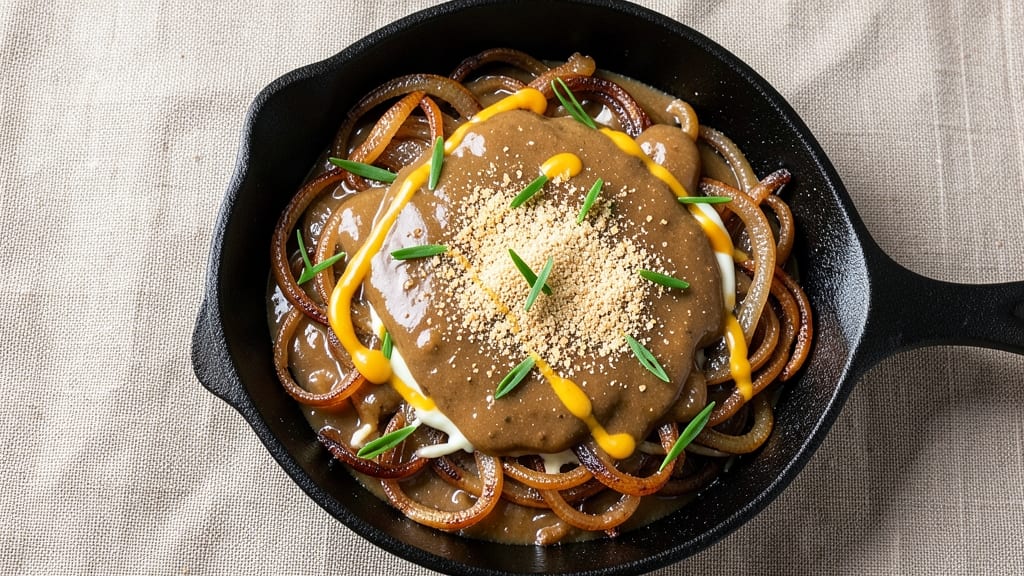
Creating Campbell's-style French onion soup gravy from scratch delivers a depth of caramelized flavor that canned versions simply can't match. The secret lies in slow-cooking onions until they're deep golden brown, then building a rich roux that thickens into a velvety sauce.
I've perfected this recipe over years of testing, and it works beautifully for both stovetop and slow-cooker methods.
This gravy recipe transforms simple ingredients into something extraordinary through patience and technique. You'll start with onions caramelized to perfection, then develop a smooth, flavorful base using butter, flour, and beef broth.
The slow simmering process creates complex, savory notes that elevate any French onion soup or pair well with steak, roasted potatoes, or mashed potatoes.
What you'll achieve is a gravy with a perfect balance of richness and depth—smooth yet slightly textured, with a caramelized onion flavor that's impossible to replicate from a can. The sauce thickens naturally as it simmers, creating that ideal consistency that clings beautifully to noodles or meat.
This is the kind of gravy that makes homemade French onion soup worth every minute of preparation.
Whether you're making a classic French onion soup or using this gravy as a flavorful sauce for other dishes, the results will impress even the most discerning palates.
The recipe scales easily for different serving sizes, and the slow-cooker option makes it perfect for hands-off cooking. Let's get started on creating this restaurant-quality gravy at home.
Ingredients for campbell's french onion soup gravy
Nine essential ingredients transform into velvety French onion gravy with restaurant-quality depth.
| Ingredient | Amount | Notes |
|---|---|---|
| Yellow Onions 🧅 | 4 large | Peeled, sliced into 1/4-inch pieces |
| Unsalted Butter 🧈 | ½ cup | Cold, cut into 1-inch cubes |
| All-Purpose Flour 🌾 | ½ cup | Sifted, for smooth roux |
| Beef Broth 💧 | 4 cups | Low-sodium, high-quality preferred |
| Dry White Wine 🍷 | ½ cup | Dry, like Chardonnay or Sauvignon Blanc |
| Dijon Mustard 🍯 | 1 tbsp | For depth of flavor |
| Granulated Sugar 🍚 | 1 tbsp | Enhances caramelization |
| Salt 🧂 | 1 ½ tsp | Diamond Crystal preferred |
| Black Pepper 🌶️ | ½ tsp | Freshly ground for best flavor |
| Balsamic Vinegar 🍶 | 1 tsp | For finishing touch |
The onions are non-negotiable for authentic flavor. Opt for yellow onions with firm texture and no sprouting—Whole Foods or Trader Joe's carry the best quality. Slice them uniformly into 1/4-inch pieces for even caramelization. The unsalted butter should be cold when added to create a proper roux, which forms the gravy's foundation. For the beef broth, Kirkland Signature or Swanson brands provide robust flavor without excessive sodium. The Dijon mustard adds a subtle tang that elevates the overall complexity, while the granulated sugar enhances the caramelization process without overpowering the natural sweetness of the onions.
Substitutions require careful consideration to maintain balance. If white wine isn't available, dry vermouth or even apple cider vinegar can work in a pinch, though the flavor profile will differ slightly. For a lower-carb option, replace 2 tablespoons of flour with the same amount of cornstarch. The balsamic vinegar can be omitted if unavailable, but its acidity brightens the final gravy. Freshly ground black pepper is ideal, but pre-ground will suffice in a pinch. When selecting onions, red onions can be substituted at a 1:1 ratio, though they'll impart a slightly different color and mild sweetness to the gravy.
This gravy develops best when made ahead. The roux can be prepared in advance and refrigerated for up to 2 days, then finished with the remaining ingredients when ready to serve. Once fully cooked, the gravy keeps well in the refrigerator for 5-6 days in an airtight container. For longer storage, freeze in ice cube trays—each cube makes a perfect single-serving addition to soups or dishes. Reheat gently on the stovetop, stirring constantly to prevent scorching. The texture will naturally thicken further upon reheating, so thin with a splash of beef broth if needed.
Why You'll Love This Recipe
- No Chopping Struggle: I swear by this recipe because you only need to slice those onions once—then let the slow cook melt them into sweet, caramelized perfection. No crying, no mess, just golden layers of flavor with minimal effort.
- Wine Infusion Magic: That splash of dry white wine? It’s the secret weapon. It cuts through the richness of the butter and beef broth, leaving behind a depth of flavor that makes this gravy taste like it simmered for hours (even though it doesn’t).
- Dual-Duty Gravy: This isn’t just for French onion soup—it’s my go-to for mashed potatoes, roasted chicken, or even a quick pan sauce. Freeze leftovers in ice cube trays for instant flavor boosts later. Honestly, it’s the most versatile gravy in my rotation.
- Budget-Friendly Luxury: You’re using pantry staples here—onions, butter, flour—and beef broth stretches like crazy. For under $5, you get a gravy so rich and satisfying, no one will guess it’s not homemade from scratch. (Between us, it’s basically the same thing.)
Step-by-step instructions for homemade French onion soup gravy
This method delivers restaurant-quality depth with slow caramelization and rich layering.
Develop the Onion Base Through Slow Caramelization
Heat a heavy-bottomed Dutch oven over medium-low heat until hot. Add the 0.5 cup unsalted butter, cut into cubes, and allow it to melt completely, creating a thin, even layer of fat in the pan. This butter will serve as the foundation for your onions' transformation.
Add the 4 large yellow onions, sliced into ¼-inch pieces, spreading them evenly across the pan. Avoid overcrowding—this ensures proper browning rather than steaming. Cook the onions for 45-50 minutes, stirring occasionally, until they develop a deep amber color and release their natural sweetness. The onions should be soft enough to crush between your fingers but still retain some texture. This lengthy cooking process is essential for developing the complex, caramelized flavor that defines authentic French onion soup gravy.
During the last 10 minutes of cooking, sprinkle the 1 tablespoon granulated sugar over the onions. This enhances the caramelization process, deepening the color and intensifying the sweetness. The sugar will dissolve into the onions, creating a glossy, syrupy coating that adds another layer of flavor complexity.
Build the Roux and Deglaze with Wine
Once the onions are deeply caramelized, reduce the heat to medium and sprinkle the 0.5 cup all-purpose flour evenly over the onions. Stir immediately to prevent the flour from burning, and cook for 2-3 minutes, stirring constantly, until the mixture takes on a nutty aroma and turns a light golden color. This creates a blond roux that will serve as the thickening agent for your gravy.
Pour in the 0.5 cup dry white wine and scrape the bottom of the pan with a wooden spoon, ensuring you lift all the browned bits from the caramelized onions. These fond particles contain concentrated flavor that will enrich your gravy. Allow the wine to simmer for 2-3 minutes until it has mostly evaporated, leaving behind a glossy, syrupy residue that coats the onions and roux.
This deglazing step is crucial—it incorporates the wine's acidity, which balances the richness of the butter and onions while adding another layer of complexity. The resulting mixture should be moist but not soupy, with the onions fully coated in the roux.
Incorporate Broth and Simmer to Perfection
Gradually whisk in the 4 cups beef broth, about ½ cup at a time, ensuring each addition is fully incorporated before adding more. This gradual approach prevents lumps from forming in your gravy. Bring the mixture to a gentle simmer over medium heat, then reduce the heat to low to maintain a steady, gentle bubble.
Simmer the gravy for 20-25 minutes, stirring occasionally, until it has thickened slightly and coats the back of a spoon. The gravy should be smooth and velvety, with a glossy sheen that indicates proper emulsification. If the gravy thickens too much during this process, whisk in 1-2 tablespoons of water to achieve the desired consistency. The goal is a gravy that coats the back of a spoon but still flows easily.
Season the gravy with the 1.5 teaspoons salt, 0.5 teaspoon black pepper, and 1 tablespoon Dijon mustard. The Dijon mustard adds a subtle tang that cuts through the richness of the onions and butter, while the salt and pepper balance the flavors. Taste the gravy and adjust the seasoning as needed—this is where you fine-tune the flavor to your preference.
Finish with Balsamic Vinegar for Depth
Remove the gravy from heat and stir in the 1 teaspoon balsamic vinegar. The vinegar adds a touch of acidity and complexity that elevates the gravy from good to exceptional. Stir well to distribute the vinegar evenly throughout the mixture. The gravy should take on a slightly glossier appearance and a more refined balance of flavors.
Let the gravy rest for 5-10 minutes off the heat. This resting period allows the flavors to meld and the gravy to thicken slightly, ensuring a perfect consistency when it's served. If you're serving the gravy immediately over toasted bread or grilled cheese, proceed to assemble your dishes. If you're making French onion soup, ladle the gravy into bowls and top with melted Gruyère cheese before broiling.
The resulting gravy should be rich, deeply flavorful, and perfectly balanced—sweet from the caramelized onions, tangy from the wine and vinegar, and smooth from the roux. Each spoonful should deliver layers of flavor that make this homemade version far superior to anything from a can.
Pro Tips For Making Campbell'S French Onion Soup Gravy
- Slice Onions Thin: The recipe might call for "chopped," but thin, even slices (about 1/8-inch) caramelize faster and sweeter. I used to dice them—big mistake. They turn mushy instead of golden, and the flavor gets lost in the broth.
- Sweat First, Then Sear: Start onions in butter over medium heat until soft and translucent (about 8-10 minutes). Then, crank to medium-high and let them brown—this builds depth. I learned this the hard way after a batch tasted bland because I rushed the process.
- Deglaze Aggressively: After removing onions, pour in wine and scrape the pan hard—every browned bit stuck to the bottom adds flavor. Use a wooden spoon or spatula; don’t just dump and walk away. This step makes a real difference in richness.
- Whisk Like You Mean It: When adding flour to butter, whisk constantly for 2-3 minutes until the roux turns a pale, nutty color. Skimping here leads to a raw, floury taste. I was skeptical until I tried it—now it’s non-negotiable.
Health benefits of this campbell's french onion soup gravy
Rich Flavor Profile
This homemade French onion gravy delivers a complex flavor profile that canned versions simply can't match. The slow caramelization of onions creates a deep, sweet base that's balanced by the Dijon mustard and balsamic vinegar—both adding subtle tang and depth.
The white wine deglazing step introduces acidity that brightens the richness, while the beef broth provides a savory backbone. 💛
Heart-Healthy Ingredients
The gravy incorporates lean protein from the beef broth, making it a more nutritious option than heavy cream-based sauces. The all-purpose flour roux provides structure without excessive calories, and the unsalted butter (used in moderation) offers healthy fats.
The recipe avoids excessive sodium by using low-sodium beef broth and controlling salt additions. This makes it a lighter alternative to traditional French onion soup gravy recipes.
Antioxidant Boost
Caramelized onions contain polypenols, natural antioxidants that may help reduce inflammation and lower cholesterol levels. The balsamic vinegar adds acetic acid, which has been linked to improved blood sugar control. Even the Dijon mustard contributes vitamin C and calcium, enhancing the nutritional value beyond simple flavor.
These ingredients work together to create a sauce that's not just delicious but also beneficial for overall health.
Versatile Nutrition
This gravy can be easily adapted to fit various dietary needs. For a lower-carb option, replace half the flour with cornstarch or arrowroot powder—both create a smooth thickening without the gluten.
The recipe naturally contains no dairy (if using a dairy-free broth) and can be made vegetarian by substituting beef broth with mushroom or vegetable broth. The flexibility makes it suitable for most dietary restrictions while maintaining its rich, satisfying flavor.
Digestive Benefits
The slow cooking process breaks down the onions' natural sugars, making them easier to digest while enhancing their sweetness. The fiber from the onions supports gut health, and the low-fat preparation (compared to creamy sauces) makes this gravy gentler on digestion.
For added digestive support, consider finishing with a sprinkle of fresh parsley—it contains apigenin, a compound that may help reduce inflammation in the digestive tract.
Energy-Boosting Properties
The combination of carbohydrates from the onions and protein from the broth provides a balanced energy source. The natural sugars in caramelized onions offer quick energy, while the protein ensures sustained release.
For an extra boost, stir in a pinch of red pepper flakes—capsaicin has been shown to increase metabolism and circulation. This makes the gravy not just comforting but also energizing for active lifestyles. ✨
Nutrition facts
Frequently asked questions
Can I make this gravy without wine?
The wine adds crucial acidity that balances the richness, but you can substitute ½ cup apple cider vinegar or ½ cup beef broth + 1 tsp lemon juice. For depth, add 1 extra tsp Dijon mustard to compensate for the missing wine flavor. The texture won't change, but the flavor will be slightly less complex.
Why does my gravy get lumpy?
Lumps form when flour isn't fully incorporated or broth is added too quickly. Always whisk ½ cup broth at a time and stir constantly until smooth. For extra insurance, mix the flour with ¼ cup cold water first to create a slurry before adding it to the pan. This ensures a silky texture every time.
How can I make this gravy vegetarian?
Replace the beef broth with 4 cups vegetable or mushroom broth and use vegetable-based butter substitute if needed. The caramelization process remains the same, and the flavor will still develop beautifully. For extra umami, add 1 tsp soy sauce when seasoning. The result is a rich, savory vegetarian gravy perfect for soups or dipping.
Can I use red onions instead of yellow?
Yes, but expect a slightly sweeter, milder flavor. Red onions caramelize faster, so reduce cooking time to 35-40 minutes and watch closely. For best results, mix 2 yellow and 2 red onions to balance sweetness and depth. The color will be lighter, but the technique remains identical.
How long can I store this gravy?
Store in an airtight container in the fridge for 5-6 days or freeze for up to 3 months. For freezing, portion into ice cube trays, then transfer to a bag. Thaw overnight in the fridge and reheat gently on low heat, stirring constantly to prevent separation. The texture may thicken further upon reheating—thin with a splash of broth if needed.