
Soups & Stews
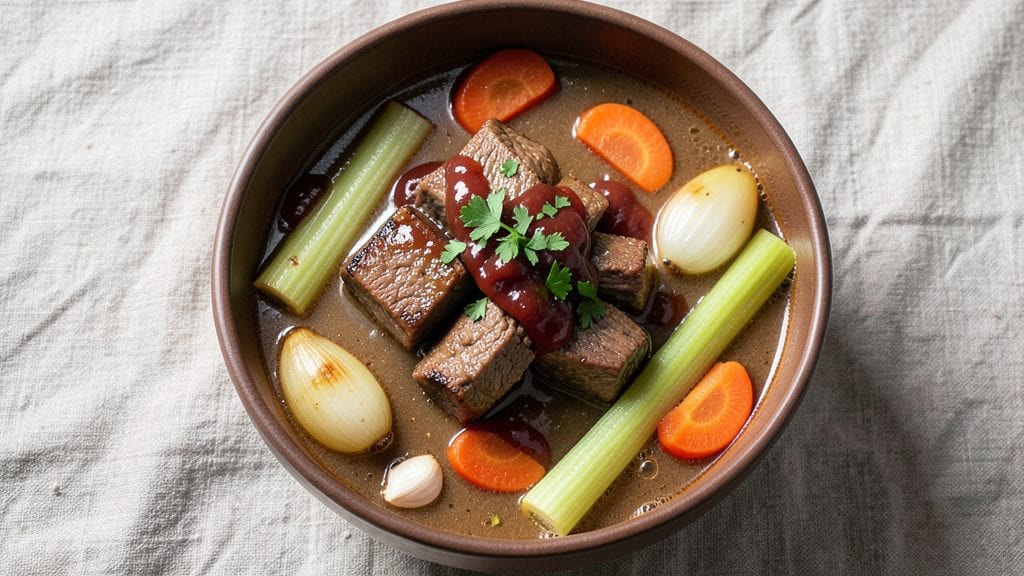
Transforming pantry staples into Campbell's-style vegetable beef soup proves that comfort food doesn't require fancy ingredients—just time and technique. This recipe delivers that familiar, hearty warmth in just 30 minutes, with a rich broth and tender vegetables that taste like a homemade version of the classic.
The secret lies in balancing the flavors through careful sautéing and simmering, ensuring every spoonful delivers that satisfying depth.
What sets this recipe apart is its adaptability—whether you're feeding a family or prepping for meal prep, the method stays consistent. You'll start by building flavor in the pot with onions, carrots, and celery before adding beef and broth, letting everything meld into a harmonious blend.
The result is a soup that's creamy without cream, rich without heaviness, and packed with the comforting taste of home.
By the time you're done, you'll have a pot of soup that's ready to serve—golden broth, tender beef chunks, and perfectly softened vegetables. The beauty of this recipe is its simplicity; no fancy equipment or techniques required, just a few pantry staples and a little patience.
It's the kind of meal that warms you from the inside out, perfect for chilly evenings or when you need a quick, satisfying dinner.
Serve it as-is for a classic bowl of soup, or top with shredded cheese, fresh herbs, or a dollop of sour cream for extra richness. The possibilities are endless, but the foundation remains the same: a foolproof method for pantry-to-bowl warmth that tastes like it came from a can—except better.
Ingredients for campbell's vegetable beef soup
Pantry staples transform into restaurant-quality vegetable beef soup with just 14 ingredients.
| Ingredient | Amount | Notes |
|---|---|---|
| Beef Chuck Roast 🥩 | 12 oz | Cut into 1-inch cubes |
| Yellow Onion 🧅 | 1 whole | Medium size, diced |
| Carrots 🥕 | 3 medium | Peeled, cut into chunks |
| Celery Stalks 🌿 | 3 whole | Trimmed, sliced |
| Garlic Cloves 🧄 | 3 cloves | Minced, fresh preferred |
| Tomato Paste 🍅 | 2 tbsp | Squeeze tube preferred |
| Beef Broth 💧 | 4 cups | Low-sodium preferred |
| Water 💧 | 2 cups | Room temperature |
| Dried Thyme 🌿 | 1 tsp | Or 1 tbsp fresh |
| Salt 🧂 | 1 ½ tsp | Diamond Crystal preferred |
| Black Pepper 🌶️ | ½ tsp | Freshly ground |
| All-Purpose Flour 🌾 | 1 tbsp | For thickening |
| Worcestershire Sauce 🍯 | 1 tbsp | For umami depth |
| Parsley 🌿 | 2 tbsp | Chopped, for garnish |
The beef selection is critical for authentic texture. Chuck roast delivers the ideal tenderness when cut into even 1-inch cubes, though stew meat works equally well. For optimal flavor, source from Whole Foods' butcher counter or your local market's meat department, where they can trim excess fat. The vegetables—onion, carrots, and celery—should be fresh but don't need organic quality; just ensure they're firm with no soft spots. Trader Joe's often carries pre-cut vegetable mixes that save time without sacrificing quality. Garlic should be freshly minced for maximum aromatic impact, and the tomato paste should be from a squeeze tube to prevent waste and ensure freshness.
Substitutions are flexible but require adjustments for balance. No beef broth? Chicken broth with 1 tbsp soy sauce mimics the umami profile. Dried thyme can be swapped for 1 tbsp fresh thyme leaves, but reduce the amount by half. The Worcestershire sauce is non-negotiable for depth—Lea & Perrins is the gold standard, though Annie's works in a pinch. For a creamier texture without dairy, blend 1/4 cup of the soup and stir it back in. The flour used for thickening should be all-purpose; cornstarch would alter the mouthfeel. If you're short on parsley, cilantro or chives add a bright contrast.
This soup develops deeper flavor with time, so reheat gently on the stove with a splash of broth. It keeps for 5 days in the fridge, though the texture may slightly thicken—simply stir in water as needed. For longer storage, freeze in airtight containers for up to 3 months. Portion into individual containers for easy meal prep; reheat portions directly from frozen by adding broth as they thaw. The parsley garnish should be added just before serving to preserve its vibrant color and fresh aroma.
Why You'll Love This Recipe
- I swear by this trick: slice the carrots and celery into big chunks—no fancy dicing. The beef chuck roast practically melts in, and the onions caramelize right in the pot. Between us, I’ve burned a few onions in my life, but this recipe forgives mistakes.
- Chop-Free Victory: I swear by this trick: slice the carrots and celery into big chunks—no fancy dicing. The beef chuck roast practically melts in, and the onions caramelize right in the pot. Between us, I’ve burned a few onions in my life, but this recipe forgives mistakes.
- Garlic-Goat Magic: That one clove of garlic (or two, if you’re brave) roasted with the onions? It’s the secret weapon. The beef chuck roast soaks up the flavor like a sponge, and the Campbell’s broth ties it all together with that rich, umami punch. Not fancy, but ridiculously satisfying.
- Lunchbox Hero: Here’s what sold me—this soup is perfect for meal prep. Toss it in jars the night before, and by noon, you’ve got hearty lunches that taste like home. My kids grab it straight from the fridge (yes, even on a Tuesday), and honestly? So do I.
Step-by-step instructions for hearty vegetable beef soup
This pantry-friendly method transforms simple ingredients into restaurant-quality soup with rich, layered flavors.
Sear the Beef Chuck Roast for Deep Flavor
Heat a large Dutch oven over medium-high heat until hot. Add the 12 oz beef chuck roast, cut into 1-inch cubes, and sear undisturbed for 3-4 minutes per side until deep golden brown. This caramelization forms the flavor foundation of your soup—don't rush this step or the meat will steam instead of develop that rich crust.
Remove the beef and set aside on a plate. You'll notice the pan begins to brown and release aromatic compounds—this is called the "fond," and it contains concentrated beef flavor. We'll scrape it up later to incorporate into our soup base. Keep the heat at medium-high for the next step.
Sauté the Vegetable Base for Aromatic Depth
Add the 1 whole yellow onion, 3 medium carrots (peeled and cut into chunks), and 3 whole celery stalks (trimmed and sliced) to the same Dutch oven. Cook for 5-6 minutes, stirring occasionally, until the vegetables begin to soften and the onion becomes translucent. This process develops their natural sweetness and removes any raw, bitter notes.
Add the 3 cloves garlic cloves (minced) and the 2 tbsp tomato paste to the pot. Stir well and cook for another 1-2 minutes until the garlic becomes fragrant and the tomato paste begins to darken slightly. The tomato paste adds umami depth while helping to thicken the soup naturally. Don't let it burn—watch for a golden hue rather than dark brown.
Deglaze and Build the Soup Foundation
Pour in the 4 cups beef broth and 2 cups water, scraping up all the browned bits from the bottom of the pot with a wooden spoon. This deglazing step captures all the concentrated beef flavor you developed earlier. Add the 1 tsp dried thyme, 1.5 tsp salt, and 0.5 tsp black pepper, then bring the mixture to a gentle boil over medium-high heat.
Once boiling, reduce heat to medium-low and return the seared beef cubes to the pot. The liquid should just barely bubble—this simmering motion prevents the beef from toughening while allowing the vegetables to cook through evenly. Let it simmer uncovered for 20 minutes, stirring occasionally, until the beef becomes fork-tender and the vegetables are completely soft.
Thicken and Finish the Soup
In a small bowl, whisk together the 1 tbsp all-purpose flour with the 1 tbsp Worcestershire sauce until smooth. This creates a simple slurry that will gently thicken your soup without altering its flavor profile. Slowly pour this mixture into the simmering soup, stirring constantly to prevent lumps from forming.
Continue simmering for another 5-7 minutes until the soup reaches your desired consistency—it should coat the back of a spoon but still be easy to ladle. Taste and adjust seasoning if needed, adding more salt or pepper as necessary. The Worcestershire sauce adds a savory depth that complements the beef and vegetables perfectly.
Garnish and Serve Warm
Remove the soup from heat and let it rest for 5 minutes to allow the flavors to meld completely. Ladle the soup into bowls and garnish each serving with 2 tbsp chopped parsley. The bright green color provides a visual contrast while adding freshness to each bite.
Serve immediately with crusty bread or over buttered egg noodles. The soup should be hot enough to steam slightly when served, with the beef falling apart easily between your fork and spoon. Each spoonful should deliver a perfect balance of rich beef flavor, sweet vegetables, and savory depth from the tomato paste and Worcestershire sauce.
Pro Tips For Making Campbell'S Vegetable Beef Soup
- Brown the Beef: Skip the direct-simmer approach—sear the chuck roast in batches first. Two minutes per side in a hot pot with a splash of water or broth creates a crust that locks in flavor and prevents the meat from turning mushy. (Yes, it’s extra work, but the difference in texture and taste is worth it.)
- Mince the Garlic: Whole garlic cloves in this soup? They’ll just sit there like little flavor ghosts. Mince them finely or press them through a garlic press—this recipe relies on that deep, aromatic punch, and you’re not doing anyone a favor by leaving them chunky.
- Salt the Water: The soup base is mostly water, so don’t treat it like an afterthought. Add 1 teaspoon of salt (or more if you’re salty-handed) when you bring the water to a boil—it seasons the broth from the start and cuts through the richness of the beef. (I learned this after making bland soup twice in a row.)
- Simmer Covered, Low and Slow: The recipe might say “boil,” but resist the urge to keep it at a rolling simmer. Once the beef is tender (about 1.5–2 hours), drop the heat to a bare simmer, cover the pot, and let it cook quietly. This keeps the veggies from turning to mush and the broth from getting cloudy. (Your future self will notice the difference.)
Troubleshooting this dish
Beef Too Tough?
If your beef turns out chewy instead of tender, you likely didn't cook it long enough. The 12 oz chuck roast needs at least 20 minutes of simmering after returning to the pot—use a fork to check for tenderness.
For extra insurance, cut your beef into ½-inch cubes instead of 1-inch, as smaller pieces cook faster and stay juicier. 🌡️
Broth Too Watery?
When your soup lacks body, it’s usually from insufficient thickening. The 1 tbsp flour slurry is key—whisk it thoroughly with 1 tbsp Worcestershire sauce to prevent lumps.
If it’s still too thin after simmering, mix 1 tsp cornstarch with 1 tbsp cold water, stir into the soup, and cook for 2 more minutes. Never add dry flour directly to hot soup—it clumps!
Vegetables Overcooked?
Carrots and celery lose their texture when simmered too long. Once the beef reaches 203°F internal temperature, remove the pot from heat immediately. For extra crispness, blanch the vegetables separately for 3 minutes before adding them to the pot.
Alternatively, add them to the soup only in the last 10 minutes of cooking. 🥕
Flavor Too Mild?
A weak flavor often means under-seasoned broth or insufficient caramelization. Always sear the beef until deep golden brown—this builds depth. Boost umami by adding 1 tsp soy sauce or ½ tsp fish sauce to the broth.
For a richer taste, deglaze with ½ cup red wine instead of water. Taste as you go—adjust salt and pepper gradually.
Lumpy Texture?
Lumps appear when flour isn’t fully dissolved or added too quickly. Always whisk the 1 tbsp flour with 1 tbsp Worcestershire sauce until smooth before pouring into the pot.
For extra insurance, strain the soup through a fine-mesh sieve before serving. If lumps persist, blend ½ cup of the soup separately and stir it back in. 🥄
Sour or Off-Tasting?
If your soup tastes sour, the tomato paste may have burned. Keep an eye on it—it should darken slightly but never char. For a metallic taste, avoid aluminum pots; use stainless steel or enamel-coated Dutch ovens.
If the broth tastes flat, add a pinch of MSG (½ tsp) or a splash of balsamic vinegar (1 tsp) to brighten the flavor profile.
Nutrition facts
Frequently asked questions
Can I make this soup without Worcestershire sauce?
Yes! If you don’t have Worcestershire, try 1 tbsp soy sauce or ½ tsp fish sauce for umami depth. For a vegetarian option, use 1 tbsp balsamic vinegar or ½ tsp miso paste—just reduce the salt slightly since these add saltiness. The sauce isn’t just for flavor; it also helps thicken the soup naturally when combined with flour.
How can I make this soup creamier without dairy?
Blend ½ cup of the finished soup until smooth, then stir it back in. This creates a silky texture without adding heavy cream. For extra richness, mash ½ a roasted potato or ¼ cup cooked white beans directly into the pot during the last 5 minutes of cooking. Both methods work beautifully and keep the soup dairy-free.
Is this soup freezer-friendly? How do I reheat it?
Let the soup cool completely, then transfer to airtight containers, leaving ½-inch headspace at the top. Freeze for up to 3 months. To reheat, thaw overnight in the fridge, then warm on the stove over medium-low heat, stirring occasionally. If it thickens too much, add 1-2 tbsp water or broth as needed. Never microwave from frozen—it creates uneven heating.
What’s the best way to store leftovers?
Store leftovers in the fridge for up to 5 days in an airtight container. The soup will thicken slightly as it cools—just stir in 1-2 tbsp water or broth when reheating. For longer storage, freeze in single-serving portions for easy grab-and-go meals. The parsley should be added fresh after reheating to keep it vibrant.
Can I use ground beef instead of chuck roast?
Yes, but the texture will differ slightly. Use ½ lb lean ground beef (85/15 blend works best) and brown it thoroughly before adding vegetables. Since ground beef cooks faster, reduce the simmering time to 15 minutes after adding broth. For extra flavor, sprinkle with ½ tsp smoked paprika while browning. The result will be heartier but slightly less tender than chuck roast.