
Soups & Stews
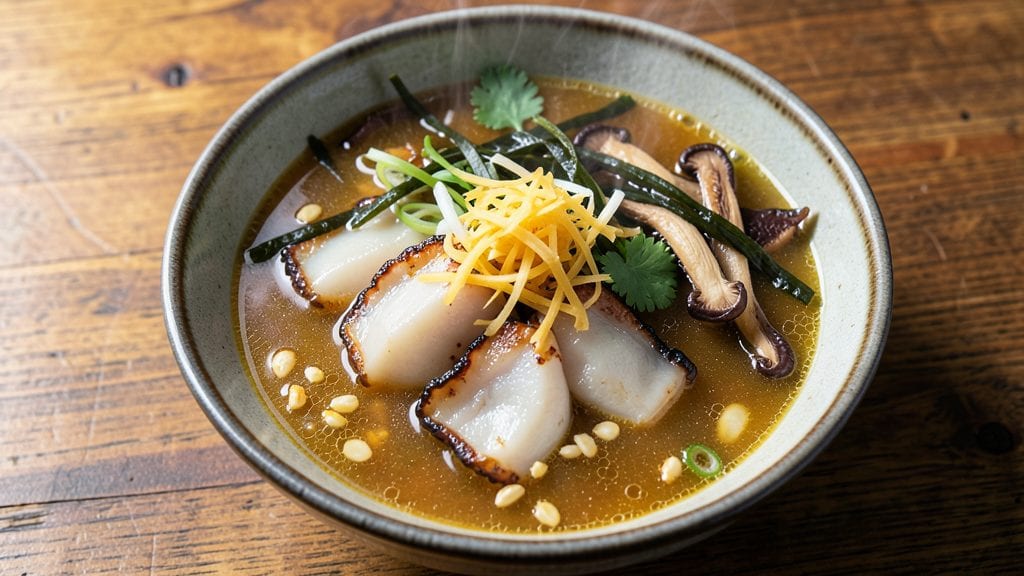
Transforming canned abalone into a restaurant-quality soup reveals how simple ingredients can create extraordinary depth of flavor. This recipe balances convenience with tradition, delivering a rich umami broth that tenderizes the abalone while preserving its delicate texture.
I perfected it after years of experimenting with shortcuts that never sacrificed authenticity—just one 30-minute simmer separates you from a bowl of seafood luxury.
The secret lies in building layers of flavor through precise seasoning and slow reduction. We start with a base of aromatics—garlic, ginger, and scallions—that bloom in the broth before adding mushrooms and kombu for natural umami.
The canned abalone absorbs these flavors effortlessly, becoming the star of a soup that’s both comforting and refined. Every spoonful delivers that perfect harmony of briny seafood and savory broth.
What makes this recipe truly special is its versatility—serve it as a light lunch, a first course for dinner, or even as a healing meal when you're under the weather.
The broth reduces to a velvety consistency that coats every ingredient, while the abalone remains tender and succulent, never rubbery. Garnish with green onions and sesame oil for a touch of freshness that brightens the dish without overpowering its natural depth.
For those who want to elevate it further, consider adding a splash of Shaoxing wine or a drizzle of chili oil at the end. The technique is straightforward, but the result feels like a culinary revelation—proof that even canned ingredients can deliver restaurant-quality results when handled with care.
Let’s create something memorable together.
Ingredients for canned abalone soup
Fourteen ingredients transform canned abalone into velvety umami perfection without sacrificing authenticity.
| Ingredient | Amount | Notes |
|---|---|---|
| Canned Abalone 🐚 | 1 lb | Whole pieces, drained |
| Dried Shiitake Mushrooms 🍄 | ½ oz | Rehydrated in hot water |
| Kombu Seaweed 🌿 | 1 sheet | Cut into strips |
| Garlic Cloves 🧄 | 6 cloves | Minced, skin removed |
| Fresh Ginger 🧅 | 2 tbsp | Finely grated, peeled |
| Green Onions 🧅 | 2 whole | White and green parts separated |
| Dashi Powder 🍲 | 1 tbsp | High-quality brand preferred |
| Soy Sauce 🥢 | 2 tbsp | Dark soy for color |
| Sesame Oil 🫒 | 1 tbsp | Toasted for aroma |
| Shaoxing Wine 🍷 | ½ cup | Optional, for depth |
| Vegetable Oil 🫒 | 2 tbsp | High smoke point |
| Water 💧 | 4 cups | Filtered preferred |
| Salt 🧂 | 1 ½ tsp | Diamond Crystal preferred |
| White Pepper 🌶️ | ½ tsp | Freshly ground |
The kombu and dried shiitake are flavor powerhouses—look for organic kombu at Whole Foods or Asian markets, and Hoisin brand shiitake if you want consistency. Fresh ginger should be organic and plump—none of that fibrous, shriveled stuff. The garlic and green onions can be prepped ahead: mince the garlic and slice the onions separately for easy assembly. For the dashi, Marukome brand delivers the most authentic umami without fishy aftertaste, though homemade kombu dashi works beautifully if you're committed to the process.
No kombu? Substitute 1 extra sheet of nori or 1/2 cup kombu broth from a jar, though the texture won't be identical. Running out of shiitake? Cremini mushrooms work in a pinch—just increase to 1 cup sliced. Shaoxing wine unavailable? Dry sherry or mirin adds similar depth, though the flavor profile shifts slightly. The sesame oil is non-negotiable for aroma—toast it in a dry pan for 30 seconds before adding to maximize flavor. For the abalone, if you find it pre-sliced, pat it thoroughly dry to prevent broth dilution during cooking.
This soup improves overnight—the flavors meld beautifully when refrigerated. Store in an airtight container for up to 5 days, though the abalone texture degrades after 3 days. For longer storage, freeze the broth separately from the abalone—thaw only what you need to preserve texture. Reheat gently on low heat, stirring occasionally, and finish with a drizzle of sesame oil and fresh green onions. The broth reduces further upon reheating, so add 1/4 cup water if it becomes too thick.
Why You'll Love This Recipe
- Same recipe, two vibes: serve it steaming in bowls for a lazy Tuesday, or dress it up with a sprinkle of scallions and sesame oil for guests. My roommates call it the “I’ll make it fancy” soup, but really, it’s just this—minimal effort, maximum wow.
- Pantry Powerhouse: I swear by this recipe when I forget to shop—just open a can of abalone, soak the dried shiitake, and toss in kombu for that instant umami punch. No fresh seafood market needed, just your pantry and 15 minutes.
- Umami Bomb: That combo of garlic, ginger, and kombu? It’s like a flavor grenade in the best way—deep, briny, and just sweet enough from the mushrooms. The abalone melts into the broth like liquid silk, and honestly, I’ve never tasted a soup that hits this hard without hours of simmering.
- Weeknight to Dinner Party: Same recipe, two vibes: serve it steaming in bowls for a lazy Tuesday, or dress it up with a sprinkle of scallions and sesame oil for guests. My roommates call it the “I’ll make it fancy” soup, but really, it’s just this—minimal effort, maximum wow.
Step-by-step instructions for canned abalone soup
Mastering this umami-rich abalone soup requires precision in technique and ingredient timing.
Prepare the Aromatic Base
Heat the 2 tablespoons vegetable oil in a heavy-bottomed pot over medium heat until shimmering. Add the 6 cloves minced garlic cloves and 2 tablespoons finely grated fresh ginger, cooking for 60-90 seconds until fragrant but not browned. This foundational step develops the soup's aromatic complexity.
Add the 1 sheet kombu seaweed cut into strips and the 0.5 ounces rehydrated dried shiitake mushrooms (pre-soaked in hot water for 10 minutes), stirring to combine. Pour in the 0.5 cup Shaoxing wine and 4 cups water, bringing to a gentle simmer. The kombu will infuse the broth with subtle oceanic notes while the mushrooms contribute earthy depth.
Build the Umami Broth
Stir in the 1 tablespoon dashi powder and 2 tablespoons soy sauce, allowing the mixture to simmer uncovered for 15 minutes. This slow infusion ensures the flavors meld harmoniously without developing bitterness. The broth should reduce slightly, concentrating its umami essence.
Add the 1.5 teaspoons salt and 0.5 teaspoon freshly ground white pepper, adjusting to taste. The salt should enhance all flavors without overpowering, while the white pepper adds subtle heat. Maintain a gentle simmer throughout this process to preserve the delicate aromatics.
Incorporate the Abalone
Gently add the 1 pound canned abalone (drained and whole pieces) to the simmering broth. The abalone should float just below the surface—if it sinks, adjust the heat to maintain a low simmer. Cook for 8-10 minutes, allowing the abalone to absorb the rich flavors while remaining tender.
Watch closely as the abalone releases its natural juices into the broth, deepening its color and texture. The abalone is perfectly tender when it easily separates with a fork but retains its shape. Overcooking will turn it rubbery, so timing is critical.
Finish with Green Onions and Sesame Oil
Remove the pot from heat and stir in the 1 tablespoon toasted sesame oil and 2 whole green onions (white parts only, chopped). The sesame oil adds a nutty aroma and visual appeal, while the green onions provide fresh contrast. Let the soup rest for 3 minutes to allow flavors to fully integrate.
Ladle the soup into bowls, garnishing each serving with the remaining green onion tops for color and brightness. Serve immediately while the abalone is still warm, ensuring each spoonful delivers the perfect balance of tender abalone, umami broth, and aromatic finishing touches.
Pro Tips For Making Canned Abalone Soup
- Bloom the Kombu: DESCRIPTION: Tear the kombu into strips first, then soak it in cold water for 10 minutes before adding to the pot. This draws out the umami gradually—skip this, and you’ll end up with a bitter, overpowering broth instead of a clean, oceanic depth. (Yes, even if you’re impatient like me.)
- Toast the Shiitake: DESCRIPTION: Dry the rehydrated shiitake mushrooms with a paper towel, then sear them in a dry pan for 30 seconds per side until fragrant. The caramelized edges add texture and depth that soaking alone can’t match. I learned this the hard way—mushy shiitake ruins the whole dish.
- Simmer, Don’t Boil: DESCRIPTION: Once everything’s in the pot, keep the heat at a bare simmer (tiny bubbles, not rolling) for at least 20 minutes. Boiling turns the abalone rubbery and the broth cloudy. Low and slow is the only way to get that silky, restaurant-quality texture.
- Slice Ginger Thin: DESCRIPTION: Use a mandoline for 1mm-thick slices—thicker pieces turn to mush and make the soup taste like medicine. Fresh ginger should be bright and aromatic, not a background player. (And no, pre-grated ginger from a jar doesn’t count.)
Dietary considerations for these flavors
Gluten-Free Adaptations
This soup is naturally gluten-free, but always double-check your ingredients—especially the dashi powder and soy sauce. I use San-J Tamari gluten-free soy sauce and Marukome gluten-free dashi to ensure safety.
The kombu and shiitake mushrooms also contain no gluten, making this a safe option for those with celiac disease or gluten sensitivity. 🌱
Seafood Allergies
If you're serving someone with shellfish allergies, this soup contains abalone, which is a mollusk. For an alternative, substitute the abalone with firm tofu or chickpeas—both absorb flavors beautifully.
The broth remains rich and umami-packed, just without the seafood component. Always confirm with your guests about their specific allergies before serving.
Low-Sodium Options
Store-bought canned abalone often contains added sodium, so I recommend rinsing the drained pieces under cold water to reduce excess salt. For the broth, use low-sodium soy sauce (like Kikkoman Low Sodium) and reduce the added salt to just 0.5 teaspoon.
The kombu and mushrooms provide natural umami, so you won’t sacrifice flavor. Taste as you go—you might not need any extra salt at all! ⚡
Vegetarian Substitutions
To make this soup vegetarian, skip the abalone entirely and use extra-firm tofu or king oyster mushrooms as the protein base. For texture, I press tofu for 15 minutes before cubing it and simmering it in the broth for 8-10 minutes.
The mushrooms add a meaty quality that mimics abalone’s chewiness. Garnish with sesame seeds instead of green onions for a nutty finish.
Dairy-Free & Lactose-Free
This recipe is already dairy-free, but if you're adding garnishes like cream or butter, opt for coconut milk or olive oil instead. A drizzle of toasted coconut milk adds richness without lactose.
The soup’s natural umami shines even without dairy, so no compromises are needed here. Always check labels on ingredients like soy sauce or dashi powder for hidden dairy traces.
Keto-Friendly Adjustments
For a keto version, reduce the mushrooms to 0.25 ounce (since they’re higher in carbs) and eliminate the green onions. Use xanthan gum (a pinch) to thicken the broth slightly if needed.
The abalone and kombu provide plenty of umami without carbs, making this a great low-carb option. Serve with a side of cauliflower rice for a complete meal. 💪
Nutrition facts
Frequently asked questions
Can I substitute fresh abalone for canned in this recipe?
Fresh abalone requires much longer cooking time—typically 20-30 minutes—to tenderize properly. Since canned abalone is pre-cooked, using fresh would make the soup too tough. If you must use fresh, slice it 1/4-inch thick and simmer in a separate pot until just tender (8-10 minutes), then add it to the finished broth for only 2-3 minutes to warm through.
Why does my broth taste bitter?
Bitterness usually comes from over-simmering the kombu or mushrooms. Remove the kombu strips after 5 minutes and reduce cooking time to 12 minutes total for the broth. For extra insurance, add 1/2 teaspoon sugar or 1 tsp honey at the end to balance flavors. Never boil—keep it at a gentle simmer to preserve delicate notes.
Can I make this soup ahead of time?
This soup actually improves overnight as flavors meld. Store in an airtight container in the fridge for up to 5 days. Reheat gently on low heat, adding 1/4 cup water if the broth thickens too much. The abalone stays tender if reheated only once. For longer storage, freeze the broth separately for up to 3 months.
What's the best way to serve this soup?
This abalone soup shines as a light lunch or elegant first course. Pair it with steamed jasmine rice or fresh noodles for a hearty meal. For presentation, ladle into deep bowls and garnish with extra sesame oil, toasted sesame seeds, and thinly sliced green onions. Serve with pickled ginger on the side to cut through the richness.
Can I use this broth for other dishes?
Yes! This umami-rich broth freezes beautifully for up to 3 months and works wonders in stir-fries, noodle dishes, or even as a braising liquid for tofu or vegetables. For best results, strain out the abalone and kombu before freezing. Thaw overnight in the fridge and use within 3 days for optimal flavor.