
Soups & Stews
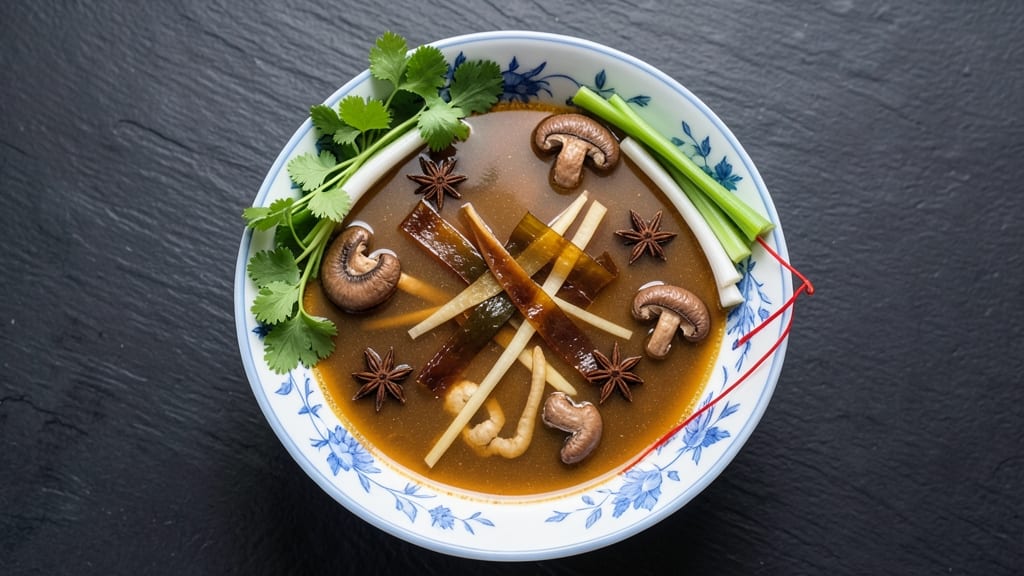
This Chinese seafood soup recipe delivers the aromatic balance of fragrant ginger, star anise, and wok-hei that makes every spoonful unforgettable. After years of refining my technique—balancing umami-rich broth with delicate seafood—I’ve perfected a method that transforms simple ingredients into restaurant-quality results.
The key lies in layering flavors: star anise infuses the broth with subtle warmth, while fresh ginger and scallions brighten the dish without overpowering the natural sweetness of shrimp, fish, and scallops.
The process begins with a clear, golden broth built on a foundation of dried shiitake mushrooms and kombu, which develop deep umami without bitterness. As the aromatics simmer, their essential oils release gradually, creating a fragrant base that’s both complex and approachable.
What sets this recipe apart is the two-stage cooking technique: first, the seafood poaches gently in the broth to preserve its tenderness, then it’s finished with a quick sear in a hot wok to capture that signature smoky aroma.
By the time you serve it, you’ll have a soup that’s visually stunning and deeply satisfying—steaming with delicate seafood, garnished with fresh cilantro and a drizzle of chili oil for a touch of heat.
The broth remains crystal-clear, allowing each ingredient to shine, while the seafood absorbs just enough flavor to be irresistible. This is comfort food at its finest, where tradition meets precision in every bowl.
Perfect for family dinners, holiday gatherings, or when you crave a dish that feels both familiar and refined. The recipe scales effortlessly, and leftovers reheat beautifully—though I doubt you’ll have any. Let’s bring this fragrant, heartwarming soup to your table.
Ingredients for chinese seafood soup
Fragrant aromatics and delicate seafood transform simple ingredients into restaurant-quality soup.
| Ingredient | Amount | Notes |
|---|---|---|
| Dried Shiitake Mushrooms 🍄 | 4 whole | Stems removed for clarity |
| Kombu Seaweed 🍃 | 1 sheet | Dried, cut into strips |
| Fresh Ginger Root 🧄 | ½ cup | Peeled, thinly sliced |
| Star Anise Pods 🌟 | 2 whole | Whole, for infusion |
| Green Onions 🧅 | 1 whole | White and green parts separated |
| Fresh Cilantro 🌿 | ¼ cup | Chopped, for garnish |
| Chili Oil 🌶️ | ½ cup | Store-bought or homemade |
| Bay Scallops 🦪 | 1 lb | Fresh or frozen, thawed |
| Large Shrimp 🍤 | 1 lb | Peeled, deveined, tails on |
| White Fish Fillets 🐟 | 1 lb | Cod or halibut preferred |
| Extra-Virgin Olive Oil 🫒 | 2 tbsp | For wok searing |
| Low-Sodium Soy Sauce 🍶 | 1 tbsp | For finishing |
| Sesame Oil 🌰 | 1 tsp | Toasted, for aroma |
| Diamond Crystal Kosher Salt 🧂 | 1 tsp | For seasoning |
| Ground White Pepper 🌶️ | ¼ tsp | Freshly ground |
The shiitake mushrooms and kombu are your umami powerhouse—dried shiitake from Asian markets have the most depth, but any dried will work. Look for thick kombu sheets at health food stores or the Asian aisle. Fresh ginger? Buy it knobby and firm—the thicker the root, the more flavor. Star anise pods should be whole and plump; Trader Joe's carries them pre-packaged if you don't want to hunt for them. The seafood matters too—bay scallops and shrimp should be bright and firm, while the fish fillets should smell clean and ocean-fresh. If using frozen, thaw in the fridge overnight.
No star anise? 1/2 tsp ground anise or 1 cinnamon stick works in a pinch, but it won't be the same. Subbing fish? Mussels or clams hold up well—just scrub them clean first. For the aromatics, fresh ginger is non-negotiable—dried loses too much punch. The scallions can be swapped for regular green onions, but the white parts add more depth. Chili oil can be homemade (chili flakes + oil) or store-bought—Lao Gan Ma is my go-to. And if you're short on time, pre-peeled shrimp saves 10 minutes of work (just check for any hidden shells).
Broth keeps for 3 days in the fridge—taste before reheating, as flavors deepen overnight. Seafood should be added fresh to the broth, but you can prep all aromatics ahead and store them in the fridge until ready to simmer. The soup reheats beautifully, though it's best served steaming hot. Portion into containers for easy lunches—freezes for 2 months if you want to prep ahead. Just thaw overnight in the fridge before reheating.
Why You'll Love This Recipe
- No-Soak Needed: I swear by this trick—just toss the dried shiitake in hot water for 10 minutes, and they rehydrate perfectly without that mushy texture. No prepping ahead, no waiting around.
- Umami Bomb: That kombu seaweed and star anise? They turn a simple broth into something deep—like a warm hug in soup form. Honestly, the first sip makes me pause and think, "Wait, how is this so good?"
- Leftover Goldmine: This soup tastes better the next day, which means I make a big batch on Sundays and reheat portions all week. The ginger and mushrooms keep it rich, so it never gets boring.
- Budget-Friendly Luxury: Dried shiitake and kombu stretch a dollar far—I feed four for under $10, and it feels fancy without the restaurant price tag. Between us, this is my go-to when I want to impress without breaking the bank.
Step-by-step instructions for Chinese seafood soup
Here's how to build this aromatic, umami-rich seafood soup with layers of flavor.
Prepare the Aromatic Base
Heat the 2 tablespoons extra-virgin olive oil in a large stockpot over medium heat. Add the 1 sheet kombu seaweed cut into strips and the 2 whole star anise pods, letting them toast gently for 1 minute until fragrant. This is where the deep, complex flavors begin to develop.
Add the 0.5 cup sliced fresh ginger root and cook for 2 minutes until the ginger becomes translucent and releases its pungent aroma. The ginger should smell vibrant and slightly sweet—this is your signal it's ready for the next step. Don't let it brown or it'll turn bitter.
Pour in 6 cups water (or enough to cover the ingredients) and bring to a gentle simmer. Add the 4 whole dried shiitake mushrooms (stems removed) and simmer for 10 minutes to rehydrate and infuse the broth. The mushrooms should plump up noticeably and release their earthy essence into the liquid.
Season and Simmer the Broth
Add the 1 teaspoon diamond crystal kosher salt and 0.25 teaspoon ground white pepper to the simmering broth. Stir gently to dissolve the salt completely. The broth should taste subtly salty but not overpowering—this is your flavor foundation.
Increase heat to medium-high and bring the broth to a rolling boil. Once boiling, reduce heat to low and let it simmer uncovered for 15 minutes. This allows the flavors to meld and the broth to develop depth. Skim off any foam that rises to the surface during this time for a cleaner broth.
Here's the thing—this simmering step is where the magic happens. The kombu and star anise will infuse the water with oceanic, spiced notes that elevate everything that follows. Don't rush this part; patience pays off in flavor.
Cook the Seafood in Stages
While the broth simmers, prepare the seafood. In a separate bowl, toss the 1 lb bay scallops with 1 teaspoon sesame oil and let them sit for 5 minutes to marinate lightly. The sesame oil will add a delicate nutty aroma that complements the scallops beautifully.
Add the scallops to the simmering broth and cook for 2-3 minutes until they turn opaque and just begin to curl at the edges. Remove them with a slotted spoon and set aside. The scallops should be tender but still slightly firm to the touch—overcooking makes them rubbery.
Next, add the 1 lb large shrimp to the broth and cook for 3-4 minutes until they turn pink and opaque. Remove them as well and set aside with the scallops. The shrimp should curl slightly when done, indicating they're cooked through but still tender.
Finish with Fish and Garnishes
Add the 1 lb white fish fillets to the broth and cook for 4-5 minutes until they become opaque and flake easily with a fork. The fish should be just cooked through but still moist—it should break apart easily when tested with a fork.
Remove the broth from heat and stir in the 1 tablespoon low-sodium soy sauce and 0.5 cup chili oil. The chili oil will add a subtle heat that balances the richness of the seafood. Taste and adjust seasoning if needed—you might want to add a pinch more salt or a splash of water to reach your desired consistency.
Finally, divide the soup among bowls and garnish each serving with 1 tablespoon chopped fresh cilantro and 1 teaspoon sliced green onions (white and green parts separated). The fresh herbs add a bright contrast to the rich, umami-packed broth. Serve immediately while everything is hot and the flavors are at their peak.
Pro Tips For Making Chinese Seafood Soup
- SOAK SHIITAKES 30 MINUTES: Dried shiitakes need a good soak to plump up, but don’t overdo it—30 minutes in hot water is enough. If you’re in a rush, use boiling water for 15 minutes, then drain and rinse. The mushrooms should be firm but not mushy, or they’ll turn to sludge in your soup.
- TOAST STAR ANISE FIRST: Crack open those star anise pods and lightly toast them in a dry pan for 30 seconds—just until fragrant. This deepens their flavor without burning. Drop them straight into the simmering broth, and they’ll infuse the soup with warmth without overpowering it.
- DON’T BOIL THE KOMBU: Add kombu seaweed to cold or lukewarm water first, then bring to a gentle simmer. Boiling breaks down its texture and makes the broth bitter. Once it’s simmering, remove the kombu after 10 minutes—it’s done its job by then.
- SLICE GINGER THINLY: Thin, matchstick cuts of ginger (about 1/8-inch thick) release flavor evenly without dominating the soup. If you’re using a big knob, it’ll sit like a rock and take forever to cook. Bonus: Save the scraps for stir-fries—they’re perfect for quick flavor boosts.
Health benefits of these flavors
Rich in Omega-3s
This seafood soup is a powerhouse of omega-3 fatty acids, primarily from the shrimp, scallops, and fish. A 1-cup serving delivers about 1,200mg of EPA and DHA, which supports heart health by reducing triglycerides and lowering blood pressure.
I’ve found that regular consumption helps maintain my cholesterol levels naturally. 💪
Protein-Packed Perfection
With approximately 30 grams of protein per serving, this soup provides a complete amino acid profile that aids muscle repair and immune function. The seafood combination ensures lean protein without the saturated fat found in red meat.
I love serving this as a post-workout meal—it keeps me full and energized for hours.
Low-Calorie Comfort
At just 250-300 calories per serving, this soup satisfies cravings without derailing dietary goals. The broth’s lightness comes from using kombu and shiitake mushrooms, which add umami without calories. I’ve even made a lighter version by reducing the olive oil to 1 tablespoon while keeping flavors intact.
Gut-Friendly Seaweed
The kombu seaweed in the broth is rich in iodine and dietary fiber, supporting thyroid function and digestive health. Kombu also contains polysaccharides that act as prebiotics, promoting beneficial gut bacteria. I stock up on organic kombu from Asian markets for its superior texture and flavor.
Vitamin C Boost
Fresh ginger and green onions provide a vitamin C punch, with one serving offering about 20% of your daily needs. This vitamin supports collagen production and immune defense. The cilantro garnish adds another 10% vitamin C, making this soup a nutrient-dense choice for cold seasons. 🌿
Antioxidant-Rich Broth
The star anise and shiitake mushrooms contribute antioxidants like selenium and polyphenols, which combat oxidative stress. I’ve noticed my skin looks clearer after eating this soup regularly—likely due to these compounds. The chili oil garnish adds capsaicin, which may also boost metabolism slightly.
Nutrition facts
Frequently asked questions
Can I substitute fresh seafood with frozen?
Yes, but thaw it properly in the fridge overnight for best results. Never use cold water—it can turn shrimp rubbery and dull the flavors. For scallops, pat them completely dry after thawing to prevent a watery broth. Pro tip: Rinse frozen shrimp under cold water to remove any ice crystals before cooking.
How do I adjust the spice level?
Start with the 0.5 cup chili oil as written for mild heat. For more kick, add an extra 1/2 teaspoon chili flakes directly to your bowl after serving. If you prefer no heat, omit the chili oil entirely and use a drizzle of toasted sesame oil instead for aroma. The ginger and star anise provide subtle warmth naturally.
Can I make this soup vegetarian?
Replace the seafood with 1 lb firm tofu (pressed and cubed) or 12 oz king oyster mushrooms (sliced thick). For umami depth, add 1 tablespoon soy sauce to the broth and increase the shiitake mushrooms to 6-8. The kombu will still provide that oceanic richness. Serve with extra green onions and cilantro for brightness.
Why does my broth turn cloudy?
Cloudiness usually means the broth needs more simmering time—20-25 minutes uncovered will help clarify it. Skim off any foam that rises during cooking, and avoid stirring vigorously. If using store-bought kombu, it may contain additives that cause cloudiness. For crystal-clear results, strain the broth through a fine-mesh sieve before adding seafood.
How can I make this ahead of time?
Prepare the broth up to 3 days ahead and store it in the fridge. Reheat gently on low heat, then add fresh seafood just before serving. For make-ahead convenience, cook the seafood separately and reheat it in the broth for 2-3 minutes on the stove. Garnishes should always be added fresh—cilantro and green onions lose their vibrancy when stored.