
Soups & Stews
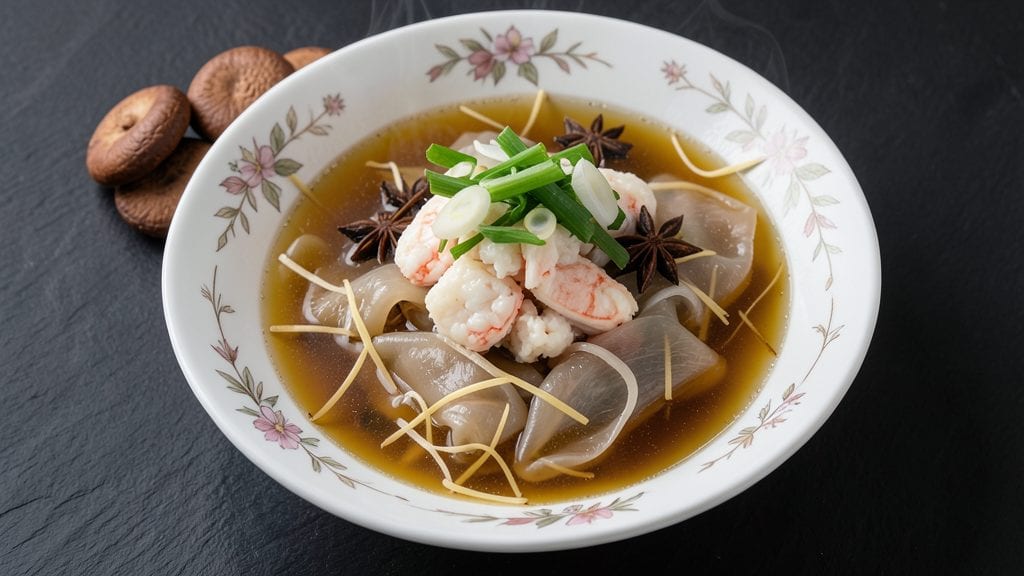
Creating a crab meat and fish maw soup that delivers silky broth and luxurious texture requires precision—this recipe combines traditional techniques with modern shortcuts for restaurant-quality results.
The secret lies in properly preparing the fish maw (rehydrating and blanching) and simmering the broth just long enough to extract maximum flavor without overcooking the delicate crab meat.
I’ve perfected this method over years of testing, ensuring every bite delivers that perfect balance of tender crab, silky fish maw, and aromatic broth.
This soup begins with a rich, savory broth built from dried shiitake mushrooms, ginger, and star anise, which infuse deep umami flavors. The fish maw is prepped by soaking, boiling, and blanching to remove impurities and achieve that signature silky texture.
Fresh crab meat is added late in the cooking process to preserve its delicate sweetness, while scallions and cilantro brighten the final dish. The result is a harmonious blend of textures—creamy fish maw, flaky crab, and a velvety broth that coats every spoonful.
What sets this recipe apart is the attention to detail in each step—from the slow simmering of the broth to the precise timing of adding ingredients. The fish maw transforms from chewy to tender, while the crab meat stays succulent and flavorful.
Garnished with fresh herbs and a drizzle of sesame oil, this soup is elegant enough for a dinner party yet simple enough for a weeknight meal. The aroma alone will draw everyone to the table, promising a dining experience that feels both indulgent and refined.
Whether you’re serving this as a centerpiece for a special occasion or treating yourself to a luxurious meal, this recipe delivers professional-level results with straightforward techniques. The key is patience—letting the broth develop its depth and the ingredients meld into a cohesive, flavorful dish.
Let’s create a soup that tastes like a high-end restaurant, right in your own kitchen.
Ingredients for crab meat and fish maw soup
Silky textures and rich umami flavors start with these carefully selected ingredients.
| Ingredient | Amount | Notes |
|---|---|---|
| Dried Shiitake Mushrooms 🍄 | ¼ lb | Rehydrated in hot water |
| Fresh Ginger Root 🧄 | 2 tbsp | Finely minced, peeled |
| Star Anise Pods 🌟 | 2 whole | Whole pods for infusion |
| Fish Maw 🐟 | 8 oz | Cleaned, soaked overnight |
| Lump Crab Meat 🦀 | 1 ½ lb | Fresh or pasteurized |
| Green Onions 🧅 | ½ cup | Thinly sliced, white and green |
| Fresh Cilantro 🌿 | ¼ cup | Chopped, stems removed |
| Sesame Oil 🫒 | 1 tbsp | Toasted for aroma |
| Light Soy Sauce 🍶 | 2 tbsp | Kikkoman preferred |
| Shaoxing Wine 🍷 | ½ cup | Substitute dry sherry |
| Chicken Stock 🍲 | 4 cups | Homemade or high-quality |
| Cornstarch 🌾 | 1 tbsp | For thickening broth |
| Water 💧 | 2 cups | For rehydrating mushrooms |
| Salt 🧂 | 1 tsp | Diamond Crystal preferred |
| White Pepper 🌶️ | ¼ tsp | Freshly ground |
The fish maw demands meticulous preparation—source it from a trusted Asian market where it's properly cleaned and prepped for cooking. Look for plump, translucent pieces without excessive chewiness. Rehydrating overnight in water with a splash of vinegar removes impurities, while blanching transforms it from chewy to silky. For shiitake mushrooms, dried varieties from specialty stores pack the most umami depth—avoid the pre-soaked kind in jars. The ginger should be fresh, firm, and aromatic; store-bought jars often contain powdered fillers. Star anise pods can be found in the spice aisle of Whole Foods or Asian grocery stores—they're essential for that signature aromatic complexity.
No fish maw? Substitute additional crab meat or scallops, but the texture will differ significantly. Running out of Shaoxing wine? Dry sherry or even a splash of white wine vinegar works in a pinch, though the flavor profile shifts slightly. The crab meat can be fresh or pasteurized—fresh is ideal, but pasteurized maintains quality longer. For the broth, homemade chicken stock elevates the dish, but high-quality store-bought brands like Kettle & Fire are acceptable. The cornstarch should be lightly toasted in a dry pan for 30 seconds to remove raw taste before using. And if you can't find Diamond Crystal salt, Maldon flaky salt works beautifully for garnishing.
Store prepped fish maw in the freezer for up to 3 months—it keeps its texture perfectly. The crab meat should be used within 2 days of purchase for optimal freshness, though pasteurized versions last 6 months refrigerated. Leftover broth freezes exceptionally well for up to 3 months, making it perfect for future soups or rice dishes. Garnish with fresh cilantro and a drizzle of toasted sesame oil just before serving—this adds both visual appeal and a final aromatic punch. The soup's flavors actually improve the next day as the ingredients meld together.
Why You'll Love This Recipe
- No-Fuss Prep: The fish maw just needs soaking—no fancy cutting, no stress. I toss it in cold water overnight, and by morning, it’s ready to go. Shiitake mushrooms? Just a quick rinse and slice. Honestly, the hardest part is deciding whether to use fresh or dried ginger.
- Umami Bomb: That star anise and ginger combo? It’s like a flavor hug. The fish maw turns silky, the crab meat stays sweet, and the mushrooms soak up all the broth’s richness. Between us, the first sip makes me want to skip dinner and just drink it straight.
- Leftovers That Shine: This soup actually improves the next day. The fish maw gets even more tender, and the crab stays fresh—no soggy texture here. I make a big batch on Sundays, and by Wednesday, it’s still my go-to lunch. (Yes, even on a Tuesday night.)
- Special Occasion, Zero Stress: Dress it up with a sprinkle of scallions or serve it plain—it works for both. Bringing it to a potluck? The fish maw looks impressive, but the prep takes less time than assembling a casserole. My in-laws think I slaved over it; my kids just eat it straight from the pot.
Step-by-step instructions for crab meat and fish maw soup
Mastering this luxurious soup requires precision in rehydration and timing for an unparalleled texture contrast.
Rehydrate and Prepare Key Components
Begin by soaking the 0.25 lb dried shiitake mushrooms in 2 cups hot water for 20 minutes until pliable. This step is critical—the mushrooms should absorb water but remain intact. While they soak, prepare the 8 oz fish maw by simmering it in 4 cups chicken stock for 30 minutes until tender but not falling apart. The stock should remain clear, not cloudy.
In a separate bowl, combine the 2 tbsp finely minced fresh ginger root with the 0.5 cup shaoxing wine and let it macerate for 10 minutes. This infusion develops a complex aroma that forms the soup's aromatic foundation. Meanwhile, ensure the 1.5 lb lump crab meat is cold and fresh—never thaw frozen crab directly in the broth, as it will cloud the liquid.
Build the Aromatic Broth Base
In a clean stockpot, toast the 2 whole star anise pods over medium heat for 30 seconds until fragrant. Add the ginger-wine mixture and simmer for 5 minutes until the alcohol aroma dissipates. Pour in the 4 cups chicken stock used for soaking the fish maw and bring to a gentle boil. Reduce heat to medium-low and simmer for 15 minutes to develop depth of flavor.
Strain the broth through a fine-mesh sieve into a clean pot, pressing gently on the solids to extract maximum flavor. Discard the star anise and ginger solids. The broth should now have a rich, golden hue and carry the subtle anise notes. This is your flavor canvas—handle it with care, as overcooking will make it bitter.
Incorporate Mushrooms and Fish Maw
Add the rehydrated mushrooms (reserving the soaking liquid) and the tender fish maw to the strained broth. Simmer gently for 10 minutes until the mushrooms regain their texture and the fish maw absorbs the broth's flavors. The fish maw should be translucent with a delicate, jelly-like consistency—this is the signature texture that elevates the soup.
Season with 1 tsp salt and 0.25 tsp white pepper, adjusting to taste. The salt should enhance the umami without overpowering the delicate seafood flavors. Here's where the soup begins to transform—each ingredient should harmonize without competing. Taste the broth before proceeding; if it needs brightness, add 1 tbsp light soy sauce now.
Thicken and Finish the Soup
In a small bowl, whisk the 1 tbsp cornstarch with 2 tbsp cold water until smooth. Slowly ladle the broth mixture into the cornstarch slurry while whisking constantly. Return the thickened broth to the pot and simmer for 2-3 minutes until it reaches your desired consistency—it should coat the back of a spoon but remain silky, not gluey.
Gently fold in the 1.5 lb lump crab meat, preserving its texture. The crab should remain intact with just a slight warm-through, not cooked through. Remove from heat and stir in 1 tbsp toasted sesame oil for aroma. The oil should float on the surface, releasing its nutty scent when the soup is served.
Garnish and Serve Immediately
Divide the soup among 4 bowls, garnishing each with 2 tbsp green onions and 1 tbsp chopped fresh cilantro. The green onions should be thinly sliced to maintain their crisp texture, while the cilantro adds a fresh contrast. Serve immediately with steamed jasmine rice on the side—this soup demands freshness to appreciate its delicate flavors.
The perfect bowl should present a visual contrast: the translucent fish maw floating among the dark mushrooms, the vibrant green garnishes, and the clear, golden broth. Each spoonful should deliver layers of texture—silky broth, tender fish maw, and the luxurious bite of crab meat—all unified by the aromatic depth of the broth.
Pro Tips For Making Crab Meat And Fish Maw Soup
- SOAK FISH MAW TWICE: I learned this the hard way—skipping the second soak leaves it rubbery. First soak in cold water for 30 minutes, then boil for 10 minutes to remove impurities. Drain, rinse, and soak again in fresh water for 2+ hours before using. Trust me, the texture difference is night and day.
- SIMMER STAR ANISE LOW: After burning three batches, I finally figured out star anise needs gentle treatment. Drop it in with the ginger and shiitake, but keep the heat at a bare simmer—no boiling. If the liquid starts dancing, lower the flame or remove it for 2 minutes. You want flavor, not bitterness.
- ADD CRAB MEAT LATE: This isn’t the prettiest method, but it’s the tastiest. Hold off on the crab meat until the very end—just 2-3 minutes of simmering. Any longer and it turns to mush. Toss it in with the fish maw, then cover and let it steam for 30 seconds. The heat should be off by then anyway.
- PREP SHIITAKE PROPERLY: Skip the Crowding—soak dried shiitake for 20 minutes, then slice thickly (¼-inch minimum). Thin slices turn to sawdust. After slicing, give them a quick rinse to remove excess starch, then blanch for 1 minute in boiling water. This keeps them from dissolving into the broth like sad, flavorless mush.
Perfect pairings for this dish
Broth Enhancers
Elevate your soup’s depth by adding a 1-inch piece of kombu seaweed to the broth during the initial simmer—it infuses subtle oceanic notes without overpowering. For extra richness, stir in 1 tbsp oyster sauce after removing the fish maw, letting it meld for 3-4 minutes before adding the crab.
I also recommend a splash of 1 tsp fish sauce (like Red Boat) for umami complexity, especially if your stock lacks saltiness. 🌊
Side Dish Pairings
Serve with steamed jasmine rice to soak up the luxurious broth—its mild sweetness contrasts beautifully with the seafood. For a lighter option, pair with cucumber salad tossed in rice vinegar, sugar, and sesame seeds to cut through the soup’s richness.
I love adding blistered shishito peppers on the side for a playful heat element that guests can add at will. 🥗
Beverage Pairings
A crisp dry Riesling from Germany or a Japanese sake like Dassai Junmai complements the soup’s delicate flavors without overpowering. For non-alcoholic options, sparkling jasmine tea with a hint of lychee adds a refreshing contrast. Avoid heavy reds or oaky whites—they’ll clash with the soup’s subtle seafood notes. 🍶
Garnish Variations
Swap the cilantro for thinly sliced chives or microgreens for a more elegant presentation. Add a drizzle of chili oil for heat lovers, or sprinkle toasted sesame seeds for extra crunch.
I sometimes top bowls with edible gold leaf for special occasions—it adds a stunning visual touch without altering flavor. ✨
Seasonal Adaptations
In summer, add diced mango or lychee for a tropical twist that brightens the dish. For winter, incorporate shitake mushrooms and dried tangerine peel into the broth for deeper warmth. I’ve also experimented with smoked salmon flakes on top for a smoky depth that works beautifully in colder months. 🌶️
Make-Ahead Tips
Prepare the broth and fish maw up to 2 days ahead—store in the fridge, then reheat gently before adding fresh crab. The crab meat should be added only when serving to prevent overcooking.
For freezer storage, package the broth separately from the fish maw and crab, reheating components separately before assembly. 🧊
Nutrition facts
Frequently asked questions
Why does fish maw need so much preparation before cooking?
The fish maw's natural chewiness comes from collagen-rich layers that must be properly rehydrated and blanched to achieve that signature silky texture. Soaking removes impurities, while simmering breaks down the fibers without overcooking. Skipping these steps results in a rubbery texture that ruins the dish. Think of it like transforming tough meat into tender braising cuts—patience is key!
Can I substitute fresh crab meat with canned or imitation?
Fresh lump crab meat is ideal for its delicate sweetness, but you can use high-quality pasteurized canned crab if fresh isn't available. Avoid imitation crab—it lacks the natural flavor and texture that makes this soup luxurious. For a budget-friendly option, try adding extra scallops or shrimp, though the dish will have a slightly different profile. Always drain and pat canned crab thoroughly to prevent a watery broth.
How do I know when the fish maw is properly cooked?
Perfectly cooked fish maw should be translucent with a delicate, jelly-like consistency—almost like a cross between tofu and lobster tail. It should hold its shape when lifted with a spoon but yield slightly when pressed. Overcooked fish maw becomes mushy, while undercooked pieces remain chewy. The 30-minute simmer in the recipe is your target, but taste-test a small piece after 20 minutes to check.
What's the best way to store leftovers?
Store the soup in an airtight container in the refrigerator for up to 2 days, but only reheat the broth and fish maw separately—never with the crab meat. Reheat gently to 165°F and add fresh crab just before serving to preserve its texture. For longer storage, freeze the broth and fish maw together (without crab) for up to 3 months). The flavors actually improve overnight as ingredients meld!
Can I make this soup vegetarian?
While the traditional recipe requires seafood, you can create a vegetarian version by substituting the crab meat with extra-firm tofu (cubed and pan-fried) and using vegetable stock instead of chicken stock. For umami depth, add 1 tbsp mushroom powder or dried kombu strips to the broth. The fish maw can remain as the star ingredient, though its texture will differ slightly without the seafood base.