
Soups & Stews
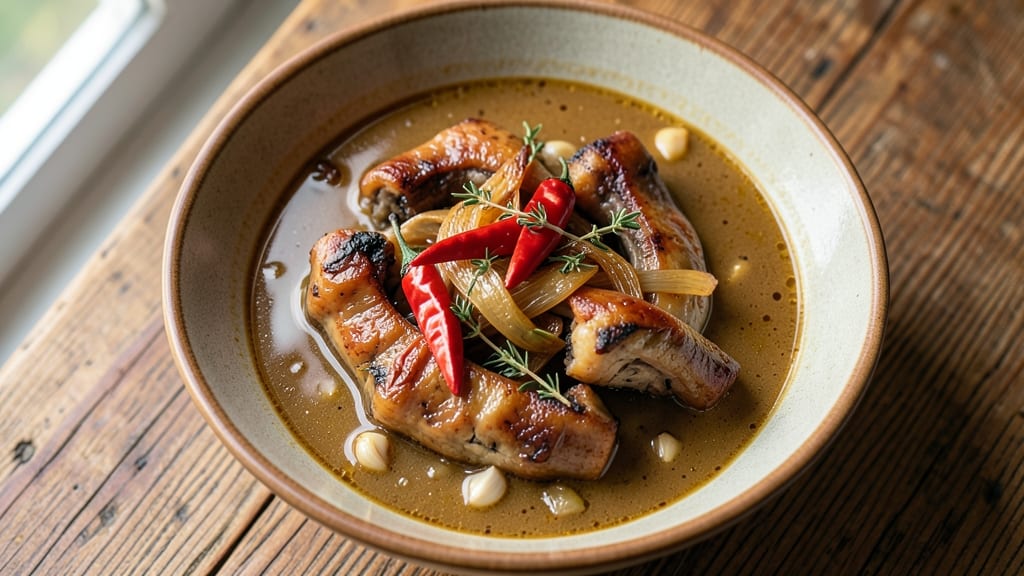
This Jamaican cow foot soup recipe brings rich tradition to your kitchen with its slow-simmered depth and collagen-packed goodness. The process starts with carefully cleaning and parboiling the cow feet—a step that transforms tough connective tissue into tender, flavorful bites.
My version stays true to the island roots while making it accessible for home cooks, using Scotch bonnet peppers, thyme, and garlic for that signature Jamaican heat and aroma.
The beauty of this dish lies in its slow cooking—at least 6 hours of simmering unlocks the collagen, creating a broth so rich it coats every spoonful.
You'll need basic ingredients like onions, garlic, and coconut milk, but the real magic happens in the seasoning blend where Scotch bonnet peppers deliver that signature Jamaican fire while thyme and allspice add earthy warmth. This isn't just soup; it's a celebration of Jamaican soul food in one steaming bowl.
What you'll end up with is a deeply flavorful soup where tender cow feet float in a velvety broth infused with Caribbean spices.
The aroma alone will have your kitchen smelling like a Jamaican rum shop, while the first bite delivers that perfect balance of spicy heat, herbal notes, and rich umami. This is comfort food at its finest—a dish that nourishes both body and spirit.
Perfect for family gatherings or when you want to serve something truly special, this soup pairs beautifully with white rice or festival (Jamaican sweet fried dumplings).
The leftovers taste even better the next day as the flavors deepen. Let's get cooking—this is one recipe that will have everyone asking for seconds.
Ingredients for jamaican cow foot soup
Six hours of simmering transforms tough cow feet into tender, spice-infused comfort.
| Ingredient | Amount | Notes |
|---|---|---|
| Cow Feet 🦵 | 4 lb | Cleaned, parboiled, joints separated |
| Yellow Onions 🧅 | 2 whole | Chopped, medium size preferred |
| Garlic Cloves 🧄 | 8 cloves | Peeled, roughly chopped |
| Scotch Bonnet Peppers 🌶️ | 2 whole | Seeds removed, chopped fine |
| Fresh Thyme 🌿 | ¼ cup | Stems removed, chopped |
| Ground Allspice 🌶️ | 1 tbsp | Freshly ground preferred |
| Ground Ginger 🌿 | 1 tbsp | Freshly grated if possible |
| Coconut Milk 🥥 | 2 cans | Full-fat, 13.5 oz each |
| Tomato Paste 🍅 | 2 tbsp | Smooth, no sugar added |
| Salt 🧂 | 2 tsp | Kosher or sea salt |
| Black Peppercorns 🌶️ | 1 tsp | Crushed, freshly ground |
| Bay Leaves 🌿 | 2 whole | Dried, for simmering |
| Scotch Bonnet Pepper Seeds 🔥 | 1 tsp | Optional, for extra heat |
| Lemon Juice 🍋 | 1 tbsp | Freshly squeezed |
| Olive Oil 🫒 | ¼ cup | For initial searing |
The cow feet are the star—look for fresh, clean cuts at specialty butchers or Caribbean markets. Costco sometimes carries them pre-cleaned, but if you're buying whole, soak them in cold water with vinegar for 30 minutes to remove impurities. The Scotch bonnet peppers are non-negotiable for that Jamaican fire, but if you can't find them, habanero or red jalapeño will work in a pinch (use half the amount). Fresh thyme and allspice add that island aroma—Penzeys Spices has great bulk options if you want to stock up. The coconut milk should be full-fat for richness, and Thai Kitchen cans are my go-to for consistency.
No Scotch bonnet? Dried habanero flakes at half the amount will give you heat, though it won't be the same fruity depth. The tomato paste can be swapped for 1 cup crushed tomatoes if you prefer, but paste gives that concentrated umami. Fresh ginger is ideal, but if you're using ground, toast it lightly in a dry pan first to wake up the flavor. The bay leaves? Don't skip them—they're subtle but essential for that Jamaican soul. For extra richness, add 1/4 cup vegetable oil to the initial sear, but olive oil works just fine.
This soup tastes even better the next day as the flavors meld. Store in the fridge for up to 5 days, or freeze portions for 3 months. The cow feet will get even more tender with reheating, so don't rush it. For serving, I like to strain some of the broth and reduce it slightly to make a thicker sauce for drizzling over rice. Leftovers? Double the batch—it disappears fast at gatherings.
Why You'll Love This Recipe
- One-Pot Magic: I swear by this recipe because it’s literally one pot—no chopping boards overflowing, no pans to wash. Toss in the cow feet (pre-soaked, of course), onions, garlic, and peppers, then let the broth work its magic. Honestly, the hardest part is waiting for the scent to fill your kitchen.
- Heat & Depth Bomb: That Scotch bonnet isn’t just for show—it layers heat that lingers just right, while the thyme and garlic turn this into a flavor explosion. The cow feet? They melt into this rich, gelatinous goodness that’s somehow both tender and satisfying. (Yes, even on a Tuesday night.)
- Feeds a Crowd (or Your Freezer): This soup is ridiculously forgiving for leftovers—it tastes even better the next day. Double the batch, freeze half, and you’ve got a weeknight savior. Between us, it’s also the star of potlucks or family gatherings when you want to impress without slaving away.
- Budget Meal, Big Payoff: Cow feet are cheap, but they feel luxurious. A single batch stretches for days, and the ingredients? Basic, affordable, and packed with flavor. I’ll be real: my grocery bill drops when I make this, but my taste buds throw a party every time.
Step-by-step instructions for Jamaican cow foot soup
Here's how to transform tough cow feet into melt-in-your-mouth goodness with rich Jamaican flavors.
Sear the Cow Feet for Deep Flavor
Heat a large Dutch oven over medium-high heat. Add the 0.25 cup olive oil and let it shimmer until hot but not smoking. Working in batches, add the 4 lb cow feet and sear for 8-10 minutes per side until they develop a deep golden-brown crust. The oil should sizzle vigorously—this creates the Maillard reaction that builds complex flavors.
I like to press down gently on each joint during searing to ensure even contact with the hot oil. This prevents curling and guarantees maximum browning. Once all pieces are seared, remove them and set aside on a plate. Don't clean the pot yet—those browned bits are pure flavor gold.
Build the Spiced Base
In the same Dutch oven, reduce heat to medium and add the 2 whole chopped yellow onions. Cook for 5-7 minutes until softened and beginning to caramelize at the edges. Add the 8 cloves roughly chopped garlic and cook for 1 minute until fragrant—don't let it burn.
Stir in the 2 whole chopped Scotch bonnet peppers (seeds removed), 0.25 cup chopped fresh thyme, 1 tbsp ground allspice, 1 tbsp ground ginger, 2 tbsp tomato paste, 2 tsp salt, and 1 tsp crushed black peppercorns. Cook for 2 minutes, stirring constantly, until the spices are toasted and the mixture smells intensely aromatic. This is your flavor foundation.
Simmer the Collagen-Rich Broth
Return the seared cow feet to the pot and add 6 cups water (enough to cover the feet by about 1 inch). Bring to a boil over high heat, then immediately reduce to a gentle simmer. Add the 2 whole bay leaves and 1 tsp Scotch bonnet pepper seeds (if using). Cover partially and simmer for 3 hours, skimming any foam that rises to the surface.
Here's the thing—patience is key. The collagen in the cow feet needs time to break down into gelatinous goodness. After 3 hours, the broth should be rich and slightly thickened. If it's still cloudy, strain it through a fine-mesh sieve into a clean pot. This step ensures silky texture in your final soup.
Finish with Creamy Coconut and Bright Acid
Stir in the 2 cans coconut milk and bring the mixture to a gentle simmer. Cook for 15-20 minutes until the flavors meld and the soup reaches your desired consistency. The coconut milk should be fully incorporated, creating a velvety texture without curdling.
Remove from heat and stir in the 1 tbsp lemon juice. This bright acidity cuts through the richness of the coconut and balances the deep flavors. Taste and adjust seasoning—you might need a touch more salt or a sprinkle of allspice to enhance the Jamaican character. The soup should be rich but not overpowering, with a perfect balance of heat, sweetness, and umami.
Serve Warm with Traditional Accompaniments
Ladle the soup into bowls and serve immediately. The cow feet should be fork-tender, falling apart easily when pierced. Each spoonful should deliver layers of flavor—sweet onions, spicy Scotch bonnet, earthy allspice, and creamy coconut.
For an authentic Jamaican experience, serve with white rice and fried dumplings on the side. The rice soaks up the flavorful broth, while the dumplings add a satisfying crunch. This soup tastes even better the next day as the flavors continue to develop—just reheat gently over low heat, stirring occasionally to prevent scorching.
Pro Tips For Making Jamaican Cow Foot Soup
- Parboil First: Cow feet need a 30-minute head start in boiling water with salt—this softens them just enough to prevent cracking later. I learned this the hard way when mine turned to mush because I skipped it, so don’t rush this step.
- Char the Onions: Blacken those yellow onions in oil until they’re deep brown and sticky—this adds a smoky depth the soup desperately needs. Sounds weird, but it works: the caramelized bits dissolve right into the broth.
- Don’t Overcrowd the Pot: If you pile all the cow feet in at once, they’ll steam instead of sear, leaving you with bland, watery broth. Layer them in batches, skin-side down, and let them brown properly.
- Blend the Scotch Bonnet: Instead of tossing whole peppers in, blend them with the thyme and garlic into a paste—this distributes heat and flavor evenly without overwhelming the dish. I was skeptical until I tried it, and now I won’t go back.
Storing and reheating your jamaican cow foot soup
Refrigerator Storage
Let your Jamaican cow foot soup cool to room temperature for no more than 2 hours before transferring to airtight containers—I use glass Pyrex with snap-on lids for best results. Store in the fridge at 40°F or below for up to 5 days.
The collagen continues to break down, making the broth even richer overnight. The cow feet will become fork-tender, almost falling apart with each spoonful. 💫
Freezer Storage
For longer storage, freeze portions in quart-sized freezer bags or airtight containers. Leave 1 inch of headspace to prevent expansion cracks. I recommend freezing in 2-cup portions—perfect for single servings.
Label with the date and freeze for up to 3 months. The texture remains excellent when thawed properly, though the broth may thicken slightly.
Thawing Method
Thaw overnight in the refrigerator for best results. Place the sealed container in the fridge 12 hours before you plan to eat. For a quicker option, transfer the frozen soup to a sealed container and submerge in a bowl of cold water (not hot).
Change the water every 30 minutes until fully thawed. Never microwave thawing—it creates uneven heating and can break down the collagen structure. 🌡️
Reheating Techniques
Reheat gently on the stovetop over low-medium heat to preserve texture. Pour the soup into a pot and warm to 165°F internal temperature, stirring occasionally to prevent scorching.
Add 2-3 tablespoons of water if it looks too thick. For microwave reheating, use 50% power in 1-minute intervals, stirring between each interval until hot.
Broth Thickening Tip
If the broth separates after reheating, stir in 1 tablespoon cornstarch mixed with 2 tablespoons cold water and simmer for 2-3 minutes. This restores the velvety consistency without altering the flavor profile.
The cow feet will absorb the extra moisture, becoming even more tender. A splash of coconut milk can also help restore creaminess if needed.
Serving Leftovers
This soup tastes even better the next day as flavors meld further. Serve with steamed white rice or fried dumplings to complement the rich broth. For extra heat, add a pinch of Scotch bonnet flakes at the table.
The leftovers keep well for 3-4 days in the fridge, making this an excellent make-ahead dish for gatherings. 💛
Nutrition facts
Frequently asked questions about Jamaican cow foot soup
Why do cow feet need to be parboiled before cooking?
Parboiling removes impurities, blood, and any remaining hair from the cow feet while partially cooking them to 165°F. This step prevents cloudy broth and ensures the feet cook evenly during the long simmer. Skipping it can leave your soup with an off-flavor or tough texture. The feet should be blanched for 10-15 minutes in salted water before searing.
Can I make this soup without Scotch bonnet peppers?
Yes, but the heat will be milder. Use habanero or red jalapeño (half the amount) for some spice, or 1 tsp cayenne powder for heat without fruity depth. For a completely mild version, omit the peppers entirely and add an extra pinch of allspice to maintain Jamaican flavor. The soup will still taste rich and savory, just without the signature kick.
How do I know when the cow feet are fully cooked?
The feet are done when they're fork-tender and the meat pulls away easily from the bone with minimal resistance. After 6 hours of simmering, pierce a joint—if it slides off the bone like butter, it's perfect. The broth should also be rich and slightly thickened from the released collagen. If it's still cloudy, strain it for a clearer texture.
What's the best way to serve this soup authentically?
Serve with steamed white rice and fried dumplings (Jamaican "festival") for the full experience. The rice soaks up the flavorful broth, while the dumplings add a satisfying crunch. Garnish with fresh thyme sprigs and a squeeze of lemon for brightness. For extra heat, offer Scotch bonnet flakes on the side. The soup tastes even better the next day!
Can I substitute chicken or beef for cow feet?
While you can use chicken feet or beef shank for a similar texture, cow feet are traditional for their collagen-rich broth. Chicken feet will be milder, while beef shank offers a deeper meaty flavor but less gelatinous richness. If substituting, increase simmering time to 7-8 hours to fully tenderize the meat. The spice blend remains the same for authentic flavor.