
Soups & Stews
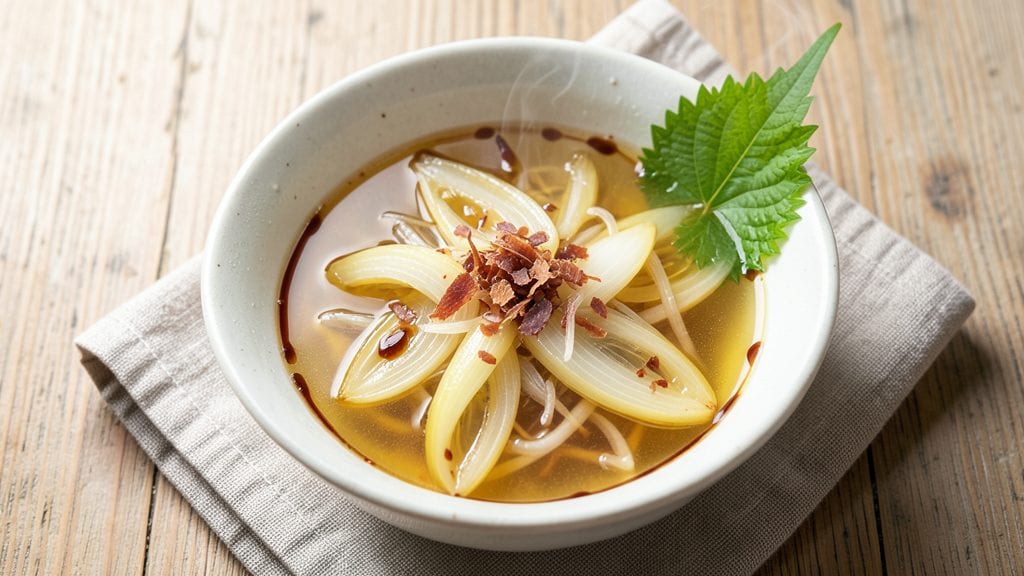
Japanese clear onion soup delivers a symphony of delicate flavors where silky dashi broth meets sweet, caramelized onions—each spoonful reveals layers of umami without overwhelming richness. The secret lies in slow simmering, which transforms simple ingredients into a restaurant-quality experience you can recreate at home.
I've perfected this technique over years of testing, ensuring the broth remains crystal-clear while developing deep, savory complexity.
This soup begins with a homemade dashi base, the foundation of Japanese cuisine, which we'll build by combining kombu and bonito flakes. Thinly sliced onions caramelize gently in the broth, their natural sweetness balancing the umami depth.
The result is a dish that's both comforting and refined—light enough for summer but substantial enough for any meal.
What makes this recipe special is its balance: tender onions that melt in your mouth, a broth so clear it's almost translucent, and optional garnishes like green onions or a drizzle of sesame oil to elevate each bowl.
The process requires patience—simmering for 30 minutes transforms basic ingredients into something extraordinary—but the result is worth every moment.
Serve this soup as a starter to whet appetites or as a light main course paired with steamed rice and grilled fish. The clarity of the broth makes it visually stunning, while the flavors satisfy even the most discerning palates. Let's create this Japanese masterpiece together.
Ingredients for japanese clear onion soup
Japanese clear onion soup transforms humble ingredients into a symphony of umami clarity through precise technique and quality components.
| Ingredient | Amount | Notes |
|---|---|---|
| Japanese Kombu Seaweed 🍃 | 1 piece | Dried, 4x4 inch sheet preferred |
| Dried Bonito Flakes 🐟 | ¼ cup | High-quality, unsalted preferred |
| Yellow Onions 🧅 | 3 whole | Thinly sliced, 1/8-inch thickness |
| Dashi Broth 💧 | 6 cups | Homemade or quality store-bought |
| Soy Sauce 🍶 | 1 tbsp | Japanese-style, reduced if preferred |
| Mirin 🍶 | 1 tbsp | Sweet rice wine, not cooking wine |
| Sake 🍶 | 1 tbsp | Dry variety, chilled for clarity |
| Sesame Oil 🫒 | 1 tsp | Toasted, for finishing |
| Green Onions 🧅 | 3 whole | Thinly sliced, for garnish |
| Salt 🧂 | ½ tsp | Diamond Crystal kosher preferred |
| White Pepper 🌶️ | ¼ tsp | Freshly ground, for subtle heat |
| Sugar 🍬 | 1 tsp | White granulated, balances flavors |
The foundation begins with Japanese kombu seaweed—look for thick, dark sheets at specialty stores like Mitsua Market or Nijiya Market. Avoid pre-cut pieces; a single 4x4-inch whole sheet yields optimal flavor extraction. For bonito flakes, Nippon brand is the gold standard, though any high-quality unsalted variety works. Thinly sliced onions should be 1/8-inch thick for even caramelization; a mandoline ensures consistency. The dashi broth must be crystal clear—homemade is ideal, but Hondashi instant granules provide a reliable shortcut for busy cooks.
Substitutions require careful balance: mirin shortages? Use equal parts sake and sugar (though mirin's acidity is irreplaceable). No bonito flakes? Increase kombu to 2 pieces and add 1 tsp dried shiitake powder for depth. For onions, leeks or shallots work but alter sweetness profiles. Sesame oil can be omitted if avoiding fat, but the toasted aroma elevates the dish—Kadoya brand delivers superior quality. Soy sauce should be Japanese-style (like Kikkoman) for proper umami without saltiness. The sugar is non-negotiable; it's the counterpoint to the broth's savory intensity.
Store homemade dashi in glass jars for up to 1 week in the fridge or 3 months frozen. Caramelized onions keep 5 days refrigerated in an airtight container with a damp paper towel to maintain moisture. For optimal presentation, assemble soup bowls just before serving—the onions continue caramelizing from residual heat. Garnishes like green onions and sesame oil should be added tableside to preserve their freshness. Leftovers reheat beautifully but may require 1 tsp additional dashi to restore clarity.
Why You'll Love This Recipe
- Foolproof Simplicity: I swear by this recipe because it’s the kind of dish that forgives mistakes. Toss in the sliced yellow onions, simmer the kombu and bonito flakes in dashi, and let the soy sauce tie it all together—no fancy techniques, no stress.
- Umami Magic: That first sip? Pure flavor explosion. The kombu adds a deep, savory richness while the bonito flakes bring a smoky, oceanic kick—like a warm hug for your taste buds, but better.
- Weeknight Wonder: Between us, this is my go-to when I’m too tired to cook but still crave something hearty. It reheats beautifully, so I make a big batch on Sundays and enjoy it all week—no leftovers going to waste.
- Budget-Friendly Staple: Honestly, the ingredients cost next to nothing, yet it feels like a restaurant-quality meal. Kombu and bonito flakes stretch the broth, onions bulk it up, and soy sauce keeps it balanced—elegant without breaking the bank.
Step-by-step instructions for Japanese clear onion soup
This method delivers a crystal-clear broth with layered umami depth and delicate onion sweetness.
Infuse the Dashi Broth with Kombu and Bonito
Place the 1 piece Japanese Kombu Seaweed in a clean, cold pot with the 6 cups Dashi Broth. Bring to a gentle simmer over medium-low heat until small bubbles form at the edges—about 5 minutes. Remove from heat and let steep for 10 minutes to extract maximum umami from the kombu.
While still warm, carefully ladle out and discard the kombu sheet. Return the broth to a clean pot and bring back to a bare simmer. Add the 0.25 cup Dried Bonito Flakes and simmer uncovered for 3 minutes until the flakes dissolve completely. Strain through a fine-mesh sieve into another pot, pressing gently on the solids to extract all flavor. Discard the bonito residue—this ensures your soup remains crystal clear.
Sweat the Yellow Onions for Delicate Sweetness
In a separate saucepan, combine the 3 whole Yellow Onions (thinly sliced) with 1 tablespoon of the reserved dashi broth. Cook over low heat for 15-20 minutes, stirring occasionally, until the onions soften but remain translucent—never brown. The goal is to develop sweetness without bitterness. Add the 1 teaspoon Sugar during the last 5 minutes of cooking to enhance natural sweetness.
Remove from heat and set aside. The onions should be fork-tender but still hold their shape when pressed. If they begin to color, reduce heat immediately—browning will cloud your soup. This step is critical for achieving that signature silky texture and delicate onion flavor.
Balance Flavors with Seasonings
Return the infused dashi broth to a simmer. Add the sweated onions along with the 1 tablespoon Soy Sauce, 1 tablespoon Mirin, and 1 tablespoon Sake. Simmer gently for 8-10 minutes until the flavors meld completely. Taste and adjust seasoning with the 0.5 teaspoon Salt and 0.25 teaspoon White Pepper—this combination should create a harmonious balance between savory, sweet, and subtle heat.
Strain the soup through a fine-mesh sieve into a clean pot, pressing gently on the onions to extract maximum flavor without breaking the broth's clarity. The resulting liquid should be pale golden with a delicate onion aroma. If the broth appears cloudy, strain again through cheesecloth for absolute clarity.
Finish and Garnish for Presentation
Return the strained broth to the pot and bring to a gentle simmer. Add the 1 teaspoon Sesame Oil and stir gently to combine—this adds a subtle nutty depth without overpowering the delicate flavors. Divide the soup evenly among 4 serving bowls, ensuring each portion contains the same amount of clear broth.
Garnish each serving with 3 thinly sliced Green Onions arranged artfully on top. Serve immediately while steaming hot, as the clarity and temperature contrast enhance the dining experience. The soup should be served in shallow bowls to showcase its crystal-clear appearance and delicate onion strands.
Pro Tips For Making Japanese Clear Onion Soup
- Bloom Onions in Ice Water: After slicing your yellow onions, plunge them into ice water for 10 minutes—this stops them from oxidizing and keeps them crisp. I used to skip this and end up with sad, limp onions in my broth. Trust me, the texture stays sharp.
- Toast Bonito Flakes Low: Heat your dried bonito flakes over low heat for 20-30 seconds—just until they start to sizzle and release aroma. High heat burns them before they crisp, leaving a bitter aftertaste. Think "gentle wake-up call," not "deep fry."
- Simmer Kombu Gently: Add kombu seaweed to cold or lukewarm dashi broth first, then bring to a barely simmer—never boil. Boiling turns the broth cloudy and extracts too much bitterness. Let it steep like tea, not a pressure cooker.
- Strain Twice for Clarity: After simmering, strain the broth through a fine-mesh sieve once, then pour it through a coffee filter or cheesecloth for a second pass. The first strain removes solids; the second removes the last traces of cloudiness. Lazy straining = murky soup.
Storing and reheating your japanese clear onion soup
Broth Clarity Preservation
Store your completed soup in glass airtight containers with 1-inch headspace to prevent condensation from clouding the broth. I use Le Parfait glass jars because they seal tightly and maintain clarity.
Refrigerate for up to 3 days—the broth may develop slight cloudiness over time, but reheating carefully preserves its delicate appearance. 💧
Onion Texture Maintenance
The caramelized onions are the soul of this soup, so handle them with care. Keep them in a separate airtight container from the broth to prevent sogginess.
For best results, store onions at room temperature in the fridge (covered with a damp paper towel) for up to 5 days. When reheating, add them back to the broth only in the final 2 minutes of warming to maintain their silky texture.
Reheating for Crystal Clarity
Reheat soup gently over low heat—never microwave—using a stainless steel pot to avoid plastic odors. Bring to a gentle simmer (never boil) for 5-7 minutes, then strain through a fine-mesh sieve again to restore clarity.
Add 1 tablespoon fresh dashi if the broth appears flat. The onions will separate slightly, so stir gently before serving to redistribute their sweetness evenly. ⚡
Garnish Freshness Tips
Green onions and sesame oil should be added tableside to preserve their vibrant colors and aromas. Store chopped green onions in a small glass container with a damp paper towel in the fridge for up to 4 days.
For sesame oil, keep it in its original dark glass bottle away from light to prevent rancidity. A few drops of freshly toasted sesame oil elevate every bowl—trust me, it makes all the difference. 🌿
Freezing for Long-Term Storage
This soup freezes surprisingly well if you take precautions. Portion into silicone ice cube trays for single servings, then transfer to a freezer bag with all air removed. Label with the date—it keeps for 2 months at 0°F or below.
When ready to eat, thaw overnight in the fridge, then reheat using the gentle simmer method above. The texture may be slightly softer after freezing, but the flavor remains intact. ❄️
Reviving Day-Old Soup
If your soup sits overnight, don't toss it! Add 1 tablespoon fresh dashi and 1 teaspoon mirin to revive the broth's brightness. Simmer for 3-5 minutes, then strain again. The onions will have absorbed more flavor, so taste and adjust with white pepper or soy sauce as needed.
A sprinkle of toasted sesame seeds adds freshness—this trick works wonders for restaurant-quality results at home. ✨
Nutrition facts
Frequently asked questions
Why does this Japanese onion soup have such a clear broth?
The crystal-clear broth comes from two key techniques: first, using a clean dashi base made with kombu and bonito flakes that's carefully strained, and second, simmering the onions at low heat without browning. The final straining through cheesecloth removes any remaining particles, creating that signature translucent appearance.
Can I substitute yellow onions with another type?
Yes, but with adjustments: use leeks for a milder flavor (reduce to 2 onions equivalent) or shallots for more sweetness (use 1.5 onions equivalent). Avoid red onions—they'll bleed color into your broth. The key is maintaining that delicate onion sweetness without bitterness.
What's the secret to getting the onions perfectly caramelized without browning?
Cook them over low heat with just 1 tablespoon dashi broth for 15-20 minutes, stirring occasionally. Add sugar only in the last 5 minutes—this helps develop sweetness while preventing color. If they start to brown, immediately reduce heat and add a splash of cold dashi to stop the reaction. Patience is key!
Is this soup suitable for a vegetarian diet?
With modifications, yes! Replace the bonito flakes with 1 tablespoon dried shiitake powder or 2 tablespoons nutritional yeast for umami depth. Use kombu for the dashi base and add 1 teaspoon mushroom powder to maintain the savory profile. The vegetarian version will still be clear but may have slightly different depth of flavor.
How can I make this soup more filling?
Add ½ cup silken tofu (cubed) or ¼ cup thinly sliced shiitake mushrooms to the broth during the final 5 minutes of simmering. For extra heartiness, serve with steamed rice or add 1 cooked egg per bowl (poached or soft-boiled) as a garnish. The broth's clarity will still shine through.