
Soups & Stews
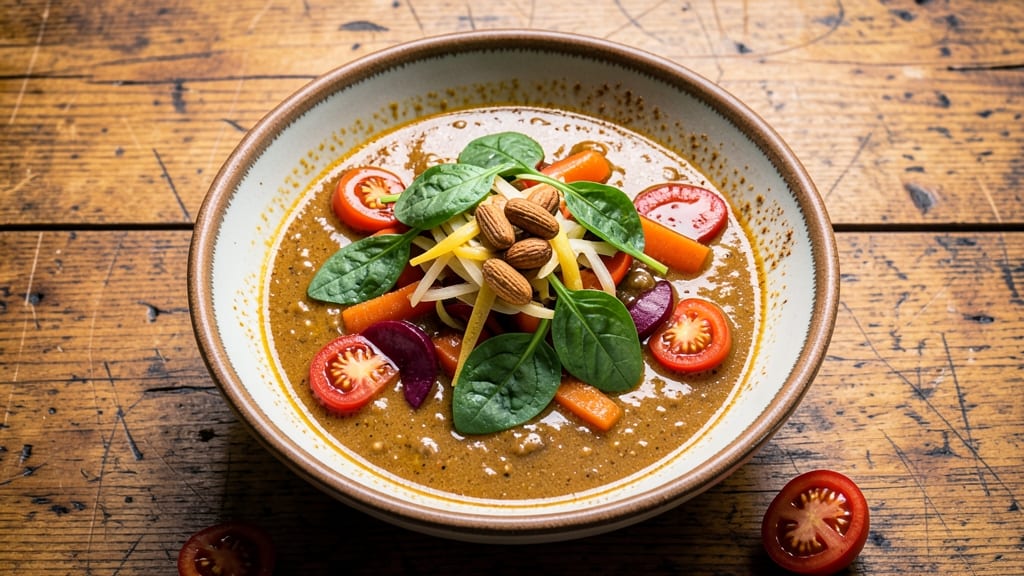
The Nigeria vegetable soup recipe you’re about to make captures the soul of West African cooking with its creamy peanut broth and fragrant leafy greens.
The dish is a staple in Nigerian homes, offering a perfect balance of earthy flavors and comforting textures that come together in just under 90 minutes.
I developed this version to stay true to the classic while making it accessible for home cooks, using ingredients you can find at most grocery stores.
The soul of this soup lies in its aromatic blend of ground peanuts, fresh leafy greens like spinach or bitter leaf, and a mix of vegetables including carrots and okra.
Traditional spices like thyme, curry powder, and crayfish (or a vegetarian substitute) add depth, while palm oil gives it that signature rich, reddish hue. The slow simmering process allows all the flavors to meld together beautifully, creating a dish that's both nourishing and deeply satisfying.
What you'll achieve is a thick, hearty soup with tender vegetables, a velvety peanut broth, and a perfect balance of spice and earthiness. The texture is unmistakably comforting—creamy from the peanuts, yet still bright from the fresh greens.
This soup pairs wonderfully with traditional Nigerian swallow like eba or pounded yam, or even crusty bread for a simpler meal. It's the kind of dish that feels like a warm embrace on a chilly day.
Whether you're serving it for a family gathering or a quiet weeknight dinner, this recipe delivers restaurant-quality results with minimal effort. The beauty of this dish is in its versatility—you can adjust the greens and vegetables based on what's available, making it a true reflection of Nigerian culinary creativity.
Let's get cooking!
Ingredients for nigeria vegetable soup
Nine pantry staples and fresh greens transform into a creamy, comforting Nigerian vegetable soup.
| Ingredient | Amount | Notes |
|---|---|---|
| Dried Peanuts 🥜 | ½ cup | Unsalted, ground into powder |
| Spinach 🌿 | 4 cups | Fresh, packed, chopped |
| Palm Oil 🫒 | ¼ cup | Vegetable oil substitute if unavailable |
| Carrots 🥕 | 2 medium | Peeled, chopped into small pieces |
| Yellow Onion 🧅 | 1 whole | Chopped, medium size |
| Fresh Tomatoes 🍅 | 2 medium | Chopped, ripe but firm |
| Okra 🌱 | 6 pieces | Fresh, trimmed, sliced |
| Garlic Cloves 🧄 | 4 cloves | Minced, fresh preferred |
| Fresh Ginger 🌿 | 1 inch | Peeled, grated |
| Dried Thyme 🌿 | 1 tsp | Or 1 tbsp fresh thyme |
| Ground Curry Powder 🌶️ | 1 tbsp | Mild curry preferred |
| Vegetable Stock 💧 | 4 cups | Low-sodium preferred |
| Red Bell Pepper 🌶️ | 1 whole | Chopped, medium size |
| Sea Salt 🧂 | 1 tsp | Adjust to taste |
| Black Pepper 🌶️ | ½ tsp | Freshly ground preferred |
| Vegetable Oil 🫒 | 2 tbsp | For sautéing |
The peanut butter is non-negotiable here—unsalted, natural peanut butter works best, but ground dried peanuts give you that authentic texture. I grab mine from Trader Joe's or the bulk section at Whole Foods since those are the most consistent. For palm oil, African markets or specialty stores carry it, but red vegetable oil works in a pinch. Fresh spinach is ideal, but kale or collard greens hold up well too—just chop them finely. The okra? Fresh is best, but frozen works if you're in a hurry. Look for pods that are firm and bright green.
No palm oil? Red bell pepper oil or tomato paste can mimic that rich color, though the flavor won't be identical. Swapping spinach for bitter leaf? Use half the amount—it's more potent. The curry powder should be mild; Madras or berbere blends add heat if you like it spicier. For extra depth, toast the ground peanuts in a dry pan for 2 minutes before adding to the soup. The vegetable stock? Homemade is best, but low-sodium store-bought cuts down on prep time. If you're using canned tomatoes, San Marzano is the gold standard for flavor.
This soup tastes even better the next day—flavors meld beautifully after resting. Store in an airtight container in the fridge for 4-5 days or freeze for 3 months. I always double the batch because it disappears fast. The peanut broth thickens as it cools, so stir well before reheating. Serve with eba or pounded yam for the full Nigerian experience, or crusty bread if you're keeping it simple. Leftovers reheat perfectly—just add a splash of water or stock to loosen it up.
Why You'll Love This Recipe
- I’ll be real: this soup is my go-to for lazy nights and Sunday dinners. Double the batch, freeze half, and you’ve got a meal ready for when you’re too tired to think. Serve it with pounded yam or rice, and suddenly, it’s a full-on celebration.
- One-Pot Magic: Honestly, the way this soup comes together in a single pot is chef’s kiss—no chopping chaos, no last-minute scrambling. Just sauté onions, toss in the veggies, and let the palm oil do its rich, golden work. Twenty minutes later, you’re done. (Yes, even on a Tuesday night.)
- Peanut-Spinach Crunch: Between us, that mix of toasted dried peanuts and wilted spinach is ridiculously good—crunchy, nutty, earthy all at once. The palm oil gives it this deep, velvety base, while the peanuts add a satisfying bite that makes every spoonful feel special.
- Weeknight to Feast: I’ll be real: this soup is my go-to for lazy nights and Sunday dinners. Double the batch, freeze half, and you’ve got a meal ready for when you’re too tired to think. Serve it with pounded yam or rice, and suddenly, it’s a full-on celebration.
Step-by-step instructions for Nigeria vegetable soup
This rich, flavorful soup comes together with simple steps and bold ingredients.
Prepare the Peanut Paste
Toast the 0.5 cup dried peanuts in a dry skillet over medium heat for 3-4 minutes until lightly golden and fragrant. Let them cool slightly, then grind into a fine powder using a food processor or mortar and pestle. Set aside—this will form the creamy base of your soup.
In a small bowl, mix the peanut powder with 1 tablespoon ground curry powder and 1 teaspoon dried thyme. This blend adds depth of flavor while keeping the texture smooth. Store it in a small container until ready to use.
Sauté the Aromatics
Heat 2 tablespoons vegetable oil in a large pot over medium heat. Add the chopped 1 whole yellow onion and cook for 4-5 minutes until softened and translucent. Add the 2 medium carrots and 1 whole red bell pepper, chopped, and sauté for another 5 minutes until the vegetables begin to soften.
Stir in the 4 cloves minced garlic and 1 inch grated fresh ginger, cooking for 30 seconds until fragrant. This step builds the foundation of your soup's flavor profile—don't rush it. The ginger and garlic should smell vibrant and inviting.
Build the Soup Base
Pour in the 0.25 cup palm oil (or substitute vegetable oil) and stir to combine. Add the peanut-curry mixture and cook for 2 minutes, stirring constantly to prevent burning. This step is crucial—it ensures your peanut paste blends smoothly into the oil without clumping.
Add 2 medium chopped fresh tomatoes and cook for 3-4 minutes until they break down and release their juices. Pour in 4 cups vegetable stock and bring the mixture to a gentle simmer. Let it cook uncovered for 10 minutes, allowing the flavors to meld together.
Add Vegetables and Season
Add the 6 sliced okra and 4 cups chopped spinach to the simmering pot. Stir gently and let it cook for 5-6 minutes until the okra softens slightly. The spinach will wilt quickly—this is normal and ensures it blends into the soup rather than remaining clumpy.
Season with 1 teaspoon sea salt and 0.5 teaspoon black pepper. Taste and adjust the seasoning if needed—this is your chance to balance the flavors before the soup finishes cooking. The soup should taste rich, slightly nutty, and well-seasoned.
Simmer and Serve
Reduce the heat to low and let the soup simmer gently for 10-15 minutes, allowing the flavors to deepen. The soup should have a thick, velvety consistency with visible chunks of vegetables. If it's too thick, add a splash of water or stock to reach your desired texture.
Serve the soup hot, accompanied by pounded yam, rice, or your choice of bread. The aroma alone will make your kitchen feel like home—this is the moment when all your efforts pay off in a bowl of comforting, traditional Nigerian vegetable soup.
Pro Tips For Making Nigeria Vegetable Soup
- SOAK PEANUTS FIRST: Skip the dry-roasting shortcut—soak dried peanuts in hot water for 10 minutes before adding them to the pot. This guarantees they soften evenly and don’t turn to paste, giving that perfect bite and nutty flavor. (Yes, even if you’re impatient like me.)
- SAUTE ONIONS LOW AND SLOW: After frying your onions in palm oil, drop the heat to medium-low and let them cook for 15 minutes. This caramelizes the onions without burning them, building deep sweetness that cuts through the soup’s richness. I learned this the hard way—charred onions ruin the whole dish.
- ADD SPINACH LAST: Stir in spinach only in the final 5 minutes of cooking—it wilts fast and loses its vibrant color if you add it too early. For extra richness, splash in a little of the soup’s palm oil when you toss it in. (Your future self will notice the difference.)
- GRATE CARROTS FINELY: Use a box grater or food processor for carrots instead of chopping them. The finer the texture, the smoother the soup’s consistency and the better they blend into the broth. I was skeptical until I tried it—now it’s non-negotiable.
Serving suggestions for this nigeria vegetable soup
Traditional Swallow Pairings
This soup shines when served with eba, a smooth, dough-like swallow made from fermented yam flour. I make mine by mixing 2 cups yam flour with 1 cup hot water, kneading until stretchy, then pressing through a sieve into boiling water.
For a quicker option, pounded yam works perfectly—steam 2 cups peeled yam chunks until tender, then pound with a wooden pestle until smooth. Both swallows soak up the rich peanut broth beautifully. 💫
Bread Alternatives
If you're skipping traditional swallows, crusty Italian bread or garri (fermented cassava flakes) make great substitutes. Toast the bread lightly to prevent sogginess, or serve garri as a side—simmer 1 cup garri in 2 cups water for 5 minutes until thick.
The garri's neutral flavor lets the soup's bold spices take center stage. For extra protein, add grilled chicken or tofu cubes on top.
Garnish Like a Pro
Fresh garnishes elevate this dish instantly. I always finish with chopped scallions and a sprinkle of toasted ground peanuts for crunch and nutty depth.
A drizzle of red bell pepper oil (simmer 2 tbsp oil with 1 chopped red bell pepper for 5 minutes) adds vibrant color and a subtle sweetness. For heat lovers, a pinch of cayenne pepper or habanero flakes on top brings the fire. 🌶️
Leftovers Reinvented
Turn tomorrow's soup into today's hero with creative twists. Blend leftover soup with ½ cup coconut milk for a creamy peanut-vegetable stew to serve over rice.
Or crisp up the okra and spinach in a pan with 1 tbsp oil and 1 tsp smoked paprika, then serve as a side with fried plantains. The peanut broth also makes an amazing soup base for congee—simmer with 1 cup rice for 45 minutes until creamy. ⚡
Drink Pairings
A cold malt drink like Maltina or Fanta Orange cuts through the soup's richness perfectly. For adults, a crisp lager beer (like Guinness or Heineken) complements the peanut and spice notes.
Non-alcoholic? Try hibiscus tea (sweetened with honey)—its tartness balances the soup's earthiness. I always keep a pitcher of sparkling water with lemon on hand for a refreshing contrast. 🍹
Kid-Friendly Tweaks
Make this soup approachable for picky eaters by blending ½ cup of the soup with ½ cup tomato sauce until smooth, then stir back into the pot. Add diced sweet potatoes (1 cup) for natural sweetness, or mix in mashed avocado at the end for creaminess.
Serve with buttered noodles or mini pancakes (like akara) for dipping. The key is to keep the peanut flavor subtle while boosting familiar textures. 🥄
Nutrition facts
Frequently asked questions
Can I make this Nigerian vegetable soup without palm oil?
Use red bell pepper oil or tomato paste for color, though the flavor will differ slightly. For a neutral substitute, try vegetable oil but add 1 teaspoon smoked paprika to mimic palm oil's depth. The soup will still taste delicious—just with a different hue and earthy profile.
What leafy greens work best in this recipe?
Fresh spinach or collard greens are ideal, but bitter leaf (ewedu) or uziza (if available) add authentic flavor. For milder options, use kale or swiss chard. Chop greens finely—they should wilt completely in 5-6 minutes of simmering. Never overcook or they'll turn mushy.
How do I adjust the spice level for kids?
Reduce the curry powder to ½ tablespoon and omit cayenne/habanero. Blend ½ cup soup with ½ cup tomato sauce to smooth out flavors, then stir back in. Add sweet potatoes or mashed avocado for kid-friendly textures. Serve with buttered noodles or akara for dipping.
Why did my soup turn out too thin?
This usually happens if you didn't toast the peanuts enough or skipped the simmering time. For next time, toast peanuts until lightly golden and simmer uncovered for the full 10-15 minutes. If it's still too thin, blend ½ cup soup and stir back in to thicken naturally. A 1 tablespoon cornstarch slurry works in a pinch.
Can I prepare this soup ahead of time?
Yes! Store in an airtight container in the fridge for 4-5 days or freeze for 3 months. Reheat gently on low heat, adding a splash of water or stock if it thickens. The flavors actually improve overnight—just stir well before serving. For leftovers, try blending with coconut milk for a creamy stew.