
Soups & Stews
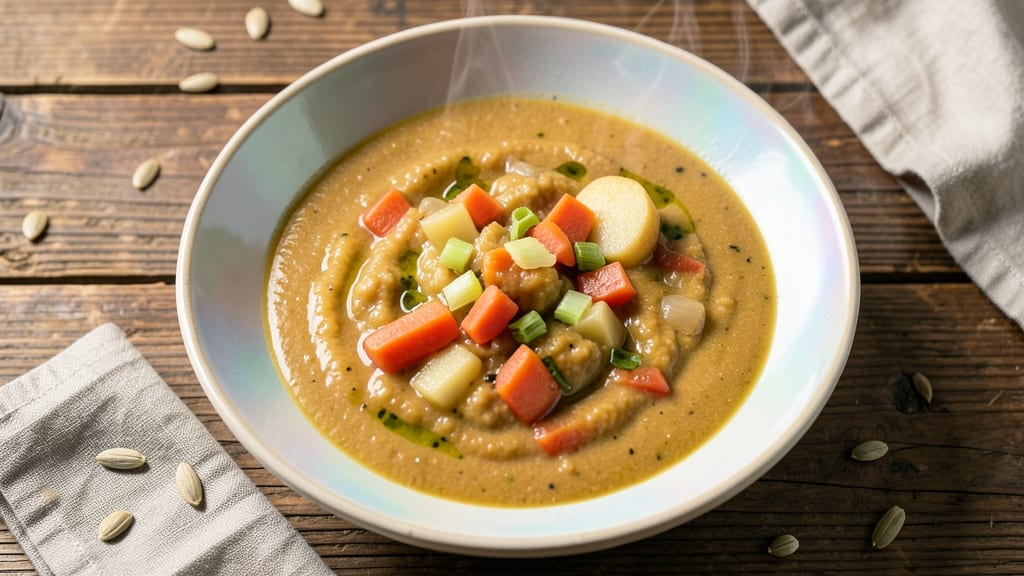
Creating a pureed vegetable soup that’s velvety smooth and packed with flavor doesn’t require fancy ingredients—just a few pantry staples and a methodical approach. This recipe delivers a silky texture that coats every spoonful, transforming simple vegetables into a restaurant-worthy dish.
The key lies in proper cooking and blending techniques, ensuring no graininess remains while preserving the natural sweetness of the vegetables.
What sets this soup apart is its versatility—whether you’re using carrots, potatoes, and celery or swapping in seasonal produce like zucchini or butternut squash, the base method remains the same.
I’ve perfected it to work with both stovetop and immersion blender methods, so you can choose what fits your kitchen best. The result is a creamy, comforting soup that’s as nourishing as it is delicious.
This recipe builds flavor through sautéing onions and garlic until fragrant, then simmering vegetables until tender before blending to perfection. The optional garnishes—like a drizzle of olive oil, fresh herbs, or a sprinkle of cheese—elevate it further, making it feel special without extra effort.
It’s the kind of soup that warms you from the inside out, perfect for chilly evenings or quick weeknight meals.
Best of all, it’s adaptable to dietary needs—swap chicken broth for vegetable broth to keep it vegan, or add a splash of cream for extra richness. The instructions are straightforward, ensuring you’ll achieve that silky smoothness every time.
Let’s get started on a bowl of comfort that’s as easy as it is satisfying.
Ingredients for pureed vegetable soup
Pantry staples and fresh produce transform into velvety pureed vegetable soup perfection.
| Ingredient | Amount | Notes |
|---|---|---|
| Yellow Onion 🧅 | 1 whole | Medium-sized, diced finely |
| Garlic Cloves 🧄 | 4 cloves | Fresh, peeled, minced |
| Extra-Virgin Olive Oil 🫒 | ½ cup | High quality, fruity aroma |
| Carrots 🥕 | 2 lbs | Medium, peeled, chopped |
| Russet Potatoes 🥔 | 2 lbs | Peeled, cubed evenly |
| Celery Stalks 🥬 | 4 whole | Trimmed, chopped finely |
| Vegetable Broth 💧 | 6 cups | Low-sodium preferred |
| Fresh Thyme 🌿 | 1 tbsp | Leaves only, chopped |
| Fresh Parsley 🌿 | ¼ cup | Chopped, for garnish |
| Salt 🧂 | 1 ½ tsp | Diamond Crystal kosher |
| Black Pepper 🌶️ | ½ tsp | Freshly ground |
| Heavy Cream 🥛 | ¼ cup | Optional, for richness |
| Vegetable Oil 🫒 | 1 tbsp | For sautéing |
The vegetables are the heart of this soup, so choose firm, fresh produce. Carrots and potatoes should be vibrant orange and creamy yellow, respectively—no wrinkled skins or soft spots. For the celery, look for crisp stalks that snap when bent. Whole Foods or local farmers markets often carry the freshest options. If using frozen veggies, opt for no-added-salt varieties like Birds Eye Steamfresh. The onion and garlic? Yellow onions with a sharp bite and garlic cloves that smell pungent when peeled are non-negotiable for building deep flavor. Don’t skimp here—it’s what makes this soup sing!
No fresh thyme? Dried thyme works at one-third the amount, but fresh is ideal for that bright, herbal note. Running low on vegetable broth? Homemade stock from veggie scraps or even coconut milk for creaminess can work in a pinch. The heavy cream is optional but adds a luxurious touch—half-and-half works too. For a vegan version, swap it for coconut milk. If you’re using an immersion blender, cut potatoes into smaller chunks to ensure silky smoothness. And if you’re short on time, pre-chopped frozen veggies are a lifesaver—just thaw and drain first.
This soup tastes even better the next day as flavors meld—store leftovers in airtight containers for up to 5 days. For freezing, portion into single-serving containers and thaw overnight in the fridge. The cream, if added, may separate slightly when reheated—just stir vigorously or whisk in a splash of warm broth. Garnishes like fresh parsley or a drizzle of olive oil add a pop of color and freshness. Double the batch and freeze half for those lazy days when you crave comfort in a bowl.
Why You'll Love This Recipe
- I swear by this trick: toss whole carrots and cubed potatoes straight into the pot with the onion and garlic—no peeling, no dicing. By the time they soften, the flavors meld into that velvety base without extra effort. (Yes, even on a Tuesday night when I’m staring at a pile of laundry.)
- No-Chop Shortcut: I swear by this trick: toss whole carrots and cubed potatoes straight into the pot with the onion and garlic—no peeling, no dicing. By the time they soften, the flavors meld into that velvety base without extra effort. (Yes, even on a Tuesday night when I’m staring at a pile of laundry.)
- Creamy Without Dairy: That golden caramelized onion and garlic combo? It’s the secret weapon. The potatoes and carrots puree into something so rich and smooth, you’d never guess it’s just olive oil and veggies. Honestly, my husband asks for seconds before I even finish serving.
- Meal-Prep MVP: This soup actually improves overnight. The flavors deepen, and reheating takes two minutes—perfect for packing lunches or freezing portions. I make a double batch every Sunday and still have leftovers by Friday. (Pro tip: freeze in jars for grab-and-go bowls.)
Step-by-step instructions for silky vegetable puree soup
This method transforms humble pantry staples into velvety perfection—every spoonful reveals the magic of proper technique.
Sauté the Aromatic Base
Heat the 1 tablespoon vegetable oil in a large pot over medium heat until shimmering. Add the 1 whole yellow onion and 4 cloves garlic cloves, cooking for 5-6 minutes until the onion softens and the garlic becomes fragrant—this builds the flavor foundation. Here's the thing: don't rush this step. The onions should turn translucent and slightly golden before moving forward.
Add the 2 pounds carrots and 4 whole celery stalks, stirring to coat in the oil. Cook for another 8-10 minutes until the vegetables begin to soften and release their natural sweetness. The celery should be tender enough to pierce with a fork, but still retain some structure—this prevents the puree from becoming watery later.
Build the Flavor Base with Broth and Herbs
Pour in the 6 cups vegetable broth, scraping up any browned bits from the bottom of the pot. This deglazing step captures all those concentrated flavors you worked so hard to develop. Bring to a gentle boil, then reduce heat to maintain a simmer and add the 1 tablespoon fresh thyme and 1.5 teaspoons salt. Stir once to combine, then let it simmer uncovered for 15 minutes—this allows the flavors to meld and the vegetables to fully soften.
After 15 minutes, add the 2 pounds russet potatoes and 0.5 teaspoon black pepper, stirring gently to submerge. The potatoes should be fully immersed in the liquid. Here's where it gets fun: the potatoes will absorb the broth and begin to break down, creating the perfect base for your puree. You'll know they're ready when a knife slides in easily with minimal resistance.
Cook Until Perfectly Tender
Continue simmering for 20-25 minutes until the potatoes are fork-tender and the carrots and celery have completely softened. The soup should have a thick, stew-like consistency at this point—this is crucial for achieving that silky texture later. Taste the mixture and adjust seasoning if needed, adding more salt or pepper as necessary. Real talk: this is the moment that matters. Overcooking will turn your puree into mush, while undercooking will leave you with a gritty texture.
Once the vegetables are tender, remove the pot from heat. Let the soup sit for 5 minutes to cool slightly—this prevents the puree from becoming too hot and breaking down the cream later. Transfer half the soup to a blender or immersion blender, leaving the other half in the pot. Here's the secret: blending in batches ensures you capture all the flavorful liquid without overfilling your blender.
Puree to Velvety Perfection
Blend the first batch until completely smooth, scraping down the sides as needed. Return the puree to the pot and repeat with the remaining soup. The result should be a silky, homogeneous texture with no visible chunks. If the puree is too thick, gradually whisk in 1-2 tablespoons of broth until you reach your desired consistency. Here's the thing: you want it thick enough to coat the back of a spoon but still flow smoothly.
Return the pot to low heat and stir in the 0.25 cup heavy cream (if using) and 0.5 cup extra-virgin olive oil. The cream adds richness while the olive oil creates a luxurious mouthfeel. Simmer gently for 3-4 minutes just to warm through—don't let it boil or the cream will curdle. Taste one final time and adjust seasoning if needed. Garnish with 0.25 cup fresh parsley just before serving to add freshness and color.
Pro Tips For Making Pureed Vegetable Soup
- Sweat, Don’t Burn: Onions and garlic are your flavor base—treat them like it. Cook them low and slow in olive oil until the onions turn translucent and the garlic just starts to smell good (not brown, not bitter). I used to rush this, and the soup always tasted flat afterward. Take the extra 5 minutes—your taste buds will notice.
- Peel Potatoes Efficiently: Russets are stubborn. Run them under cold water first, then use a paring knife to slice off the skin in one continuous spiral—no peeling required. This cuts prep time in half and keeps more nutrients in the soup. (Yes, even if you’re impatient like me.)
- Skip the Overcrowding: If you’re simmering carrots and potatoes in the same pot, resist the urge to dump everything in at once. Start with the potatoes—they’ll soften faster—and add the carrots later. Crowding steams the veggies instead of cooking them, and you’ll end up with a watery, mushy mess.
- Blend in Stages: Pureeing everything at once clogs blenders. Cook the potatoes until fork-tender, then puree them first with a splash of broth. Add the carrots and onions in batches, thinning with liquid as needed. This avoids motor burnout and ensures a silky texture—not a chunky disaster.
Essential equipment for great pureed vegetable soup
Blender Essentials
For pureed soups, a high-powered blender is non-negotiable—I swear by the Ninja BN601 for its 1,800-watt motor that handles fibrous veggies like celery without clogging. If you’re blending in batches, a 4-cup capacity is ideal, but the Cuisinart SM-50BC with its 50-ounce jar works great for larger batches.
For immersion blenders, the Ninja IN201 is my go-to for hands-free blending right in the pot—just ensure your pot has a wide, flat base to prevent spills. 💫
Pot Selection
A heavy-bottomed pot prevents scorching and ensures even heat distribution—my Lodge 5.5-quart Dutch oven is perfect for this recipe. If you don’t have one, a stainless steel stockpot with a thick base (like the All-Clad Stainless) works just as well.
Avoid thin aluminum pots—they heat unevenly and can burn your soup. For electric stovetops, a 5-6 quart capacity is ideal to accommodate the vegetables and broth without overcrowding.
Immersion Blender
An immersion blender is a game-changer for pureed soups—no transferring hot liquids to a blender! The Ninja IN201 or Hamilton Beach 58120 both have variable speeds to control texture, and their cordless designs make blending in the pot effortless.
Pro tip: Hold the blender at a 45-degree angle and move it in small circles to break down fibrous veggies completely. For extra-smooth results, pulse for 10-15 seconds after the initial blend. ✨
Spatulas and Whisks
Use a heat-resistant silicone spatula (like the OXO Good Grips) to scrape up browned bits during sautéing—this captures flavor that would otherwise stick to the pot. For stirring the soup, a wooden spoon or stainless steel whisk distributes heat evenly and prevents scorching.
I keep a long-handled spoon nearby to stir the pot without burning my hands during simmering. A ladle with a deep well is also handy for transferring soup to the blender safely.
Measuring Tools
Precision matters in pureed soups—use a stainless steel measuring cup for broth and a kitchen scale (like the OXO Good Grips) for potatoes and carrots to ensure even cooking. A microplane for garlic and fine-mesh strainer (if you prefer ultra-smooth purees) are small but mighty tools.
For herbs, a sharp chef’s knife and cutting board are essential—chop thyme finely for even distribution. Don’t forget a fine-mesh sieve to strain out any lingering fibrous bits if needed. 💡
Nutrition facts
Frequently asked questions
Can I make this pureed vegetable soup vegan?
Skip the heavy cream and use ½ cup full-fat coconut milk instead for richness. For extra silkiness, add 1 tablespoon nutritional yeast or a splash of cashew cream. Always use vegetable broth and check that your olive oil is refined (unrefined can have a strong flavor). The texture will be just as velvety!
Why does my pureed vegetable soup turn out grainy?
Graininess usually means the vegetables weren't cooked long enough before blending. Always simmer until potatoes are fork-tender (about 20-25 minutes) and carrots/celery are completely soft. For extra smoothness, strain through a fine-mesh sieve after blending, or use an immersion blender at high speed for 30 seconds per batch.
How do I store and reheat leftovers?
Store in airtight containers in the fridge for up to 5 days or freeze for 3 months. To reheat, warm on low heat with a splash of broth or water to restore creaminess. Never microwave directly from frozen—thaw overnight first. The soup actually tastes better the next day as flavors meld!
What vegetables can I substitute for carrots and potatoes?
Try butternut squash (roast first for sweetness), cauliflower (adds creaminess), or zucchini (use 1 lb for every 2 lbs potatoes). For heartier soups, swap in turnips or rutabaga. Always adjust cooking time—squash needs 10-12 minutes less than potatoes. The key is choosing veggies with similar moisture content.
Can I make this soup without a blender?
Yes! Mash the cooked vegetables directly in the pot with a potato masher or wooden spoon. For ultra-smooth results, press the mixture through a fine-mesh sieve or food mill. You'll lose some body, but it's still delicious. The texture will be more rustic but still comforting.