
Soups & Stews
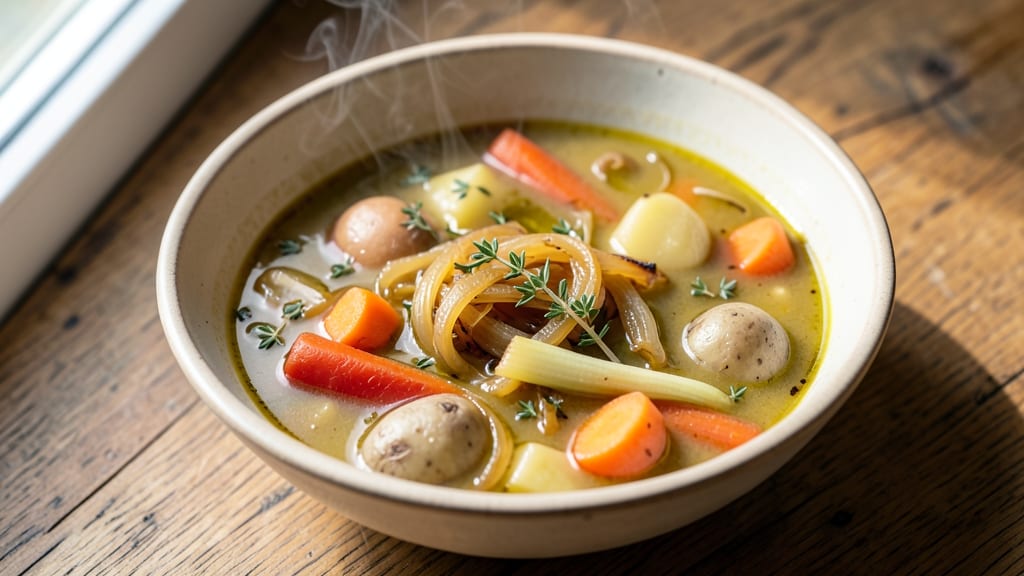
This root veg soup recipe transforms humble seasonal vegetables into a deeply satisfying dish that warms both body and soul. The foundation—a slow-cooked onion base caramelized until golden—builds layers of earthy sweetness that form the heart of every spoonful.
I developed this version after years of testing, balancing traditional slow-simmering techniques with modern texture variations using an immersion blender.
The beauty of this recipe lies in its versatility—it works as a hearty vegetarian main or pairs perfectly with crusty bread and a sprinkle of cheese. You’ll start with a simple mirepoix of onions, carrots, and celery, then add potatoes, parsnips, and turnips for natural sweetness and satisfying texture.
The soup’s velvety consistency comes from blending just enough to create a luxurious mouthfeel without losing the rustic charm of visible vegetable pieces.
What makes this soup truly special is how it evolves with each variation—add smoked paprika for depth, a splash of cream for richness, or fresh herbs for brightness.
The slow cooking process (about 45 minutes) allows flavors to meld into a harmonious blend, while the optional immersion blending creates that restaurant-quality silkiness at home. It’s the kind of dish that tastes even better the next day, making it perfect for meal prep or cozy gatherings.
Whether you’re serving it as a comforting weeknight dinner or a centerpiece for a seasonal menu, this root vegetable soup delivers on both flavor and flexibility.
The technique is straightforward, but the results feel professional—proof that even simple ingredients can create something extraordinary when given time and care. Let’s get cooking!
Ingredients for root veg soup
The foundation of this velvety root veg soup lies in its caramelized onion base and carefully selected seasonal roots.
| Ingredient | Amount | Notes |
|---|---|---|
| Yellow Onions 🧅 | 3 large | Thinly sliced, caramelized slowly |
| Carrots 🥕 | 2 lb | Medium size, peeled and chopped |
| Celery Stems 🧆 | 4 whole | Trimmed, chopped into 1/2-inch pieces |
| Russet Potatoes 🥔 | 2 lb | Peeled and cubed into 1-inch pieces |
| Parsnips 🥕 | 1 ½ lb | Peeled and cut into 1/2-inch slices |
| Turnips 🥕 | 1 lb | Peeled and cubed into 1-inch pieces |
| Vegetable Broth 💧 | 6 cups | Low-sodium preferred, homemade or quality store-bought |
| Extra-Virgin Olive Oil 🫒 | ¼ cup | High-quality, fruity variety |
| Garlic Cloves 🧄 | 4 cloves | Peeled and smashed, not minced |
| Fresh Thyme 🌿 | ¼ cup | Leaves only, stems removed |
| Bay Leaves 🌿 | 2 whole | Dried, removed before serving |
| Smoked Paprika 🌶️ | 1 tsp | Sweet or hot variety |
| Salt 🧂 | 1 ½ tsp | Diamond Crystal kosher salt |
| Black Pepper 🌶️ | ½ tsp | Freshly ground preferred |
| Heavy Cream 🥛 | ½ cup | Optional for richness, full-fat preferred |
The quality of your onions and root vegetables is paramount for this recipe. Yellow onions with a vibrant color caramelize best—avoid those with wilted outer layers. For the root vegetables, farmers markets or specialty grocers like Whole Foods often carry the freshest parsnips and turnips, which should feel firm and free of blemishes. Potatoes and carrots can be sourced from any reputable grocery store, but organic varieties tend to have richer flavor profiles. The celery should be crisp with no yellowing—this is your aromatic base, so don't skimp. I prefer organic vegetable broth from brands like Imagine or Pacific Foods for deeper flavor, though any good-quality low-sodium option will work. The fresh thyme should smell intensely herbal—if it's faint, it's past its prime.
Substitutions should be made thoughtfully to maintain the soup's balanced profile. Sweet potatoes can replace parsnips at a 1:1 ratio, though they'll alter the natural sweetness slightly. Turnips can be swapped for additional carrots if unavailable, but their peppery bite adds complexity. No fresh thyme? Dried thyme at one-third the amount works, though the flavor will be more subdued. The smoked paprika is optional but recommended—substitute with a pinch of chipotle powder if you prefer a different smoky profile. For the heavy cream, coconut milk or cashew cream offer dairy-free alternatives without compromising texture. The broth can be substituted with a mix of water and bouillon cubes in a pinch, though the flavor depth will be noticeably less complex.
This soup develops richer flavors with time, so make a double batch and store portions for future meals. The base will keep in the refrigerator for 5 days and freezes beautifully for up to 3 months—simply reheat with a splash of water or broth to restore texture. Fresh herbs like thyme should be stored in a damp paper towel in a sealed container to maintain their vibrant aroma. The caramelized onions can be prepped ahead and stored in the refrigerator for 3 days, making assembly quick on busy evenings. For optimal texture, blend just a portion of the soup if you prefer rustic chunks—reserve some unblended vegetables to add back in at serving.
Why You'll Love This Recipe
- Pantry Magic: I swear by this soup because it uses what’s already lurking in my fridge—no fancy shopping required. Carrots, parsnips, and potatoes? That’s half the battle won. The onions and celery add just enough depth without needing a spice rack.
- Sweet-Savory Balance: The parsnips bring a natural sweetness that makes this soup irresistible, while the carrots and potatoes keep it hearty. Honestly, it’s the kind of flavor that makes you want to linger at the table—no takeout needed.
- Meal Prep MVP: This soup tastes even better the next day, which means I can make a big batch on Sunday and have effortless lunches all week. Freeze half if you’re feeling extra, and thaw it straight into a simmer—no defrosting drama.
- Budget-Friendly Warmth: For under $10, I feed four people with leftovers to spare. The russets and parsnips stretch the meal, and the onions and celery add layers of taste without breaking the bank. Comfort food that doesn’t guilt me.
Step-by-step instructions for root vegetable soup
This method delivers a velvety, deeply flavorful soup where each root vegetable contributes its unique texture and sweetness.
Develop the Onion Base
Heat the 0.25 cup extra-virgin olive oil in a large Dutch oven over medium-low heat. Add the 3 large yellow onions, sliced thinly, and cook undisturbed for 15 minutes until they transform into a deep golden caramel. Stir occasionally to prevent burning, but let them brown deeply—this creates the soup's rich foundation. The onions should smell sweet and jammy, with visible color changes from pale to amber.
Here's the thing—patience is key. If you rush this step, you'll miss the complex sweetness that forms during slow caramelization. Once the onions reach that perfect golden hue, add the 1 tsp smoked paprika and cook for another 1 minute to toast the spices and deepen their flavor. This aromatic base will carry through the entire soup, so don't skip it.
Sauté the Aromatics and Add Root Vegetables
Push the onion mixture to one side of the pot and add the 0.25 cup fresh thyme and 4 cloves garlic cloves, smashed. Sauté for 1 minute until the garlic becomes fragrant but doesn't brown. Then, add the 2 lb carrots, 4 whole celery stems, 1.5 lb parsnips, 1 lb turnips, and 2 lb russet potatoes, all prepped as specified. Stir to coat everything evenly in the onion mixture.
Pour in the 6 cups vegetable broth and bring to a gentle simmer. The liquid should just cover the vegetables—if it doesn't, add a splash of water. Add the 2 whole bay leaves, 1.5 tsp salt, and 0.5 tsp black pepper. Here's what you're aiming for: a gentle, rolling simmer where bubbles form at the edges but the liquid remains calm in the center. This prevents the vegetables from breaking apart and ensures even cooking.
Simmer Until Vegetables Are Tender
Cover the pot and simmer for 45-50 minutes, stirring occasionally, until all the root vegetables are fork-tender. You'll know they're ready when a knife slides in easily with minimal resistance. The potatoes should be soft but not falling apart, and the carrots and parsnips should yield slightly when pressed. If the soup reduces too much and the vegetables aren't tender, add a little more broth or water to keep them submerged.
Real talk: Your oven might run hot, so start checking at the 40-minute mark. The vegetables should be tender but still hold their shape—overcooking turns them mushy. Once they reach the perfect texture, remove the bay leaves and discard them. These leaves have done their job infusing flavor, but they're not meant to be eaten.
Blend and Finish the Soup
For a velvety texture, use an immersion blender to purée the soup directly in the pot. Work in batches if needed, blending until smooth. If you prefer a rustic texture, skip blending and proceed to the next step. The choice depends on your preference—smooth for a creamy finish, rustic for texture and heartiness.
Return the soup to a gentle simmer and stir in the 0.5 cup heavy cream. This step adds richness and balances the earthy flavors of the root vegetables. Simmer for 2-3 minutes to heat through, but don't let it boil—this ensures the cream doesn't curdle. Taste and adjust the seasoning with additional salt or pepper if needed. The soup should be harmonious, with the sweetness of the carrots and parsnips shining through, balanced by the smoky depth of the paprika.
Serve Warm with Optional Garnishes
Ladle the soup into bowls and serve immediately. The soup should be steaming hot, with a glossy sheen from the cream. Garnish with additional fresh thyme leaves if desired, but the soup's rich flavors stand well on their own. This soup is hearty enough to be a meal in itself, but it also pairs beautifully with crusty bread to soak up every last drop of the velvety broth.
Don't skip the resting period—let the soup sit for 5 minutes after blending and before serving. This allows the flavors to meld and the cream to fully incorporate, resulting in a soup that's even more cohesive and delicious. Each spoonful should deliver a perfect balance of sweet, earthy, and smoky notes, with a creamy finish that makes it irresistibly comforting.
Pro Tips For Making Root Veg Soup
- SWAP POTATOES LAST: Toss the Russet potatoes in after the onions, carrots, and celery have softened—about 10 minutes into cooking. I learned this the hard way: adding them early turns them mushy while the outer veg stays tough. If you’re impatient, cut them into 1-inch chunks; if you’ve got time, leave them whole for a creamier texture.
- PEEL PARSNIPS THIN: Skip the peeler—use a sharp knife to shave parsnips down to just the pale yellow flesh. The outer skin’s bitterness lingers, and I used to waste good soup fixing that. For speed, trim the ends first, then slice into ½-inch rounds. (Yes, even if you’re in a hurry.)
- SIMMER NOT BOIL: Once everything’s in the pot, keep the heat low enough that only tiny bubbles break the surface—no rolling boil. I’ve seen people crank it up, and next thing you know, the carrots turn to mush while the potatoes stay hard. A gentle simmer in 15-20 minutes does the trick.
- SALT THE WATER: Add 1½ teaspoons of salt to the pot before the veggies go in—no excuses. The seasoning penetrates better, and you’ll taste it in every spoonful. (I know, I know—it’s easy to forget, but trust me, it matters.) If using broth later, cut the salt by half.
Health benefits of this root veg soup
Fiber-Rich Comfort
This soup is a fiber powerhouse, thanks to its diverse root vegetables. Just one bowl delivers about 15-20 grams of dietary fiber—that's 60-80% of your daily needs—supporting digestion and keeping you full for hours.
The combination of potatoes, carrots, parsnips, and turnips creates a prebiotic-rich environment that feeds your gut microbiome, promoting better overall gut health. 💪
Parsnips and carrots are particularly high in soluble fiber, which helps regulate blood sugar levels by slowing digestion. I've noticed that when I eat this soup regularly, my energy levels stay steadier throughout the day.
The fiber content also makes this an excellent option for anyone managing weight or blood sugar.
Vitamin and Mineral Boost
The root vegetables in this soup pack a nutritional punch with essential vitamins and minerals. Carrots provide vitamin A (about 300% of your daily needs per serving) in the form of beta-carotene, crucial for eye health and immune function.
Turnips contribute vitamin C and potassium, while parsnips offer folate and vitamin K. The combination creates a broad-spectrum vitamin profile that supports everything from skin health to bone strength.
Don't overlook the electrolyte benefits—this soup contains significant amounts of potassium (from potatoes and turnips) and magnesium (from parsnips), both of which help maintain proper muscle and nerve function. I always feel more balanced after eating this soup, especially during cold months when we're more prone to deficiencies.
Low-Calorie Comfort Food
Despite its rich, creamy texture, this soup is surprisingly light on calories—about 250-300 calories per serving when made without heavy cream. The natural sweetness of the caramelized onions and root vegetables satisfies cravings without the guilt.
For an even lighter version, substitute the heavy cream with unsweetened almond milk or Greek yogurt, reducing calories by about 100 per serving while maintaining creaminess.
The slow-cooking process helps break down complex carbohydrates into simpler sugars, making them easier to digest and absorb. This makes the soup particularly beneficial for those with mild digestive sensitivities or anyone looking for a gentle, nutrient-dense meal.
The fiber and water content also contribute to hydration, which is often overlooked in comfort foods.
Antioxidant Protection
Root vegetables are packed with antioxidants that combat oxidative stress in your body. Carrots contain lutein and zeaxanthin, which protect your eyes from harmful blue light and age-related degeneration.
Turnips provide anthocyanins (especially in purple varieties), while parsnips offer polyacetylenes, compounds with potential anti-cancer properties. The smoked paprika adds capsaicin, another powerful antioxidant that supports heart health.
I've found that incorporating this soup into my weekly meals helps me feel more energized and resilient. The antioxidants work synergistically with the fiber to create a protective food matrix that supports long-term health.
Even the simple act of slow-cooking these vegetables enhances their antioxidant availability, making them more bioavailable to your body.
Seasonal and Sustainable
This recipe celebrates seasonal eating, using vegetables that are naturally abundant in fall and winter months. Root vegetables store well and have a longer shelf life than many other produce items, reducing food waste.
The recipe also makes excellent use of whole ingredients—no peels or scraps go unused, making it an eco-friendly choice. The caramelized onion base can even be made ahead and frozen, minimizing daily prep work.
By focusing on these hearty, earthy vegetables, you're also supporting sustainable agriculture. Root crops generally require less water and pesticides than many other vegetables, making them a more environmentally responsible choice.
Plus, the simplicity of this recipe means fewer ingredients to source, reducing your carbon footprint even further. It's a win-win for both your health and the planet.
Nutrition facts
Frequently asked questions
Can I make this root vegetable soup without blending it?
The recipe works beautifully with a rustic texture. Simply skip the blending step and serve the soup as-is with tender chunks of root vegetables. The natural sweetness of the caramelized onions and slow-cooked roots will still shine through, creating a hearty, textured dish perfect for those who prefer a more substantial bite.
What's the best way to store leftovers?
Store leftovers in an airtight container in the refrigerator for up to 5 days. For longer storage, freeze portions for up to 3 months. When reheating, add a splash of water or broth to restore texture—never microwave from frozen. The flavors actually improve overnight, making this soup perfect for meal prep!
How can I make this soup vegan?
Swap the heavy cream for coconut milk or cashew cream, and use vegetable broth instead of any animal-based options. The caramelized onion base and root vegetables will still deliver deep flavor. For extra richness, stir in nutritional yeast or a splash of white miso paste at the end. The texture remains velvety without dairy.
Why does my onion base burn before caramelizing?
This happens when cooking at too high heat. Use medium-low heat and stir only occasionally—caramelization needs patience! If your onions start browning too quickly, reduce the heat further. The key is slow, steady cooking until they reach a deep golden color. Think of it as a labor of love that creates the soup's soul.
Can I substitute sweet potatoes for parsnips?
Yes, but expect a slightly different flavor profile. Sweet potatoes add more natural sweetness and moisture, while parsnips contribute a nuttier, earthier taste. Use a 1:1 ratio by weight, and adjust seasoning—you may need less salt since sweet potatoes are naturally salty. The texture will be slightly softer, so reduce simmering time by 5-10 minutes.