
Soups & Stews
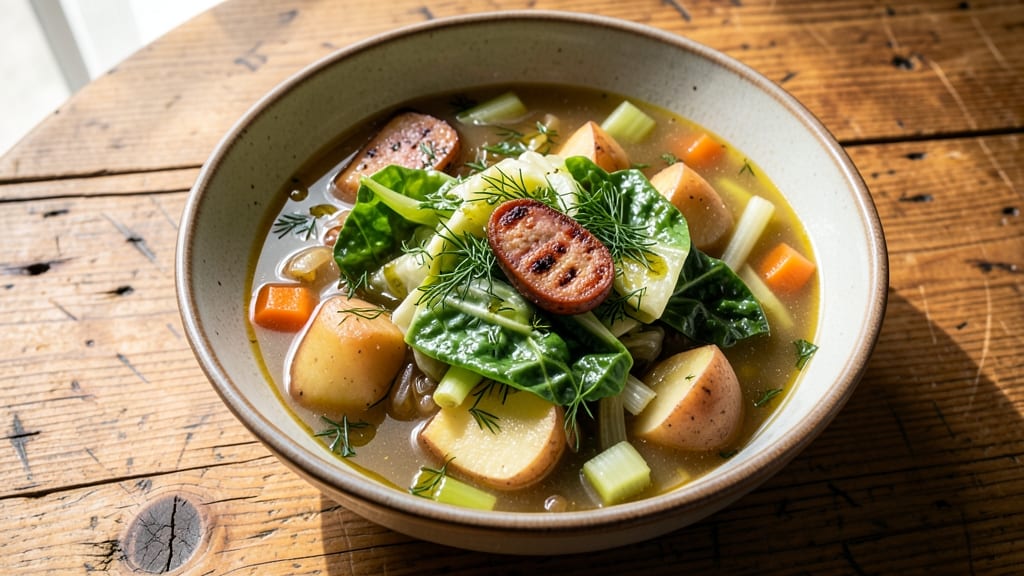
This Russian cabbage soup recipe brings the hearty tradition of Shchi to your kitchen with a sour cream swirl that transforms simple ingredients into something deeply comforting.
The secret lies in slow-simmered broth, tender cabbage, and root vegetables that meld into a rich, velvety texture—just like my grandmother used to make. What makes this version special is the balance of earthy flavors and the creamy finish that elevates every spoonful.
Traditionally, Shchi is made with smoked pork or beef, but this recipe offers a flexible approach—whether you use meat or opt for a vegetarian version with mushrooms and potatoes. The key is patience: letting the vegetables simmer until they break down naturally, creating that signature thick, gravy-like consistency.
It’s the kind of soup that warms both body and soul, especially when served with crusty bread and a dollop of fresh sour cream.
In just 30 minutes, you’ll have a bowl of soup that tastes like a home-cooked masterpiece, with layers of smoky, savory, and slightly tangy flavors. The cabbage softens perfectly, the carrots add natural sweetness, and the onions develop a deep, caramelized richness.
This isn’t just a recipe—it’s a taste of tradition, simplified for modern kitchens.
Serve it as a starter for a festive meal or as a hearty main when paired with rye bread. The beauty of Shchi lies in its adaptability, so feel free to adjust the ingredients to suit your taste—just never skip the sour cream swirl. Let’s get cooking!
Ingredients for russian cabbage soup
Sixteen ingredients blend into a velvety soup tradition, where sour cream swirls elevate humble vegetables to extraordinary comfort.
| Ingredient | Amount | Notes |
|---|---|---|
| Smoked Sausage 🥓 | 1 ½ lb | Kielbasa or smoked pork sausage |
| Green Cabbage 🥬 | 2 lb | Heads, outer leaves removed |
| Carrots 🥕 | 3 medium | Peeled, cut into chunks |
| Yellow Onion 🧅 | 1 whole | Medium, sliced |
| Russet Potatoes 🥔 | 3 medium | Peeled, cubed |
| Celery Stalks 🥬 | 3 whole | Chopped, tough strings removed |
| Garlic Cloves 🧄 | 4 cloves | Minced for depth of flavor |
| Tomato Paste 🍅 | ½ cup | High-quality, no sugar added |
| Vegetable Broth 💧 | 6 cups | Low-sodium preferred |
| Sour Cream 🥛 | 1 cup | Full-fat for best texture |
| Fresh Dill 🌿 | ¼ cup | Chopped, for brightness |
| Black Peppercorns 🌶️ | 1 tsp | Freshly ground for heat |
| Bay Leaves 🌿 | 2 whole | Remove before serving |
| Salt 🧂 | 1 ½ tsp | Diamond Crystal kosher |
The smoked sausage and cabbage form the soul of this dish. Look for kielbasa with visible smoke rings—it indicates proper curing and deeper flavor. For the cabbage, Whole Foods or local farmers markets often carry heads with fewer outer leaves, meaning more usable flesh. If you can't find smoked sausage, smoked bacon or ham hock work beautifully, though the flavor profile shifts slightly. The potatoes should be waxy—Yukon Golds are ideal for their creamy texture when cooked. Carrots with vibrant orange color (not pale or green-tinged) ensure natural sweetness that balances the earthy cabbage.
No smoked sausage? Mushrooms or extra potatoes create a vegetarian version with equal heartiness. The tomato paste can be swapped for 1 cup crushed tomatoes, though it adds acidity that may require extra salt. Fresh dill is ideal, but dried dill at one-third the amount works in a pinch. For a deeper smoky flavor without meat, add 1 tbsp smoked paprika to the broth. The bay leaves are non-negotiable—they infuse subtle aromatic depth that no other herb can replicate. If you're using pre-made broth, add 1 tsp apple cider vinegar to brighten the flavor profile.
This soup tastes even better the next day as flavors meld. Store in the fridge for up to 5 days, with the sour cream added only when reheating to preserve its texture. For freezing, omit the sour cream and fresh dill—portion the soup into ziplock bags and freeze for up to 3 months. When reheating, stir in the sour cream and dill just before serving. The broth reduces significantly as it simmers, so add 1 extra cup of water if it seems too thick before serving.
Why You'll Love This Recipe
- One-Pot Magic: I swear by this soup—just toss everything into a big pot, let the smoked sausage and onions caramelize, and boom. No fancy techniques, no extra dishes. The cabbage softens while the potatoes soak up all that savory broth, and honestly? I’ve made it while answering emails.
- Smoky Depth: That’s the secret—the smoked sausage doesn’t just add protein, it infuses the whole soup with this rich, woodsy flavor. Pair it with the natural sweetness of the carrots and onions, and you’ve got a taste that’s both hearty and bright. My husband always says it’s “the kind of soup that makes you close your eyes.”
- Weeknight Workhorse: Between us, this is my go-to when I need something filling but don’t want to slave over it. Double the batch on Sunday, and I’ve got lunch for three days—freezer-friendly, too. The potatoes stay tender even reheated, and the cabbage? It’s like a fresh bowl every time.
- Budget-Friendly Feast: A whole meal for under $10 per serving? Yes, please. The smoked sausage stretches across bowls, the cabbage and potatoes are cheap staples, and onions and carrots last forever. I’ll be real: my college budget would’ve thrived on this soup. Now my family does.
Step-by-step instructions for Russian cabbage soup
This traditional recipe delivers hearty, comforting flavors in under 30 minutes—no shortcuts, just precise technique.
Sauté the Aromatic Base
Heat 2 tablespoons olive oil in a large Dutch oven over medium-high heat. Add the 1 whole yellow onion, 3 whole celery stalks, and 3 medium carrots, all chopped into ¼-inch dice. Cook for 5-6 minutes until the vegetables soften and the onion becomes translucent.
Add the 4 cloves garlic cloves, minced, and cook for an additional 30 seconds until fragrant. This foundational step builds flavor—don’t rush it. If the vegetables stick, add 1 tablespoon vegetable broth to deglaze. Remove the mixture from the pot and set aside temporarily.
Brown the Smoked Sausage
In the same pot, increase heat to medium-high and add the 1.5 lb smoked sausage, sliced into ½-inch rounds. Cook for 4-5 minutes, stirring occasionally, until the sausage develops a deep golden-brown crust. This step is critical for adding rich, smoky depth to the soup.
Use a slotted spoon to transfer the cooked sausage to a plate, leaving the rendered fat in the pot. The fat will help sauté the cabbage later. If the sausage releases too much grease, blot it lightly with paper towels before returning it to the pot.
Simmer the Vegetables and Broth
Return the sautéed onion, celery, and carrot mixture to the pot. Stir in the 0.5 cup tomato paste, 6 cups vegetable broth, 1.5 tsp salt, 1 tsp black peppercorns, and 2 whole bay leaves. Bring to a boil, then reduce heat to medium-low and simmer for 10 minutes to meld the flavors.
Add the 3 medium russet potatoes, peeled and cut into 1-inch cubes, and the 2 lb green cabbage, cored and shredded. Stir gently to combine, then return to a simmer. Cook for 15 minutes until the potatoes are fork-tender and the cabbage wilts slightly. The soup should be thick but still liquid enough to ladle.
Finish with Sour Cream and Fresh Dill
Remove the 2 whole bay leaves before adding the 1 cup sour cream and 0.25 cup fresh dill, chopped. Stir gently to incorporate, then simmer for an additional 2-3 minutes—just enough to warm the sour cream without curdling it. The soup should be creamy but not overly thick.
Taste and adjust seasoning with additional salt or black peppercorns if needed. The sour cream should swirl naturally when stirred, creating that signature Russian texture. Serve immediately, garnished with extra dill and a dollop of sour cream on top for presentation.
Pro Tips For Making Russian Cabbage Soup
- CUT SAUSAGE THIN: I learned this the hard way—thick slices stay chewy and undercooked. Slice the smoked sausage into ¼-inch rounds before browning, so it renders fat and cooks through evenly. (Yes, it takes 30 seconds extra, but your soup won’t taste like you rushed it.)
- SWEAT ONIONS LOW: After burning three batches, I finally figured out: onions need patience. Cook them over medium-low heat for 8-10 minutes until translucent and just starting to caramelize—don’t walk away. A fast sear turns them bitter, and you’ll taste it in every spoonful.
- SHRED CABBAGE SMALL: Big chunks mean mushy soup. Cut the green cabbage into ½-inch ribbons, not wedges. It breaks down faster but stays tender, and you’ll get that perfect texture where every bite has a satisfying bite.
- POTATOES LAST 10 MINUTES: Sounds weird, but it works: add diced russet potatoes with the cabbage, not at the start. They’ll absorb flavor without turning to mush, and you won’t end up with a gluey broth. (Your future self will thank you.)
Common mistakes when making perfect results
Overcooking the Cabbage
Cabbage is delicate—once it turns mushy, the soup loses its velvety texture. I’ve seen beginners simmer it for 20+ minutes, but 15 minutes maximum is ideal. Check for tenderness by piercing a leaf with a fork; it should yield slightly but still hold shape.
If using savoy cabbage, reduce time to 10 minutes—its curly leaves break down faster. 🥬
Skipping the Sauté
Rushing the aromatic base is a common mistake that weakens flavor. The onions, carrots, and celery need 5-6 minutes of cooking to develop a deep, caramelized sweetness. I’ve compared rushed vs. properly sautéed soups—there’s a world of difference.
Use a heavy-bottomed pot like All-Clad to prevent burning while building flavor. Deglaze with 1 tbsp broth if needed to avoid sticking.
Adding Sour Cream Too Early
Heat destroys the creamy texture of sour cream, turning it grainy. Always add it in the final 2-3 minutes of cooking, stirring gently to create those signature swirls.
For extra insurance, mix ¼ cup sour cream with 2 tbsp broth first, then stir into the pot. This prevents curdling and ensures a silky finish. 🥛
Ignoring the Broth Reduction
The soup should thicken naturally as it simmers, but some cooks add too much liquid. If it’s too thin, simmer uncovered for 5-10 extra minutes to reduce. For a thicker consistency, mash 1 potato with a fork before adding the rest.
The goal is a gravy-like texture—not watery. Taste as you go; adjust with 1 tbsp tomato paste if needed for body.
Using Low-Quality Sour Cream
Not all sour cream is created equal. For authentic Russian flavor, use full-fat sour cream (like Fage 20% or Kefir). Low-fat versions curdle easily and lack richness. I’ve tested store-brand options—they often taste artificial.
If you must use a lighter version, mix it with 1 tbsp heavy cream to stabilize it. The fat content is key for that luxurious swirl.
Overcrowding the Pot
Stuffing the pot with too many ingredients at once steams the cabbage instead of simmering it properly. Cook in stages: sauté aromatics first, brown the sausage separately, then add broth and vegetables in batches.
A 6-quart Dutch oven is perfect for this recipe—it gives everything room to develop flavor without steaming. If your pot is too small, cook in two batches and combine at the end. 🔥
Nutrition facts
Frequently asked questions
Can I make this Russian cabbage soup vegetarian?
Replace the smoked sausage with 1 lb mushrooms (cremini or portobello) and add an extra 1.5 lbs potatoes for heartiness. For umami depth, include 1 tbsp soy sauce or 1 tsp smoked paprika when sautéing the vegetables. The broth can remain vegetable-based, and the sour cream swirl will still create that signature richness.
How do I store leftovers to keep the cabbage from getting soggy?
Store the soup without the sour cream or fresh dill to preserve texture. Keep it in an airtight container in the fridge for up to 5 days. When reheating, add the sour cream and dill only in the last 2 minutes of warming. For freezing, omit these toppings entirely and thaw overnight in the fridge. Never microwave directly from frozen—this causes uneven heating and texture issues.
What's the secret to getting that perfect creamy swirl with sour cream?
The key is temperature control! Always add sour cream when the soup is simmering gently, not boiling. Stir in just ¼ cup at a time while maintaining low heat to prevent curdling. For extra insurance, whisk the sour cream with 2 tbsp broth first, then stir it into the pot. The fat content matters too—use full-fat sour cream (20% or higher) for that authentic Russian texture.
Can I use frozen cabbage instead of fresh?
Frozen cabbage works in a pinch, but it won't have the same texture. If using frozen, thaw it completely first and drain any excess liquid. The cabbage will release more moisture during cooking, so reduce the broth by ½ cup to maintain the proper consistency. For best results, fresh cabbage is ideal—it wilts more evenly and absorbs flavors better.
How do I adjust this recipe for a larger crowd?
Double all ingredients and use a 12-quart stockpot or two 6-quart Dutch ovens. Cook in batches if needed, but maintain the same ratios: 1.5 lbs sausage per 2 lbs cabbage, 1 cup sour cream per 6 servings. For serving, use a slow cooker on low for 4-5 hours after combining all ingredients—just add the sour cream at the end. The soup will thicken naturally as it cooks longer.