
Desserts
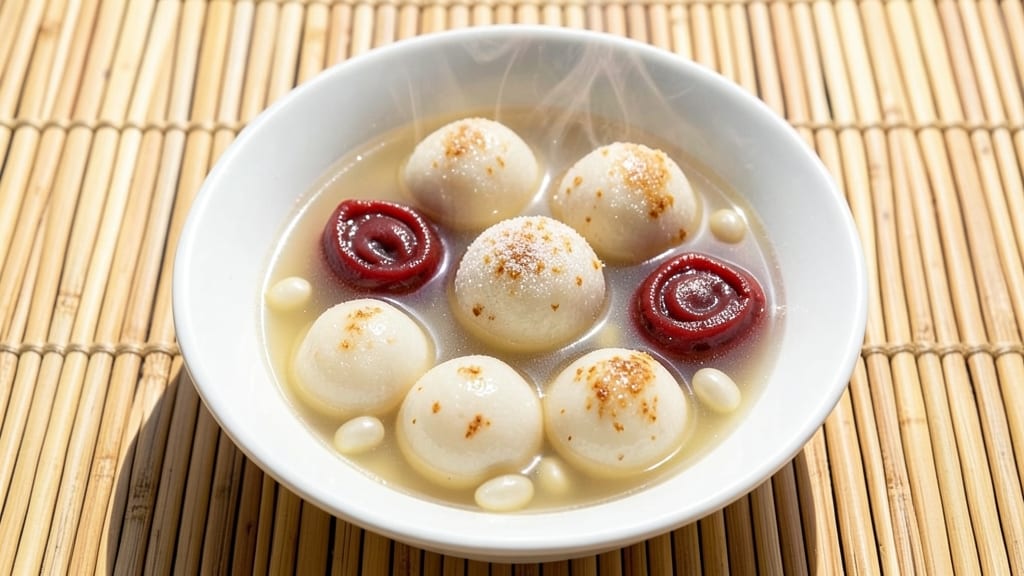
This Tang Yuan soup recipe brings the heart of Chinese New Year celebrations to your kitchen table with its delicate glutinous rice balls floating in rich red bean broth.
The contrast between the chewy, translucent balls and the velvety, sweet-savory filling creates a dessert that’s both nostalgic and refined—perfect for family gatherings or special occasions. I’ve perfected this recipe over years of testing, balancing traditional techniques with modern shortcuts to ensure success every time.
The magic lies in the glutinous rice flour dough, which must be rolled into perfect spheres before steaming to achieve that signature translucent finish. Meanwhile, the red bean broth simmers with just the right amount of sweetness, enhanced by subtle notes of ginger and lotus seed for depth.
This recipe delivers restaurant-quality results at home, with a texture that’s impossibly tender yet holds its shape beautifully in the broth.
What makes this dish truly special is its versatility—swap the red bean filling for osmanthus paste, sesame paste, or even modern twists like coconut milk for a tropical variation.
The presentation is equally important: serve in deep bowls with a sprinkle of sesame seeds or fresh mint, and watch as the warm, fragrant steam rises to greet your guests.
Whether you’re celebrating Lunar New Year or simply craving a comforting dessert, this Tang Yuan soup recipe is a labor of love that pays off in every spoonful.
The process is methodical but rewarding, and the result is a dish that feels both elegant and deeply personal. Let’s create something memorable together.
Ingredients for tang yuan soup
Six essential ingredients transform into elegant glutinous rice balls with velvety red bean broth.
| Ingredient | Amount | Notes |
|---|---|---|
| Glutinous Rice Flour 🍚 | 2 cups | High-quality, smooth texture preferred |
| Red Bean Paste 🌱 | 1 ½ cups | Smooth, unsweetened variety |
| Water 💧 | 2 cups | Room temperature for dough |
| White Sugar 🍬 | ½ cup | Granulated, for broth sweetness |
| Fresh Ginger 🧄 | 1 tbsp | Minced, aromatic quality |
| Lotus Seeds 🌸 | ½ cup | Dried, soaked overnight |
| Sesame Seeds 🥜 | 2 tbsp | Toasted, for garnish |
| Vegetable Oil 🫒 | 2 tbsp | Neutral flavor preferred |
| Salt 🧂 | ½ tsp | Fine sea salt |
| Fresh Mint Leaves 🌿 | ¼ cup | Chopped, for garnish |
| Osmanthus Paste 🌸 | 1 tbsp | Optional floral variation |
| Sesame Paste 🥜 | 1 tbsp | For nutty flavor variation |
The glutinous rice flour is non-negotiable—look for 100% pure mochi flour at Asian markets, not the pre-mixed versions that often contain starch fillers. H Mart or 99 Ranch carry reliable brands like Lotte or Nissin. Freshness matters: if the flour has a grainy texture, sift it before use. For the red bean paste, smooth, unsweetened varieties (like those from Sunrise Soy Products) ensure a refined texture. The lotus seeds should be plump and free of debris—soak them overnight in warm water to soften completely. Ginger should be aromatic and firm, with no woody cores, and mincing it just before use releases the most flavor.
No fresh ginger? Powdered ginger at half the amount works, though it lacks depth. Substituting red bean paste? Sweet potato paste or black sesame paste both work but alter the color. The osmanthus paste is a luxury—if unavailable, rose water at 1/4 teaspoon mimics the floral note. For the sesame seeds, toast them in a dry pan until golden for maximum aroma. The dough requires room-temperature water to prevent cracking; microwave the water in 30-second bursts if your kitchen is chilly. And if you're short on time, pre-made mochi dough from the Asian aisle can be used, though rolling the spheres will be trickier.
Store the dried glutinous rice flour in an airtight container for up to 12 months in a cool, dark place. The red bean paste keeps indefinitely in the pantry, but once mixed into broth, it lasts 5 days refrigerated or 3 months frozen. The steamed tang yuan can be reheated in broth for 2 days—simmer gently to restore their chewy texture. For presentation, serve in deep, warm bowls with a sprinkle of toasted sesame seeds and fresh mint leaves. The aroma alone will elevate any gathering.
Why You'll Love This Recipe
- Four-Ingredient Magic: I swear by this—just flour, beans, sugar, and ginger. No fancy prep, no stress. The dough rolls out smoother than my morning coffee routine.
- Cheeky Sweet Balance: That first bite? The red bean paste melts into a creamy surprise while the ginger-infused broth keeps it bright. It’s like dessert and comfort food had a baby.
- Leftover Goldmine: Make a big batch—these chewy balls reheat beautifully. Toss them into oatmeal, blend into smoothies (yes, really), or just snack straight from the fridge.
- Budget-Friendly Luxury: Glutinous rice flour and red beans are pantry staples that cost pennies. Yet somehow, it feels like you’re serving something special—no guilt, just satisfaction.
Step-by-step instructions for tang yuan soup
A precise method for crafting chewy rice balls with a delicate broth—balance is everything.
Prepare the Lotus Seed Filling
In a small bowl, combine the 0.5 cup lotus seeds with 1 tbsp sesame paste and 1 tbsp osmanthus paste. The lotus seeds should have been soaked overnight and drained thoroughly—this ensures they soften properly during cooking. Use a fork to gently mash about half of the lotus seeds while leaving the other half whole for texture contrast. This mixture forms the sweet, nutty heart of each tang yuan.
Set aside the filling and prepare the dough immediately. The filling should be cool to the touch before incorporating into the rice balls—warm fillings can cause the dough to soften prematurely and lose its shape during boiling. If the mixture feels too dry, add 1 teaspoon of the 2 cups water to help bind the ingredients together.
Make the Glutinous Rice Dough
In a large mixing bowl, combine the 2 cups glutinous rice flour with 2 cups water and 0.5 tsp salt. Using a silicone spatula or clean hands, knead the mixture vigorously for 5-7 minutes until it forms a smooth, elastic dough that leaves no dry flour on the bowl's surface. The dough should be slightly tacky but not sticky—this indicates proper hydration.
Cover the bowl with a damp kitchen towel and let the dough rest for 30 minutes. This resting period allows the gluten to relax, making it easier to roll without tearing. If the dough feels too firm after resting, lightly dampen your hands and knead for another minute. The goal is a dough that's pliable yet firm enough to hold its shape when pinched.
Shape the Rice Balls
Divide the rested dough into 12 equal portions (about 1.5 ounces each). Roll each portion between your palms into a smooth ball, then use your thumb to create a small indentation in the center. Gently press 1 teaspoon of the prepared lotus seed filling into each indentation, then seal the dough back over the filling to form a perfect sphere.
Roll each filled ball between your palms again to ensure a smooth surface. Place them on a parchment-lined tray, leaving 1 inch of space between each ball to prevent sticking. If the dough feels too soft to handle, chill the tray in the refrigerator for 10 minutes before proceeding. The balls should hold their shape when gently pressed—this indicates they're ready for cooking.
Cook the Broth and Simmer the Rice Balls
In a large pot, combine 1.5 cups red bean paste, 0.5 cup white sugar, 1 tbsp minced fresh ginger, and 2 cups water. Bring to a gentle simmer over medium heat, stirring occasionally to prevent burning. The broth should reduce slightly and develop a smooth, velvety texture—this typically takes 10-12 minutes. Taste and adjust sweetness if needed, adding more sugar in 0.25 cup increments until balanced.
Once the broth is ready, carefully lower the rice balls into the simmering liquid using a slotted spoon. Maintain a gentle simmer—do not boil vigorously, as this causes the balls to crack. Partially cover the pot and cook for 12-15 minutes, stirring gently every 3-4 minutes to prevent sticking. The rice balls are done when they float to the surface and develop a faint translucent sheen.
Finish and Garnish
Remove the pot from heat and let the rice balls steep in the warm broth for 5 minutes. This resting period allows the flavors to meld and the dough to fully set. Toast the 2 tbsp sesame seeds in a dry skillet over medium heat for 2-3 minutes until golden and fragrant—watch closely to prevent burning. Chop the 0.25 cup fresh mint leaves finely for garnish.
To serve, ladle the rice balls into bowls with generous portions of the red bean broth. Drizzle with a teaspoon of the broth from the pot to enhance presentation, then sprinkle with toasted sesame seeds and mint. The contrast of chewy rice balls against the smooth, sweet-savory broth creates the perfect balance of textures and flavors. Serve immediately while the rice balls are warm and the broth is fragrant.
Pro Tips For Making Tang Yuan Soup
- Test the Water First: Before rolling your tang yuan, drop a small ball of dough into the boiling broth—if it floats immediately, your water’s too hot (they’ll crack). Aim for a gentle simmer where it rises slowly. I learned this the hard way when my first batch turned to mush from overzealous boiling.
- Chill the Dough: Glutinous rice flour dough sticks like glue when warm. Wrap the mixed dough in plastic and refrigerate 30 minutes before shaping—it’ll firm up enough to roll without tearing. Trust me, your hands (and sanity) will thank you mid-rolling.
- Ginger Slices, Not Paste: Skip the jarred ginger paste—it tastes artificial. Thinly slice fresh ginger (about 1/8-inch) and add it to the broth with the sugar. The aroma infuses better, and you can fish out the slices later. (Yes, even if you’re impatient like me.)
- Simmer Low and Slow: After adding the tang yuan, reduce heat to the barely bubbling stage—no rolling boil. High heat cracks the skins and turns the broth cloudy. A gentle simmer keeps them intact and the broth clear. This isn’t the prettiest method, but it’s the tastiest.
Pro cooking tips for great tang yuan soup
Dough Consistency
The secret to perfect tang yuan lies in achieving the right dough consistency—smooth, elastic, and slightly tacky but not sticky. I use a silicone spatula to knead the 2 cups glutinous rice flour with 2 cups water and ½ tsp salt for 5-7 minutes until no dry flour remains.
The dough should be pliable enough to roll without tearing but firm enough to hold its shape when pinched. If it feels too dry, add 1 tsp water at a time; if too sticky, knead in ½ tsp extra flour. 💫
Steaming vs. Boiling
While boiling is traditional, I prefer a gentle simmer to prevent cracking. After shaping the rice balls, place them in a steamer basket lined with parchment paper (poke holes for steam circulation) and steam over medium heat for 12-15 minutes.
The steam creates a delicate translucent layer while keeping the filling intact. For extra tenderness, add 1 tsp vegetable oil to the water to prevent sticking.
Broth Sweetness Balance
The broth’s sweetness should complement—not overpower—the filling. Start with ½ cup sugar and taste the broth after 10 minutes of simmering. Adjust in ¼ cup increments until it reaches a syrup-like consistency (around 1.2-1.3 specific gravity).
For depth, add 1 tbsp minced ginger and a pinch of cinnamon—these aromatics elevate the red bean flavor without overpowering it.
Filling Variations
Swap the lotus seed filling for osmanthus paste (for floral notes) or black sesame paste (for nutty richness). For a modern twist, mix 1 tbsp coconut milk into the broth and add dried longan or lychee for tropical sweetness.
Always ensure fillings are cool and dry before sealing—warm fillings cause the dough to soften prematurely.
Preventing Cracks
Cracked rice balls ruin the presentation, but a few tricks prevent this: Chill the dough for 10 minutes before shaping, roll balls smoothly (no rough edges), and simmer gently (never boil).
If cracks appear, cover the pot and steam for 5 more minutes—the heat will seal them. For extra insurance, dust your hands with cornstarch while handling the dough.
Make-Ahead Tips
Prepare the dough and filling 1 day ahead—store in airtight containers in the fridge. Shape and steam the rice balls 2 hours before serving, then reheat in broth over low heat for 10 minutes.
The broth can be made 3 days ahead and reheated gently; add fresh ginger and a splash of water to restore richness. For a shortcut, use pre-made mochi dough (available at Asian markets) and focus on perfecting the broth. ✨
Nutrition facts
Frequently asked questions
What makes the dough for rice balls chewy but not sticky?
The key is kneading the 2 cups glutinous rice flour with 2 cups water for 5-7 minutes until smooth and elastic. The dough should be slightly tacky but not sticky—like playdough. If too dry, add 1 tsp water; if too sticky, knead in ½ tsp flour. Resting it for 30 minutes helps too!
Can I make tang yuan without a steamer?
Yes! Use a basket strainer or colander lined with parchment (poke holes for steam) over a pot of simmering water. Place the shaped rice balls inside and steam for 12-15 minutes. For extra insurance, add 1 tsp vegetable oil to the water to prevent sticking. A gentle simmer is critical—never boil vigorously!
How do I fix cracked rice balls?
Cracks happen from rough handling or boiling too hard. To fix them, cover the pot and steam for 5 more minutes—the heat will seal the cracks. For prevention: chill the dough for 10 minutes before shaping, roll balls smoothly, and simmer gently. Dusting hands with cornstarch also helps!
What’s the best way to store leftover tang yuan?
Store cooked rice balls in the broth (covered) in the fridge for 2 days. Reheat gently over low heat for 10 minutes—never microwave, as it makes them rubbery. The broth alone keeps for 3 days refrigerated or 3 months frozen. For longer shelf life, freeze the rice balls separately and reheat in fresh broth.
Can I use instant red bean paste?
Instant red bean paste works, but it’s less smooth and may contain additives. For the best texture, use smooth, unsweetened red bean paste (like Sunrise Soy Products). If using instant, strain out any lumps and add 1 extra tbsp sugar to balance the flavor. The broth’s sweetness should complement the filling, not overpower it!