
Soups & Stews
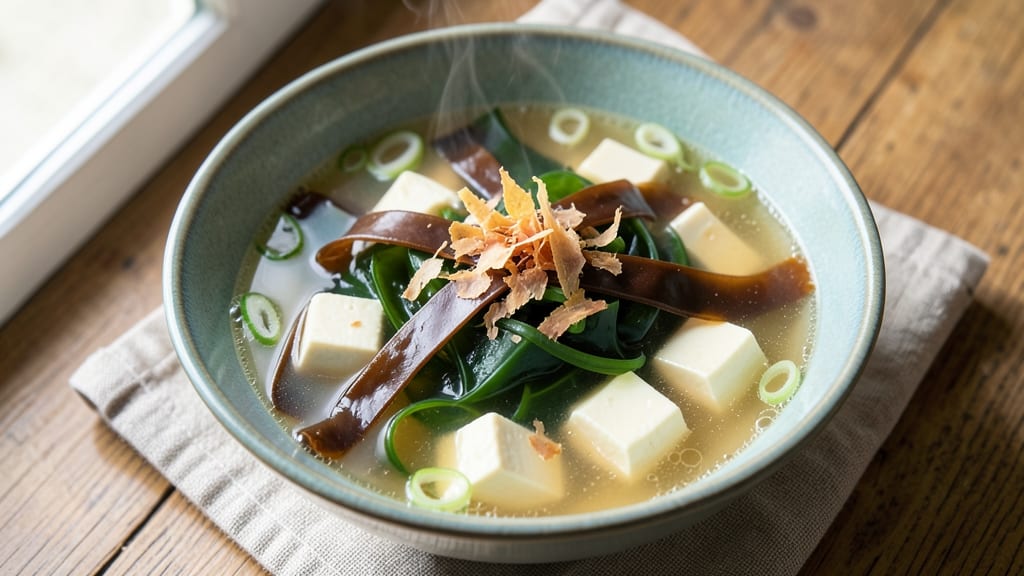
This wakame soup recipe transforms simple ingredients into a deeply flavorful broth that captures the essence of Japanese comfort food. The secret lies in kombu and dashi, which build layers of umami that wakame seaweed enhances with its signature oceanic depth.
I developed this version after years of refining traditional techniques to balance richness with clean, mineral notes.
The beauty of wakame soup is its versatility—it works as a light starter or hearty meal, depending on how you load it. Start with a foolproof broth that simmers for just 20 minutes, then add silky tofu and delicate wakame for texture contrast.
The result is a bowl that’s both nourishing and elegant, with a clarity that makes every spoonful satisfying.
What makes this recipe special is how it delivers restaurant-quality depth at home without complicated techniques. The kombu infuses the broth with savory complexity, while wakame adds that signature briny freshness.
Whether you serve it with miso for warmth or shoyu for brightness, the broth remains the star—clear, aromatic, and packed with umami.
Perfect for weeknight dinners or special occasions, this soup scales effortlessly for one or four. The key is patience—letting the broth develop its flavor while keeping the wakame tender. Once you taste the difference between store-bought and homemade, you’ll never go back. Let’s get started!
Ingredients for wakame soup
Simple Japanese ingredients that deliver restaurant-quality umami depth in every bowl.
| Ingredient | Amount | Notes |
|---|---|---|
| Kombu Seaweed 🌿 | 4 inches | Dried, cut into strips |
| Dried Bonito Flakes 🍄 | ¼ cup | Vegan substitute: shiitake mushroom flakes |
| Wakame Seaweed 🌊 | 2 oz | Dried, rehydrated in broth |
| Silken Tofu 🧀 | 1 block | Firm, cubed for texture |
| Silken Tofu 🧀 | 14 oz | Firm, cubed for texture |
| Green Onions 🧅 | 3 whole | Thinly sliced, for garnish |
| Shoyu Soy Sauce 🍶 | 1 tbsp | Japanese style preferred |
| Sesame Oil 🫒 | 1 tsp | Toasted, for aroma |
| White Miso Paste 🍶 | 1 tbsp | Vegan miso preferred |
| Dried Shiitake Mushrooms 🍄 | 4 whole | Rehydrated for dashi |
| Fresh Ginger 🧅 | 1 tbsp | Grated, aromatic base |
| Water 💧 | 4 cups | Filtered preferred |
| Diamond Crystal Kosher Salt 🧂 | ½ tsp | For seasoning |
The kombu is your umami powerhouse—look for thick, leathery strips at Asian markets or the dried seaweed section. Maruichi or Matsunoya brands are top-tier, but any high-quality dried kombu works. The wakame should be dark green and free of grit—skip the pre-packaged stuff with additives. For the dashi, dried shiitake mushrooms replace bonito flakes perfectly, giving that deep, savory base without animal products. If you can't find shiitake, extra kombu plus a splash of soy sauce gets you close.
No shoyu? Tamari or coconut aminos work in a pinch, though the flavor won't be identical. Fresh ginger is ideal, but dried ginger at half the amount works if you're in a hurry. The miso should be white (shiro) or red (aka)—never instant miso paste. For extra richness, add 1 tbsp vegan butter to the broth at the end. The tofu? Silken tofu holds its shape better than regular when cubed, but if you only have firm, press it for 15 minutes first.
Broth keeps for 5 days in the fridge—taste before reheating, as flavors deepen over time. Freeze in ice cube trays for quick portions. The wakame rehydrates in minutes, so add it last. For meal prep, store components separately: broth, tofu, and wakame. Assemble when ready to eat—fresh wakame is best within 2 hours of rehydration.
Why You'll Love This Recipe
- Five-Ingredient Magic: I swear by this—just kombu, bonito flakes, wakame, and tofu. No chopping, no fuss, and the broth builds itself while you sip tea.
- Umami Bomb: That first spoonful? Pure ocean flavor. The kombu gives a deep, savory base, while the bonito flakes add a smoky, salty punch—like a hug in a bowl.
- Lunchbox Hero: Between us, this is my go-to for meal prep. Cold or warm, it travels well, and the silken tofu stays intact. Pack it the night before, and you’re golden.
- Budget Bright Spot: A single sheet of kombu and a bag of dried bonito stretch for weeks—way cheaper than takeout. Plus, wakame’s cheap and lasts forever if stored right.
Step-by-step instructions for wakame soup
Here's how to craft a velvety wakame broth that captures all the oceanic richness of traditional Japanese dashi.
Prepare the Kombu and Shiitake Base
Cut the 4 inches kombu seaweed into ¼-inch strips and place them in a clean saucepan. Add the 4 whole dried shiitake mushrooms and pour in the 4 cups water. Bring to a gentle simmer over medium-low heat—never a rolling boil, as kombu releases bitterness when overcooked. Let it simmer uncovered for 10 minutes until the kombu softens and the water develops a faint golden hue.
Here's the thing—this initial simmer extracts the kombu's natural glutamate, which forms the umami backbone of your soup. Strain out the kombu and shiitake using a fine-mesh sieve, pressing gently to extract every last drop of flavor. Discard the solids and return the strained liquid to the pan. You'll notice the broth now has a delicate marine aroma and a translucent quality that's the hallmark of proper kombu infusion.
Build the Umami Layers
Add the 0.25 cup dried bonito flakes and 1 tbsp grated fresh ginger to the simmering kombu broth. Stir gently and reduce heat to low. Let it steep for 5 minutes—you'll see the bonito flakes dissolve completely, transforming the broth into a deeper amber color. This is where the magic happens: the bonito's inosinic acid combines with the kombu's glutamic acid to create that quintessential umami depth.
For a vegan version, skip the bonito flakes and instead add 2 oz rehydrated wakame seaweed (soaked in warm water for 10 minutes and drained) at this stage. The wakame will contribute its own oceanic sweetness while maintaining the broth's integrity. After steeping, strain the broth again through a fine-mesh sieve to remove any remaining ginger fibers, leaving you with a perfectly clear foundation.
Incorporate the Miso and Tofu
Return the strained broth to the pan and add the 1 tbsp white miso paste. Stir constantly over low heat until the miso dissolves completely—this should take about 2 minutes. The broth will darken slightly and develop a richer, more complex flavor profile. Here's where it gets fun: the miso's fermented depth bridges the gap between the broth's clean umami and the tofu's delicate texture.
In a separate bowl, gently fold the 14 oz silken tofu (cubed) and 1 block silken tofu (also cubed) with 1 tbsp shoyu soy sauce and 1 tsp sesame oil. The tofu should absorb just enough soy sauce to develop a subtle savory note without becoming soggy. Add this tofu mixture to the simmering broth and let it warm through for 3 minutes—just enough to heat the tofu gently without breaking its silky texture.
Finish with Wakame and Garnish
Add the 2 oz wakame seaweed (if not used earlier) to the broth and simmer for 3 minutes until it softens and unfurls. The wakame should contribute a delicate seaweed sweetness that complements the broth's umami. Taste and adjust seasoning with 0.5 tsp diamond crystal kosher salt—this final adjustment ensures the soup's flavor is perfectly balanced between salty, sweet, and umami.
Ladle the soup into bowls and garnish each serving with 3 whole green onions (thinly sliced). The green onions add a fresh, bright contrast to the rich broth, while their subtle sharpness cuts through the soup's depth. Serve immediately while the tofu maintains its silky texture and the wakame holds its shape. This soup is best enjoyed fresh, as its flavors meld beautifully in the first 15 minutes after preparation.
Pro Tips For Making Wakame Soup
- SOAK KOMBU FIRST: Toss that kombu in cold water for 10 minutes before boiling—it’ll release its umami punch without turning your broth bitter. I used to skip this and ended up with soup that tasted like "maybe seaweed, maybe disappointment."
- TOAST BONITO LOW: Dry-toast those flakes over low heat for 30 seconds max, or they’ll burn into ash. Stir constantly and watch like a hawk—once they’re golden, remove them immediately. Your future self will thank you.
- REHYDRATE WAKAME PROPERLY: Soak wakame in cold water for 5 minutes, then drain thoroughly—no soggy soup here. If you’re lazy and use hot water, it’ll turn to mush faster than you can say "overcooked seaweed."
- CUT TOFU LAST: Keep silken tofu whole until the very end—it’ll hold its shape better. Slice it just before serving so it stays creamy, not sad and waterlogged. (Yes, even if you’re impatient like me.)
Wine and beer pairings for this wakame soup
Light Japanese Sake
A dry, crisp sake like Hakkaisan Junmai Ginjo (15% ABV) complements wakame soup’s delicate umami and oceanic notes. The sake’s subtle sweetness and clean finish mirror the broth’s clarity, while its acidity brightens the dish. Serve chilled to enhance the wakame’s freshness—this pairing is a staple in Kyoto izakayas. 🍶
Miso-Inspired White Wine
For non-sake lovers, a dry Riesling (like Dr. Loosen Blue Slate) or Albariño (such as Pazo de Señorans) works beautifully. Their citrus and mineral notes echo the kombu’s savory depth, while the wine’s acidity cuts through the tofu’s silkiness. Avoid oaky whites—they’ll overpower the soup’s delicate profile.
Light Lager Balance
A Japanese lager like Asahi Super Dry (4.2% ABV) or Sapporo Premium provides a neutral, crisp contrast. The lager’s subtle malt sweetness won’t compete with the wakame’s brininess, while its effervescence cleanses the palate between bites.
For a craft twist, try a Belgian witbier (like Hoegaarden)—its coriander and citrus notes add unexpected harmony. 🍺
Umami-Boosting Beer
For a bolder match, a light wheat beer with a touch of saltiness (like Blue Moon) enhances the soup’s umami without overwhelming it. The beer’s slight sweetness balances the wakame’s oceanic edge, while its carbonation refreshes the palate. Avoid heavy stouts or IPAs—they’ll clash with the soup’s delicate texture.
Non-Alcoholic Pairings
For a refreshing non-alcoholic option, try sparkling green tea (like Ariake Sparkling)—its citrus notes and effervescence mirror the soup’s brightness. Alternatively, a cucumber-mint infused water (chilled with ice) highlights the wakame’s crispness while keeping the meal light and hydrating. 💧
Nutrition facts
Frequently asked questions
Can I make this wakame soup vegan?
Replace the bonito flakes with 2 oz rehydrated wakame seaweed (soaked in warm water for 10 minutes) and use vegan miso paste. The kombu and shiitake mushrooms already provide all the umami depth needed for a rich, plant-based broth. Just ensure your tofu is certified vegan if that matters to you.
Why does my wakame soup taste bitter?
Bitterness usually comes from overcooked kombu or using low-quality dried seaweed. Always simmer kombu gently (medium-low heat) for just 10 minutes—never boil. For extra insurance, strain the broth through a fine-mesh sieve after removing the kombu. If the bitterness persists, add a pinch of sugar or a splash of 1 tsp mirin to balance the flavors.
How long does wakame soup keep in the fridge?
The broth stays fresh for 5 days in an airtight container, but the wakame loses texture after 24 hours. For best results, store components separately: broth (5 days), tofu (3 days), and wakame (2 days). Reheat gently on the stove—never microwave, as it can make the tofu rubbery. The flavor actually improves as the broth sits!
Can I add other vegetables to this soup?
Yes! Try thinly sliced shiitake mushrooms (for extra umami) or bok choy (for freshness). Add them during the last 3 minutes of simmering to preserve texture. Avoid heavy veggies like potatoes—they can muddy the delicate broth. For a modern twist, toss in edamame or spinach just before serving.
What's the difference between wakame and kombu?
Wakame is a delicate, sweet seaweed used for texture and mild oceanic flavor, while kombu is a thick, leathery seaweed that builds umami depth in broths. Kombu infuses the base, while wakame adds the signature "sea vegetable" bite. Think of kombu as the soup's backbone and wakame as its finishing touch.