
Soups & Stews
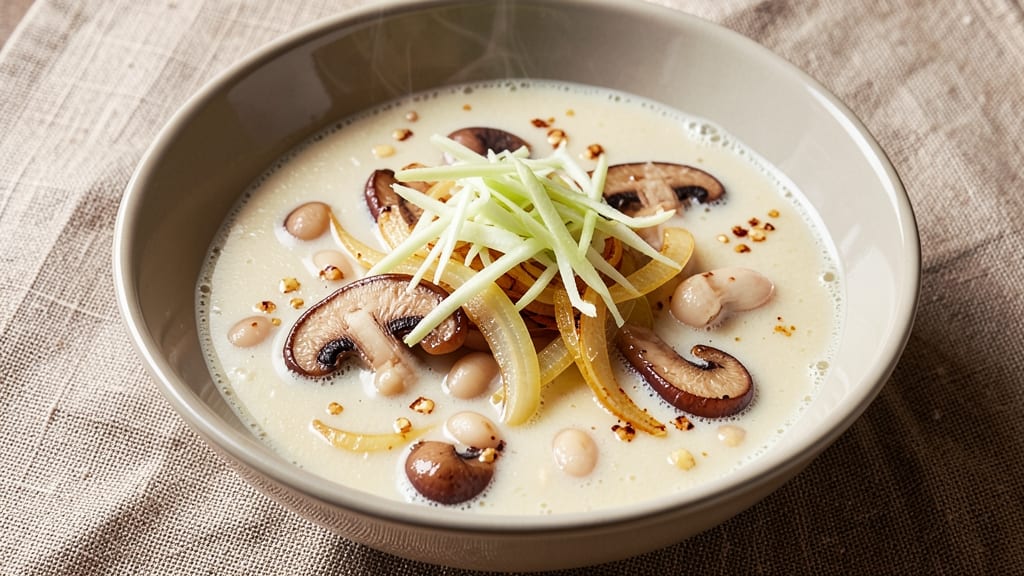
This monggo soup recipe brings the heart of Filipino comfort food to your kitchen with its rich, earthy flavors and velvety texture. Slow-simmered until the mung beans are tender and the mushrooms release their umami depth, this soup is a labor of love that rewards patience with every spoonful.
My version keeps the traditional soul while adding a modern twist with roasted peanuts for crunch and depth.
The beauty of monggo soup lies in its simplicity—just a handful of ingredients transformed through slow cooking into something extraordinary. You'll start with dried mung beans, which soak up the savory broth and develop a creamy consistency as they simmer.
The mushrooms add meaty texture, while the peanut garnish brings a satisfying contrast that elevates this classic dish beyond ordinary soups.
What you'll achieve is a bowl of soup that's deeply satisfying—warm, aromatic, and packed with layers of flavor. The broth will be rich and savory, the beans perfectly tender, and the mushrooms infused with the essence of garlic and ginger.
This is the kind of soup that feels like a hug on a cold day, perfect for family gatherings or cozy weeknight meals.
While traditional versions often include meat, this recipe offers a vegetarian-friendly base that still delivers on flavor. For those who prefer it, adding chicken or pork transforms it into a heartier version without losing its soul. Let's create this comforting classic together.
Ingredients for monggo soup
Mung beans, mushrooms, and peanuts create this rich Filipino comfort soup's signature harmony.
| Ingredient | Amount | Notes |
|---|---|---|
| Dried Mung Beans 🌾 | 1 ½ cups | Rinsed thoroughly before soaking |
| Shiitake Mushrooms 🍄 | 8 whole | Stems removed, sliced |
| Yellow Onion 🧅 | 1 whole | Medium size, chopped |
| Garlic Cloves 🧄 | 6 cloves | Minced for aromatic base |
| Fresh Ginger 🌿 | 1 inch | Thinly sliced, peeled |
| Coconut Milk 🥥 | 13 ½ oz | Full-fat canned variety |
| Vegetable Broth 💧 | 4 cups | Low-sodium preferred |
| Peanut Oil 🫒 | 2 tbsp | For frying mushrooms |
| Soy Sauce 🧂 | 2 tbsp | Light or dark preferred |
| White Wine Vinegar 🍶 | 1 tbsp | Balances flavors |
| Peanuts 🥜 | ½ cup | Roasted, unsalted |
| Green Onions 🧅 | 4 whole | Sliced for garnish |
| Salt 🧂 | 1 tsp | Adjust to taste |
| Black Pepper 🌶️ | ½ tsp | Freshly ground |
The dried mung beans are the heart of this soup—soak them overnight for perfect texture. Filipino markets often carry the best quality, but any grocery store dried mung beans work. Shiitake mushrooms add that meaty depth, so look for fresh ones with tightly closed caps—they'll keep longer and taste better. The coconut milk should be full-fat for that creamy richness; Thai Kitchen or Aroy-D brands are my go-tos, but any canned variety works. If you can't find shiitake, cremini mushrooms are a solid swap—they won't have the same earthy flavor but still add great texture.
No fresh ginger? Ground ginger at half the amount works in a pinch, but fresh is ideal. The peanut oil matters here—it's what gives those mushrooms their signature crispy texture. Trader Joe's or Costco have great prices on the unsalted variety. For the peanuts, roast them yourself for maximum flavor—toss them in a dry pan over medium heat until golden. The soy sauce can be light or dark, but avoid the low-sodium versions unless you're adding extra salt. This soup tastes even better the next day as the flavors meld together—make extra if you can.
Store any leftovers in an airtight container for up to 5 days in the fridge. The broth will thicken as it cools, so add a splash of water when reheating. For freezing, portion it into single-serving containers—thaw overnight in the fridge. The peanuts and green onions are best added fresh when serving, but you can toast extra peanuts ahead and store them in a sealed container for up to 2 weeks. This soup reheats beautifully—just warm it gently on the stove with a splash of water or broth.
Why You'll Love This Recipe
- Soak-and-Go Magic: I swear by this trick—just soak the dried mung beans overnight, and they’re ready to go. No fancy pre-cooking, no measuring cups of dried beans mid-recipe. The mushrooms and onions caramelize while they simmer, so you’re really just stirring and tasting.
- Umami Bomb: That combo of shiitake mushrooms and fresh ginger? It’s like flavor overdrive. The mushrooms add this deep, meaty richness while the ginger cuts through with a bright kick—every spoonful tastes like a little comfort hug. (Yes, even on a Tuesday night.)
- Leftovers That Beg for More: This soup only gets better the next day. The beans soften just right, the broth thickens into something heartier, and suddenly you’re reheating it for lunch. My freezer’s full of batches because I can’t resist making extra—it’s that good.
- Pantry Staple Power: Between us, this recipe uses things you already have. Dried beans? Check. Onion and garlic? Always in my bin. The shiitakes might be a splurge, but they stretch across multiple meals. It’s the kind of dish that turns a $10 grocery run into a full week of dinners.
Step-by-step instructions for monggo soup
Here's how to create this rich, comforting soup with layers of umami and nutty depth.
Soak and Prepare the Dried Mung Beans
Place the 1.5 cups dried mung beans in a large bowl and cover them with plenty of cold water—at least 4 cups. Let them soak for 4-6 hours or overnight. This long soak ensures they soften completely and don't turn mushy during cooking. I like to soak them in the fridge for better flavor development.
After soaking, drain the beans and rinse them thoroughly under cold water. This removes any excess starch that could make the soup gummy. Give them a quick stir in the colander to separate any clumped beans. Once drained, set them aside in a separate bowl—you'll cook them separately from the other ingredients to prevent them from breaking apart.
Build the Aromatic Base
Heat 2 tablespoons peanut oil in a large pot over medium heat. Add the 1 whole yellow onion, 6 cloves garlic cloves, and 1 inch fresh ginger—all chopped as specified. Sauté for 5-7 minutes until the onions turn translucent and the garlic begins to turn golden. You'll smell that wonderful aromatic base developing—this is where the flavor foundation happens.
Next, add the 8 whole shiitake mushrooms, sliced as directed. Cook for another 8-10 minutes until they release their moisture and begin to brown slightly. This step develops their umami depth. If the mushrooms release too much liquid, reduce heat briefly to let it evaporate. The mushrooms should be tender but still hold their shape.
Simmer the Base and Add Coconut Milk
Pour in the 4 cups vegetable broth and bring the mixture to a gentle boil. Once boiling, reduce heat to low and let it simmer for 15 minutes. This allows all the aromatics to meld together. Add the 2 tablespoons soy sauce and 1 tablespoon white wine vinegar now—the vinegar brightens the dish while the soy sauce adds depth.
After the 15 minutes, stir in the 13.5 oz coconut milk. The soup should thicken slightly as it simmers—this is when the flavors start coming together. Taste and adjust seasoning with 1 teaspoon salt and ½ teaspoon black pepper. The coconut milk adds a luxurious creaminess that balances the earthy mushrooms and nutty peanuts we'll add later.
Cook the Mung Beans and Finish the Soup
In a separate pot, combine the drained mung beans with 2 cups fresh water (enough to cover them by about 1 inch). Bring to a boil, then reduce heat to low and simmer for 45-60 minutes until tender but not mushy. They should hold their shape when bitten but be completely soft inside. Drain any remaining water before adding them to the soup.
Add the cooked mung beans to the pot with the mushroom base. Stir gently to combine. The beans will absorb some of the liquid, so if the soup seems too thick after adding them, you can thin it with a splash of hot water or more broth. Simmer together for another 5 minutes to let the flavors meld.
Garnish and Serve
Remove the pot from heat and stir in the ½ cup peanuts and 4 whole green onions, sliced as directed. The peanuts add a satisfying crunch that contrasts beautifully with the creamy coconut milk. Let the soup sit for 2-3 minutes to allow the peanuts to warm through and absorb some of the flavors.
Ladle the soup into bowls and serve immediately. The aroma alone will make your kitchen smell like a Filipino comfort food haven. Each spoonful delivers tender mung beans, earthy mushrooms, nutty peanuts, and that perfect balance of tangy, savory, and creamy flavors. Pair it with steamed rice to soak up every last drop of this velvety soup.
Pro Tips For Making Monggo Soup
- SOAK BEANS OVERNIGHT: I learned this the hard way—rushing the soak leaves your monggo soup with that chalky, undercooked bite. Use 8 cups of water per 1 cup of dried mung beans, and let them sit for at least 12 hours. The longer they soak, the creamier your soup will be, and you’ll skip the tedious boiling stage later.
- SIMMER LOW AND SLOW: After burning three batches, I finally figured out that monggo soup needs patience. Once the beans are tender, drop the heat to a gentle simmer—just small bubbles breaking the surface. Too much heat turns the beans mushy and the broth cloudy. Think "whisper-quiet boil," not a rolling pot.
- PREP GINGER LIKE A PRO: Skip the grating—use a microplane for fresh ginger. It releases more flavor and blends seamlessly into the broth without chunks. A teaspoon of finely zested ginger (about a 1-inch piece) is enough to brighten the whole pot. Trust me, your soup will taste like it came from a restaurant.
- SAUTE ONIONS UNTIL GOLDEN: This isn’t the prettiest method, but it’s the tastiest. Cook your sliced yellow onion in oil until the edges are deep golden brown—about 8-10 minutes. That caramelization adds a sweet depth that cuts through the earthiness of the shiitake mushrooms. Don’t rush it, even if you’re impatient like me.
Regional styles of monggo soup
Classic Filipino Style
In the Philippines, monggo soup is traditionally made with pork or chicken as the protein base, creating a heartier version called monggo guisado. I often use pork belly or chicken thighs—about 8 ounces—browned first in peanut oil before adding the aromatics.
The meat infuses the broth with deep, savory notes that pair beautifully with the mung beans. For authenticity, some regions add shrimp paste (bagoong) for an umami kick, though I prefer to keep it simpler with just soy sauce. 🥘
Visayan Twist
The Visayan region brings a unique variation using dried squid (tuyo) instead of mushrooms, creating a seafood-forward version. I like to rehydrate 4 ounces dried squid in warm water for 15 minutes before adding it with the mushrooms.
The texture becomes tender and slightly chewy, adding a briny contrast to the creamy beans. Some versions also include chili flakes for heat, balancing the richness with a spicy finish. This version works beautifully with a side of garlic fried rice.
Modern Vegetarian Adaptation
For a plant-based version, I boost the umami by adding 1 tablespoon miso paste to the broth along with the soy sauce. The miso deepens the savory profile without overpowering the natural flavors.
I also stir in 1 cup chopped kale after adding the mung beans—it wilts beautifully into the soup, adding earthy notes. Top with extra peanuts and a drizzle of chili oil for a contemporary take that still honors the dish's roots.
This version is perfect for vegan diets but still satisfies meat lovers. 🌱
Bicolano-Inspired Coconut Boost
In Bicol province, coconut milk takes center stage, and I take this to the next level by adding 1 cup extra coconut milk at the end of cooking. The result is an even richer, almost dessert-like soup that's still savory.
I also incorporate 1 tablespoon grated coconut into the garnish for added texture. For a smoky twist, some versions include a dash of annatto oil (achuete) to give the soup a vibrant orange hue and subtle earthy flavor.
This version feels luxurious yet remains true to Filipino comfort food traditions. 🥥
Quick Weeknight Version
When time is tight, I make a simplified version using canned mung beans instead of dried. Just drain and rinse 1 (15 oz) can mung beans and add them directly to the simmering broth after the mushrooms. Reduce the cooking time to 20 minutes total, stirring occasionally.
For extra richness, I stir in ½ cup coconut cream at the end. While it lacks the traditional texture, this version delivers the same comforting flavors in under 45 minutes. It's perfect for busy weeknights but still feels special. ⏰
Nutrition facts
Frequently asked questions
Why do I need to soak the mung beans overnight?
Soaking overnight ensures the beans soften evenly and cook faster without turning mushy. This 4-6 hour soak removes excess starch that could make your soup gummy. The fridge helps preserve flavor while the beans absorb water. Skipping this step risks beans that stay hard or split during cooking.
Can I substitute shiitake mushrooms with something else?
Yes! Cremini or oyster mushrooms work well as substitutes. For a meatier texture, try portobello mushrooms (remove gills first). If using dried mushrooms, rehydrate them first in warm water for 10 minutes. The key is choosing mushrooms with good umami depth to complement the peanut and coconut flavors.
How do I fix monggo soup that's too thick?
Add ¼ cup hot water or broth at a time while stirring gently. If the beans are still firm, simmer 5 more minutes to soften them naturally. For extra creaminess, stir in 1 tablespoon coconut milk. Avoid adding too much liquid at once—this can dilute the flavors you've carefully built.
What's the best way to make this soup vegetarian?
Boost umami with 1 tablespoon miso paste or ½ cup soy sauce in the broth. Add 1 cup chopped kale or spinach at the end for greens. For protein, stir in ½ cup cooked tofu cubes or 1 cup chickpeas. The peanut garnish and coconut milk already provide rich vegetarian-friendly textures.
Can I make monggo soup ahead of time?
Yes! This soup tastes even better the next day as flavors meld. Store in an airtight container for up to 5 days in the fridge. Reheat gently on the stove with a splash of water or broth. The peanuts and green onions should be added fresh when serving for maximum crunch and flavor.