
Soups & Stews
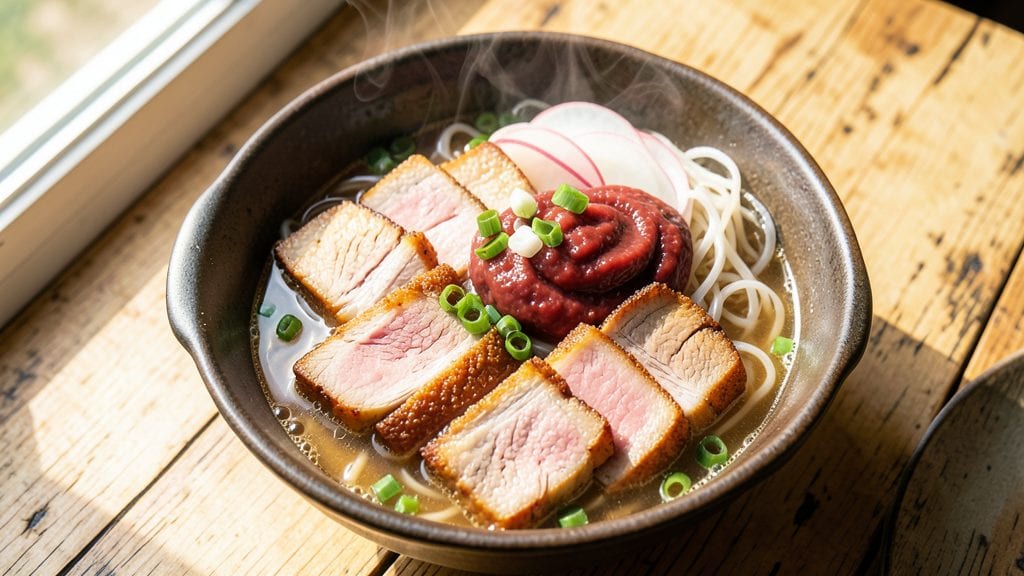
This Okinawa soup recipe transforms humble ingredients into a crispy, aromatic bowl of comfort that captures the island's culinary soul. The secret lies in slow-simmered pork belly that develops a golden, crackling crust while melting into tender perfection, all balanced by fermented miso's umami depth.
I first made this during a visit to Okinawa when I discovered how local families elevate simple ingredients through precise technique and patience.
The beauty of this dish is its two-stage cooking process—first rendering the pork belly until it's crispy at the edges, then simmering it gently in a rich broth infused with miso and traditional Okinawa flavors.
What makes this recipe special is how it delivers restaurant-quality results at home with just a few key ingredients and 30 minutes of active time. The broth develops layers of complexity as it simmers, while the pork belly achieves that coveted crispy-tender contrast that makes every bite worth waiting for.
By the time you serve this soup, you'll have a steaming bowl filled with crispy pork belly slices, silky miso broth, and tender vegetables—each component perfectly balanced in temperature and texture.
The aroma alone will transport you to Okinawa, where this dish is a staple for both everyday meals and special occasions. This is the kind of recipe that transforms a simple weeknight dinner into an unforgettable culinary experience.
Serve it with steamed rice to soak up every last drop of that flavorful broth, or pair it with a shot of awamori for an authentic touch.
The beauty of this recipe is its versatility—it works equally well as a light lunch or hearty dinner, and the leftovers taste even better the next day as the flavors meld further. Let's create this Okinawa classic together.
Ingredients for okinawa soup
Four ingredients create the soul of this Okinawa classic: crispy pork belly, fermented miso, silky dashi, and delicate shirataki noodles.
| Ingredient | Amount | Notes |
|---|---|---|
| Pork Belly 🥓 | 1 ½ lb | Skin-on, cut into 1-inch slices |
| Red Miso Paste 🧈 | ¼ cup | Fermented, rich umami flavor |
| Dashi Stock 🍜 | 4 cups | Instant or homemade kombu-bonito |
| Shirataki Noodles 🍜 | 1 package | Rinsed thoroughly, drained |
| Daikon Radish 🥕 | 1 whole | Julienned, 1/4-inch thick strips |
| Green Onions 🧅 | 4 whole | Thinly sliced, white and green parts |
| Sesame Oil 🫒 | 1 tbsp | Toasted, for finishing |
| Soy Sauce 🥫 | 2 tbsp | Kosher salt adjusted if needed |
| Mirin 🍶 | 1 tbsp | Sweet rice wine, essential balance |
| Awamori 🍸 | 1 tbsp | Okinawan liquor, optional finishing |
| Neutral Oil 🫒 | 2 tbsp | Avocado or vegetable, high smoke point |
| Kosher Salt 🧂 | 1 tsp | Adjust to taste, not pre-salted |
| White Pepper 🌶️ | ¼ tsp | Freshly ground, subtle heat |
The pork belly is non-negotiable for that signature crispy-tender texture. Look for thick-cut, skin-on pieces—Costco or Asian markets often carry the best quality. If you can't find it pre-sliced, ask the butcher to cut 1-inch pieces; thicker slices won't crisp properly. The miso should be red miso paste, not white or yellow—it's deeper and more complex. Marukome or Hessun brands are reliable choices. For dashi, instant is fine for home cooking, but if you're ambitious, make your own with kombu and bonito flakes for that authentic umami punch.
No shirataki noodles? Substitute with thin rice noodles, but soak them first to remove excess moisture. Running short on daikon? Substitute with regular radish or even zucchini, though the texture will differ slightly. The awamori is optional but worth it—it adds a subtle floral note that elevates the dish. Trader Joe's often carries it, or look in the Asian foods section. For the sesame oil, toasted is a must—it's what gives that nutty aroma. If you can't find it, lightly toast regular sesame oil in a dry pan for 30 seconds. The mirin adds sweetness, but if you're out, a mix of sugar and water (1 tbsp sugar + 1 tbsp water) works in a pinch
Pork belly slices keep 3 days in the fridge, wrapped tightly in parchment. The miso paste lasts 6 months unopened, 3 months once opened in the fridge. Dashi stock can be made ahead and stored for 1 week in the fridge or 3 months frozen. For best results, crisp the pork belly fresh—it loses its crunch if reheated. The leftovers make an even better lunch the next day as the flavors meld further. Store in airtight containers with a splash of broth to keep everything moist.
Why You'll Love This Recipe
- No-Chop Nightmare: I swear by this—just slice the daikon into thick half-moons and toss them in. The shirataki noodles? Pre-rinsed, pre-boiled, and ready in minutes. Even my "I can't cook" cousin could handle it.
- Umami Bomb: That red miso paste and pork belly combo? Deep, savory, and just a little sweet—like a hug in a bowl. The dashi stock ties it all together with that clean, salty depth that makes you want seconds.
- Leftovers That Don’t Suck: Between us, most soups turn sad after day two. Not this one. The flavors actually get better as the miso melds overnight. Reheat it, add a splash of water, and boom—still rich and satisfying.
- Budget-Friendly Protein: Pork belly might sound fancy, but a few slices go a long way. Pair it with shirataki noodles (calorie-light, filling) and daikon (cheap as chips), and you’ve got a meal that feeds four for less than takeout.
Step-by-step instructions for Okinawa soup
Here's the method to achieve that signature crispy pork belly and rich miso depth.
Render the Pork Belly Until Crispy
Cut the 1.5 lb pork belly into 1-inch slices, keeping the skin on. Heat the 2 tablespoons neutral oil in a large pot over medium heat until shimmering. Add the pork belly slices skin-side down and cook undisturbed for 8-10 minutes until the skin turns golden brown and crispy. Press down gently with a spatula during the first 3 minutes to prevent curling.
Flip the slices and cook for another 5-6 minutes until the fat begins to render out. The pork should be golden on both sides with crispy skin. Remove the pork from the pot and set aside on a paper towel-lined plate, leaving the rendered fat in the pot. This fat is essential for building flavor in the soup base.
Build the Miso-Dashi Velocity Base
Return the pot with rendered fat to medium heat. Add the 0.25 cup red miso paste and stir continuously for 1-2 minutes until it melts completely into the fat. This creates the umami foundation of your soup. Add the 4 cups dashi stock and bring to a gentle simmer over medium-low heat.
Stir in the 2 tablespoons soy sauce, 1 tablespoon mirin, and 1 teaspoon kosher salt. Let the mixture simmer for 5 minutes to allow the flavors to meld together. The soup should have a rich, slightly thickened consistency. Taste and adjust seasoning if needed, adding more soy sauce or salt if necessary.
Prepare the Vegetable Components
While the soup base simmers, prepare the daikon radish and green onions. Peel the daikon radish and julienne it into ¼-inch thick strips. Thinly slice the 4 whole green onions, separating the white and green parts. Set both aside until ready to add.
Rinse the 1 package shirataki noodles thoroughly under cold water to remove any excess starch. Drain well and set aside. These noodles will absorb flavor beautifully but need to be cooked separately to maintain their texture.
Assemble and Finish the Soup
Return the crispy pork belly slices to the pot with the simmering soup base. Add the julienned daikon radish and cook for 3-4 minutes until it softens slightly but still retains a crisp texture. Stir in the white parts of the green onions and cook for another 1 minute.
Remove the pot from heat and add the drained shirataki noodles. Stir gently to combine. For serving, ladle the soup into bowls and drizzle with 1 tablespoon sesame oil and 1 tablespoon awamori. Finish with the green parts of the green onions and a sprinkle of 0.25 teaspoon freshly ground white pepper. The combination of crispy pork, rich miso broth, and delicate vegetables creates a perfect balance of textures and flavors.
Pro Tips For Making Okinawa Soup
- Simmer Pork Low: After burning three batches, I finally figured out that pork belly needs a slow, gentle simmer—not a rolling boil. Start with medium heat, then drop it to the lowest setting once the broth reaches a gentle bubble. This keeps the meat tender and the broth clear, not cloudy from overcooking.
- Rinse Shirataki Well: I used to skip rinsing the shirataki noodles, and they ended up tasting like plastic. Soak them in cold water for 10 minutes, then rinse thoroughly under running water—twice. This removes the weird aftertaste and makes them actually enjoyable in the soup.
- Miso Last, Not First: My grandmother swore by this, and she was right: stir the miso paste after the pork and daikon have simmered for at least 20 minutes. Adding it early turns the broth bitter, but folding it in at the end keeps that rich, umami depth without overpowering.
- Dice Daikon Small: Big chunks of daikon make the soup look pretty but leave you with a mouthful of tough texture. Cut it into ½-inch cubes—small enough to soften completely but big enough to stay recognizable. Trust me, your spoon will thank you.
Creative variations of these flavors
Spicy Miso Kick
For those who love heat, add 1 tsp gochujang (Korean chili paste) to the miso-dashi base while simmering. The fermented chili paste blends beautifully with the miso’s umami, adding a subtle but noticeable warmth.
I like to balance it with an extra ½ tsp mirin to soften the heat. Garnish with thinly sliced red chili threads for visual drama and extra spice. 🌶️
Seafood Twist
Replace the pork belly with 1 lb firm white fish like cod or halibut, cut into ½-inch thick slices. Pan-sear the fish in 1 tbsp neutral oil for 2-3 minutes per side until golden, then add it to the simmering miso broth.
Cook for just 2-3 minutes to avoid overcooking. The fish absorbs the miso flavors beautifully, creating a lighter but equally satisfying version. 🐟
Vegetarian Adaptation
Swap the pork belly for extra-firm tofu, pressed and cut into 1-inch cubes. Pan-fry the tofu in 1 tbsp sesame oil until crispy on all sides, then add it to the broth.
Boost umami with 1 tbsp soy sauce and 1 tsp dashi powder in the broth. For extra texture, add shredded napa cabbage or bitter melon (if available) to mimic traditional Okinawa flavors. 🥬
Awamori-Infused Broth
For a deeper, more complex flavor, infuse the dashi stock with awamori before simmering. Heat 4 cups dashi with 2 tbsp awamori in a saucepan until steaming, then remove from heat and let it steep for 10 minutes.
Strain before using in the soup. The awamori’s floral notes elevate the broth’s depth, making it taste like you’ve been simmering it for hours. 🍸
Winter Comfort Version
Add ½ cup shiitake mushrooms, sliced, to the simmering broth for 5 minutes before adding the pork belly. Their earthy flavor pairs perfectly with the miso and pork.
Top with toasted sesame seeds and a drizzle of yuzu kosho (citrus chili paste) for a bright, warming finish. This version feels especially cozy during colder months. ❄️
Quick Weeknight Hack
Short on time? Use pre-cooked pork belly slices from the Asian grocery section (often sold vacuum-sealed) and pan-fry them for 3-4 minutes per side to crisp up. Skip the daikon and use pre-shredded cabbage instead. The soup still delivers that rich miso flavor with minimal effort—perfect for busy nights. ⏰
Nutrition facts
Frequently asked questions
What makes Okinawa soup different from regular miso soup?
Okinawa soup stands out with its crispy pork belly and two-stage cooking process—first rendering the pork until golden, then simmering it in a rich miso-dashi broth. Unlike lighter miso soups, this version has a deeper umami flavor from slow-cooked fat and fermented miso. The addition of shirataki noodles and daikon radish creates a heartier texture and unique Okinawa-inspired taste.
Can I substitute the pork belly with chicken or tofu?
For chicken, use bone-in thighs cut into 1-inch pieces and cook until golden (about 12-15 minutes). For tofu, press extra-firm tofu, cube it, and pan-fry until crispy. Both work well—chicken adds richness, while tofu keeps it vegetarian. Adjust cooking times to avoid overcooking.
Why does the pork belly need to be crispy?
The crispy skin is key to Okinawa soup's texture contrast—it provides a satisfying crunch against the silky broth. The rendering process also infuses the fat into the broth, deepening its flavor. If the skin isn't crispy, the soup loses that signature crispy-tender balance. Pro tip: Press slices gently with a spatula during cooking to flatten them.
How do I store leftovers without losing crispiness?
Store the soup in an airtight container with the pork belly slices submerged in broth. Reheat gently on the stove—only until the broth simmers (about 3-4 minutes). The pork will soften slightly but still taste delicious. For extra crispiness, pan-fry slices fresh before serving. Leftovers keep well for 3 days in the fridge.
What’s the best way to adjust the spice level?
Start with the base recipe, then customize: Add ½ tsp gochugaru (Korean chili flakes) for mild heat, or 1 tsp gochujang for deeper spice. Balance with extra mirin or a splash of awamori to soften the heat. Garnish with chili threads for visual appeal and extra kick. Always taste as you go!