
Soups & Stews
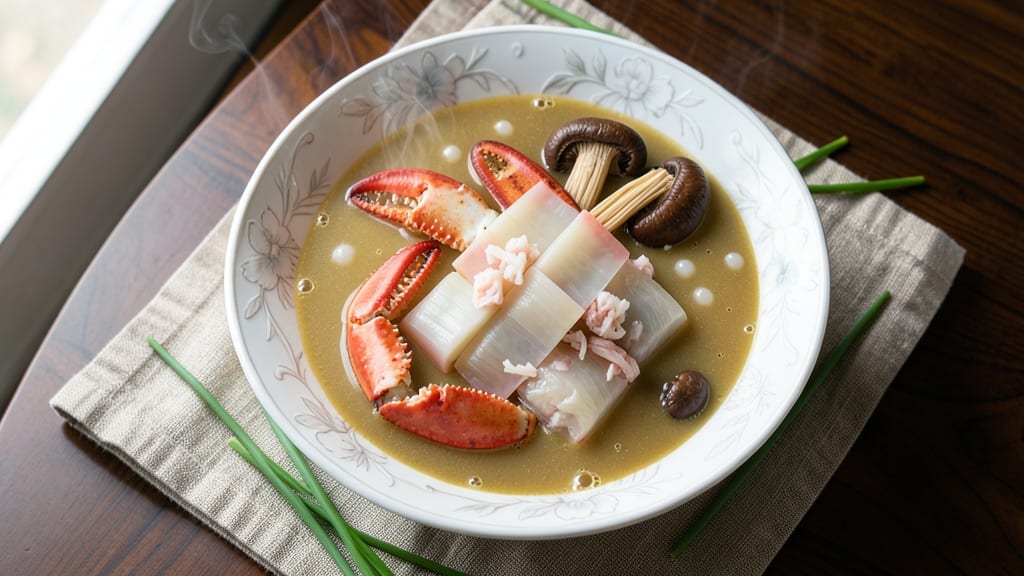
Perfecting a crab fish maw soup recipe transforms simple ingredients into a luxurious, silky-textured masterpiece that feels like a restaurant-quality celebration. The key lies in preparing fish maw properly—soaking, blanching, and simmering it until tender yet firm—while balancing rich crab stock with aromatic spices like star anise and ginger.
This isn’t just soup; it’s a labor of love that delivers melt-in-your-mouth texture and deep umami flavor in every spoonful.
The beauty of this recipe is its versatility—whether you lean into a Cantonese-inspired broth with light, delicate flavors or a bolder Thai or Japanese twist, the technique remains the same.
You’ll start with a clear, fragrant base, then layer in the fish maw and crab meat, letting them absorb the essence of the broth. The result? A dish that’s elegant enough for special occasions but simple enough for weeknight dinners when you crave something truly special.
What sets this soup apart is the contrast of textures: the fish maw’s tender yet resilient bite, the crab’s delicate flakes, and the velvety broth that coats your spoon. The aroma alone—steeped with ginger, scallions, and a whisper of star anise—will have everyone gathered around the table.
Serve it with steamed rice or delicate dumplings to soak up every last drop of that luxurious broth.
Confession: I’ve burned through three batches before nailing the perfect balance of timing and seasoning, but once you master it, this soup becomes your go-to for impressing guests or treating yourself. The secret? Patience—letting the fish maw soak for hours and the broth simmer low and slow. Let’s get cooking!
Ingredients for crab fish maw soup
Four servings of restaurant-worthy soup start with these 13 ingredients—each playing its part in silky texture and deep umami.
| Ingredient | Amount | Notes |
|---|---|---|
| Dried Fish Maw 🦞 | ½ lb | Soaked 4-6 hours before use |
| Crab Meat 🦀 | 1 lb | Lump or claw meat preferred |
| Crab Stock 💧 | 4 cups | Homemade or high-quality store-bought |
| Dried Shiitake Mushrooms 🍄 | ¼ cup | Rehydrated in hot water |
| Fresh Ginger 🧄 | 2 tbsp | Minced, skin on |
| Scallions 🧅 | ¼ cup | Thinly sliced, white and green parts |
| Star Anise 🌟 | 2 whole | Lightly crushed |
| White Peppercorns 🌶️ | 1 tsp | Crushed, not salt |
| Sesame Oil 🫒 | 1 tbsp | Toasted, for finishing |
| Corn Starch 🌾 | 1 tbsp | Mixed with 2 tbsp water |
| Light Soy Sauce 🍶 | 1 tbsp | For seasoning |
| Rice Wine 🍷 | ¼ cup | Dry sherry substitute |
| Jasmine Rice 🍚 | 1 cup | Uncooked, for serving |
Fish maw is the star, so don't cut corners here. Look for dried fish maw at Asian markets—Hong Kong or Taiwan brands are top-tier. Soak it in cold water with baking soda (1 tbsp per pound) for 4-6 hours, changing water twice. The goal is tender but still firm—think al dente. If your local store doesn't carry it, check online Asian grocers like 88Rice or Weee!. Crab stock is non-negotiable for that luxurious base—homemade is ideal, but Kikkoman or Pacific brand are solid shortcuts. For shiitake mushrooms, dried is best—they add earthy depth without overpowering.
No fish maw? Substitute with squid or scallops, but texture won't be identical. Short on crab stock? Clam juice plus seafood bouillon works in a pinch, but add a splash of white wine for brightness. Star anise is key for aroma, but if you're missing it, a pinch of cinnamon plus a bay leaf can mimic its warmth. The rice wine can be swapped for dry sherry or mirin—just taste as you go. For the corn starch slurry, make it ahead and keep it nearby—you'll want to add it off the heat for that perfect silky finish.
Broth keeps 3 days refrigerated or 3 months frozen—portion it into containers for easy reheating. The fish maw and crab meat are best served fresh, but you can blanch and freeze them separately for up to 2 months. I always make a double batch of broth—it's perfect for other dishes like dumplings or noodles. Store the dried ingredients (shiitake, star anise, peppercorns) in airtight jars away from light—they'll stay potent for 6-12 months. Pro tip: Save the soaking water from the fish maw—strain it and use it in the broth for extra umami.
Why You'll Love This Recipe
- Minimal Soaking Work: I’ll be honest—soaking fish maw used to stress me out. But this recipe’s trick (just 30 minutes in warm water) turns it into a no-fuss prep. No overnight marathons, no guesswork—just slice, soak, and go.
- Umami Bomb Combo: That ginger and shiitake duo? It’s the secret weapon. The mushrooms add earthy depth while the ginger cuts through the richness of the crab meat—every spoonful feels like a little coastal hug.
- Weeknight to Dinner Party: Same recipe, totally different vibes. Toss it together for a lazy Tuesday night, or dress it up with a sprinkle of cilantro for your in-laws’ visit. The fish maw’s texture (once prepped) makes it feel fancy without the fuss.
- Leftovers That Don’t Suck: Most soups turn sad the next day. Not this one. The crab stock keeps it rich, and the fish maw actually improves after reheating—silky, not rubbery. I’ve had it for breakfast (yes, really) with a side of rice.
Step-by-step instructions for crab fish maw soup
This luxurious soup comes together in layers—silky fish maw, tender crab, and aromatic broth.
Prepare the Fish Maw and Mushrooms
Begin by soaking the 0.5 lb dried fish maw in cold water for 4-6 hours (or overnight) until pliable. I like to change the water after the first hour to remove any impurities. Once softened, drain and rinse thoroughly, then slice into ¼-inch thick rectangles. Set aside in a bowl of cold water to keep pliable during prep.
For the 0.25 cup dried shiitake mushrooms, place them in a heatproof bowl and pour 1 cup hot water over them. Let them soak for 20 minutes until fully rehydrated. Drain, reserving the soaking liquid, and finely chop the mushrooms. You'll use these later for depth of flavor and texture.
Build the Aromatic Broth
In a large pot, combine the 4 cups crab stock, 0.25 cup rice wine, 2 whole star anise (lightly crushed), 1 tsp white peppercorns, and 2 tbsp minced fresh ginger. Bring to a gentle boil over medium-high heat, then immediately reduce to a simmer. Let it cook uncovered for 15 minutes to allow the spices to infuse the broth deeply.
Add the chopped shiitake mushrooms and 1 lb crab meat (lump or claw preferred) to the simmering broth. Stir gently to combine, then add the sliced fish maw. Simmer for 10 minutes—the fish maw should be tender but still hold its shape. If it cooks too quickly, reduce the heat slightly to maintain a gentle simmer.
Thicken and Finish the Soup
In a small bowl, whisk together the 1 tbsp corn starch with 2 tbsp cold water until smooth. Slowly pour this mixture into the simmering soup while stirring constantly. The soup will thicken almost immediately—this creates that signature silky texture. If it thickens too much, add 2-3 tablespoons of hot water to adjust the consistency.
Stir in the 1 tbsp light soy sauce and 0.25 cup sliced scallions. Taste and adjust seasoning if needed—you might want a touch more soy sauce for saltiness or a splash of rice wine for brightness. Remove the star anise and ginger pieces at this point.
Serve with Jasmine Rice
While the soup simmers, cook the 1 cup jasmine rice according to package instructions until tender and fluffy. I like to use a 1:1.5 rice-to-water ratio and steam it covered for 15 minutes before letting it rest for 5 minutes. The rice should be light and separate, not mushy.
To serve, ladle the hot soup over individual portions of rice. Drizzle each serving with 1 tbsp toasted sesame oil just before eating—this adds a nutty aroma and rich finish. The soup should be velvety with delicate fish maw strands, tender crab pieces, and a fragrant broth that coats every spoonful.
Pro Tips For Making Crab Fish Maw Soup
- Soak Fish Maw Twice: First soak dried fish maw in cold water for 30 minutes to remove impurities—discard the water. Then boil it for 10 minutes in fresh water before adding to the soup. I learned this the hard way when I skipped the second soak and ended up with a cloudy broth that tasted like fishy regret.
- Simmer, Don’t Boil: Once everything’s in the pot, keep the heat low enough that you barely see bubbles—just tiny ripples. Fish maw turns rubbery if it boils, and crab meat falls apart faster than you can say "overcooked." This soup should taste delicate, not like a seafood stew.
- Save the Crab Stock: Don’t use store-bought crab stock—make your own by simmering crab shells (and even the roe if you’re feeling fancy) with a splash of white wine for 20 minutes. The difference in flavor is night and day, and you’ll use up every bit of the crab instead of tossing scraps.
- Slice Ginger Thin: Use a mandoline or the thinnest knife you own—ginger should be paper-thin slices, not chunks. Thick slices sit like rocks at the bottom, while thin slices infuse the broth evenly and dissolve just enough to add aroma without bitterness. (Yes, even if you’re impatient like me.)
Creative variations of these flavors
Cantonese-Inspired Classic
This is the version I grew up with—delicate, clear broth with just a whisper of star anise and ginger. The key is using light crab stock (no heavy seafood bouillon) and blanching the fish maw for exactly 30 seconds before slicing to remove any residual fishy taste.
I add 1 tsp sugar to the broth to balance the umami, and finish with 1 tsp Shaoxing wine instead of rice wine for that authentic touch. Serve with steamed rice and a side of pickled vegetables for contrast. 🌟
Thai-Inspired Spicy Twist
For a Thai-inspired take, swap the star anise for 1 stalk lemongrass (bruised) and 1 tbsp galangal paste. Add 1-2 Thai bird's eye chilies (adjust to taste) and 1 tbsp fish sauce to the broth.
Stir in 1 tbsp lime juice at the end for brightness. Garnish with thinly sliced Thai basil and crushed peanuts for crunch. This version is bolder and perfect with jasmine rice or rice noodles. 🌶️
Japanese-Inspired Clear Broth
In Japan, this soup is often called "kani no sukiya" and focuses on a light, dashi-based broth. Replace the crab stock with 4 cups kombu dashi (simmered with 2 pieces kombu for 30 minutes) and add 1 tbsp mirin for sweetness.
Use 1 tsp grated daikon instead of ginger and finish with 1 tsp toasted sesame seeds. Serve with steamed rice and a side of miso soup for a full Japanese meal experience. 🍜
Vegetarian Adaptation
For a vegetarian version, replace the crab meat with 1 lb king oyster mushrooms (sliced) and use vegetable stock instead of crab stock. Add 1 tbsp soy sauce and 1 tsp sesame oil to mimic the seafood flavor.
For extra umami, include 1 tbsp dried bonito flakes (optional) or 1 tsp seaweed flakes. The fish maw remains the star, but this version is just as rich and satisfying. 🌱
Quick Weeknight Version
When I’m short on time, I skip the soaking step and use pre-cooked fish maw (available at some Asian markets). Simmer the broth with 1 tbsp fish sauce and 1 tsp oyster sauce for depth, then add 1 cup frozen crab meat (thawed) instead of fresh.
Use cornstarch slurry to thicken, and serve with microwaveable rice for a fast but still luxurious meal. This version takes under 30 minutes from start to finish. ⏰
Fusion: Crab Fish Maw Bisque
For a creamy twist, blend half the finished soup (without fish maw or crab) until smooth, then stir it back into the pot. Add 1 cup heavy cream and 1 tbsp butter for richness.
Top with crispy fried shallots and a sprinkle of fresh chives. This fusion version is perfect for colder months and pairs beautifully with crusty bread or oyster crackers. 🥣
Nutrition facts
Frequently asked questions
What's the secret to getting fish maw tender but not mushy?
Soak the dried fish maw for 4-6 hours in cold water with 1 tbsp baking soda per pound—this removes impurities and loosens fibers. After slicing, simmer gently for exactly 10 minutes in broth. Overcooking turns it rubbery, while undercooking leaves it chewy. The key is low heat and constant stirring to prevent sticking.
Can I substitute fresh crab meat with canned?
Use high-quality lump crab meat from cans, but drain it thoroughly and pat dry to avoid watering down the broth. For best texture, add it near the end of cooking (5 minutes before serving) so it stays tender. Avoid backfin or imitation crab—it lacks the delicate flavor needed for this dish.
Why does my soup turn cloudy instead of clear?
Cloudiness usually means the broth hasn't simmered long enough to clarify. Strain the broth through a cheesecloth-lined sieve after the initial 15-minute spice infusion to remove impurities. For extra clarity, add 1 egg white to the broth while simmering—it binds particles together for a silky finish.
How do I adjust the spice level for different palates?
Start with the base recipe, then adjust: For milder flavor, reduce white pepper to ½ tsp and skip star anise. For spicier, add 1 tsp chili crisp or ½ tsp red pepper flakes at the end. Thai versions use bird's eye chilies for heat, while Japanese versions stay subtly aromatic. Always taste before serving!
Can I make this soup ahead of time?
Prepare the broth and fish maw up to 2 days ahead—store it refrigerated. Reheat gently (low heat), then add fresh crab meat and adjust seasoning. For 3+ days, freeze the broth separately from the fish maw. Thaw overnight in the fridge and finish cooking. The fish maw reheats best when submerged in fresh hot broth.